




Ensuring Proper Trailer and Tanker Tire Pressure
With fuel costs and tire expenses the top two operating costs for fleet managers, a few simple tips and reminders can save money, improve vehicle handling, and reduce driver fatigue.

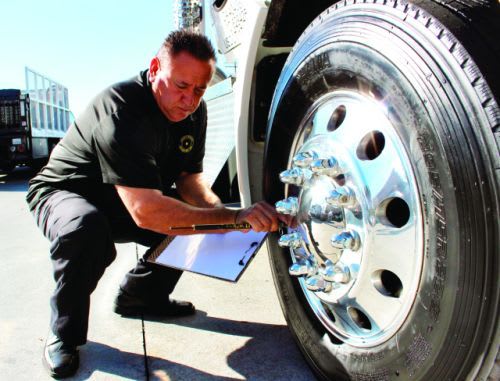
When it comes to tire maintenance, proper inflation is the most cost-effective way to reduce operating expense, according to Pat Keating, senior manager, technical engineering at Yokohama Tire.
And, this is especially true for the often-overlooked trailer and tanker fleet assets utilized in vocational fleets such as oil and gas, long-haul/over-the-road delivery, construction, contracting, and others.
“Improper pressure targets and poor pressure maintenance are an issue in every market segment, including with trailers and tanker trucks,” Keating noted. “Depending on the starting point, tire removal miles can be improved by 20 percent through proper inflation. Additionally, routine tire pressure checks are an excellent opportunity to notice other tire issues before they force a vehicle out of service.”
Proper pressure helps reduce operating costs, but also improves vehicle handling and can reduce driver fatigue. In addition to higher tire costs, poor tire pressure maintenance can also increase fuel costs and reduce overall tire casing life.
“In extreme cases, tires can even become unserviceable while in use, creating downtime,” said Keating.
“Drivers should understand that they play a large role in tire performance. Ensuring that they perform regular pre-trip pressure checks will keep them on the road and reduce the chances for CSA violation."
The bottom line? “I’ve never met anyone who made a decision to get serious about inflation maintenance and later regretted it,” said Keating.
Tire Safety Starts with Selection
By Rick Phillips, VP of sales, Yokohama Tire Corporation
Even in a market where prices have been generally falling, tire costs are still a large portion of any fleet’s operating expense. But, tires can get a lot more expensive if they are misapplied or put into service in an environment they were not designed for.
Tire manufacturers spend millions of dollars and countless hours developing technologies that produce application-specific products to meet the needs of any situation a vehicle may encounter. The technology is applied to the various elements that comprise the tire. They are:
The Casing: If you are going to construct a house, the first thing you do is build a strong foundation. That’s what the casing represents; it’s literally the foundation the tire is built on. It’s not possible to have a premium product built on a subpar casing. The two important things to consider when selecting a tire are load and speed — and the combination of both.
Casing quality varies considerably from brand to brand. Generally, there is no casing technology that is applied specifically to tanker tires, but an increasing number of tankers are using wide base single tires and wide base casing structure varies considerably among tire manufacturers. Always compare written warranties and ask your retreader for retreading success rates to inform your decision.
Tread Design: Tread is the area of the tire that actually makes contact with the road surface, and is usually the most visible and identifiable element of the tire. Each position on the truck and trailer — steer, drive, and trailer — has a different set of demands put on them depending on the situation.
Tires that run at high speeds and “over-the-highway” are typically shallower in tread depth and more rib-like in design. Tires that are in “regional and high scrub” applications (such as local pickup and delivery) still operate mostly on paved surfaces, and can still be more or less rib, but tend to have deeper tread depths to deal with the high scrub. Also, the tires that are used in “on/off-road” applications tend to have deeper treads and much more aggressive patterns, such as lugs, to provide traction when needed.
Tread compound: The rubber compound used in a particular tire will also depend on the application. The compound — or properties — of the rubber have a lot to do with a tire’s performance. As the ingredients in the compound change, so do the properties. Some tires are compounded for fuel efficiency (over-the-road), while others are compounded for cut and chip resistance (off-road). These are two extremely different applications, and neither tire would perform well in the other’s world as they are at the opposite ends of the spectrum. There are also several applications in between. In this application, tire performance is largely judged by rolling resistance and treadwear.
While these attributes can be difficult to combine, major tire companies meet customer requirements for long, even wear as well as meeting the requirements for EPA SmartWay verification.
By combining these different elements, tire engineers are able to design and build custom products that will perform well in almost any application. Sometimes it may even be necessary to test a few options to make sure you have the right product. Most manufacturer websites are a good resource to look at the different tire options available by position and application.
Beware of the ‘Magic’ Number
By Jim Park, HDT magazine
A glance at any tire maker’s load and inflation tables can tell a driver proper tire inflation levels, but many fleets inflate their drive and trailer tires arbitrarily to 95 or 100 psi — thus “overinflating” them and possibly sacrificing tire life.
The truth is, you only need between 75 and 80 psi in any drive or trailer tire when loaded to the maximum U.S. Interstate weight limit of 34,000 pounds per tandem axle group.
Published load and inflation tables from Goodyear and Michelin indicate 75 psi (80 psi by Bridgestone’s table) is the minimum pressure required to support a tire load of 4,550 pounds. In a fully loaded 34,000-pound tandem, each tire in a dual assembly carries 4,250 pounds. That’s cold inflation pressure, by the way, the standard inflation pressure denominator.
Many fleets want to err on the side of caution by running 95 to 100 psi in single tires in dual assemblies. But, tire inflation pressures are not arbitrary. Each tiremaker establishes minimum pressures based on tire loading, and the construction of the tire establishes the maximum allowable pressure.
But, several things happen to a tire that’s overinflated for its load, such as the tread tending to “crown,” leaving the shoulders of the tire scrubbing along the road as it tries to keep pace with the larger circumference of the center of the tread. When a truck is empty, tires just bounce along the road, scrubbing a little more rubber off the tread every time they hit the ground. It’s a cumulative effect and it can be severe in fleets like fuel haulers that run empty half the time.
Fleet managers need to remember that tire loads should determine pressure. The specific pressure for a given load is available from a tire manufacturer’s load and inflation tables and fleets also can use tables provided by the Tire & Rim Association, whose members set technical standards for manufacturing tires and wheels.
TIPS FOR PROPER TRAILER TIRE INFLATION
While not “rocket science,” there is definitely the right way to ensure trailer and tanker tires are properly inflated. According to Yokohama, fleet managers should ensure that drivers follow the tips below:
1. Use a pressure gauge; “thumpers” — or tools sold at truck stops for checking tire pressure — truly don’t work. Only pressure gauges are accurate.
2. Only check pressure on tires that haven’t been driven on for at least four hours. Never bleed air from a hot tire.
3. When checking pressures, also look for tire damage that could cause vehicle downtime later.
4. Use labels/stickers to remind drivers of the proper target pressure.
5. Consider running trials to determine the fleet’s proper pressure for each axle.
GET THE FACTS
Improper tire inflation can cost fleets money. According to the Technology & Maintenance Council (TMC):
• A constant 20-percent under-inflation will increase tire tread wear by 25 percent and a constant 10-percent over-inflation will increase tire tread wear by 5 percent. This is due to an uneven abrasion of the tread against the pavement and the development of irregular wear patterns, which shortens tread life.
• Improper tire inflation, defined as little as 10 psi low, reduces fuel economy by about 1 percent. About 30-40 percent of the fuel required to move a vehicle down the highway is spent overcoming tire rolling resistance.
More Safety
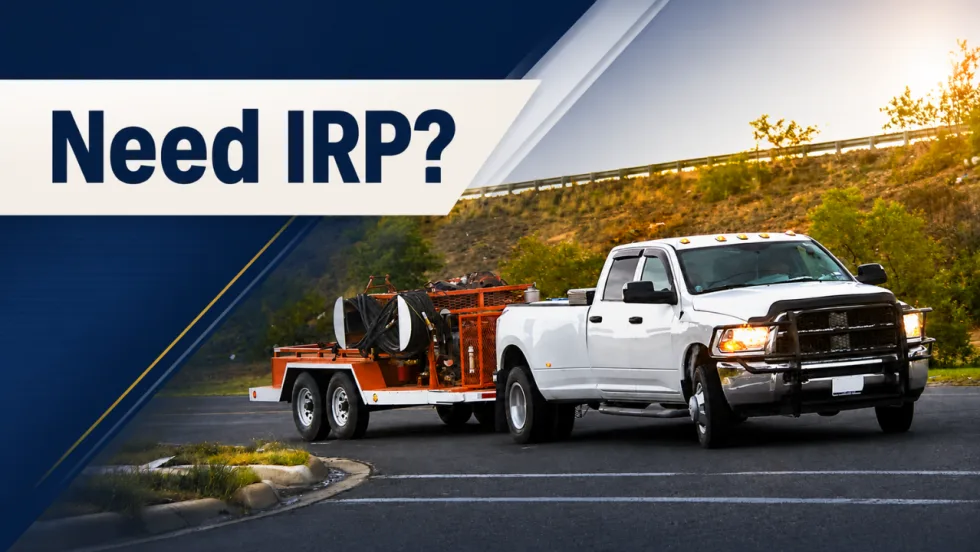
When Work Trucks Under 26,001 Pounds Need IRP Registration
Think trucks under 26,001 pounds are automatically in the clear when it comes to IRP? Not always. Learn where lighter vehicles can still run into trip permit, apportioned registration, and IFTA compliance requirements when crossing state or provincial lines.
Read More →
Volvo Trucks Releases New Safety Recommendations for Traveling with Pets
One of the most important recommendations for professional drivers traveling with pets is to ensure pets are properly restrained while the truck is moving. Other tips are available in the new guide from Volvo Trucks North America and Center for Pet Safety.
Read More →
API Issues Refueling Safety Guidelines
The American Petroleum Institute offers a list of safe vehicle refueling guidelines, including ways to avoid potential problems with static electricity discharges in fall, winter, and early spring.
Read More →
Winter Fleet Prep: Expert Tips to Keep Vehicles Running Smoothly
Cold weather can expose weak batteries, tires, fuel systems, and maintenance gaps fast. Use this winter fleet checklist to prepare trucks and drivers before temperatures drop.
Read More →
When a Work Truck Breaks Down, the Job Can Stop, Too
A work truck breakdown can stop more than the vehicle. Discover how payloads, jobsites, and specialty equipment change the roadside response.
Read More →
What Stronger Long-Term Fleet Service Partnerships Actually Require
Fleet service partnerships rarely fall apart all at once. Learn the three warning signs that trust is eroding and what fleets and providers can do before downtime, frustration, and lost revenue follow.
Read More →
Applause & TRUCE Software Partner to Improve Driver Safety Through AI-Powered Telematics & Employee Performance Management
Applause has integrated TRUCE driving metrics directly into its employee-first performance and safety platform that transforms mobile devices into AI-powered telematics.
Read More →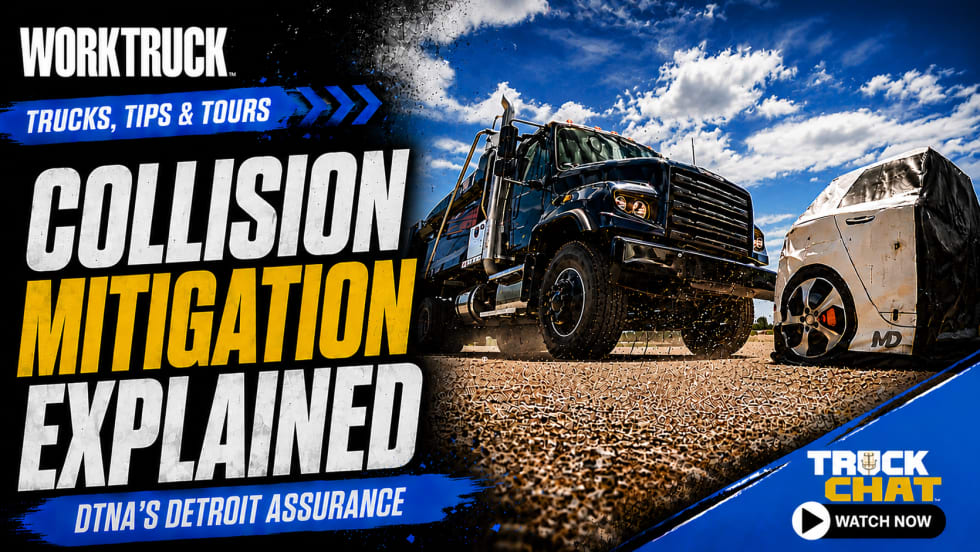
How Detroit Assurance with Active Brake Assist Works
Do you want to see what it is like to experience Detroit Assurance’s Active Brake Assist? In this video, Work Truck will put you in the cab to see how it all works and then hear more details from DTNA’s Mike Young.
Read More →
Get Left of Loss: A 5-Step Workplace Violence Prevention Framework for Fleet Operators
Violence risks do not stop at the driver’s door. Learn five practical steps fleets can take to spot threats early and protect workers before loss occurs.
Read More →
How Better Visibility Cut Speeding Violations by 48%
Fleet leaders don't need more data, they need clearer visibility into what the data is saying. This case study explores how one utility replaced speeding-event counts with a single metric — miles driven in violation — to strengthen safety and significantly reduce speeding violations.
Read More →