




DuraStar Does the Job Green
To combat volatile diesel fuel prices, Navistar offers truck fleets a greener alternative with the International DuraStar medium-duty diesel hybrid electric truck — offering up to 60% more fuel economy than traditional diesel engines.

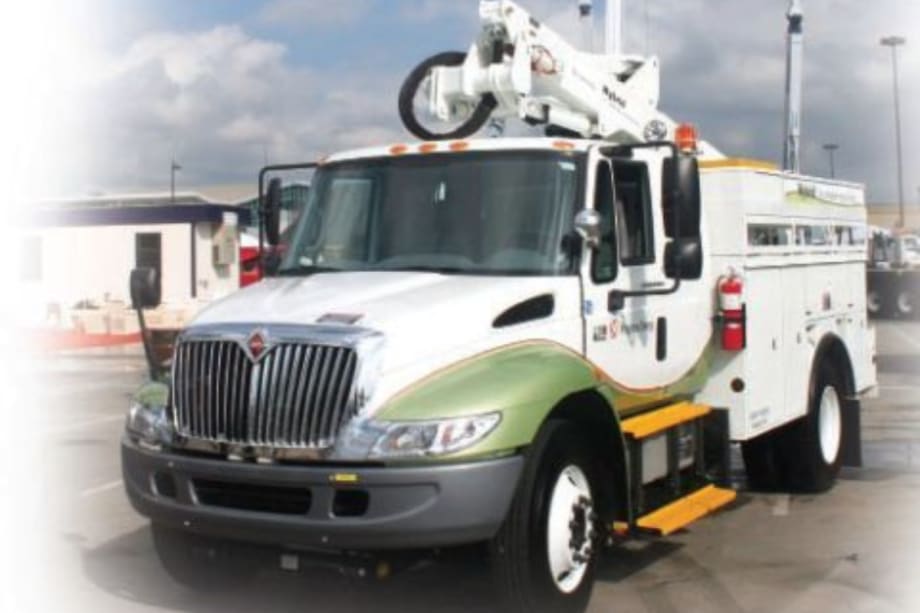
The DuraStar Series works for a number of fleet applications.
Photo: Navistar
Based in Warrenville, Ill., Navistar has paved the “road to a better environment” with its hybrid commercial trucks. Navistar announced last November it would be the first company to enter line production of International DuraStar Hybrid trucks. Debuted at the 2008 National Truck Equipment Association (NTEA) Work Truck Show, the International DuraStar Hybrid is a medium-duty diesel-hybrid electric truck designed to improve fuel efficiency and reduce engine emissions.
Utilities Light the Way
Among the first fleets to drive these forward-thinking trucks was Florida Power & Light (FPL) in Juno, Florida, one of the largest utilities in the United States. FPL was one of 14 utility companies that participated in the Hybrid Truck Users Forum (HTUF) pilot program from 2006-2007.
“We tested International’s hybrid truck for almost a year and it has provided substantial savings in diesel fuel,” said George Survant, director of fleet services for FPL and HTUF utility working group chair. “Plus, the truck’s boom can operate on battery power instead of the engine, which results in less fuel consumed, less emissions released into the air, and reduced noise in the neighborhoods where we work,” Survant said.
FPL currently operates 1,222 International trucks in its fleet, and three 4300 DuraStar 4300 model hybrid-electric trucks (with five on order). According to Survant, the fleet expects to have 600 hybrids in the future.
“What International and the other partners did was make these trucks, to a large degree, very much like those the operators were already used to — which makes the learning curve short, the application easy to adapt, and training of the drivers simply a non-issue,” said Survant.
Hybrid Drive System
The key to the hybrid’s powertrain efficiency is the hybrid drive unit (HDU). While braking, torque passing through the transmission turns the generator in the HDU to recharge the battery. Then, when pulling away, the truck uses the torque created by the electric motor to get the vehicle moving.
Regenerative braking enhances stopping power and reduces brake wear by using the electric motor to slow the vehicle. With a parallel hybrid system, the diesel powertrain remains fully functional in the unlikely event the HDU goes offline.
Benefits for a Variety of Applications
The DuraStar Series works for a number of fleet applications, including:
Beverage.
Pickup.
Emergency
Delivery.
Government.
Recovery.
Landscaping.
Utility.
Leasing.
Waste Collection.
The DuraStar Series also provides a number of benefits.
Low ownership cost. Synchronized service intervals, comprehensive maintenance, breakaway mirrors, and a three-piece hood allow for easy part replacement and repair — cutting down on costs.
Integrated powertrain. DuraStar’s cab, chassis, and MaxxForce engine are all built by International, resulting in smooth integration, less downtime, drive efficiencies, and strong performance.
Performance. The DuraStar hybrid goes from 0-60 mph nine seconds faster than its predecessor. It also offers up to 60% improvement in fuel economy compared to traditional diesel engines. The optional Electronic Power Take-Off (EPTO) keeps the engine off during stationary work, reducing noise pollution.
Uptime. DuraStar’s Diamond Logic connects electrical power in the truck by routing all signals through a few wires. With 40% less wiring, there’s less chance of electrical shorts, resulting in fewer breakdowns. Users can also plug into the system to diagnose problems in minutes rather than hours.
Safety. DuraStar’s fully programmable Diamond Logic electrical system’s special safety interlocks and self-diagnostics provide warnings of potential problems. It prevents inadvertent operating mistakes and electrical shorts, and sends scheduled maintenance alerts.
Convenience. Diamond Logic also comes with a number of programmable features such as a built-in parking brake alarm and wiper speed control.
Customized options include a warning light that indicates an open cargo door, or a drive-time meter showing the hours the truck’s been in use. A vehicle idle shutdown timer eliminates unnecessary idling. To save fuel, the vehicle temporarily shuts down after a customer-specified time. Electrical features continue to operate for headlights, turn signals, taillights, hazard flashers, and dome lights.Comfort. The optional Crew Cab and Extended Cab models comfortably accommodates up to six people. World-class fit and finish, and improved cab insulation ensure a quiet driver environment. Drivers of all sizes can fit comfortably with the improved shoulder, head, and belly room interior. The ergonomically designed interior also includes high-back seats with integrated headrests, easy-to-read gauges, and easy-to-use controls.
To minimize driver fatigue, the DuraStar has improved pedal placement and angles, and offers an easy-to-operate clutch and an optional cab rear air suspension for greater ride and cab component durability. Driver and passenger amenities include a rear-wall coat hook, abundant lighting and storage, a two-beverage pull-out cup holder with ashtray, and a choice of trim levels.Environmentally friendly. The hybrid model reduces hydrocarbon emissions by 65%, carbon monoxide (CO) by 58%, and nitrogen oxide (NOx) by 41%, making it the cleanest truck in the industry, according to the company. The DuraStar Hybrid is approved for biodiesel, a blend of cleaner-burning fuel made from diesel fuel and renewable resources such as vegetable oil.
More Green Fleet

Fleet Forward Conference Introduces One-Day Passes for 2026
New one-day registration gives fleet professionals the flexibility to attend Tuesday, Wednesday, or Thursday, with passes available for $199 through Sept. 18.
Read More →
CALSTART Rebrands as Catalyst Mobility, Will Combine with Forth in 2027
CALSTART has rebranded as Catalyst Mobility and will combine with Forth at the start of 2027. The new organization said it is poised to become one of the world's largest, strongest, and most impactful clean transportation nonprofits.
Read More →
Electric Truck and Charging Programs to Boost Sustainability at NY & NJ Ports
Together, the Port Authority of New York and New Jersey and CALSTART will electrify drayage and terminal operations serving the East Coast’s busiest container port. A pair of incentive programs totaling $45 million has launched to accelerate adoption of zero-emission drayage trucks and terminal tractors.
Read More →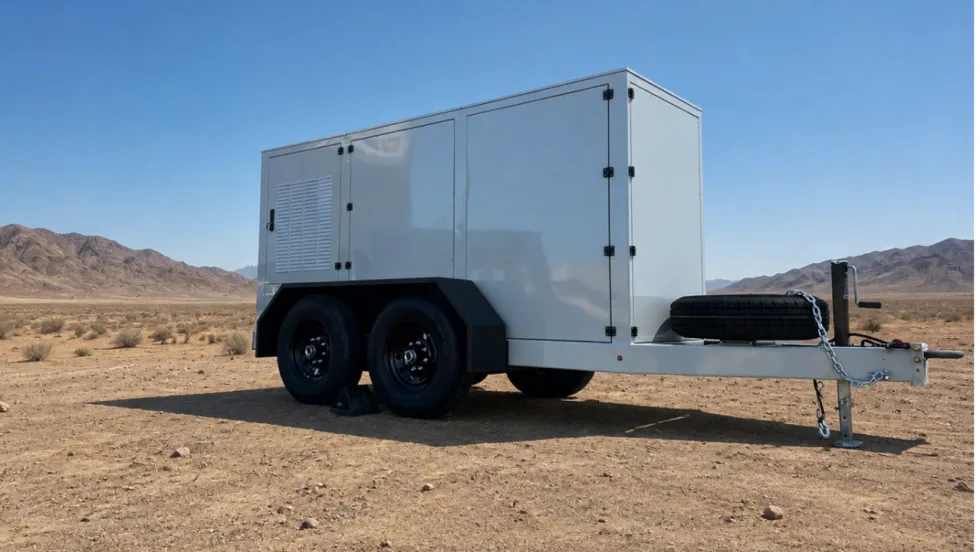
Xos Hub Surpasses One Gigawatt-Hour of Energy Delivered in the Field
A single Xos Hub has surpassed one gigawatt-hour of energy across more than 33,600 charging sessions in the field, demonstrating performance that supports Xos' expansion across new products and markets.
Read More →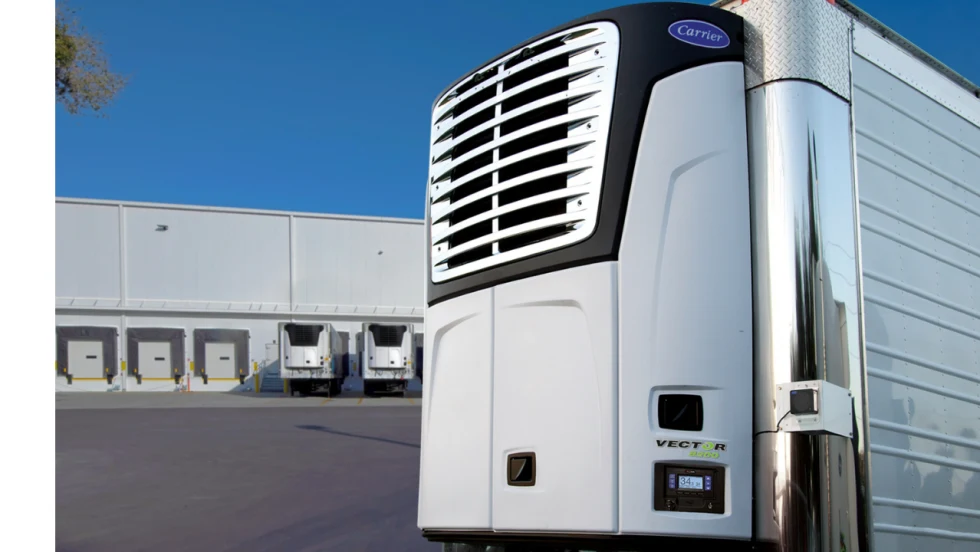
Carrier Transicold Launches All-Electric Vector 8200 TRU for Diesel-Free On-Site Cold Storage
Carrier Transicold’s first engineless multi-temperature TRU helps fresh- and frozen-food fleets add supplemental cold storage capacity during seasonal peaks.
Read More →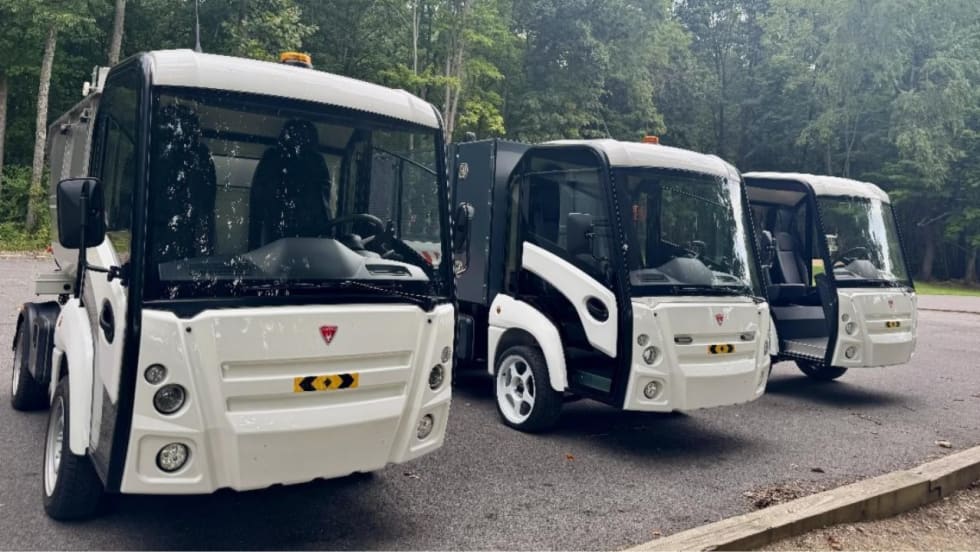
Narro Trucks Introduces Electric Utility Vehicle
Narro Trucks officially launched its operations on Aug. 20 and hosted a ride and drive to showcase its electric truck, which will be produced in Virginia.
Read More →
Samsung SDI Takes Full Control of GM Battery JV as Indiana Plant Pivots to Energy Storage
Samsung SDI is taking full control of its Indiana battery plant with GM, marking a major shift from the EV-focused joint venture Charged Fleet first covered in 2023.
Read More →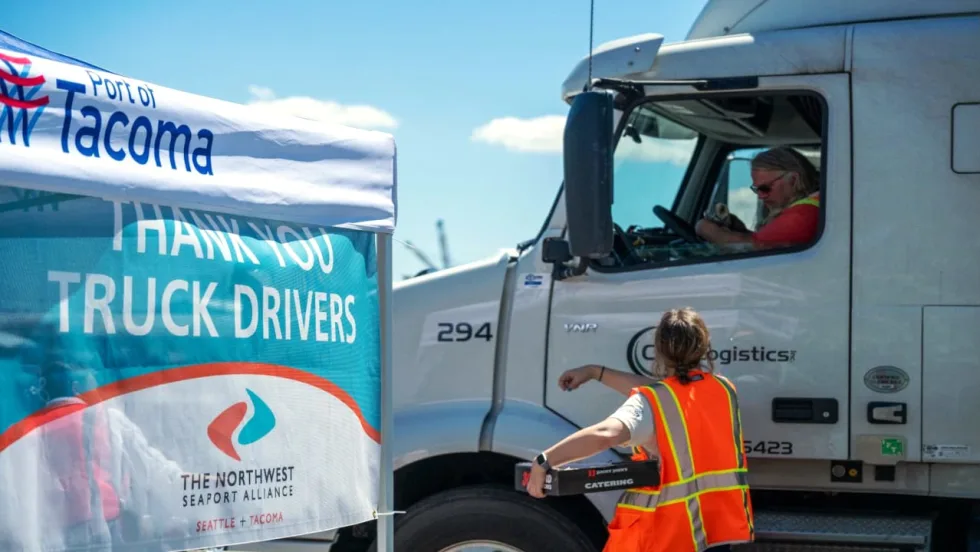
NWSA Taps CALSTART to Administer Zero-Emission Drayage Assistance Program
CALSTART will provide free technical assistance services to drayage fleets serving the Ports of Seattle and Tacoma and looking to transition to cleaner technologies and help decarbonize freight hubs.
Read More →
EV Fleet Reality Check: What Operators Wish They Knew Before Electrifying Their Work Vans
Electric work truck upfits bring new compatibility questions. Learn how parts availability, OEM guidance, power demands, and route planning can affect fleet performance.
Read More →
Peterbilt Expands Sourcewell Partnership with Electric Vehicle Lineup
Peterbilt Motors Company’s cooperative purchasing agreement with Sourcewell and its Canadian partner, Canoe Procurement Group, now includes including Peterbilt's battery-electric vehicle lineup.
Read More →