




DOT Compliance: Have You Reviewed Your Program Lately?
Following a program compliance may be challenging, but it is doable. Key areas of focus are highlighted.
For many fleet managers and safety professionals, ensuring compliance with the FMCSA regulations is critical.
Photo: Work Truck
Here is a scenario that plays out weekly if not daily in the U.S.: A company driver is operating a pickup truck and towing a trailer. The driver is transporting company property to a work site or delivering products to a customer and is pulled over by a law enforcement officer for a broken taillight. The officer approaches the driver, requesting license and registration.
After a quick look at the documents, the officer asks for the driver’s Health Card (Certificate of Medical Exam) and/or log book. The driver has neither, and a citation is issued for the lack of health card, log book, as well as the broken taillight. The truck and trailer combination weighs at least 10,001 lbs., but less than 26,000 lbs. However, this is not the end of the incident; several weeks later, the fleet manager receives a notice that the DOT will be conducting an audit.
This, unfortunately, is how many fleets find out their DOT compliance program needs a review. Federal and state regulations have gone through significant changes in the past five years. A vast majority of states have adopted most, if not all, federal regulations.
The goal of this article is to encourage fleet managers to review their DOT compliance programs. Here are a few key areas to examine. (Neither HAZMAT transportation regulations or state-specific regulations will be included.) "The Federal Motor Carrier Safety Administration (FMCSA) is focused on reducing crashes, injuries, and fatalities involving large trucks and buses..."— from the Federal Motor Carrier Safety Administration (FMCSA) Web site.
For many fleet managers and safety professionals, ensuring compliance with the FMCSA regulations is critical. Following the rules and overseeing a compliance program may seem a daunting challenge, but it can be done. DOT Safety Regulations were enacted to ensure the safety of the driver and the public. The regulations define the responsibilities of the driver, the supervisor, and the carrier/company that employs them.
The regulations are comprised of the following parts:
Part 40: Procedures for transportation workplace drug and alcohol testing programs.
Part 380: Special training.
Part 382: Controlled substances and alcohol use and testing.
Part 383: Commercial driver’s license standards, requirements and penalties.
Part 387: Minimum levels of financial responsibility for motor carriers.
Part 390: General (definitions).
Part 391: Driver qualifications.
Part 392: Driving of commercial motor vehicles.
Part 393: Parts and accessories necessary for safe operation.
Part 394: (Removed and reserved).
Part 395: Hours of service.
Part 396: Inspection, repair, and maintenance.
Part 397: Transporting hazardous materials; driving and parking rules.
Part 399: Employee safety and health standards.
What Vehicles are DOT Regulated?
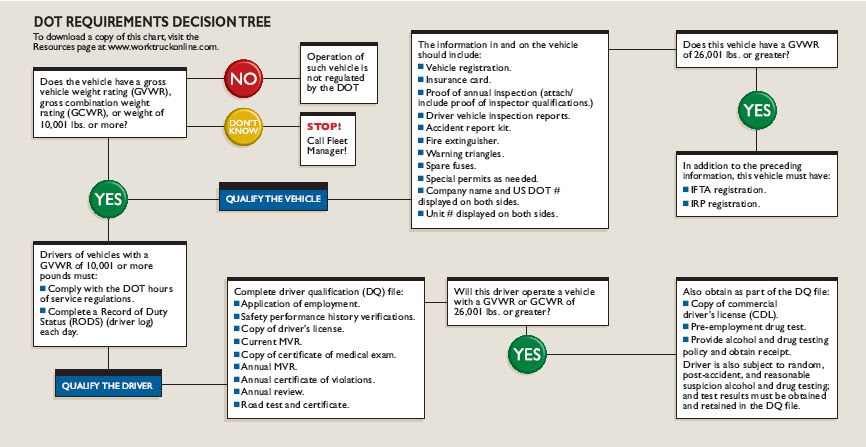
There are two definitions of a commercial motor vehicle. The first is found in FMCSR 390.5 and covers vehicles with gross vehicle weights (GVW) or gross vehicle weight ratings (GVWR) between 10,001 and 26,000 lbs. An example would be a Ford F-350 dual rear-wheel pickup with a GVWR of 11,300 lbs., or a combination unit such as a Ford F-150 pickup (with a GVWR of 7,200 lbs.) towing a trailer with a GVWR of 2,801 lbs. or more.
Once the vehicle or combination vehicle exceeds 10,000 lbs., it is regulated and FMCRS Parts 390-396 and 399 apply.
The second definition covers vehicles with a GVWR exceeding 26,000 lbs. The driver of this type of vehicle is required to have a commercial driver’s license (CDL) issued by the state of residence. An example of this type of vehicle would be Ford F-750 service truck (GWR of 33,000 lbs.), or a combination vehicle such as a Ford F-450 with the high-capacity tow package and a trailer may have gross combination weight ratings (GCWR) as high as 28,000 lbs. For these vehicles, Parts 40, 380, 382, 383, 390-396, and 399 apply.
Check with the vehicle manufacturer to determine specific GVWR or GCWR. Typically, weight ratings are found on the vehicle’s VIN plate. The weights and capacities vary based on model and year.
The rules apply to all vehicles with a GVW or GCWR above 10,000 lbs. engaged in interstate commerce. If vehicles are used to transport property or passengers as part of a business, the regulations apply. The regulations are clear that the company/carrier is responsible for knowing, as well as complying with, the regulations per 390.5(e). As part of that responsibility, there must also be training and maintenance programs in place.
A few important words are "shall" and "must"; these regulatory terms mean the stated regulations must be performed. Also, the carrier is responsible for understanding the rules and how they apply to all its operations. Companies operating intrastate are not off the hook. Many states have adopted most, if not all, interstate regulations. Consult the state DOT Web site. Remember, "Ignorance of the law is no excuse."
Do I Fall Under Intrastate or Interstate?
The simple answer to this question is "I cross state lines to conduct business, so I am engaged in 'interstate commerce.'" The not-so-simple answer is when your operations are within a single state, but include activities that start or end outside of that state. This is a great question to present to your legal department for clarification.
Here is an example of an intrastate activity that is actually interstate in nature: A contract mail driver (operating a vehicle with a GVWR of 10,001 lbs. or more) picks up a load of mail in Cincinnati and moves the load to Columbus, Ohio. Though the driver did not leave the state of Ohio, some of the mail originated out of state. As a result, the driver and carrier are engaged in interstate commerce. Keep in mind one must look at all activity as a whole. You may find that your operation engages in both intra- and interstate commerce. If this is the case, your organization will need to decide if it can segregate the activities of the drivers/ vehicles, or if the company would be better served by standardizing to the interstate regulations.
Importance of Driver Qualification Files
FMCSR Part 391 Driver Qualification (DQ) files are a time-consuming parts of the compliance challenge. However, this is a very important part of your DOT program. These documents are required to demonstrate that each driver meets the minimum DOT standards. Employment applications must contain the applicant’s name, date of birth, and Social Security number (FMCSR 391.21(2)). Several documents require periodic review, including the annual motor vehicle record (MVR) check and the annual certificate of violations. Each driver must advise you annually of any moving violations in any vehicle that he/she operated, and then you must run an MVR to confirm. Further, you must verify that they have not been disqualified from driving a commercial motor vehicle (CMV). (See FMCSR391.15).
The medical card or certificate of medical exam is reviewed on a 24-month basis, unless there is a condition that requires a more frequent review, such as a driver being treated for hypertension. (FMCSR 391.41 sub Part E).
The regulations do not require that the DQ file be maintained separately from the driver’s personnel file, but is considered the best practice. In the event of an audit, a separate DQ file limits the information to what is required by the DOT.
This file must contain the following items:
Application for employment (driver must be 21 years old).
Safety performance history verifications.
Copy of driver’s license.
Original MVR.
Current copy of certificate of medical exam-health card.
Annual MVR.
Annual certificate of violations.
Annual review.
Road test certificate.
If the driver must operate vehicles greater than 26,000 lbs., the additional items must be included:Copy of commercial driver’s license.
Pre-employment drug test.
Signed receipt for the alcohol and drug testing policy.
This driver is also subject to random, post accident, and reasonable suspicion drug testing. Test results must be retained with the DQ file.
Commercial Driver’s License Requirements
FMCSR Part 383: Vehicles requiring CDLs have a GVWR above 26,000 lbs. These are single vehicles or combination units, vehicles requiring placarding for hazardous materials, and vehicles transporting more than 15 passengers including the driver. The states have simplified the process for the carrier; each state has a licensing process for CDL trucks that meet the federal requirements. Contact your state licensing divisions for the particulars.
There are a few items you need to keep up-to-date with your CDL drivers. If a driver has a moving violation for any vehicle operated, he or she must report any convictions they have incurred. If the violation or conviction is out of state, the driver must notify the company/carrier, as well as the state, in writing within 30 days. A driver must also report license suspension, revocation, cancellation, or other disqualification of their driver’s license to the company/carrier by the end of the next business day. Also, the carrier shall not allow the driver to operate a CMV without a valid license. (FMCSR 383.31 &383.33 Driver Notification).
Understanding Disqualifying Offenses
FMCSR Part 383.51:A driver holding a CDL can be disqualified from driving a CMV if convicted of certain violations while driving any type of vehicle. This includes violations that occur on a driver’s own time while operating a personal vehicle.
The driver is disqualified for one year if convicted of one of the following major offenses while driving any type of vehicle:
Driving under the influence of alcohol or a controlled substance.
Refusing to take an alcohol test.
Leaving the scene of an accident.
Using a vehicle to commit a felony.
A driver is disqualified for one year if convicted of any one of the following major offenses while driving a CMV:Having an alcohol concentration of 0.04 or greater.
Driving with a revoked, suspended, or cancelled CDL.
Driving when disqualified from operating a CMV.
Causing a fatality through the negligent operation of a CMV.
If the driver is hauling hazardous materials, the disqualification period is three years. The disqualification period for a second conviction is life. A driver convicted of using any vehicle to commit a felony involving the manufacturing, distributing, or dispensing of a controlled substance is automatically disqualified for life.
A driver can be disqualified if convicted of any combination of two or more serious traffic violations. This includes excessive speeding, reckless driving, improper or erratic lane changes, following the vehicle ahead too closely, violating a state or local motor vehicle traffic control law arising in connection with a fatal accident, or driving a CMV without obtaining a CDL, possessing a CDL, or the proper class of CDL and/or endorsements. If a driver is convicted of two serious offenses in three years, he or she is disqualified for 60 days. Three convictions in three years is a 120-day disqualification.
Procedures for Workplace Drug and Alcohol Testing Programs
FMCSR Part 40: This part outlines the how-to for labs, medical review officers, breath alcohol techs, and substance abuse professionals. As the carrier, you are responsible for ensuring these personnel understand the DOT requirements. It is also important to understand the tests must be separate from any non-DOT testing. Carriers must be sure not to misrepresent company tests as DOT tests. These procedures are established to protect the driver from a false positive.
Controlled Substances and Alcohol Use and Testing
FMCSR Part 382 (382.101): The purpose of this part is to establish programs designed to help prevent accidents and injuries resulting from the misuse of alcohol or use of controlled substances by CMV drivers.
Part 382 defines prohibitions, the results handling, test types, and consequences for drivers engaging in these activities. It is important the carrier has in place a written policy that covers this section; the carrier must provide training and obtain a signed receipt for the policy from each driver. The drug and alcohol policy covers CDL drivers who are required to operate a CDL vehicle.
DOT 382.301-382.311 requires the following six tests: Pre-employment, post-accident, random, reasonable suspicion, return to duty, and follow-up testing. Of the six, the random test is probably the most confusing. Currently, random testing shall be administered by the employer at a minimum rate of 10 percent of the average number of driving positions for alcohol, and 50 percent of the average number of driving positions for controlled substances. Remember these percentages pertain to the "driver pool." You cannot count non-DOT tests towards meeting this requirement.
The selection process must be performed by a scientifically valid method, such as a random number generator, and must be spread through out the year. Selections must be unannounced, and the driver must go to the test site upon notification. Keep in mind that a refusal to test is treated the same as a positive. Refer to FMCSR 382 for more information.
Hours of Service Violations
FMCSR Part 395: A carrier in Milwaukee was fined more than $90,000 for hours of service violations.
Hours of service (HOS) regulations were created to ensure that fatigued or tired drivers are not permitted to operate commercial motor vehicles. A driver must prepare a log for each day, including all on-duty as well as off-duty time. This is a record of duty status, not just a record of driving activity.
The company/carrier is responsible for ensuring the logs are audited and the drivers are in compliance with these rules. The regulations limit a driver to no more than a 14-hour work day. Eleven of these hours can be spent behind the wheel, followed by 10 hours off-duty time. Further, there is a 60-hour limit for a seven-day period. For operations utilizing vehicles every day, there is a 70- hour 8-day rule. The company/carrier must ensure driver logs are audited. These records must be maintained for a period of six months and be available to the DOT in 48 hours upon request.
The record of duty status (or log) must be filled out in duplicate for each 24-hour period. The information must be entered by the driver and be legible. The information on the log is as follows:
A vertical or horizontal graph or grid with space for remarks
24-hour period start time
Date
Total miles driven for the day
Vehicle and/or trailer number
Carrier/company name
Carrier/company’s location of record
Driver signature block
Assistant driver
Total hours
Any shipping documents
Drivers must have current log of seven previous days
A variety of exemptions are available to graph the logs. However, the carrier must decide how it can best manage the need to have documents that demonstrate it is in compliance with the daily and weekly HOS regulations.
The HOS regulations are currently under court review.
Importance of Inspection, Repair & Maintenance
Each carrier is required to care for its vehicles and equipment and keep them roadworthy. A vehicle must be inspected daily before being operated, and a written post-trip inspection must be recorded — the daily vehicle’s inspection report (DVIR). This report must cover the following parts and accessories: service brakes (including trailer brake connections), parking brake, steering mechanism, lighting devices and reflectors, tires, horn, windshield wipers, rearview mirrors, coupling devices, and emergency devices. Daily inspection reports must be maintained for a period of 90 days.
Each year, the carrier must conduct an inspection that covers the parts and accessories listed in Appendix "G."
This inspection must be conducted by a qualified inspector (see 396.19). The records must be maintained for a period of 14 months and six months after the vehicle leaves your control.
Noncompliance can be very costly from a fine standpoint. The DOT can put a fleet out of service. Your company also should consider third-party liability. With potential judgments in the millions, the cost of a DOT compliance program can be relatively small.
Additional details on DOT compliance can be found at the U.S DOT and federal DOT Web sites.
More Safety
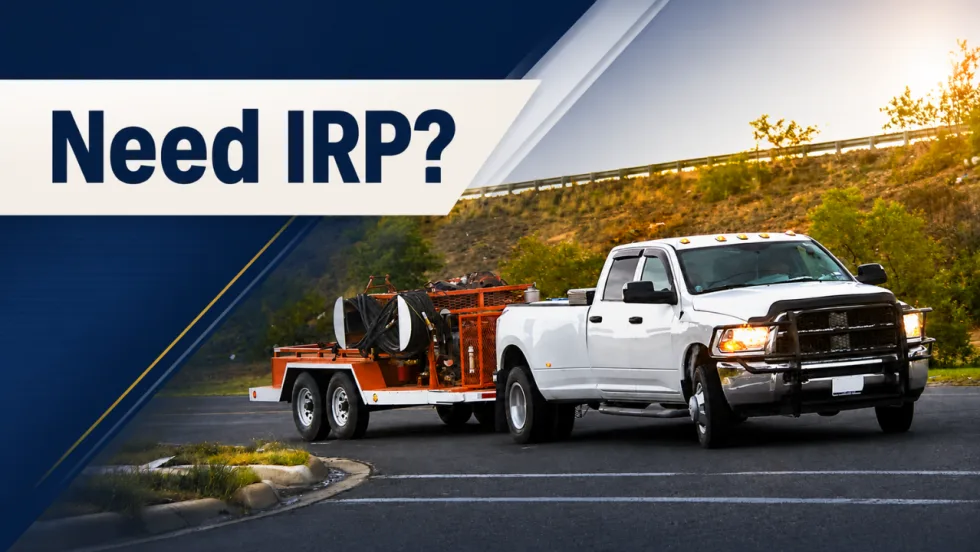
When Work Trucks Under 26,001 Pounds Need IRP Registration
Think trucks under 26,001 pounds are automatically in the clear when it comes to IRP? Not always. Learn where lighter vehicles can still run into trip permit, apportioned registration, and IFTA compliance requirements when crossing state or provincial lines.
Read More →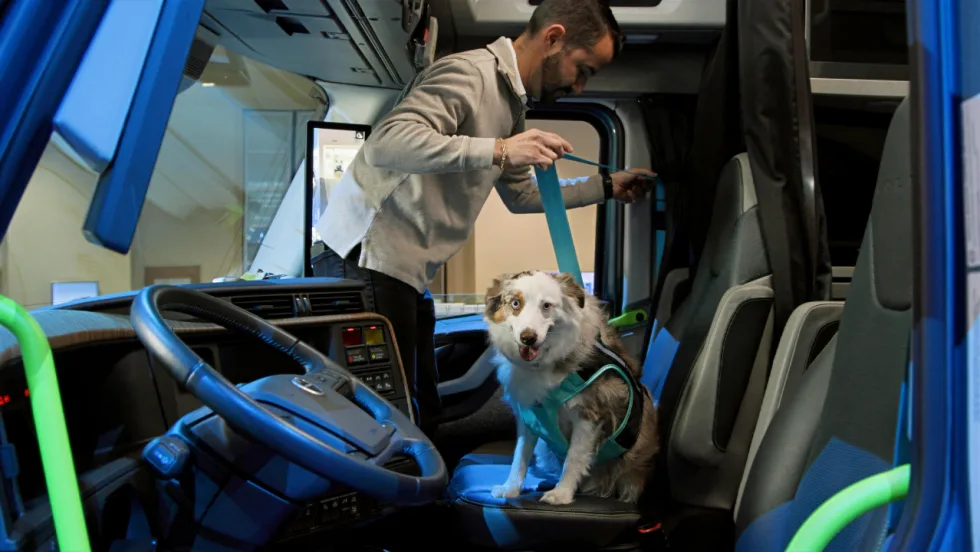
Volvo Trucks Releases New Safety Recommendations for Traveling with Pets
One of the most important recommendations for professional drivers traveling with pets is to ensure pets are properly restrained while the truck is moving. Other tips are available in the new guide from Volvo Trucks North America and Center for Pet Safety.
Read More →
API Issues Refueling Safety Guidelines
The American Petroleum Institute offers a list of safe vehicle refueling guidelines, including ways to avoid potential problems with static electricity discharges in fall, winter, and early spring.
Read More →
Winter Fleet Prep: Expert Tips to Keep Vehicles Running Smoothly
Cold weather can expose weak batteries, tires, fuel systems, and maintenance gaps fast. Use this winter fleet checklist to prepare trucks and drivers before temperatures drop.
Read More →
When a Work Truck Breaks Down, the Job Can Stop, Too
A work truck breakdown can stop more than the vehicle. Discover how payloads, jobsites, and specialty equipment change the roadside response.
Read More →
What Stronger Long-Term Fleet Service Partnerships Actually Require
Fleet service partnerships rarely fall apart all at once. Learn the three warning signs that trust is eroding and what fleets and providers can do before downtime, frustration, and lost revenue follow.
Read More →
Applause & TRUCE Software Partner to Improve Driver Safety Through AI-Powered Telematics & Employee Performance Management
Applause has integrated TRUCE driving metrics directly into its employee-first performance and safety platform that transforms mobile devices into AI-powered telematics.
Read More →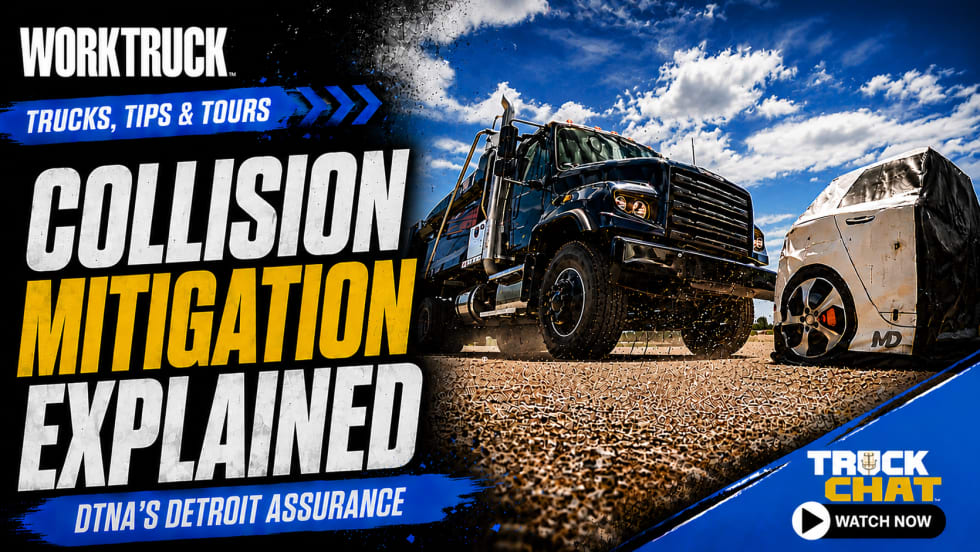
How Detroit Assurance with Active Brake Assist Works
Do you want to see what it is like to experience Detroit Assurance’s Active Brake Assist? In this video, Work Truck will put you in the cab to see how it all works and then hear more details from DTNA’s Mike Young.
Read More →
Get Left of Loss: A 5-Step Workplace Violence Prevention Framework for Fleet Operators
Violence risks do not stop at the driver’s door. Learn five practical steps fleets can take to spot threats early and protect workers before loss occurs.
Read More →
How Better Visibility Cut Speeding Violations by 48%
Fleet leaders don't need more data, they need clearer visibility into what the data is saying. This case study explores how one utility replaced speeding-event counts with a single metric — miles driven in violation — to strengthen safety and significantly reduce speeding violations.
Read More →