




Digital Transmission to Eliminate Paper Trail for CDL Med Cards
Starting June 23, 2025, FMCSA's digital transmission will eliminate the paper trail for CDL med cards, simplifying fleet recordkeeping and compliance.
May 23, 2025

FMCSA will transmit data originating from the NRCME to SDLAs. Specifically, FMCSA will send CME information, examination results, expiration date, restrictions, and information on medical variances. The medical status should appear on the MVR within a few days.
Photo: Work Truck
3 min to read
Effective June 23, 2025, state driver’s licensing agencies (SDLAs) will no longer accept medical certificates from commercial drivers. The Federal Motor Carrier Safety Administration (FMCSA) and SDLAs are streamlining the medical certification process for drivers who hold commercial driver’s licenses (CDLs) and permits (CLPs).
The Process From Start to Finish
Certified medical examiners (CMEs) will input the driver’s medical information into the National Registry of Certified Medical Examiners (NRCME), as they have done since June 2018.
The new process takes it one step further by eliminating the need for:
Drivers to submit proof of certification to the SDLA, and
States to manually enter specific data elements onto a driver’s motor vehicle record (MVR).
Instead, FMCSA will transmit data originating from the NRCME to SDLAs. Specifically, FMCSA will send CME information, examination results, expiration date, restrictions, and information on medical variances. The medical status should appear on the MVR within a few days.
Motor carriers then request a copy of the MVR to retain in the driver’s qualification (DQ) file, as they have done for several years.
Impacts to Fleet Recordkeeping
The automation will result in two noteworthy changes to recordkeeping.
CMEs are no longer required to provide CDL and CLP holders with a copy of their medical examiner’s certificate (MEC). If drivers and their carriers want a copy as temporary proof of medical certification, they must request a copy from the CME. In the past, drivers and carriers used a copy of the MEC as proof of certification until the information appeared on the MVR.
For drivers who renew their medical certification close to expiration, it’s advisable that they ask for an MEC to show their carrier and enforcement. It will also ease the carrier’s mind that the driver passed!
The other significant change is that motor carriers no longer need to verify the CME’s status on the NRCME and generate a note. The data on the MVR originates from the site, so there’s no need to check the CME.
Why are Procedures Changing?
FMCSA published a rulemaking in 2015 that connects the SDLAs directly to NRCME. This transmission simplifies the process and accounts for every medical examination, including those where the CME medically disqualifies the driver.
The original implementation date was June 22, 2018; however, it was pushed back to 2021 and then 2025 to accommodate technology development for transmitting and receiving information from the NRCME to the SDLAs. The current implementation date requires all SDLAs to be connected to NRCME no later than June 23, 2025.
Does This Rule Impact Non-CDL Fleet Drivers?
No, SDLAs don’t track the medical status of regular driver’s licenses or even non-CDL commercial motor vehicle (CMV) classes (e.g., chauffeur). As a result, the current process will not change for those who hold these licenses. However, if a driver has a CDL or CLP that they wish to maintain independently of their current position, the information will be transmitted by FMCSA to the SDLA.
A non-CDL driver will continue to receive a copy of the MEC, and the motor carrier must retain a copy in the driver’s qualification file. The motor carrier must verify that the CME is on the NRCME and create a note to that effect.
Have Medical Certification Requirements Changed?
Drivers who operate CMVs are still required to be medically certified through an examination by a CME. The medical examination and its standards remain the same.
Only the sharing of data has changed. The only means of communicating CDL/CLP holders’ examination results to the SDLA is through FMCSA’s data transmission.
Subscribe to Our Newsletter
More Safety
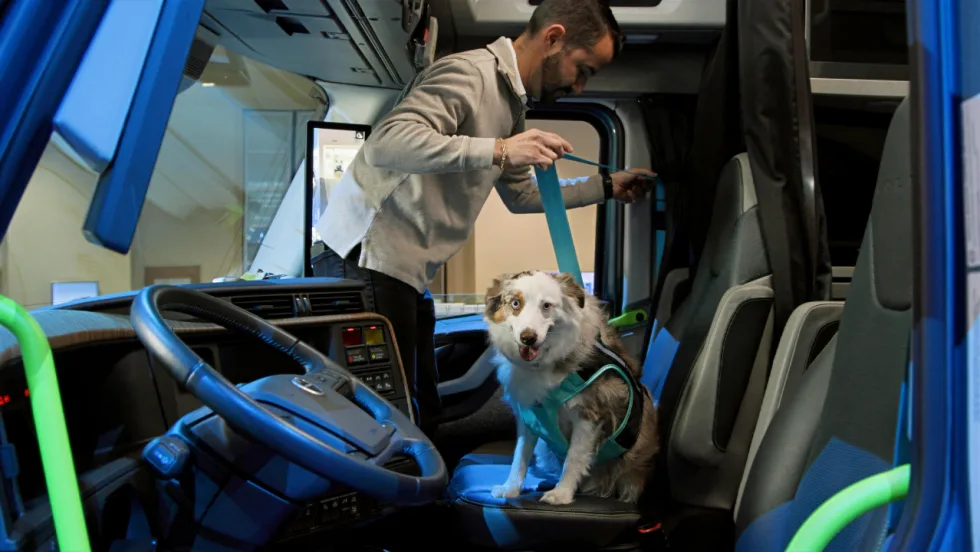
Volvo Trucks Releases New Safety Recommendations for Traveling with Pets
One of the most important recommendations for professional drivers traveling with pets is to ensure pets are properly restrained while the truck is moving. Other tips are available in the new guide from Volvo Trucks North America and Center for Pet Safety.
Read More →
API Issues Refueling Safety Guidelines
The American Petroleum Institute offers a list of safe vehicle refueling guidelines, including ways to avoid potential problems with static electricity discharges in fall, winter, and early spring.
Read More →
Winter Fleet Prep: Expert Tips to Keep Vehicles Running Smoothly
Cold weather can expose weak batteries, tires, fuel systems, and maintenance gaps fast. Use this winter fleet checklist to prepare trucks and drivers before temperatures drop.
Read More →
When a Work Truck Breaks Down, the Job Can Stop, Too
A work truck breakdown can stop more than the vehicle. Discover how payloads, jobsites, and specialty equipment change the roadside response.
Read More →
What Stronger Long-Term Fleet Service Partnerships Actually Require
Fleet service partnerships rarely fall apart all at once. Learn the three warning signs that trust is eroding and what fleets and providers can do before downtime, frustration, and lost revenue follow.
Read More →
Applause & TRUCE Software Partner to Improve Driver Safety Through AI-Powered Telematics & Employee Performance Management
Applause has integrated TRUCE driving metrics directly into its employee-first performance and safety platform that transforms mobile devices into AI-powered telematics.
Read More →
How Detroit Assurance with Active Brake Assist Works
Do you want to see what it is like to experience Detroit Assurance’s Active Brake Assist? In this video, Work Truck will put you in the cab to see how it all works and then hear more details from DTNA’s Mike Young.
Read More →
Get Left of Loss: A 5-Step Workplace Violence Prevention Framework for Fleet Operators
Violence risks do not stop at the driver’s door. Learn five practical steps fleets can take to spot threats early and protect workers before loss occurs.
Read More →
Sponsored•July 17, 2026
How Better Visibility Cut Speeding Violations by 48%
Fleet leaders don't need more data, they need clearer visibility into what the data is saying. This case study explores how one utility replaced speeding-event counts with a single metric — miles driven in violation — to strengthen safety and significantly reduce speeding violations.
Read More →
13 Safe Driving Tips for Commercial Vehicle Drivers
Make sure you are spending time on the road safely with these important tips.
Read More →