




Related: How to Make the Transition to ELD in 6 Important Steps
An ELD Primer for Fleet Managers: Just the Facts
The upcoming ELD mandate is the biggest technological change fleet managers have faced in nearly 30 years. A summary of important facts and a primer for fleet managers is shared.
by Pete Allen and John Seidl
November 23, 2016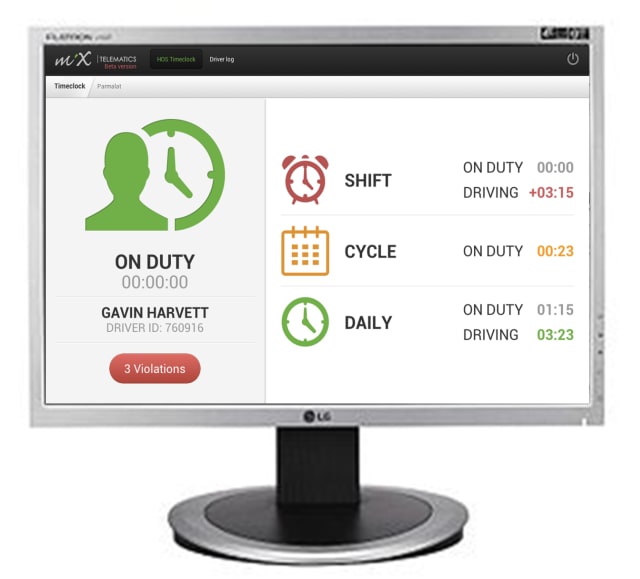
The ultimate goal of the ELD Mandate is to improve safety, not only for drivers but for those with whom they share the road. (Photo: MiX Telematics)
8 min to read
The upcoming ELD mandate is the biggest technological change fleet managers have faced in nearly 30 years, according to MiX Telematics and Integrated Risk Solutions. There is a lot of technical information out there (anyone read the FMCSA’s 516-page Final Rule doc?), but a shortage of straight-facts summaries.
Who is subject to the ELD mandate? In short:
Commercial vehicles (requiring CDLs) with a gross vehicle weight or actual weight over 26,000 pounds. Examples include tractor-trailers of course but also buses and commercial pickups with heavy trailers.
Commercial motor vehicles (non-CDL) with a gross vehicle weight or actual weight over 10,000 pounds. Examples include smaller buses and shuttle vans, and even smaller pickups with trailers that bring the entire gross vehicle weight over the 10,000-pound limit.
There are some key exceptions, including:
100 and 150 Air-Mile Radius Drivers
Driveaway/towaway operations: For example, truck saddle mounts.
Vehicles whose model year is pre-2000: Note that it’s model-year, not manufacture date.
A Little History
In 1988, the FMCSA implemented the AOBRD Final Rule, mandating automatic, on-board recording devices (otherwise known as on-board computers). This was effectively the first time technology was required in the HOS rules. In the 28 years since then, vendors have added a lot of functionality to basic AOBRD devices.
In 2007, the FMCSA took a stab at moving to the next-generation device called an EOBR (electronic on-board recorder). But the FMCSA saw a lot of pushback on the EOBR rule, including a successful lawsuit related to driver harassment. By 2012, the FMCSA had backed off the EOBR rule completely and began implementing its ELD (electronic logging device) Mandate.
Dates You Need to Know
The deadline for the ELD Mandate compliance is December 2017; however, if your fleet is currently using an AOBRD, those devices are grandfathered in, which buys you an additional two years to comply. As a result, telematics vendors are seeing a mad rush of fleets looking to implement systems prior to December 2017. Many of these systems can be upgraded to a compliant ELD system by December 2019, ensuring that fleets won’t have to rip and replace systems that are only two to three years old. (Upgrades will typically be via software update – check with your vendor to make sure they can do it.)
How ELDs work
There are three components to an ELD:
Electronic Mobile Communication/Tracking Technology (EMC/T): This element tracks and records vehicle location, automatically
Engine Control Module (ECM): This element tracks and records whether the truck is moving, automatically – factors like speed and braking.
Driver/Carrier entries: Some of these are still manual, and in theory could be falsified just like a paper log. That’s why the EMC/T and ECM are important – their data is more difficult to falsify or edit, so they serve as a check and balance system. For example, if a driver records his/her status as off duty, but then the truck moves another 400 miles before stopping (yes, we’ve seen this happen), something is wrong.
How ELDs Help Fleet Managers
ELDs can help fleet managers in a number of ways, including:
Easier driver planning: HOS rules can make driver planning challenging. And it can be an absolute minefield if you suspect drivers are fudging their paper logs. With ELDs, all HOS details are in one central place, making driver planning much easier. One caveat: certain industries, such as Oil & Gas, have their own HOS exemptions that are different from the generic FMCSA ones. Make sure your ELD provider can accommodate any special rules that apply to your industry.
Better CSA scores: Many advantages exist for early installers of ELDs, and a positive impact on CSA scores is at the top of the list. Remember, all companies in your CSA peer group for HOS are eventually moving toward full ELD implementation. Because it takes 24 months for paper logbook violations to fall from the CSA scoring system, early adopters get a head start on that 24-month period and higher CSA scores, relative to peers without ELDs.
Speeding and sudden deceleration detection: Speeding is a major cause of crashes, and sudden decels are an indicator of following too closely, which also causes many crashes. By tracking speed and sudden decels, ELDs can help fleet managers identify poor driving behavior so they can intervene with training and education.
Reduce falsification by eliminating paper logs: Paper logs were easy to fudge. ELDs are not. Even though AOBRDs and ELDs can provide very accurate driving time information, the driver still must enter all other categories of duty status and required remarks. Fleet managers still must carefully check the records. Among the many things to monitor for: vehicle movement with no driver logged onto the device. ELDs record and highlight any edits made by drivers, and the original data is retained, making it easy for fleet managers to identify and review changes.
What Else is There?
There are a number of other factors that fleet managers should be aware of, including:
Vendors self-certify their compliance: This is a big one. The FMCSA is not screening ELD providers – instead, it is providing vendors with a list of requirements, and vendors self-certify that they meet the criteria. So if you are using the list at the FMCSA website to screen vendors, be aware that you must do your own due diligence to make sure a provider meets your fleet’s unique needs.
Location monitoring is not exact: To address issues raised regarding driver harassment, the FMCSA has relaxed the requirements around location monitoring. ELDs are required to record location at least once every 60 minutes and at every duty status change, at an accuracy of at least one mile, but only while drivers are on duty. When drivers are off duty, the ELD can only record location at a 10-mile radius; however, location tracking for each change of duty status is still required for the nearest city, town or village.
Supporting docs are still required: The FMCSA requires fleets to maintain ‘Supporting Documents’ to verify the accuracy of ELDs, specifically for all non-driving periods. What does that mean? Supporting docs must include driver identification, date, vehicle location and time. Examples include bills of lading, itineraries, payroll records, dispatch records and expense receipts. Drivers must retain up to eight supporting docs per 24-hour shift.
Data transfer mediums to agents is still an unknown: How does roadside inspector check the logs? In theory, there are two options: transferring data wirelessly to an agent from the ELD or transfer it using a hardware device such as a flash drive or via Bluetooth. The issue here is that the FMCSA has not yet revealed the specs for this data sharing. Anyone outside the FMCSA who purports to have these details is merely speculating. Suffice it to say the FMCSA is looking to find a way that fleets can share data with agents without the agents having to learn the ins and outs of every major ELD vendor’s platform.
A new Driver Coercion Rule is in effect: This is another byproduct of the 2007 ELD Rule lawsuit: while you would think this is obvious, the new rule says that motor carriers, shippers, receivers and transportation intermediaries aren’t allowed to coerce drivers to break FMCSA rules on HOS or anything else. This rule impacts the ELD technical specs, requiring ELD solutions to prompt the driver at login for three key elements: Unassigned Trips from the current vehicle, Edited driver Logs, and Unconfirmed Logs. Since drivers are responsible for their own HOS logs, they must rectify any occurrences of these three prompts before driving.
If an ELD malfunctions, you’ll need to take action immediately: In the event of an ELD malfunction, the ELD Mandate requires drivers to immediately re-create paper logs, if they cannot access or print them from the device. Fleets have eight days to get an ELD unit repaired and back into service. This is something to explore with your vendor, as few can turn around a repair in that length of time. (The FMCSA does grant extensions when needed.)
Drivers can edit ELD data, but all edits are recorded: Drivers can edit data on an ELD, but the original data is retained and all edits are noted. As noted above, this is a check and balance procedure to prevent against drivers who may try to circumvent HOS or other rules.
Drivers are responsible for their Record of Duty Status (RODS): The ELD mandate technical requirements state that drivers are responsible for their own RODS. There are three key technical requirements fleet managers, drivers and ELD providers need to be aware of or support relative to this rule:
The driver is responsible for accepting or approving any edits to their RODS either by themselves or by an administrator of their system.
All unidentified mileage captured by the ELD solution for a vehicle must be accounted for. The ELD system must prompt the driver at login if there is any unidentified mileage collected for the vehicle they are operating. The driver must be allowed to accept or reject the unidentified mileage as theirs to support accurate information.
The driver must verify, accept and confirm their RODS on the ELD system every 24 hours and after edits are made.
The Bottom Line
The ultimate goal of the ELD Mandate is to improve safety, not only for drivers but for those with whom they share the road. In announcing the Final Rule, the FMCSA stated that it’s expected to drive “an annual net benefit of more than $1 billion – largely by reducing the amount of required industry paperwork.” The commission also predicts it will save 26 lives annually and prevent 562 injuries resulting from crashes involving large commercial motor vehicles.
While the regulatory burden for fleets may seem high, no one can argue that the goal of improving safety is a worthy one.
About the Authors
This article was written by Pete Allen, Executive Vice President, MiX Telematics and John Seidl, Transportation Consultant, Integrated Risk Solutions.
Subscribe to Our Newsletter
More Safety & Compliance
When Work Trucks Under 26,001 Pounds Need IRP Registration
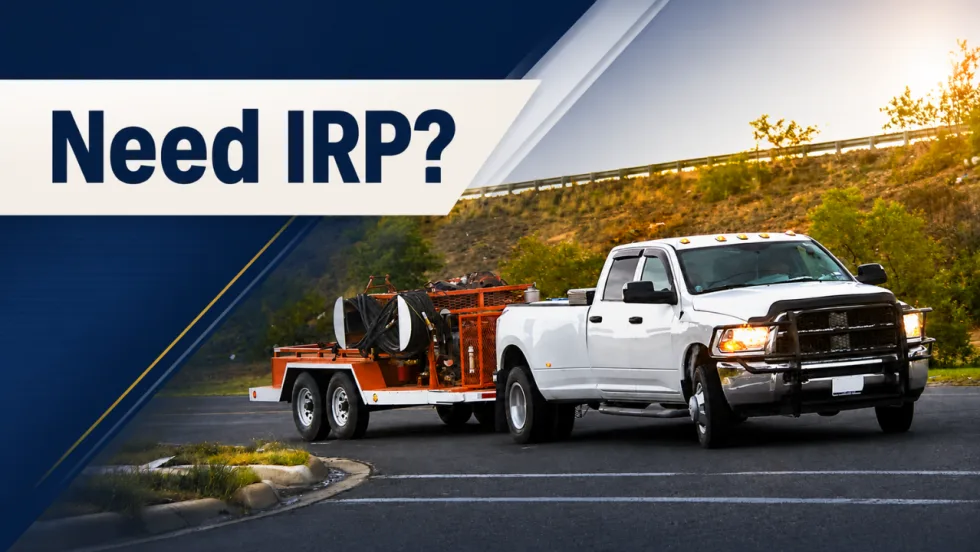
Think trucks under 26,001 pounds are automatically in the clear when it comes to IRP? Not always. Learn where lighter vehicles can still run into trip permit, apportioned registration, and IFTA compliance requirements when crossing state or provincial lines.
Read More →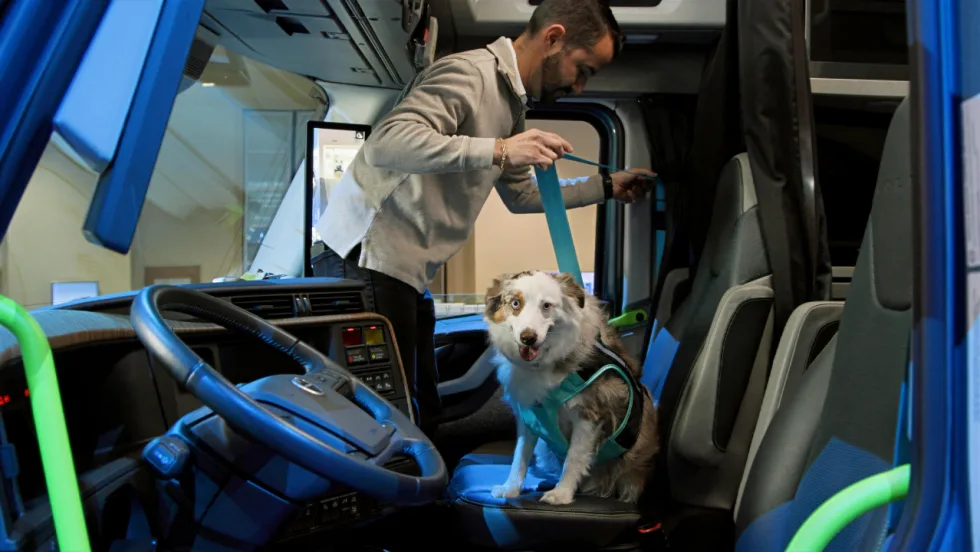
Volvo Trucks Releases New Safety Recommendations for Traveling with Pets
One of the most important recommendations for professional drivers traveling with pets is to ensure pets are properly restrained while the truck is moving. Other tips are available in the new guide from Volvo Trucks North America and Center for Pet Safety.
Read More →
API Issues Refueling Safety Guidelines
The American Petroleum Institute offers a list of safe vehicle refueling guidelines, including ways to avoid potential problems with static electricity discharges in fall, winter, and early spring.
Read More →


Winter Fleet Prep: Expert Tips to Keep Vehicles Running Smoothly
Cold weather can expose weak batteries, tires, fuel systems, and maintenance gaps fast. Use this winter fleet checklist to prepare trucks and drivers before temperatures drop.
Read More →
When a Work Truck Breaks Down, the Job Can Stop, Too
A work truck breakdown can stop more than the vehicle. Discover how payloads, jobsites, and specialty equipment change the roadside response.
Read More →
What Stronger Long-Term Fleet Service Partnerships Actually Require
Fleet service partnerships rarely fall apart all at once. Learn the three warning signs that trust is eroding and what fleets and providers can do before downtime, frustration, and lost revenue follow.
Read More →
Applause & TRUCE Software Partner to Improve Driver Safety Through AI-Powered Telematics & Employee Performance Management
Applause has integrated TRUCE driving metrics directly into its employee-first performance and safety platform that transforms mobile devices into AI-powered telematics.
Read More →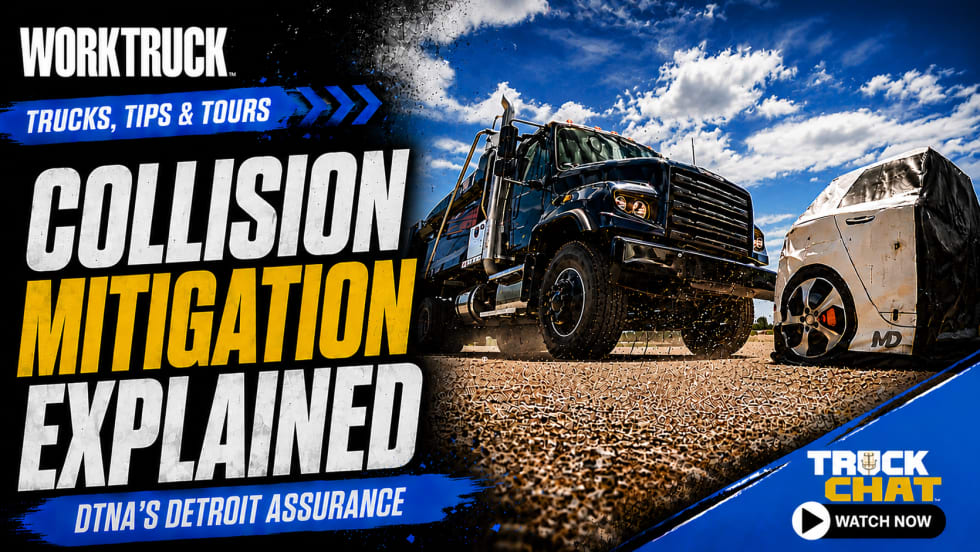
How Detroit Assurance with Active Brake Assist Works
Do you want to see what it is like to experience Detroit Assurance’s Active Brake Assist? In this video, Work Truck will put you in the cab to see how it all works and then hear more details from DTNA’s Mike Young.
Read More →
Get Left of Loss: A 5-Step Workplace Violence Prevention Framework for Fleet Operators
Violence risks do not stop at the driver’s door. Learn five practical steps fleets can take to spot threats early and protect workers before loss occurs.
Read More →
Sponsored•July 17, 2026
How Better Visibility Cut Speeding Violations by 48%
Fleet leaders don't need more data, they need clearer visibility into what the data is saying. This case study explores how one utility replaced speeding-event counts with a single metric — miles driven in violation — to strengthen safety and significantly reduce speeding violations.
Read More →