




6 Steps to Selecting the Right Medium-Duty Trucks for Your Fleet
There are several options to consider when choosing the right truck. Eliminating unwanted costs, targeting specific needs, and calculating mpg are all ways you can help determine the right truck for your fleet needs.

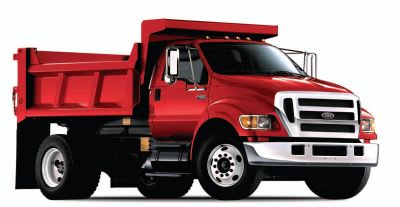
While the process of evaluating and defining specs for medium trucks is more complex than for light-duty vehicles, you don’t have to be intimidated by the task.
Photo: Ford Motor Co.
You’ve been assigned by senior management to evaluate your company’s medium-duty truck fleet and offer a detailed proposal for cutting costs. If your strategy succeeds, you’ll create opportunities for career advancement and position yourself as a valuable expert in your field.
However, defining specs for medium-duty trucks presents unique challenges to even the most seasoned fleet manager. Unlike light-duty work trucks and cargo vans, which have only a handful of options to consider, a medium-duty chassis offers literally scores of option combinations. A diesel engine spec alone offers more than 10 choices of horsepower and torque ratings. Or, with more than 15 rear-axle ratios available, which one is best for your application? Which weight ratings do you need for both the front and rear axles? Should you spec air brakes or will hydraulic brakes suit the job fine? What size tires do you need? And so forth.
What actions can you take to simplify the medium-duty specification and selection process and uncover tangible cost-saving opportunities for your company? Here are six steps.
1. Determine the Objective
What function do you expect a particular truck to perform? Ask yourself these questions to help formulate your objective:
What exactly are you going to haul or do with the truck? Are you looking to haul stone, debris, dirt, pieces of pipe, tools, etc.? Or, are you going to use the truck as a mechanic’s vehicle that requires a utility bed and crane?
How much will the load weigh? If you’re transporting medical equipment, for example, how much does each unit weigh? How many units do you expect to carry on a given load?
How will you carry the load? For example, will it be an even load? This refers to weight placement on the body. In other words, will the weight be distributed evenly, or, for example, if you have a large water tank, will the weight be concentrated at the front of the body, six feet in front of the rear axle? This factor is important because load placement in relation to the rear axle affects total payload capacity.
Will the truck be used primarily on- or off-road? This will help you determine whether you need two-wheel drive versus four-wheel drive. It also impacts whether you need to spec higher horsepower or if lower horsepower and torque ratings are sufficient.
Will the truck be driven in the inner city? This way, you can assess whether you need the tighter maneuverability of the cab-over for, say, inner-city or residential deliveries, or if conventional cabs work okay.
How many miles per year? Use this information to confirm whether to spec a diesel or gas motor (if available), depending on how long it would take to recoup the initial higher cost of diesel in proposed fuel economy savings.
How many crew members do you expect to operate from the truck?This determines the spec for regular cab, extended cab, or crew cab.
Once you’ve gathered this information, begin to organize your thoughts in an objective statement. Your statement may look something like this: The truck must be able to haul seven pallets of sod, weighing approximately 14,000 lbs. at full load. It will be driven primarily on-road and must be maneuverable for tight inner-city deliveries. The truck will be driven approximately 40,000 miles per year. Only two crew people are necessary for this truck.
2. Evaluate Existing Solutions
With your purpose defined, evaluate what your company is already doing to perform that function. If new to the position, talk with the shop manager and drivers to gather information. What’s working? What could use improvement?
For example, suppose you’re using two 16-ft. box trucks to carry pipe and other materials to a single job site. What if you could replace the two box trucks with one 24-ft. box that could handle the entire load?
Or, you’re managing the fleet for a landscape operation, running a 19,500-lb. gross vehicle weight (GVW) truck with a 10-ft. dump body to also pull a trailer carrying lawn equipment, stone pavers, and shrubs. Typically, in order to tilt the dump body, you must go through the hassle of unhooking the trailer. However, what if your dump body can also dump to the side? This would allow the crew to empty the load without unhooking the trailer, thus improving job efficiency and productivity.
3. Consult Upfitters/Equipment Providers
“Don’t spec a chassis before you’ve spoken to the equipment provider first,” advises Mickey Casey, president of West Georgia Mobile Hydraulics, a maintainer and autocrane dealer based in Villa Rica, Ga., who runs approximately 200 medium-duty trucks through his shop each year. “Get everybody on the same page. If you say, ‘I gotta have a 12,000- lb. crane to do the job,’ have your equipment provider tell you what chassis specs you need.”
A common mistake Casey has seen fleet managers make in 18 years of business occurs when clients come to him with a chassis they’ve purchased without consulting him first, only to find the specs don’t match the body requirements.
“You want to put a hydraulic crane and compressor on the truck, but you can’t do it if the power take-off is not spec’d,” says Casey. “Or, you’ve purchased a chassis for a lube truck, but the front axle is not heavy enough, so you’ve spent money on a chassis that won’t do the job.”
Get upfitters involved early in the specification process. Why risk purchasing the wrong-spec chassis, when professionals work with trucks like yours on a daily basis? This will save time, money, and hassle in the process.
4. Organize Chassis Specs
You’ve defined your objective, evaluated your existing trucks, and consulted upfitters to gain a clear idea of the specs you need. Now it’s time to organize your thoughts into a spec requirement sheet. Here are 15 key items to include:
Gross Vehicle Weight Rating (GVWR). What are your GVWR requirements? While chassis manufacturers vary in how they define “medium-duty truck,” the most common definitions reflect GVWRs ranging from 13,000-33,000 lbs. Many fleets, however, spec trucks to fall under the threshold of 26,001 lbs. which requires a special commercial driver’s license (CDL) to operate.
Cab Configurations Do you need a crew cab or will a regular cab suffice? In some cases, the cab configuration will limit the body size you can put on the chassis, so you’ll need to balance crew size with body length.
Seat Configurations. If you run regular cabs, do you plan to carry a driver and one or two passengers? If two, then make sure you include a two-passenger seat for your spec. Take into account that seat configuration will also either increase or diminish interior storage capacity, depending on the manufacturer.
Cab Type. This refers to cabovers (also known as tilt-cabs or lowcab forward) and conventional cabs. Examples of cab-overs include Isuzu NPR, Chevy W-Series, Nissan UD, Mitsubishi Fuso, and Ford Low Cab Forward. Conventional cabs include chassis, such as Ford F-550, Chevy Kodiak C-5500, Hino 185, and International 4100, among others.
2WD or 4WD. Four-wheel drive is often limited by truck class and manufacturer availability. If four-wheel drive is a must for your application, ensure your GVW requirements will fit what’s available.
Engines. Do you require gas or diesel? (Gas availability is limited by class and manufacturer.) Is a highhorsepower, high-torque diesel engine a must, or will a 200-horsepower motor, for example, be sufficient? The higher the horsepower and torque ratings, the higher the cost.
Transmissions. Manual or automatic? (Manual transmission availability is limited by class and manufacturer.) If you opt for the automatic transmission, what size and capacity will match your engine selection? Do you need a power take-off (PTO) included in your spec?
Chassis lengths. Body requirements dictate length. Most upfitters think of length in terms of cab-to-axle (CA). For example, a 12-ft. flat bed will typically require an 84-in. CA. What CA do you need?
Fuel Tank Capacities and Configurations. One body may require two fuel tanks — one tank midship (within the frame rails in front of the rear axle) and the other in the rear. Or, you may need to spec an outside frame rail tank for the body to work. Confirm what works best with your upfitters.
Safety Options. What safety specs does your company require? Airbags, spot mirrors, daytime running lamps, and traction control are just a few options to consider.
Driver Comfort Options.These include air conditioning, power windows, power locks, cruise control, smoker’s packages, and tilt wheel.
Brake Systems. Hydraulic brakes or air brakes? Air brakes provide greater stopping power, but they come at a higher price. Which will best fit your application and budget? Consult your upfitter.
Axle Ratios. Will you run the truck primarily over the road, or will the truck operate short distances at a job site? This will help evaluate approximately what axle ratio is required. The typical rule of thumb is the higher the ratio, the greater the pulling power, but at the expense of fuel economy. And the inverse often holds true. Reduce the ratio to improve fuel economy, but you’ll sacrifice pulling power. Find the ratio that best fits the balance you’re trying to achieve.
Exhaust Systems. Exhaust placement is critical to many body applications. Is a horizontal or vertical exhaust system best for you?
Tire Sizes. For example, if you’re running an industrial rollback to carry Bobcats and other heavy equipment on the rear, your truck’s tire size directly impacts the body load angle as it tilts. If the tires are too tall, the tilt angle will be too steep to roll the equipment up.
5. Look for Ways to Standardize Specs Throughout the Company
As you analyze your spec list, consider how you might standardize those specs throughout the organization as a means to uncover cost savings.
“When you establish common specs, you’re able to streamline the ordering process, keep the right parts on hand to reduce downtime, and increase your buying power with both the chassis and body manufacturers,” says Mike Coffey, director of equipment and fleet services with APAC, Inc., (a division of Oldcastle, Inc.), a large highway construction company headquartered in Atlanta that operates approximately 1,700 medium-duty trucks. “Standardization value far surpasses any initial purchase price concessions (from the OEMs) leveraged in the process. It makes the operations, servicing, warranty management, and repair management far easier and more cost-efficient,” says Coffey.
6. Compare Chassis Manufacturers
Once you’ve identified your spec requirements, how do you evaluate and compare chassis manufacturers to find the best fit for your budget? A helpful tool is to create a spreadsheet matrix for comparison. Across the top of the spreadsheet, list the chassis OEMs you’re considering. Then from top to bottom, list the following categories for comparison. (Some items you can easily quantify, such as price and warranty coverage. For other categories, you may want to rate on a scale of, say, 1-5 when applicable.)
Warranty. What is the warranty length in terms of mileage and time? What exactly is covered? For example, are there different warranty terms covering the engine and transmission? What about roadside assistance?
Dealer/Service network. How extensive is the chassis dealer network to handle service work and provide parts? How far away is the nearest dealer to your operations?
Estimated fuel economy. This is difficult to verify with third-party sources on medium-duty trucks. One way to gather information is to ask peers in your industry who run similar trucks what kind of fuel economy they’re getting with their trucks.
Turning diameter. This is important to assess maneuverability and safety.
Visibility. How long, in terms of feet, is the sightline from driver to ground? OEM material should include this stat.
Required maintenance cycles. This will help you in estimating and comparing maintenance costs.
Available options. Based on your spec sheet, does this chassis manufacturer offer all the options you need?
Engine durability. Many OEMs will publish engine durability ratings in terms of “B-10” or “B-50” for a certain number of miles. The “10” or “50” refers to percent-fail. A B-10 rating of 410,000 miles for an Isuzu 7.8L inline six engine, for example, means that 10 percent of those engines fail at 410,000 miles. Or, if you look at it another way, 90 percent of those vehicles are still on the road at 410,000 miles. What is the rating of each engine you’re considering? This affects long-term operational costs.
Price. Which manufacturer offers the best price for the total vehicle line you’ll need? For example, you may receive a lower price on a 19,500-lb. GVWR vehicle spec, but with the 26,000-lb. GVWR chassis, the manufacturer is $2,000 higher. How does the price fit in the context of the other points listed in your comparison, such as warranty, dealer network, etc.? Does this OEM offer the best overall value or just the lowest price?
The Bottom Line
While the process of evaluating and defining specs for medium trucks is more complex than for light-duty vehicles, you don’t have to be intimidated by the task. When you take a step-by-step approach to your medium-duty specs, you’ll uncover ways to create tangible cost-savings for your company and accomplish senior management’s objective.
More Vehicle Insights
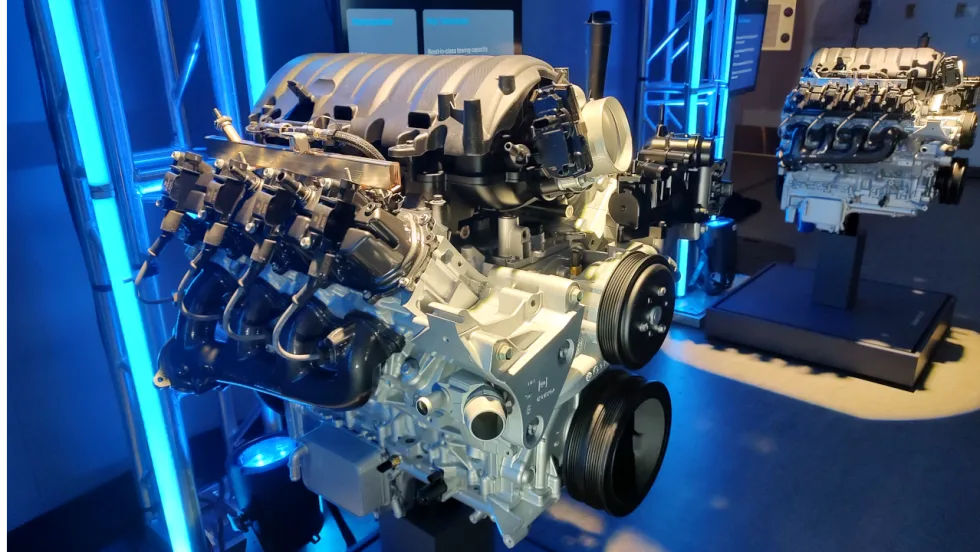
GM Unveils New Sixth-Generation Small Block Engines for 2027 Light-Duty Pickups
General Motors unveiled two new small-block engines, backed by extensive real-world validation and more than 70 years of small-block V8 manufacturing experience, as part of the engine portfolio for the 2027 Chevrolet Silverado 1500 and GMC Sierra 1500.
Read More →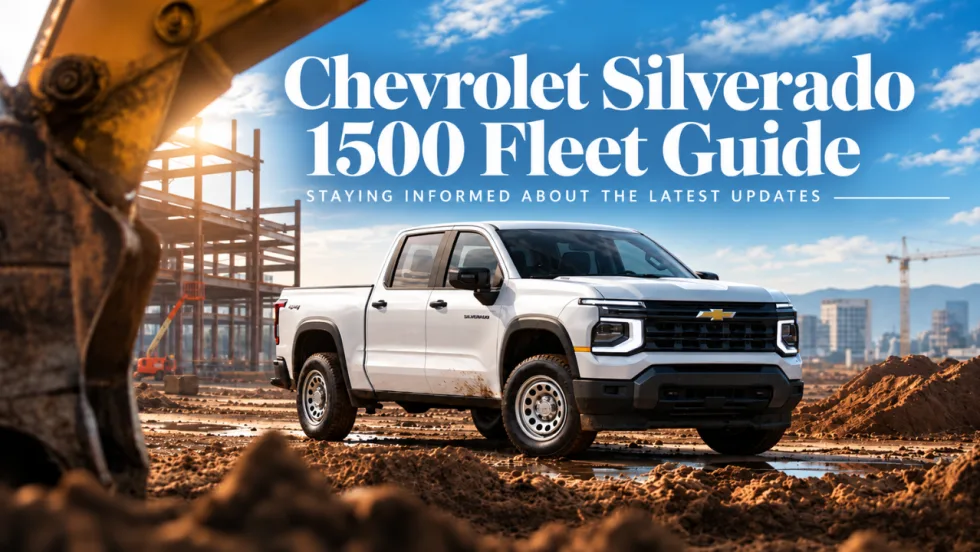
Chevrolet Silverado 1500 Fleet Guide Specs Capability and 2027 Model-Year Updates
The next-generation 2027 Chevrolet Silverado 1500 brings new V-8 engines, updated technology, expanded safety features, and a fleet-focused Work Truck. Here’s what commercial fleets need to know so far.
Read More →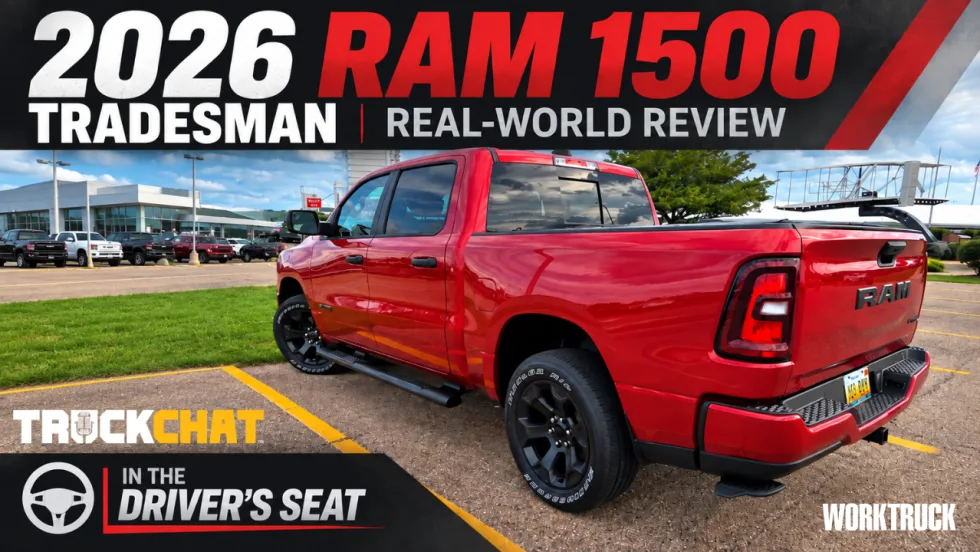
2026 Ram 1500 Tradesman Put to a Real-World Fleet Test
A few days behind the wheel of a 2026 Ram 1500 Tradesman turned into a test of visibility, parking, work-ready features, and even severe-weather driving.
Read More →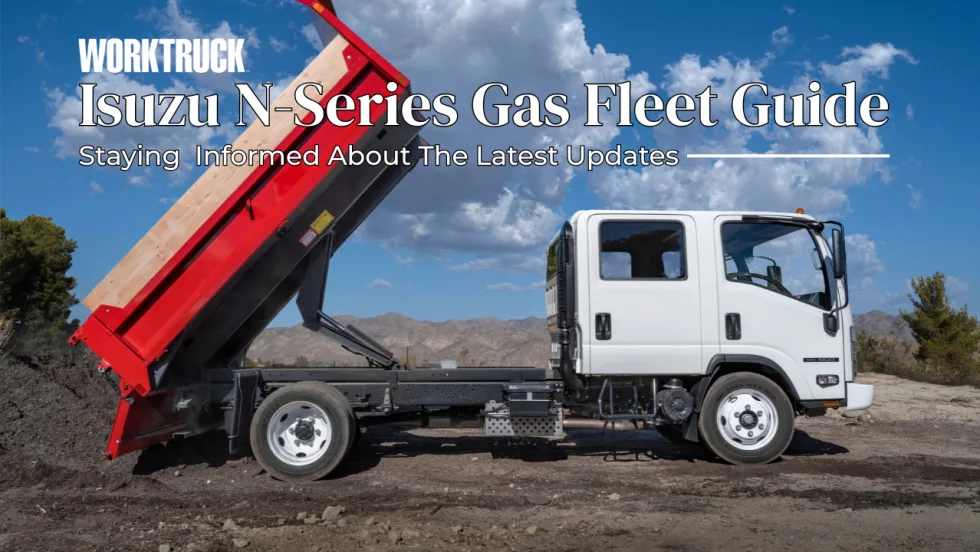
Isuzu N-Series Gas Fleet Guide: Specs, Capability and 2027 Model-Year Updates
Explore Isuzu Truck North America’s N-Series Gas fleet specs, engine performance, GVWR and payload capability, configurations, chassis dimensions, work-focused features, and 2027 model-year information.
Read More →
Ram ProMaster City Fleet Guide Specs Cargo Capacity and 2027 Updates
Work Truck’s Ram ProMaster City Fleet Guide tracks the latest specifications, cargo capability, configurations, fleet technology, pricing, and model-year updates for Ram’s mid-size commercial van.
Read More →
Ford F-150 Fleet Guide Specs Capability and 2026 Model-Year Updates
Explore 2026 Ford F-150 fleet specs, engines, towing and payload capability, configurations, work features, technology, and model-year updates.
Read More →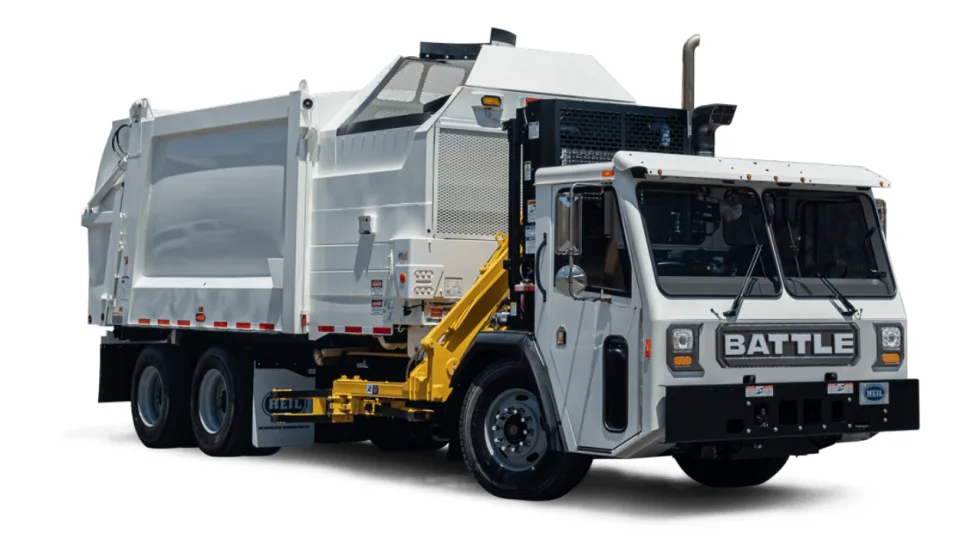
TCI Now Sells & Supports Battle Motors’ Vocational Trucks
Midwest truck dealer Truck Centers, Inc. (TCI) has expanded its transportation solutions with sales and service support for Battle Motors’ heavy-duty vocational trucks at locations in locations in Indiana, Illinois, and Missouri
Read More →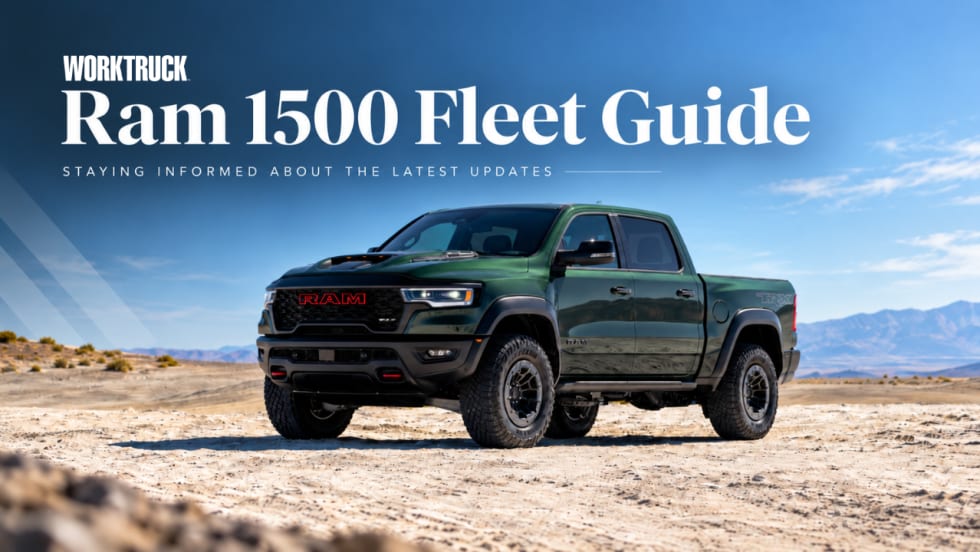
Ram 1500 Fleet Guide Specs, Capability and 2027 Model-Year Updates
Explore always up-to-date Ram 1500 fleet specs, engines, towing and payload capability, configurations, technology, pricing updates, and model-year changes.
Read More →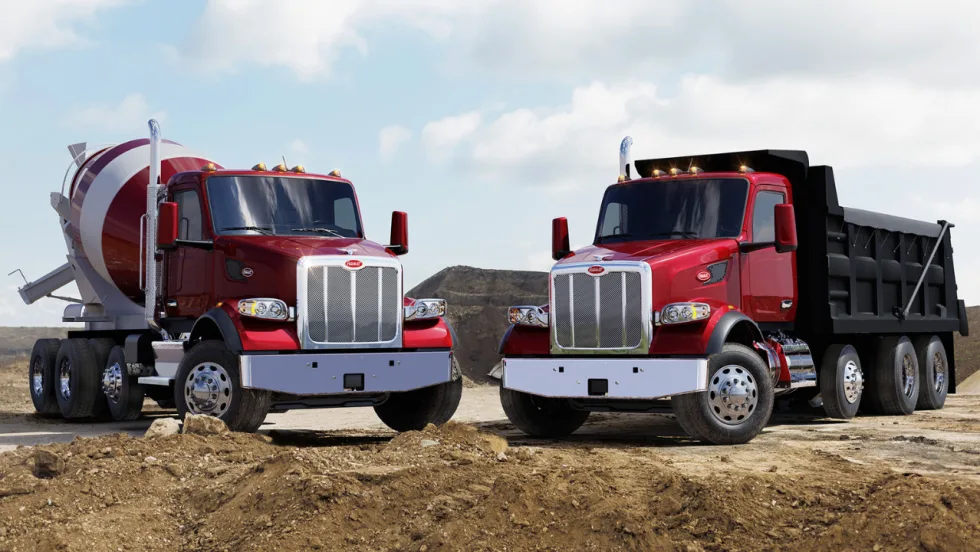
Peterbilt Trucks Equipped with Paccar TX-18 Pro Boost Efficiency for Maryland Fleet
Patuxent Companies is replacing aging trucks with the Peterbilt Model 567 and Model 589, specified with the Paccar TX-18 Pro 18-speed automated transmissions, and is reporting an 8% to 10% improvement in fuel economy.
Read More →
Stellar Expands into Fire Apparatus Market with Acquisition of Midwest Fire
Stellar Industries has acquired Midwest Fire, a custom fire apparatus manufacturer headquartered in Luverne, Minnesota, with nearly four decades of specialized apparatus experience.
Read More →