





Want More? Telematics in Food & Beverage Fleets
6 Mistakes to Avoid When Spec'ing Refrigerated Truck Bodies
Incorrectly spec’ing a refrigerated truck can be costly to both a fleet and a company’s clients. Knowing what mistakes to avoid when spec’ing can go a long way to impacting the bottom line and increasing company business.
March 14, 2013
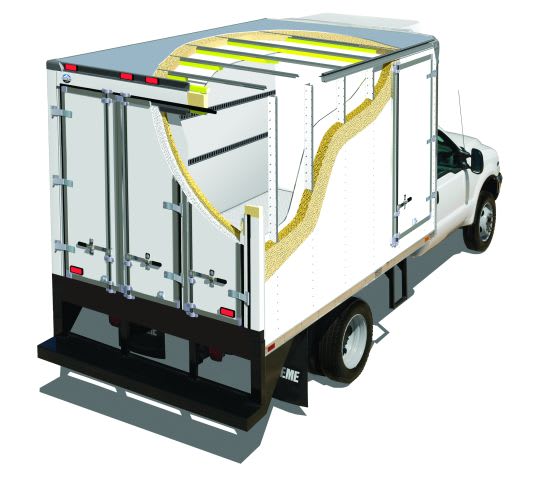
Among the biggest mistakes to make while spec’ing is underestimating the impact of insulation on interior dimensions and selecting the wrong type of rear door access for the application.
Photo: Supreme Corp.
6 min to read
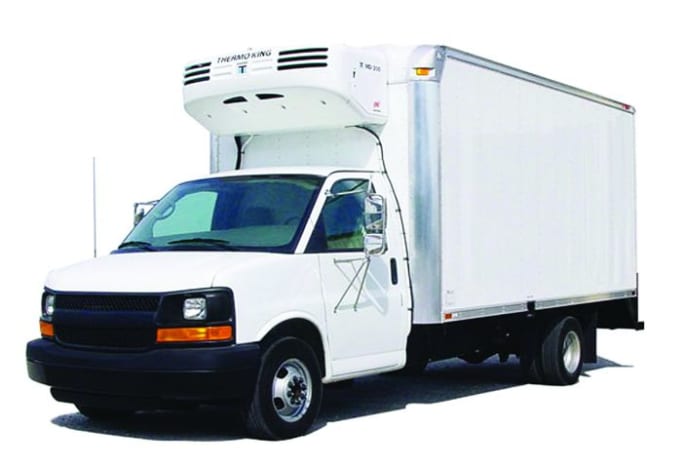
While spec’ing a refrigerated truck, it is imporant to consider airflow requirements, chassis compatibility, and function. Cutting corners and costs to maximize fleet dollars while spec’ing can be more expensive for the fleet and its company in the long run with the potential for ruined product and unsatisfied customers. Asking the right questions up front is key to successful spec’ing.
Photo: Thermo King
Refrigerated trucks serve the same purpose whether the product is poultry, meat, seafood, produce, ice cream, or flowers — to keep the product at the precise temperature acceptable for the recipient. To do otherwise would be ruinous to the transporter and its client.
“If you deliver to a fast food restaurant, for example, and its [signature chicken patties] need to be kept at, say, 42 degrees Fahrenheit, and they arrive at the store at 45 degrees Fahrenheit, the manager can reject that load,” said David Duford, truck specifications analyst at ARI, a full-service fleet management firm that has clients worldwide. The result: unhappy customers, wasted product, and extra trips to the warehouse — all of which drive up operational costs.
How can fleet managers protect their organization’s reputation and bottom line with so much at stake? Avoid making these six mistakes when ordering new refrigerated trucks:
1. Underestimating the Impact of Insulation
“A standard, plywood-lined 24-foot van body might be 23 feet 9 inches on the inside, but a refrigerated truck might only be 23 feet, depending on the insulation package, the doors, and other various features of that specific truck,” Duford said. “So, if a client is looking for a truck that can accommodate forklift-pallet loading, and is looking to be able to load two pallets side-by-side inside the box, you might not make it with a five-inch insulation wall. But, if you reduce the insulation 1 or 2 inches to accommodate the pallets side-by-side, you might not have enough insulation to keep a product frozen.”
2. Selecting the Wrong Rear Door
“A fleet manager may choose roll-up doors versus hinged doors for ease of use, but may not properly consider the loss of insulation value over time with the roll-up doors,” said Rich Barrett, truck product manager for Thermo King, a producer of temperature and climate control products for the transportation industry. “This can mean higher operating costs or temperature control problems if the refrigeration unit isn’t properly sized to accommodate the loss of insulation value. An alternative would be to consider hinged doors that will better maintain their insulation performance over time.”
Tim Riley, district sales manager for Supreme Corporation, a full-line manufacturer of truck bodies, advised fleet managers to consider delivery type — multiple stops, diminishing load throughout the day versus full load/unload delivery — when spec’ing the rear door.
“If you’re calling in saying you want to haul ice cream, but want a roll-up door, let’s talk about your operation. If you’re making multiple stops delivering ice cream, you don’t want a roll-up door because it allows too much cold air to escape, putting excessive stress on the refrigeration unit to keep the product at a proper temperature between stops,” Riley explained. “But, if you’re hauling ice cream from point A to point B and unloading the whole thing at one time, then a roll-up door could work.”
When specifying a liftgate, keep the rear door type in mind as well, said Duford of ARI. “If you do a lot of dock loading, you want a tuckaway liftgate. If you spec a rail-style gate [that goes up and down along the outer edges of the rear doorframe], it might not work too well with swing doors, which means you might be stuck with a roll-up rear door.”
3. Neglecting to Consider Power Interrupt Switches
Each time the rear door of the refrigerated box opens, the blower causes cold air to escape, while sucking warm, humid air from the outside into the body, creating inefficiencies that not only put extra stress on the refrigeration unit but also jeopardize keeping the product at the acceptable temperature. That is unless a power interrupt switch is spec’ed.
“If you don’t have a blower interrupt switch on the door, you fill that body up with warm, moist air every time that door opens,” observed Riley of Supreme Corporation. “The coils in the refrigeration unit that are hit with the moist air begin to frost, forcing the refrigeration unit to go into defrost mode, which heats the coils to remove the frost. If you get to the next stop, and the unit hasn’t had a chance to fully defrost the coils, it may feel like the refrigerated unit isn’t cooling properly. But, if you get the interrupt switch, you can open the door, and the blower shuts down. The cold air stays inside the body; the warm air stays out — making it easier to maintain proper temperature inside the box throughout the day.”
4. Mismatching Truck Chassis Specs to Body Requirements
“A critical mistake to avoid is ordering the chassis without verifying frame height at the rear of the truck frame and not realizing there’s a problem until it arrives at the body company,” Riley said. “The body vendor cannot install the body because the box [as originally spec’ed and built] exceeds the truck’s overall height requirements. Also, you may run into issues with the liftgate range, if the chassis is too high. The liftgate might not touch the ground when lowered, making it impossible to roll pallet jacks and food carts on and off the platform.”
Riley recommended fleet managers work closely with both chassis and body manufacturer representatives to ensure compatibility with the specs before signing off on the vehicle order.
5. Overlooking the Importance of Airflow
“Spec’ing a box with inadequate airflow when loaded can result in uneven cooling and cargo damage,” warned Barrett of Thermo King. “It’s important to specify the body to ensure proper airflow around the product for uniform cooling.”
A key to achieving proper airflow is floor selection. How the product is loaded — whether on a pallet, in milk-type crates, or boxes — will dictate the best floor. Consult with a body manufacturer to determine the optimal floor spec for the application.
6. Under-Spec’ing to Keep Costs Down
“There are several factors that can result in an inappropriately spec’ed refrigerated body, including an emphasis on a lower up-front cost,” Barrett cautioned. “This can lead to selecting a less-insulated box to save money, but may result in greater operating and lifecycle costs over the life of the box.”
Duford with ARI agreed. “The temptation is to look exclusively at the initial cost. But, if fleet managers don’t truly evaluate how the truck is being used, they may cut back on insulation, or they may go for a smaller [refrigeration] unit — all with the aim to cut costs,” he said. “But, in the end, they’re having to pay more to operate the vehicle.”
The Bottom Line
The key to avoiding these mistakes, said Riley with Supreme Corporation, is to continually increase knowledge of the full array of options available for refrigerated trucks and then challenge the fleet’s existing specs.
“The truck buying process should not be a once-a-year event. Instead, gather information all year long,” Riley said. “Ask yourself: Has anything changed in our operations since the last time we purchased a refrigerated truck? If so, how should we adjust our specs to accommodate those changes? Have there been new technology developments [that impact chassis, body, or refrigeration unit specs] that could add value to our fleet operation?”
Riley added that when it comes time to decide on refrigerated truck specs, you’re informed and have a good knowledge of what’s available and select what’s most appropriate for the application and your budget.
Subscribe to Our Newsletter
More Upfitting
Multitasking: Vanair’s Air N Arc 330 Diesel 60 CFM All-In-One Power System
The Air N Arc 330 Diesel 60 CFM from Vanair consolidates a welder, generator, rotary screw air compressor, battery booster, battery charger, and EV charger into a single 750-pound enclosure driven by one 24.8-horsepower Kubota diesel engine.
Read More →
Buyers Products Awarded Sourcewell Cooperative Purchasing Contract for Snow & Ice Equipment
Buyers Products has been awarded a Sourcewell contract for a wide range of winter maintenance equipment and accessories, including snowplows, municipal plow systems, wing plows, spreaders, and more.
Read More →
Hilltip Introduces the SnowStriker SFT Flex Expandable Box Plow
Hilltip’s new SnowStriker SFT Flex expandable box plow features hydraulically extendable sections that allow operators to adapt the clearing width to changing conditions and applications on the go.
Read More →
Harbinger Part of Effort to Deliver Autonomous Logistics Capabilities for U.S. Army
American Rheinmetall received an 18-month U.S. Army contract to deliver autonomous, hybrid-powered uncrewed ground vehicles. Harbinger is providing the truck platform for those vehicles.
Read More →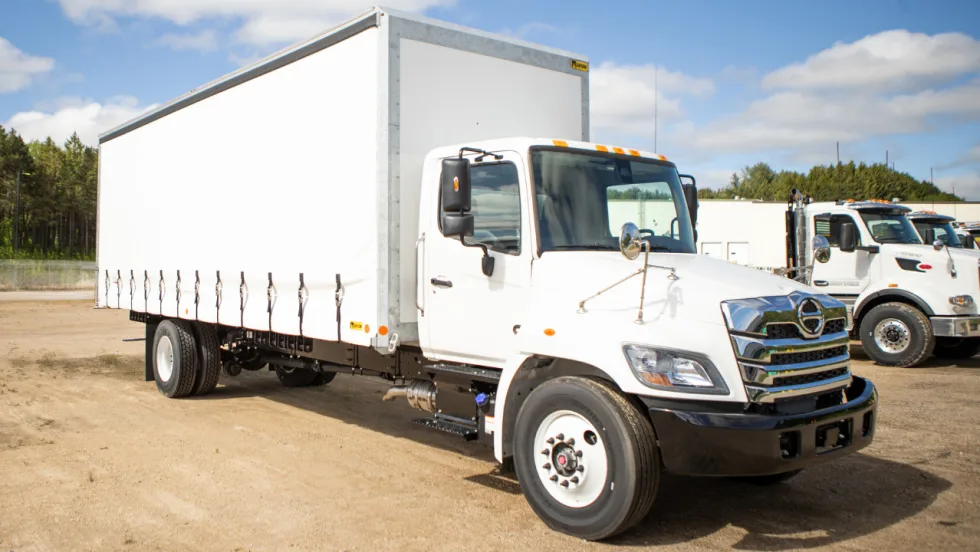
Thinking Outside of the Box: Choosing the Right Truck Body for Your Fleet
Choosing the right truck body can have a major impact on loading efficiency, cargo protection, downtime, and long-term operating costs. Here’s how dry vans, platforms, and curtainsiders compare, plus what fleets should consider before spec’ing their next truck.
Read More →
Fourth Annual Upfit Package of the Year Awards Open for 2027 Entries: One Month Left!
Think your upfit deserves industry recognition? Enter the 2027 Work Truck Upfit Package of the Year Awards before the Sept. 30 deadline. There is less than a month left to get your submissions in!
Read More →
Reading Truck Equipment & Masterack Unite as One of North America's Largest Commercial Vehicle Upfit Networks
Reading Truck Equipment and Masterack have integrated operations to create one of North America's largest and most comprehensive commercial vehicle upfit organizations.
Read More →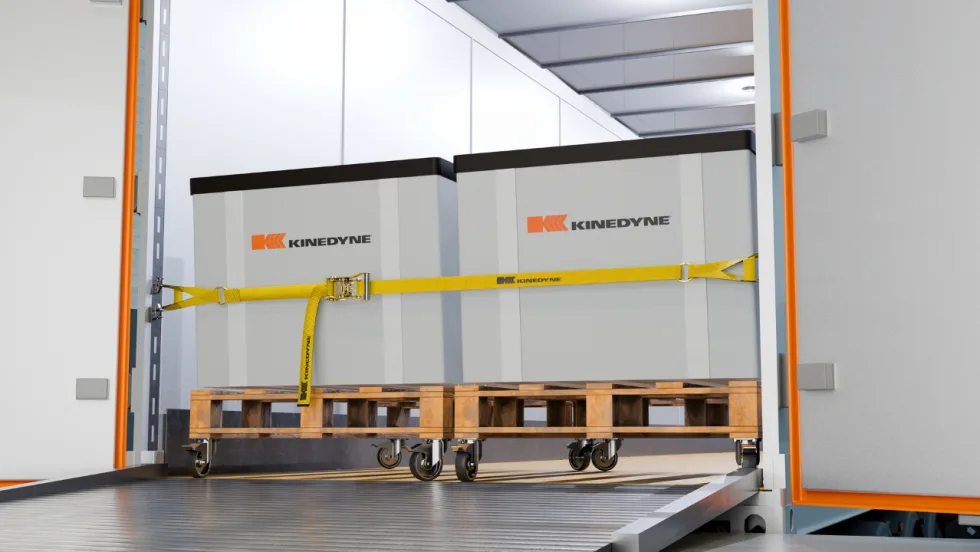
Kinedyne Launches Heavy Duty Logistic Shoring Strap
Kinedyne’s new Heavy Duty Logistic Shoring Strap features a patent-pending four-point design to deliver greater cargo stability, increased strength, and easier handling for rolling and shifting freight.
Read More →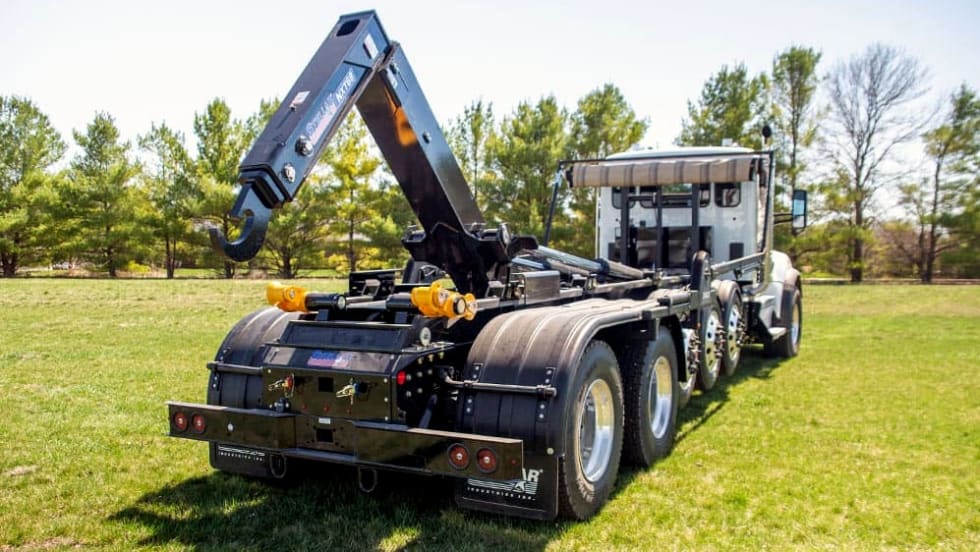
Hooklift Bumper Design from Stellar Showcases Strength & Versatility
Stellar Industries’ new bumper for the NZT Series Hooklifts come in two capacity options: the 20K, designed for Class 3 – 6 chassis with a 20,000-pound pull capacity, and the 90K, built for Class 7 and 8 chassis with a 90,000-pound pull capacity.
Read More →
Maxon Lift Awarded the Wabash Platinum Award for Supply Chain Performance
Maxon Lift, a liftgate manufacturer since 1957, received the Wabash Platinum Award for supply chain performance in 2025. Each year, Wabash presents awards to top suppliers for excellence in supply chain performance.
Read More →