




Transforming Tech: The Future of Fleet Maintenance
3 New Fleet Tech Advances Saving Lives
Safety is a top priority for fleet managers. Advances in fleet technology, such as telematics, AI, and ADAS, are helping to improve road safety and reduce accidents.

Hillary Weiss・Senior Editor

Fleet technology such as ADAS, AI, and telematics can be used to help prevent accidents on the road.
Photo: Work Truck
7 min to read
As roads become more crowded and the demand for transportation increases, fleet management has become increasingly complex.
Safety is a top priority, as accidents pose a risk to the public and can result in costly repairs and legal issues.
Fortunately, advances in fleet technology are providing new ways to improve safety on the road.
Three fleet tech advancements are helping save lives on the road: telematics, artificial intelligence (AI), and advanced driver assistance systems (ADAS).
Let’s explore the current state of these life-saving technologies and how they help fleets reduce accidents and improve road safety.
Taking Advantage of Fleet Telematics to Boost Safety
Telematics involves using GPS, cellular, and onboard diagnostics to track vehicles, monitor driver behavior, and collect data on vehicle performance.
This data, paired with management software, can be used to optimize fleet operations, improve safety, and reduce costs.
Telematics for fleets started in the 1990s when GPS fleet technology became widely available and affordable.
Used primarily for navigation, GPS technology quickly evolved to include real-time tracking of two important features that could save drivers from dangerous accidents:
Engine diagnostics.
Driver behavior analysis.
Addressing Risky Driver Behavior
Driver behavior analysis is a big factor in keeping the roads safe. Distracted driving causes around 3,000 accidents per year, according to the National Highway Traffic Safety Administration (NHTSA).
As for aggressive driving, over seven years, more than 200 murders and 12,000 injuries were attributed to road rage, stated American Automobile Association.
With telematics, driver managers can get immediate alerts of poor driving.
“Vehicle telematics solutions can alert about distracted driving, aggressive driving, speeding, seatbelt alerts, and more. Video telematics solutions capture driving incidents that can help fleets coach safer driving habits while providing the evidence to know whether to fight or settle when faced with an accident claim,” explained Brianna Perry, Fleetio Product Marketing Coordinator.
And if telematics is paired with fleet management software, drivers can be alerted while the actions happen in real-time.
“Both telematics and fleet management software technology focus on providing as much data in real-time as possible, helping to promote preventive maintenance instead of relying only on reactive maintenance. Instead of waiting for a trip to be over to see safety-related data points, today’s solutions alert fleet managers — and even drivers through in-cab alerts — as the data points are generated. These types of solutions focus heavily on monitoring and correcting driver behavior,” Perry added.
Preventive Maintenance to Minimize Malfunctions
NHTSA stated that a vehicle malfunction causes an average of 45,000 accidents annually.
With preventive maintenance, fleets can address potential issues before they become major problems on or off the road. But tracking what vehicles need what type of maintenance and what parts can be daunting.
Using telematics, fleets can easily track and monitor vehicles, collecting data on a range of key performance indicators (KPIs), such as fuel consumption, engine hours, and vehicle speed.
“Many Fleetio customers have telematics solutions, which bring diagnostic trouble codes to Fleetio’s fleet management hub. This passthrough of data simplifies the fleet manager’s workflow to ensure issues get added to service records so you can identify which DTCs are most common across their fleet and whether any trends need to be addressed. If there’s a persistent issue with a vehicle, you can identify the trend before an emergency breakdown occurs,” said Perry.
The Importance of Preventive Maintenance
By performing regular preventive maintenance on fleet vehicles and utilizing real-time driver behavior alerts, telematics can be a big factor in reducing accidents on the road.
To those looking to use telematics paired with fleet software to improve safety, Perry suggested:
Have a solid preventive maintenance plan. Scheduled maintenance is key to avoiding unexpected breakdowns and preventing accidents, which put drivers at risk.
Choose software that can help track and schedule maintenance and alleviate some of the worries that a service may fall through the cracks. It also acts as a digital trail of the service performed on each vehicle, making it easier to track compliance.
Automate or reduce the repetitive but critical tasks your fleet needs to operate smoothly. Suppose you can get notifications of upcoming service tasks and receive alerts for failed inspection items instead of tracking things down manually. In that case, it translates to less time doing paperwork and more time addressing safety concerns across your entire fleet.
AI Helps Avoid Accidents Before They Happen
Artificial intelligence has expanded beyond the sci-fi films of robots taking over the world. It can perform tasks more efficiently — including in the work truck industry.
AI in work truck fleet safety can help reduce accidents, lower insurance costs, and improve driver safety and satisfaction. It can also help businesses operate more efficiently and save money in the long run.
And companies such as Safe Fleet are starting to use AI to improve the safety features of fleet technology.
Alex Trkulja, Director of Sales, Rear View Safety, for Safe Fleet explained how the company uses AI: “AI is new to the industry. Historically data would be sent to a data center for people to review and report to the customer. Safe Fleet’s AI will use decades’ worth of data to determine drivers’ behavior and create reports to better coach their drivers.”
With AI growing in the industry, several new products are available with built-in AI that are aiding in reducing road accidents, such as dashcams and training programs.
Safe Fleet’s MobileMule AI is a dual dash cam that detects and alerts for drowsiness, sleeping, seat belt usage, distracted driving, and phone usage before uploading to the cloud. At the same time, the road-facing camera records real-time alerts.
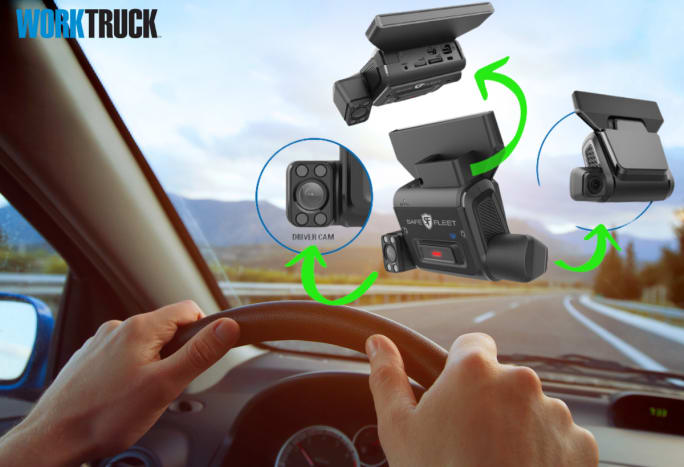
MobileMule AI's driver facing camera detects drowsiness, distracted driving, and phone usage, while the road-facing camera records real-time alerts.
Photo: Safe Fleet/Work Truck
“The main difference between Mobile Mule AI and a regular dash cam you buy off Amazon is that our system has a ‘brain’ that will learn and grow with the data it’s receiving. It will deliver this data to help understand where they can improve driver behavior, save lives and cut costs," Trkulja said.
When it comes to the future and AI, growth doesn’t stop here. Companies, such as Safe Fleet, are constantly looking to improve their products with AI.
“We are always adding new behaviors to our database. They would be based on a case-by-case scenario if a large fleet wanted to customize something their drivers need coaching on. If you’re going to track a driver using earbuds while driving, we do not have this, but the system would be programmed to learn,” Trkulja explained.
When it comes to the future of AI, Trkulja said, “We’re going to see a lot more fleet technology being implemented. All the technology drivers are used to having in their cars is currently being implemented on large vehicles. Blind spot sensors, backup sensors, cameras, and dash cams, to name a few.”
Reducing Risk With ADAS
ADAS is designed to help drivers avoid collisions and improve safety on the road.
It uses sensors, cameras, radar, and other fleet management technologies to collect and analyze data about the vehicle's surroundings, road conditions, and the driver's behavior.
When implemented in work truck fleets, ADAS technology can help prevent accidents and save lives in several ways:
Collision avoidance: Features such as forward collision warning and automatic emergency braking can help drivers avoid collisions with other vehicles or obstacles on the road.
Lane departure warning: This feature alerts drivers when they are drifting out of their lane, helping to prevent accidents caused by lane departures.
Blind spot detection: This fleet technology alerts drivers when a vehicle is in its blind spot, reducing the risk of collisions when changing lanes.
Driver monitoring: ADAS technology can also monitor driver behavior, such as detecting drowsiness or distraction, and provide alerts to help drivers stay focused on the road.
Putting Safety First in Fleet
By providing these safety features, ADAS technology can help reduce the risk of accidents and save lives on the road.
For work truck fleets, which often operate in challenging conditions and environments, ADAS can protect drivers and other road users.
Whether you use ADAS, AI, or telematics in your fleet and drivers, remember to put safety first.
With the ability to detect potential hazards, improve driver behavior, and optimize vehicle performance, these technologies are not only saving lives but also helping companies to reduce costs and increase productivity.
Subscribe to Our Newsletter
More Safety
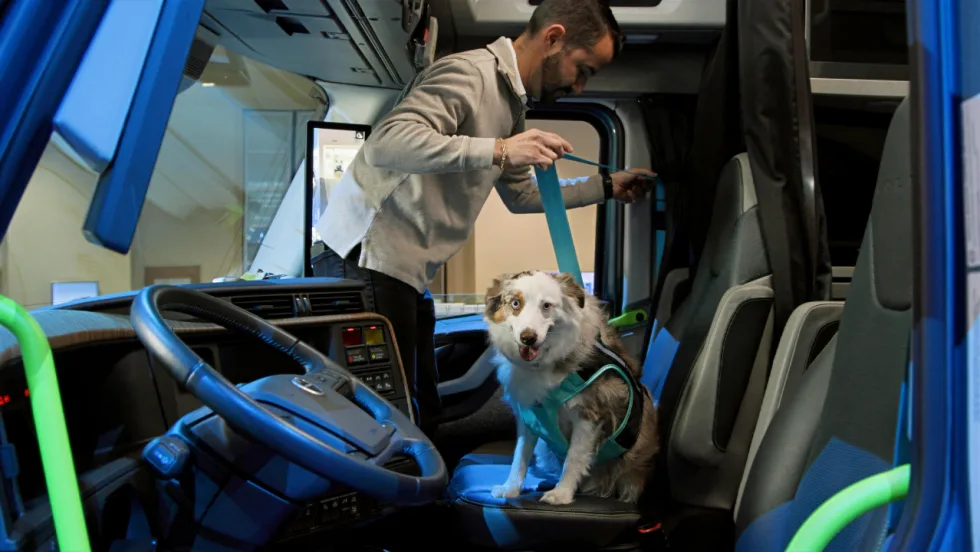
Volvo Trucks Releases New Safety Recommendations for Traveling with Pets
One of the most important recommendations for professional drivers traveling with pets is to ensure pets are properly restrained while the truck is moving. Other tips are available in the new guide from Volvo Trucks North America and Center for Pet Safety.
Read More →
API Issues Refueling Safety Guidelines
The American Petroleum Institute offers a list of safe vehicle refueling guidelines, including ways to avoid potential problems with static electricity discharges in fall, winter, and early spring.
Read More →
Winter Fleet Prep: Expert Tips to Keep Vehicles Running Smoothly
Cold weather can expose weak batteries, tires, fuel systems, and maintenance gaps fast. Use this winter fleet checklist to prepare trucks and drivers before temperatures drop.
Read More →
When a Work Truck Breaks Down, the Job Can Stop, Too
A work truck breakdown can stop more than the vehicle. Discover how payloads, jobsites, and specialty equipment change the roadside response.
Read More →
What Stronger Long-Term Fleet Service Partnerships Actually Require
Fleet service partnerships rarely fall apart all at once. Learn the three warning signs that trust is eroding and what fleets and providers can do before downtime, frustration, and lost revenue follow.
Read More →
Applause & TRUCE Software Partner to Improve Driver Safety Through AI-Powered Telematics & Employee Performance Management
Applause has integrated TRUCE driving metrics directly into its employee-first performance and safety platform that transforms mobile devices into AI-powered telematics.
Read More →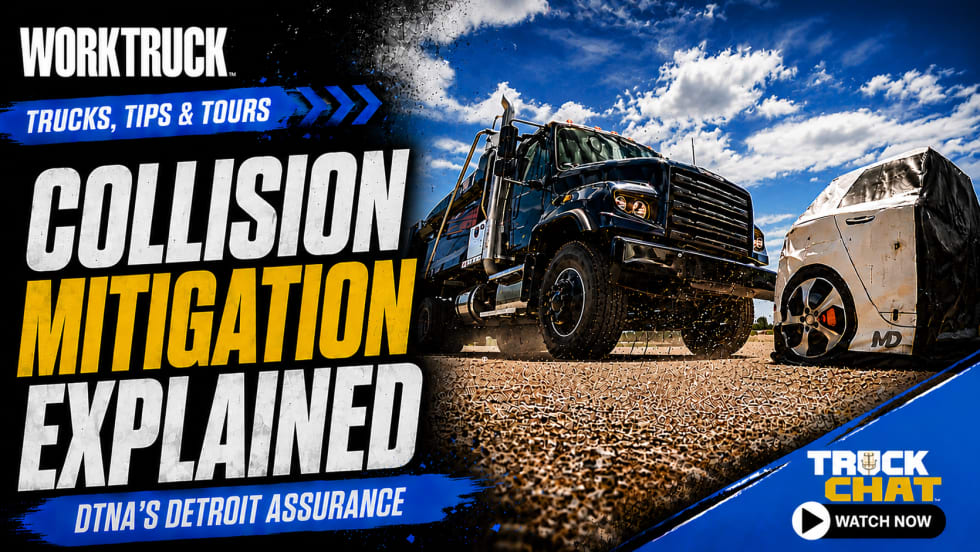
How Detroit Assurance with Active Brake Assist Works
Do you want to see what it is like to experience Detroit Assurance’s Active Brake Assist? In this video, Work Truck will put you in the cab to see how it all works and then hear more details from DTNA’s Mike Young.
Read More →
Get Left of Loss: A 5-Step Workplace Violence Prevention Framework for Fleet Operators
Violence risks do not stop at the driver’s door. Learn five practical steps fleets can take to spot threats early and protect workers before loss occurs.
Read More →
Sponsored•July 17, 2026
How Better Visibility Cut Speeding Violations by 48%
Fleet leaders don't need more data, they need clearer visibility into what the data is saying. This case study explores how one utility replaced speeding-event counts with a single metric — miles driven in violation — to strengthen safety and significantly reduce speeding violations.
Read More →
13 Safe Driving Tips for Commercial Vehicle Drivers
Make sure you are spending time on the road safely with these important tips.
Read More →