




How the Solar Eclipse Will Affect Fleets
The Aug. 21 solar eclipse will bring total or partial darkness to much of the continental U.S. – and with it, a potential traffic nightmare for drivers across the country.
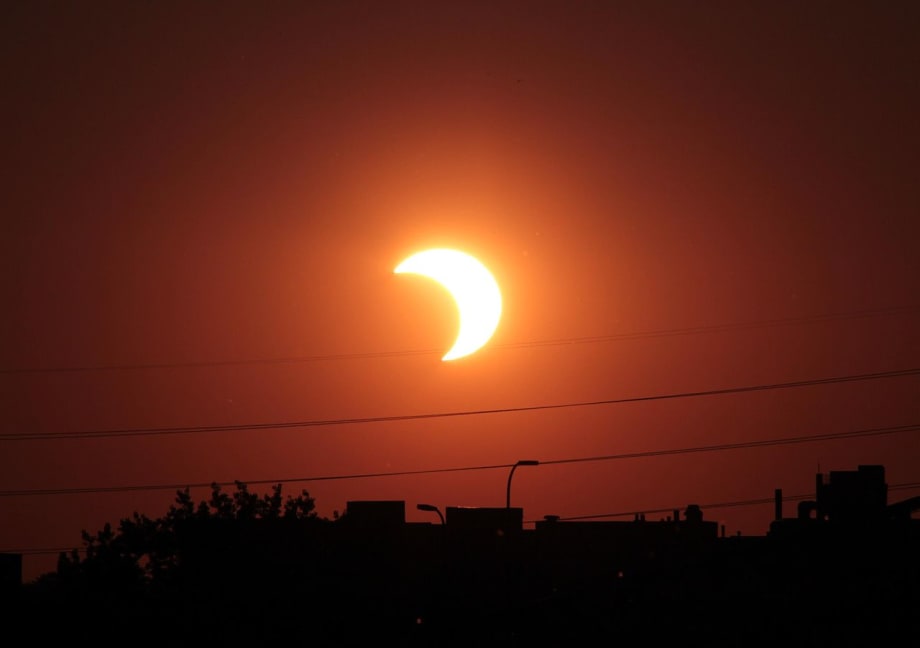
Public Domain
Public Domain
The Aug. 21 solar eclipse will bring total or partial darkness to much of the continental U.S. – and with it, a potential traffic nightmare for drivers across the country.
While solar eclipses are a regular event, occurring, on average, once every 18 months, most of them happen across oceans or sparsely populated areas. This year's event is the first total solar eclipse in the United States in 38 years. The next may not come for another seven years. Vox.com has published a handy tool to find out how much of an eclipse will be visible from your zip code.
The entire U.S. will see at least a partial eclipse, but the sought-after total eclipse will follow a sweeping, narrow path from coast to coast. The potential for gridlock is even higher along the narrow band of total eclipse, which is expected to bring in floods of tourists to the 14 states along the eclipse path from Oregon to South Carolina.
In places like Kentucky, state and local agencies are preparing for the influx of visitors, asking people who must drive to plan ahead for any trips on the days surrounding the stellar event and to expect delays.
“We anticipate that a majority of the visitors will filter into the eight-county region over the two or three days before the eclipse,” said Wade Clements, Kentucky Transportation Cabinet district 2 chief engineer. “Once the eclipse is over, we are expecting traffic issues akin to what Louisville faces before and after the Kentucky Derby or Thunder Over Louisville. We urge motorists to plan ahead before traveling to or through the region the day of the eclipse.”
In Oregon, the state Department of Transportation is taking a proactive stance on the expected traffic. ODOT has already warned residents that the eclipse could trigger the largest traffic event in the state’s history.
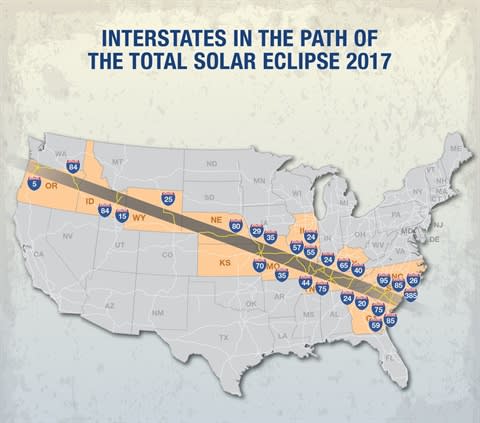
Map: FHWA/NASA
The Oregon Motor Carrier Transportation Division is taking steps to ease the congestion by banning certain kinds of traffic and roadside activity, including blocking over-width loads in the state from Aug. 18-22, stopping construction and non-emergency maintenance on state highways, and warning truckers of the lack of available parking and hotel rooms. In other states like Colorado, similar bans on oversized vehicles have also been issued to prepare for visitor traffic.
Some trucking companies have announced plans to reduce business in the most affected areas, with some companies cutting service entirely, while others are trying to plan around it, according to a KATU report from Portland, Oregon.
Each state will have restrictions in place to address the traffic, so make sure to check with the transportation agencies in each of the 14 states in the eclipse’s direct path to prepare for the traffic crunch. The Federal Highway Administration has set up apage dedicated to the August solar eclipse with links to state agency websites, general safety tips, as well as information on the event. It’s all a lot of preparation for an event that will only last a few minutes.
Originally posted on Automotive Fleet
More Safety
When Work Trucks Under 26,001 Pounds Need IRP Registration
Think trucks under 26,001 pounds are automatically in the clear when it comes to IRP? Not always. Learn where lighter vehicles can still run into trip permit, apportioned registration, and IFTA compliance requirements when crossing state or provincial lines.
Read More →
Volvo Trucks Releases New Safety Recommendations for Traveling with Pets
One of the most important recommendations for professional drivers traveling with pets is to ensure pets are properly restrained while the truck is moving. Other tips are available in the new guide from Volvo Trucks North America and Center for Pet Safety.
Read More →
API Issues Refueling Safety Guidelines
The American Petroleum Institute offers a list of safe vehicle refueling guidelines, including ways to avoid potential problems with static electricity discharges in fall, winter, and early spring.
Read More →
Winter Fleet Prep: Expert Tips to Keep Vehicles Running Smoothly
Cold weather can expose weak batteries, tires, fuel systems, and maintenance gaps fast. Use this winter fleet checklist to prepare trucks and drivers before temperatures drop.
Read More →
When a Work Truck Breaks Down, the Job Can Stop, Too
A work truck breakdown can stop more than the vehicle. Discover how payloads, jobsites, and specialty equipment change the roadside response.
Read More →
What Stronger Long-Term Fleet Service Partnerships Actually Require
Fleet service partnerships rarely fall apart all at once. Learn the three warning signs that trust is eroding and what fleets and providers can do before downtime, frustration, and lost revenue follow.
Read More →
Applause & TRUCE Software Partner to Improve Driver Safety Through AI-Powered Telematics & Employee Performance Management
Applause has integrated TRUCE driving metrics directly into its employee-first performance and safety platform that transforms mobile devices into AI-powered telematics.
Read More →
How Detroit Assurance with Active Brake Assist Works
Do you want to see what it is like to experience Detroit Assurance’s Active Brake Assist? In this video, Work Truck will put you in the cab to see how it all works and then hear more details from DTNA’s Mike Young.
Read More →
Get Left of Loss: A 5-Step Workplace Violence Prevention Framework for Fleet Operators
Violence risks do not stop at the driver’s door. Learn five practical steps fleets can take to spot threats early and protect workers before loss occurs.
Read More →
How Better Visibility Cut Speeding Violations by 48%
Fleet leaders don't need more data, they need clearer visibility into what the data is saying. This case study explores how one utility replaced speeding-event counts with a single metric — miles driven in violation — to strengthen safety and significantly reduce speeding violations.
Read More →