




Samsara Report Reveals Tech & Sustainability Strategies of Global Leaders
Samsara's 2023 State of Connected Operations Report analyzed 1,500 operations leaders worldwide.

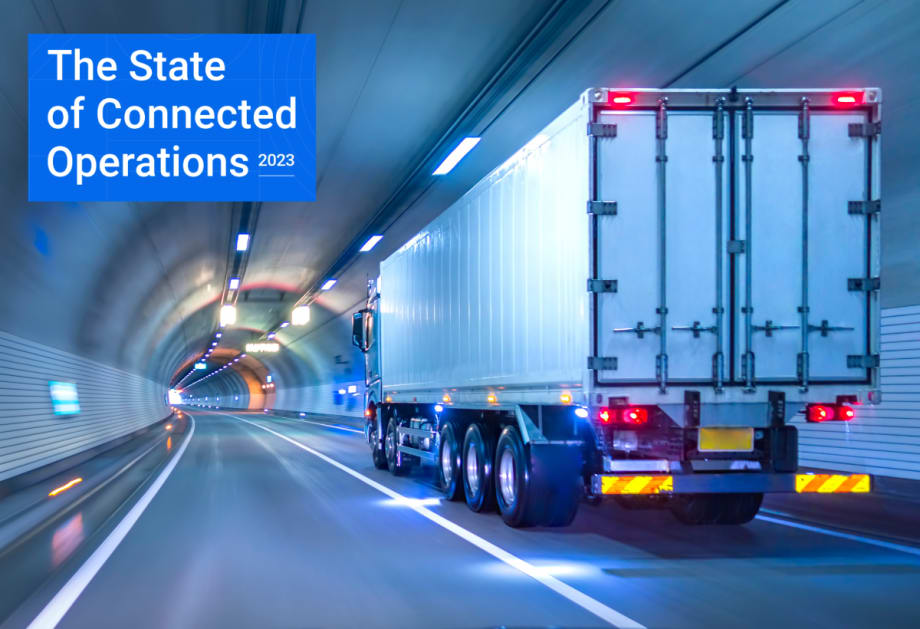
The report reveals how global leaders maneuver through economic and geo-political volatility.
Photo: Work Truck
Several technological breakthroughs are unfolding in the work truck industry, encompassing self-driving cars, renewable fuel, robotics, and more.
What implications will these advancements have on the future of the industry? When faced with pressure, fleets don't shy away from change but embrace it.
Samsara released the 2023 State of Connected Operations Report. It analyzed 1,500 operations leaders worldwide and dives into how today's leaders maneuver through economic and geo-political volatility.
Reimaging a Fleet’s Operations With Technology
Equipping a work truck fleet with up-to-date technology brings many advantages to today's industry.
By embracing tech, fleets can streamline operations, enhance productivity, and achieve significant cost savings.
Regarding the digital maturity rate of leaders’ organization’s physical operations, 47% reported beginner, 45% said they were advanced, and only 8% reported a high level of digital maturity.
So is it worth adding telematics and management software to your fleet?
The data speaks for itself; the leaders who reported resulted in higher employee productivity (64%), higher revenue (59%), and increased net profit (56%).
As we enter 2023, 56% of leaders emphasize enhancing workforce productivity by adopting new technologies as an essential organizational priority.
There is still time for fleets who haven’t taken advantage of tech yet. But it would be best if you started planning for it now.
Of the 1,500 leaders, 84% plan to use generative AI, and 91% will leverage automation to modernize their operations by 2024.
Investing in Data to Get Ahead
One thing almost every leader agreed on (90%) was that data is a competitive advantage for their organization.
Real-time operational data for fleets involves collecting, analyzing, and using up-to-the-minute information regarding fleet operations.
It involves gathering real-time data from vehicles, drivers, and other relevant sources and processing it to provide actionable insights.
And fleets are increasing their tech budget to take advantage of it. According to the report, 90% of leaders say having accurate, real-time operational data is critical to decision-making in 2023.
Plus, leaders report widespread benefits because of their data technology investments:
Increased safety (50%).
Improved compliance (50%).
Higher revenue (43%).
Increased net profit (43%).
Using AI to Modernize Operations
The survey reported that adopting artificial intelligence (AI) has significantly impacted operations this year.
According to the report, 31% of leaders and 47% of digitally mature leaders use generative AI to modernize their operations.
Looking ahead, 84% of leaders have plans to incorporate generative AI into their processes by 2024, with only a mere 5% expressing no intention to adopt this technology.
As generative AI advances and finds diverse real-world applications, it will unlock boundless possibilities for physical operations in the coming years.
These possibilities include automating:
Driving tasks.
Predicting consumer demands.
Streamlining daily operations.
To fully leverage AI's potential and overcome information overload challenges, Samsara stated that leaders will need to focus on solutions that harness the power of AI to enhance existing processes and tackle new problems.
Particularly for physical operations, AI can efficiently organize and analyze massive volumes of data from various sources, such as sites, vehicles, assets, and employees in the work truck industry.
On top of discussing leveraging technology, the leaders were also surveyed on their top three challenges this year.
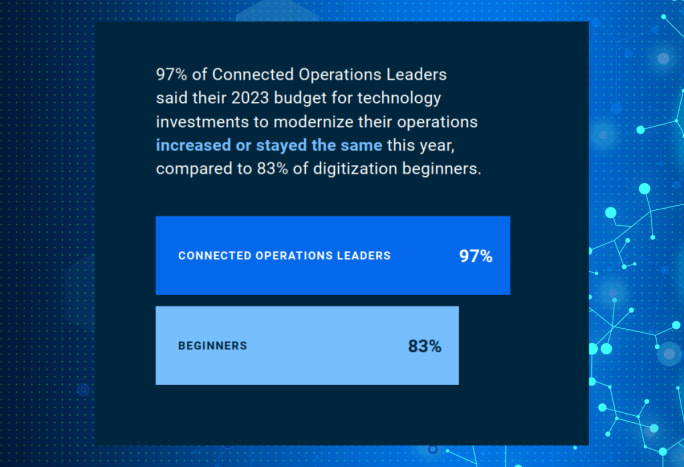
Results from the 2023 State of Connected Operations Report.
Photo: Samsara
Top Strategies to Combat Supply Chain Shortages
The top three concerns the leaders face globally are:
Volatile fuel prices.
Cross-border travel/trade.
Leaders remain deeply concerned about the persistent supply chain delays and shortages three years after the pandemic triggered worldwide disruptions.
Recognizing the limitations of minor adjustments, leaders have shifted their focus toward fundamentally rebuilding their supply chains.
So how are these leaders combating their most significant challenge? Of the surveyed, 95% plan to implement at least one of these strategies this year to combat supply chain shortages:
Onshoring — transferring an overseas business operation back to its country of origin.
Nearshoring — transferring an overseas business operation to another nearby country.
Friendshoring — transferring an overseas business operation to countries that are political or economic allies.
Clean Fuel Becomes the Norm
This year, reducing emissions is a high priority for leaders.
Top strategies for achieving this goal include:
Adopting EVs through purchasing or leasing.
Driver training programs to reduce fuel usage and idling.
Optimizing routing to minimize the number of miles driven.
What excites leaders about decarbonization initiatives? They point to two primary factors:
Meeting customer and/or partner expectations.
Increasing competitiveness.
These motivations reflect how market pressures are driving the shift toward sustainability.
Government Regulations on Decarbonization
Governments worldwide are tightening regulations on businesses that fail to prioritize sustainability. Among the digitally mature leaders, 51% acknowledge that regulatory requirements serve as a primary motivation for their efforts to reduce emissions.
Pursuing government sustainability grants has garnered significant interest across countries, with Mexico leading the way. A remarkable 60% of leaders in Mexico plan to actively seek these grants within the next two years.
Globally, 62% of the digitally mature leaders have similar intentions, compared to 50% of those still in the early stages of their sustainability journey.
More Operations
A buyer's guide to fleet management software in 2027
Buying fleet management software in 2027 means looking beyond features and price. As fleet operations, technology and expectations evolve, this guide explores what today’s fleet professionals should consider when choosing a system that can deliver value now and adapt to what comes next.
Read More →
How to Build a Lasting Fleet Career by Staying Curious and Connected
Tina Kourakos never planned on a career in fleet. More than 30 years later, she says curiosity, strong relationships, and a willingness to keep learning helped turn an unexpected assignment into a career spanning fleet management and OEM leadership.
Read More →
Think You Know Trucks? Take Our 19-Question Fleet Trivia Challenge
From chicken lights to diesel engines and trucking history, test your knowledge with 19 questions from the 2026 Work Truck Exchange and Heavy Duty Trucking Exchange.
Read More →From Our Partners
Basic Tracking vs Next Generation Fleet Technology
Sponsored by AT&T Business
5 Facts Every Fleet Manager Should Know About Embedded Telematics
Sponsored by Stellantis/Mobilisights
How AI Video Telematics Boosts Driver Safety and Helps to Avoid Unnecessary Costs
Sponsored by Verizon Connect

Charting the 8 Bottom-Line Benefits of Workforce Optimization
Sponsored by Verizon Connect

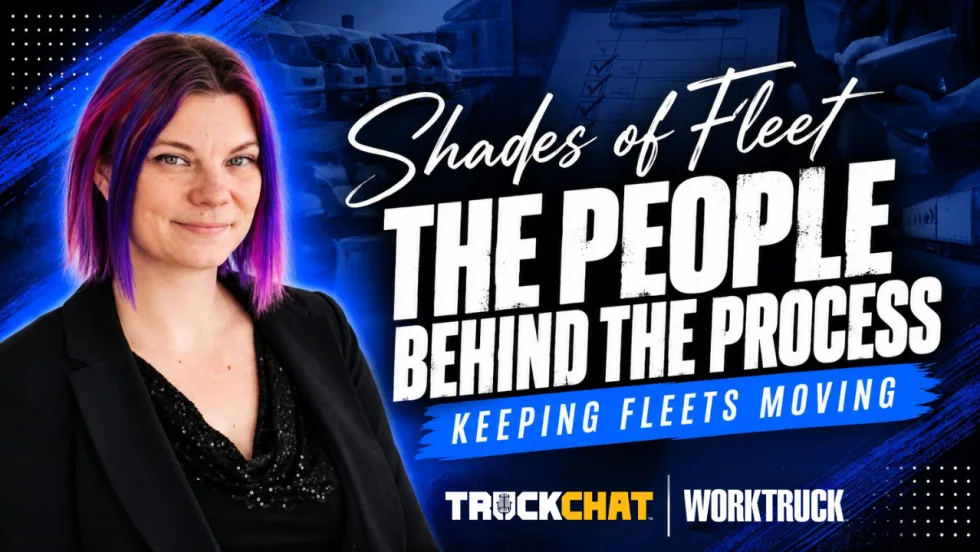
Where’s My Truck: Inside the Fleet Logistics Work Nobody Sees
Shades of Fleet video thumbnail featuring Lauren Fletcher beside the text “The People Behind the Process, Keeping Fleets Moving,” with fleet vehicles and logistics imagery in the background.
Read More →
Work Truck Seeks Fleet and Industry Insights on 2026 Trends and 2027 Forecasts
Work Truck is seeking insights from fleet leaders and industry partners on the trends that shaped 2026 and what commercial fleets should prepare for in 2027. Participate today!
Read More →
It's 10 p.m... Do You Know Who Has Access to Your Fleet?
Preventing cargo theft requires investment in technology, operational processes, and employee training. In an industry with tight margins, it can be difficult to justify investments whose value is measured by incidents that might never occur.
Read More →
GeoFencing Adds to Your Truck Security Arsenal
Geofencing is a familiar fleet tool today, but its early adoption marked a major shift in vehicle tracking, route monitoring, and the debate over employee privacy.
Read More →
Truckers’ Strike Rumors, New GM Engines, and Hidden Idling Costs Lead This Week’s News
Truckers’ strike rumors, GM’s new 2027 engines, hidden idling costs, racing lessons, IRP rules, and more headline this week’s Truck Chat Weekly Cheat Sheet.
Read More →
Shades of Fleet Wants to Hear From You About Building a Culture of Care
Fleet leaders, we want to hear from you. Share how empathy, trust, and creating space for people can strengthen your team, improve performance, and support retention.
Read More →
What Racing Can Teach Work Truck Fleets About the Work Nobody Sees
Race car driver and mechanical engineer Isaac Johnson shares practical lessons on preparation, relationships, setbacks, and building teams that perform when it counts.
Read More →