





This article appeared in the 2022 Connected Fleet Guide, which offers resources to turn connected car data into actionable insights to foster safer and more efficient fleets.
Electric & Connected: Fleet Managers Face New Responsibilities
Electric vehicles are computers on wheels. Here’s how their operation adds to fleet managers’ — and drivers’ — roles. It starts with managed EV charging and extends to managing data from both the vehicles and drivers.
December 27, 2022
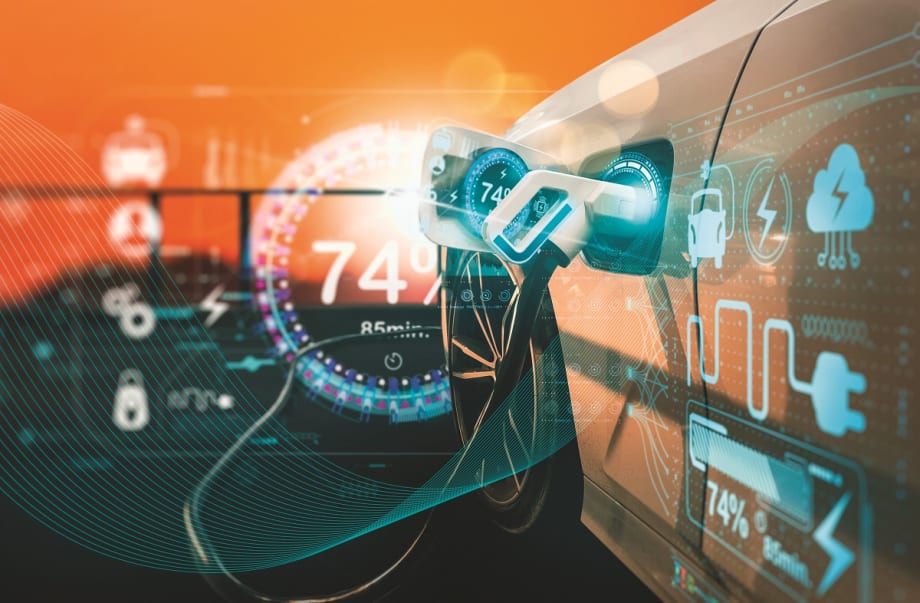
Managing EV charging, as well as data, is imperative for the modern fleet manager. Combining the data from multiple systems, though, can be tricky,
Photo: Getty Images/greenbutterfly
6 min to read
It’s always been about the data. It’s just that back in the day, we didn’t have the resources at our fingertips to extract it — and thus there was less of an expectation to do anything. Those days are over. If you’re not on a continual quest as a fleet manager to use data to hone your processes, create efficiencies, and conserve your fleet budget, you’re not doing your job.
The changes were incremental: Analyzing data from fuel card reporting helped mitigate fraud and lessened fuel spend. Then came the rise of the fleet management information systems (FMIS) that track and automate everything from fuel, maintenance, technicians, driver logs, and timecards, to tax, title, and licensing. You eventually got into telematics to monitor driver location and performance, routing, and vehicle diagnostics. You may have integrated dashboard from your fleet management company to monitor data and many of these processes.
You figured out how to manage well enough through automated rules and exception reporting. But there was always the promise that these systems could talk to each other and that the information would flow through a single pane of glass, though that never quite happened. And that was okay, because the benefits those individual systems delivered are more than enough to offset the extra management hassle.
Now, the electric vehicles cometh. EVs are more than just an internal combustion engine (ICE) swapped for a battery. They’re computers on wheels — and they bring new and heightened requirements around connectivity, software management, and data mining along with them.
Here’s how their operation adds to fleet managers’ (and drivers’) roles, particularly as it relates to data, though this isn’t a complete picture. It starts with managed EV charging and extends to managing data from both the vehicles and drivers.
Monitoring EV Charging
Unlike fueling an ICE engine, EVs take eight hours or more to reach 80% capacity on a Level 2 charger. This dictates remote monitoring of home or depot chargers, often after work hours, to make sure they are in fact plugged in and receiving juice. An EV that fails to charge will really screw up your next day.
Understanding Battery State-of-Charge
With EVs’ limited ranges and the lack of public infrastructure, fleet managers need to know how much juice their EVs have left to strategize on how not to get stranded.
Managing Electricity Rate Fluctuation
As much as we abhor unpredictable gas prices, electricity demand and rates fluctuate by the hour and peak load times. To avoid expensive demand charges, fleets must remotely activate chargers Again, this task is often performed after hours. With many virtual tasks, the goal is to automate them by establishing rules and exception alerts based on how soon the vehicle is needed, rate curve, and present state of charge.
Accessing Public EV Charging
While most charging should be done at home or the depot, public charging should be worked into the plan as a backup when necessary. Public chargers are run on multiple networks. You’ll need to subscribe to a network with the best coverage for you. Each network comes with a proprietary app to locate its charge points. You’ll then need to monitor costs by kWh, dwell time, and type of charging (Level 2 or more expensive Level 3 DC fast charging). To expand charger accessibility, you’d want to subscribe to multiple networks — but that requires another set of apps for both you and your drivers.
Reimbursing for Home EV Charging
Another aspect of home charge management for fleets involves separating utility bills by personal and work expense for fleet vehicle charging, and then reimbursing the employee accurately.
Managing EVSE
The chargers themselves (also known as EVSE, or electric vehicle supply equipment), whether at employees’ home or the depot, need to be maintained to minimize the potential for maintenance issues. Again, an EV that fails to charge because of faulty equipment will really screw up your next day.
Managing Vehicle, Driver Data
Managing vehicle and driver data are still important in the ICE world but take on even greater importance with EVs. These data sets are needed to understand battery efficiency (the costliest component of an EV by far) and how range is affected by factors such as driving style and payload, stops, road grade, and external temperature.
Ways to Integrate EV Data
A major issue today is that there are no communications standards or protocols regarding how data from EVs is communicated, which creates difficulties in gathering data across makes and models. As a result, there isn’t one set way to access and analyze all this data. (Protocols on the charging side have been developing, however.)
Entities that can access data include aftermarket-installed telematics, new data services platforms, fleet card providers, EV charging network provider apps, and automakers’ EV management systems. Each of these systems takes on specific roles in the EV ecosphere, and many provide multiple solutions, but none do them all.
That leaves fleets to integrate EV data from multiple sources. This is only a sample of the hypotheticals:
Automakers’ EV management systems connect their fleet customers with their electric vehicles. Those systems are essential to monitor EVs’ status in the charging queue, identify battery state of charge, precondition cabins, locate chargers, measure energy consumption, and offer other metrics on vehicle performance. A select few of these systems have robust functionality, while some electric OEMs don’t have any system or app at all. If you’re running EVs from multiple OEMs, you’re again faced with juggling multiple apps, like finding chargers. If you acquire new electric models, are you prepared to manage a new system and have your drivers download and learn a new app?
Some proprietary OEM systems are marketing the fact that they integrate with other electric makes and models. This is worth vetting — but normalizing data from other OEMs isn’t just a digital handshake. But we’re still at the infancy of cross-brand compatibility and making data flow back and forth in easily digestible formats.
Your existing telematics system is inherently cross-brand compatible for measuring driver and vehicle performance data. Though as EVs don’t have OBD-II ports, data is instead pulled from the vehicle’s onboard computer. This brings up other data normalization issues that aren’t insurmountable, but the solutions aren’t off the shelf. Further, telematics may handle other functions that the OEM systems offer around EV batteries, chargers, and expense management.
Growing EV Resources
For EV fleet integrations of any size and of different makes and models, integration of multiple systems is essential. There is no one set answer on which combination is best, as each situation is different. How do you minimize the number of applications to manage, making sure those applications connect and deliver the right data reliably? That depends on the functionality offered by your providers and your fleet situation.
The good news is that there is an industry coalescing around holistic solutions to get your fleet on the right path. Those stakeholders include fleet management companies, telematics providers, utilities, third-party consultancies, and the manufacturers themselves. For a fee, they’ll manage a lot of the hard stuff for you.
In the Valhalla of EV fleets, vehicles receive over-the-air repairs and updates; they automatically charge an account when they’re plugged in, and they have myriad charging options on an app within close range. As well, other parts of their support system run on a standardized open platform, like Android, for third parties to invent new solutions. (Some already do and are growing their networks.)
The industry will overcome these challenges incrementally. If you’re about to embark on your EV pilot, it’s better to be prepared for them before you start.
Topics:Connected VehiclesConnected CarsElectric VehiclesEV ChargingData ManagementTechnology & AISustainabilitySmall Fleet
Originally posted on Automotive Fleet
Subscribe to Our Newsletter
More Technology & AI
Geotab Data Shows Regional Trucking Growing Faster as Last Mile Routes Get Denser
Geotab's first U.S. supply chain report finds stable long-haul activity, stronger regional freight movement, tighter hub-and-spoke utilization, and more last-mile trips on shorter routes.
Read More →
When Fleet Technology Helps and When It Just Adds Complexity
New technology can help fleets work smarter, but only if it solves the right problem. Lauren Fletcher talks with AP Fleet’s Alex Coveney about innovation, AI, data, and knowing when a new solution is actually worth adopting.
Read More →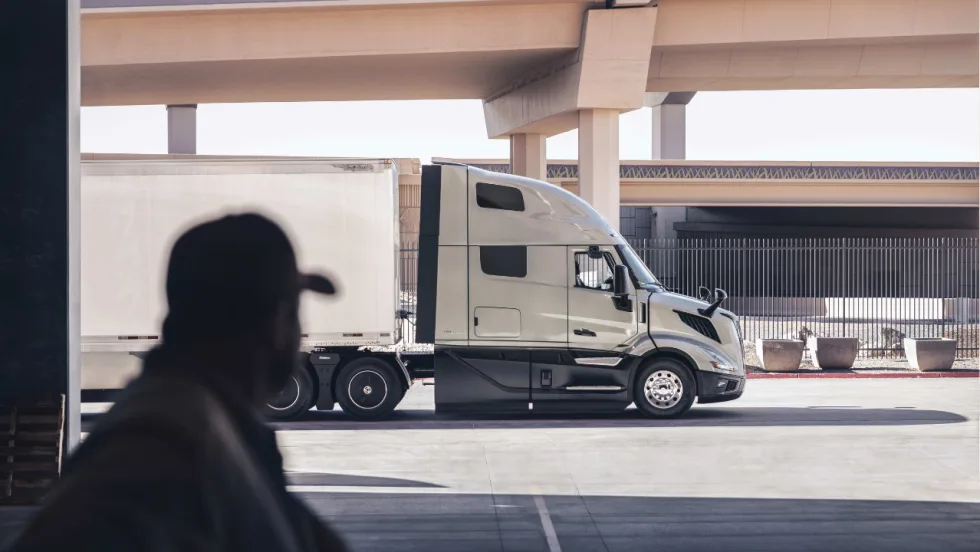
Volvo Trucks’ 'Lock and Leave' Software Updates Go Live Across North America
Unattended over-the-air software updates are now available in Volvo trucks across the U.S. and Canada. The new capability lets trucks stay current with the latest software without interrupting operations or requiring a dealership visit.
Read More →From Our Partners
Basic Tracking vs Next Generation Fleet Technology
Sponsored by AT&T Business
5 Facts Every Fleet Manager Should Know About Embedded Telematics
Sponsored by Stellantis/Mobilisights
How AI Video Telematics Boosts Driver Safety and Helps to Avoid Unnecessary Costs
Sponsored by Verizon Connect
Charting the 8 Bottom-Line Benefits of Workforce Optimization
Sponsored by Verizon Connect

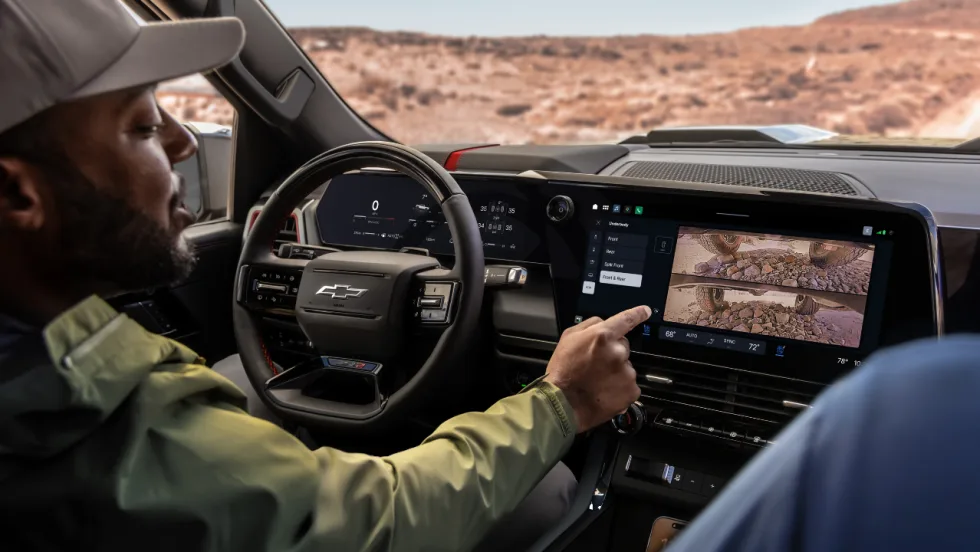
GM Brings New Truck Focused Interface to 2027 Silverado and Sierra
GM's new pickup interface puts trailering data, camera views, vehicle controls, and smartphone integration closer to the driver in the 2027 Silverado and Sierra.
Read More →
Samsara Driver Perks Expands Rewards Beyond the Long Haul Driver
Samsara’s new driver rewards program was built with a broader professional driver in mind, including employees who split their day between driving, job sites, service calls, and other work.
Read More →
AI Service Advisor Aims to Cut Fleet Repair Downtime
Fleetio said its AI Service Advisor can help fleets cut repair downtime by an average of 2.5 hours per repair while reducing manual maintenance work.
Read More →
Verra Mobility Launches AI-Driven Title & Registration Solution
Verra Mobility has launched a new AI-driven Title & Registration platform to help fleets move vehicles from acquisition to the road the same day while reducing compliance risk.
Read More →
Wialon Unlocks OEM Data to Give Fleet Owners Data Ownership & Operational Clarity
Wialon has introduced hardware-free OEM integration as the EU Data Act accelerates the shift in vehicle data access across the fleet industry in many countries.
Read More →
Teletrac Navman Promotes New CEO from Within
Teletrac Navman’s next CEO, Ricardo Buranello, has served as the company’s chief financial and operating officer. He brings deep financial and operational expertise, a strong strategic orientation, and an intimate knowledge of the business to his new role.
Read More →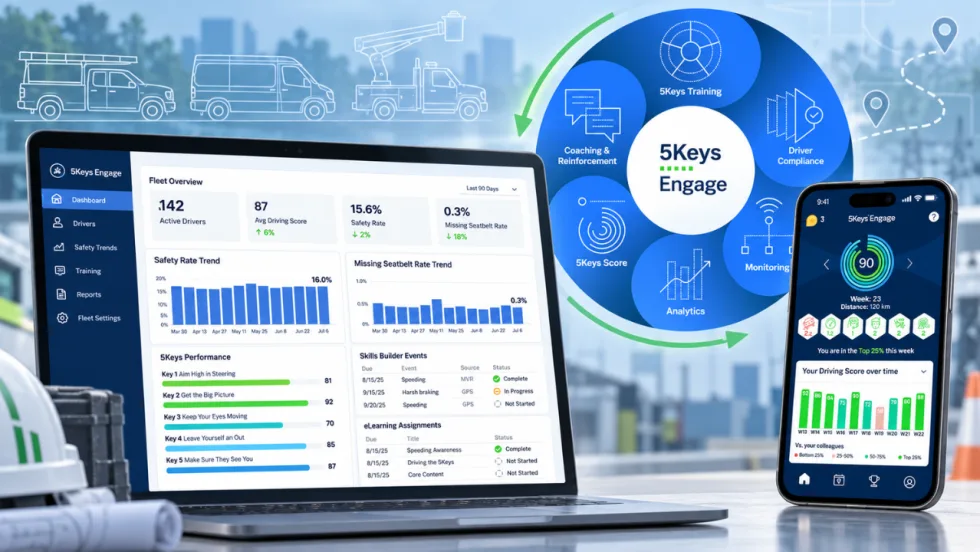
Smith System Wants Work Truck Fleets to Look Beyond the Driver Alert
Smith System’s new Driver Risk Management program is built to help mixed work truck fleets turn telematics alerts and observations into specific behaviors, coaching actions, and measurable follow-up.
Read More →