





Learn More: What to Look for in Remanufactured Parts
The Importance of Trailer Stability Systems
Here's how drivers and technicians can ensure safe and reliable operation.
March 23, 2022
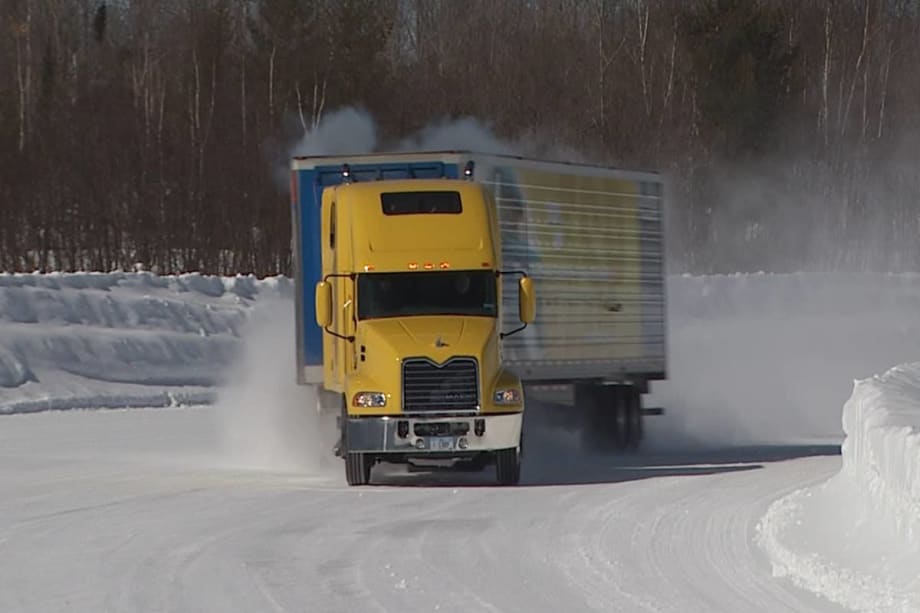
A trailer roll stability program (TRSP) uses sensors and wheel-end controls to detect conditions that may lead to a rollover and then intervene through brake applications, typically before the driver realizes an intervention is needed.
Photo: Bendix
5 min to read
Whether your fleet is large, small, or a single tractor-trailer, nobody wants to deal with a rollover: They’re dangerous, expensive, and can be damaging to your reputation. This installment of the Bendix Tech Tips series provides drivers and technicians with insights on the operation and maintenance of trailer roll stability systems that are designed to help prevent rollovers.
“Full-stability systems for tractors – like the Bendix ESP system – have been mandatory on new tractors since 2017 and were standard on many makes and models even before then,” TJ Thomas, director of marketing and customer solutions – Controls Group at Bendix, said. “Trailer roll stability technology provides additional protection against rollovers, whether or not the attached tractor is equipped with a stability system – which is important in situations where a fleet might not know all the specs of every tractor that hooks up to its trailers.”
The Basics of Trailer Stability
A trailer roll stability program (TRSP), like the Bendix family of Trailer Antilock Braking Systems (TABS) solutions, uses sensors and wheel-end controls to detect conditions that may lead to a rollover and then intervene through brake applications, typically before the driver realizes an intervention is needed. There are two basic types of trailer TRSPs: Single-channel and multichannel.
Single-channel configurations are typically built on an antilock braking system (ABS) configuration of two sensors and one modulator (2S/1M). This is a simple and popular solution that adds less weight without sacrificing performance and allows for easy installation and maintenance. It’s also a good choice for fleets looking to add trailer stability to an existing ABS system.
Multichannel TRSPs address different demands: They’ll be easier to install on vehicles with ABS systems that are already built with multiple sensor-and-modulator configurations, such as 2S/2M or 4S/2M. Additionally, tandem axle trailers are better served by a multichannel option, since each axle is sensed and controlled. Most key components of a multichannel TRSP are efficiently housed in a single, environmentally protected modular unit.
What Drivers Should Know About Trailer Stability
“The first thing any driver should know is what sort of stability system – if any – is on the trailer they’re pulling,” David Dennis, supervisor – Bendix Tech Team, said. “This is pretty easy to spot: You should be able to tell by looking at the information sticker on the trailer if it’s equipped with an ABS or roll stability. And just to be clear – if it’s got stability, it’s built on ABS. You can’t have stability without the ABS controls.”
Safety technologies like trailer stability complement safe driving practices, Thomas stressed. No commercial vehicle safety technology replaces a skilled, alert driver exercising safe driving techniques and comprehensive driver training. Responsibility for the safe operation of the vehicle remains with the driver at all times, which is why it’s important for the person behind the wheel to be aware of any system’s capabilities and possible interventions.
Monitoring a trailer stability system from the cab just requires a watchful eye: There’s an amber warning lamp located on the left rear side of a trailer, in view of a driver’s side mirror. If it’s illuminated, there’s an active Diagnostic Trouble Code (DTC), and it needs to be checked out as soon as possible. Additionally, on all tractors built after 2001, the trailer will communicate issues to the tractor through the power line carrier, which enables dashboard warning lights. It’s important to note a stability warning lamp does not mean the trailer has no brakes: It just indicates the ABS/stability system is not functioning – the brakes will operate normally.
Drivers may also catch on to trailer stability issues by listening to the “chuff test” the system runs at startup. When the tractor is keyed on, the air brake system runs through the process of firing the individual modulators to make sure they’re working – creating a series of clicks and “chuffs.” A system or modulator that has faulted will not produce the “chuff” sound.
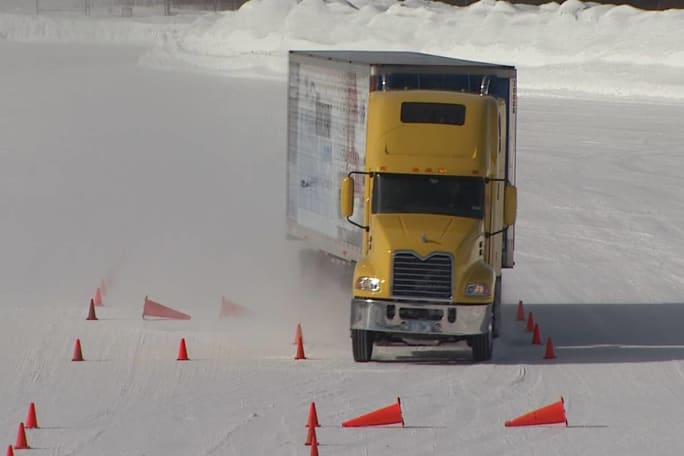
Safety technologies like trailer stability complement safe driving practices. No commercial vehicle safety technology replaces a skilled, alert driver exercising safe driving techniques and comprehensive driver training.
Photo: Bendix
In the Garage
When it comes to diagnosing an issue with a trailer stability system, details matter. If you’re the driver, try to provide as much information about the situation as you can: Do you notice, for example, the trailer pulls during long right turns – such as on a cloverleaf – or that the warning light comes on when you go over railroad tracks? Anything you can let the techs know about driving situations, road conditions, or weather is helpful. Owner-operators can also examine some DTCs themselves, as the trailer sticker will include basic blink code information providing insight on the severity of the fault.
Wiring-related issues are among the most common causes of trailer stability system faults, since weather and exposure can easily contribute to wire problems. In fact, many times, the system’s Electronic Control Unit (ECU) isn’t the primary cause, which reinforces the importance of knowing as much information about the circumstances as possible.
Technicians should begin by using a diagnostic tool such as Bendix ACom PRO to identify the ABS or stability system installed on the trailer. From there, deeper dives into the issue may be required, highlighting the importance of using up-to-date diagnostics.
“Safety and uptime depend on getting the right results quickly in the shop, so you need to make sure your diagnostics are equipped to recognize and support the newest ECUs and other connected components,” Dennis said. “Trailer stability maintenance is a three-step process: Identify the failure, address the failure, and clear the code. Making the right moves along the way is what will get your vehicles back on the road and rolling safely.”
Subscribe to Our Newsletter
More Safety & Compliance
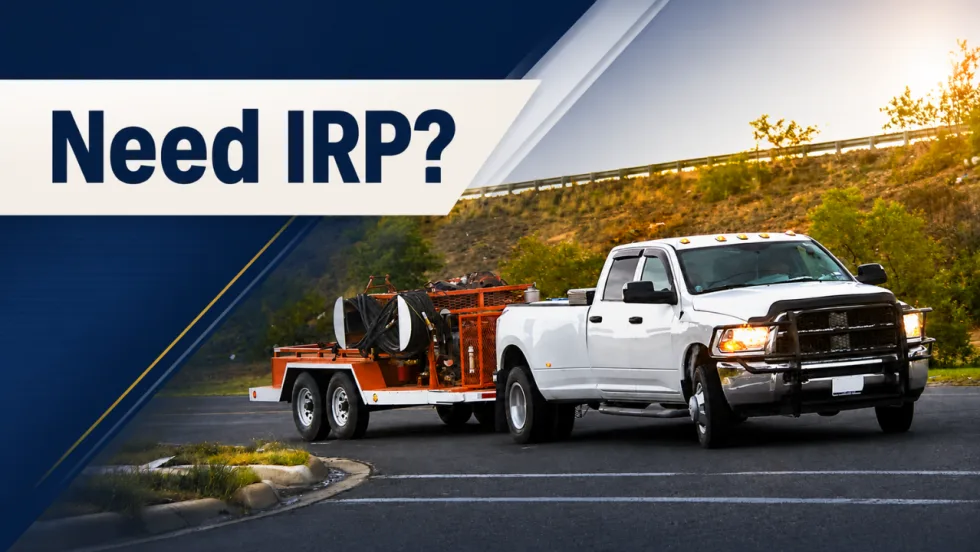
When Work Trucks Under 26,001 Pounds Need IRP Registration
Think trucks under 26,001 pounds are automatically in the clear when it comes to IRP? Not always. Learn where lighter vehicles can still run into trip permit, apportioned registration, and IFTA compliance requirements when crossing state or provincial lines.
Read More →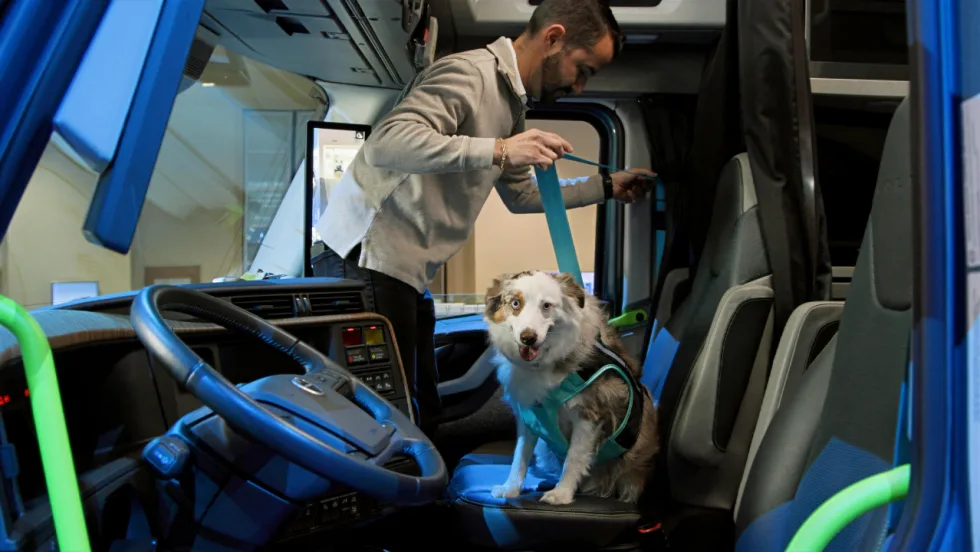
Volvo Trucks Releases New Safety Recommendations for Traveling with Pets
One of the most important recommendations for professional drivers traveling with pets is to ensure pets are properly restrained while the truck is moving. Other tips are available in the new guide from Volvo Trucks North America and Center for Pet Safety.
Read More →
API Issues Refueling Safety Guidelines
The American Petroleum Institute offers a list of safe vehicle refueling guidelines, including ways to avoid potential problems with static electricity discharges in fall, winter, and early spring.
Read More →


Winter Fleet Prep: Expert Tips to Keep Vehicles Running Smoothly
Cold weather can expose weak batteries, tires, fuel systems, and maintenance gaps fast. Use this winter fleet checklist to prepare trucks and drivers before temperatures drop.
Read More →
When a Work Truck Breaks Down, the Job Can Stop, Too
A work truck breakdown can stop more than the vehicle. Discover how payloads, jobsites, and specialty equipment change the roadside response.
Read More →
What Stronger Long-Term Fleet Service Partnerships Actually Require
Fleet service partnerships rarely fall apart all at once. Learn the three warning signs that trust is eroding and what fleets and providers can do before downtime, frustration, and lost revenue follow.
Read More →
Applause & TRUCE Software Partner to Improve Driver Safety Through AI-Powered Telematics & Employee Performance Management
Applause has integrated TRUCE driving metrics directly into its employee-first performance and safety platform that transforms mobile devices into AI-powered telematics.
Read More →
How Detroit Assurance with Active Brake Assist Works
Do you want to see what it is like to experience Detroit Assurance’s Active Brake Assist? In this video, Work Truck will put you in the cab to see how it all works and then hear more details from DTNA’s Mike Young.
Read More →
Get Left of Loss: A 5-Step Workplace Violence Prevention Framework for Fleet Operators
Violence risks do not stop at the driver’s door. Learn five practical steps fleets can take to spot threats early and protect workers before loss occurs.
Read More →
Sponsored•July 17, 2026
How Better Visibility Cut Speeding Violations by 48%
Fleet leaders don't need more data, they need clearer visibility into what the data is saying. This case study explores how one utility replaced speeding-event counts with a single metric — miles driven in violation — to strengthen safety and significantly reduce speeding violations.
Read More →