




Meals on Wheels People Debuts Electric-Solar Van
The van comes equipped with a refrigerated unit so it can deliver ready meals to children and families experiencing food insecurity.

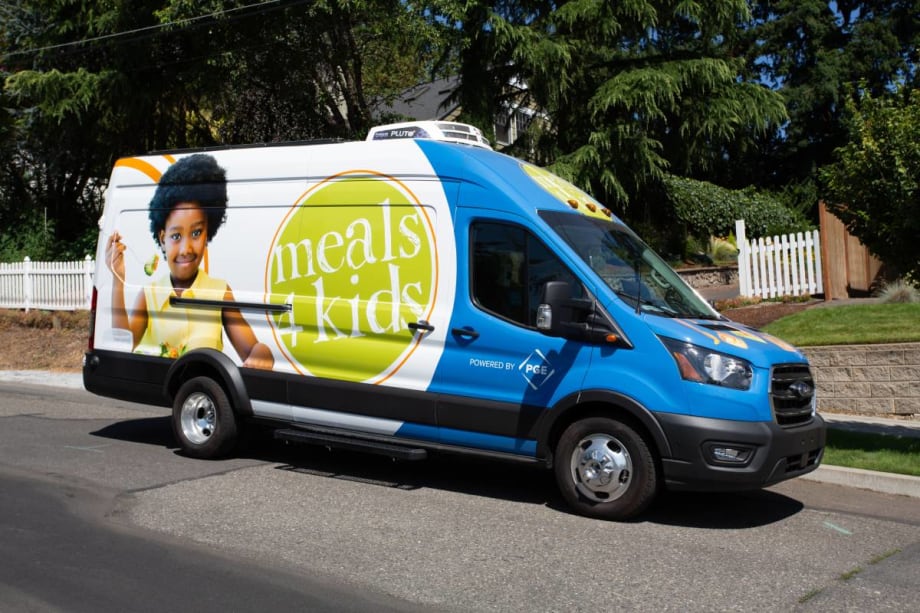
The zero emission Lightning Electric Transit Van has joined the fleet of Meals on Wheels People in Portland, Oregon, and is believed to be the first electric van deployed in the U.S. with a fully functioning solar-powered refrigeration system, according to the group.
Photo: Meals on Wheels People
Meals on Wheels People in Portland, Oregon recently begain using an all-electric van with a solar-powered refrigeration unit, according to an Aug. 9 press release.
The van, built by Lightning eMotors of Loveland, Col., is believed to be the first electric van deployed in the U.S. with a fully functioning solar-powered refrigeration system, used to keep meals fresh for delivery. The refrigeration unit is powered by a 12-volt battery pack charged by the vehicle when the van is plugged in and by a solar panel when the it sits in the sun.
The Lightning Electric Transit Van is a zero-emission vehicle that will be used for the Meals 4 Kids, which serves qualified children and families within Portland experiencing food insecurity. Meals 4 Kids and is funded by the Portland Children’s Levy.
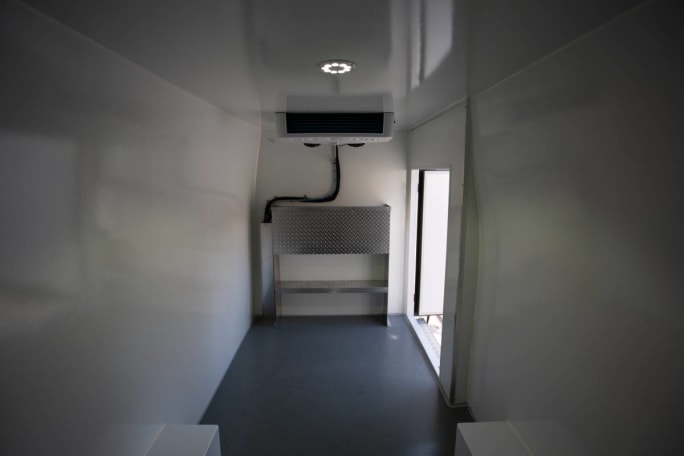
The refrigeration unit is powered by a 12-volt battery pack charged by the vehicle when the van is plugged in and by a solar panel when the it sits in the sun.
Photo: Meals on Wheels People
The Meals on Wheels People fleet van is supported by a grant from the Portland General Electric (PGE) Drive Change Fund, which draws its funds via the Department of Environmental Quality’s (DEQ) Clean Fuels Program. Through an annual competitive grant process, Meals on Wheels People received the grant in 2020. The PGE Drive Change Fund enabled Meals on Wheels People to purchase two electric vehicles and install EV charging stations at its headquarters in Multnomah Village, allowing staff, volunteers and the public to charge their vehicles while on location.
"Sustainability is part of our corporate culture and Meals on Wheels People is committed to reducing its impact on the environment,” said Meals on Wheels People CEO Suzanne Washington, in the news release. “Converting to electric vehicles is just one step in our green initiative and helped us earn a spot on the list of 100 Best Green Workplaces in Oregon. We are extremely grateful to PGE for providing us the funding for our new electric vehicles and charging stations.”
Eva DeCesaro, manager of PGE’s Clean Fuels Program, added, “This electric van and charging infrastructure will contribute to the reduction of emissions not just for the wonderful people at Meals on Wheels, but for everyone they serve, and the larger community here in Oregon.”
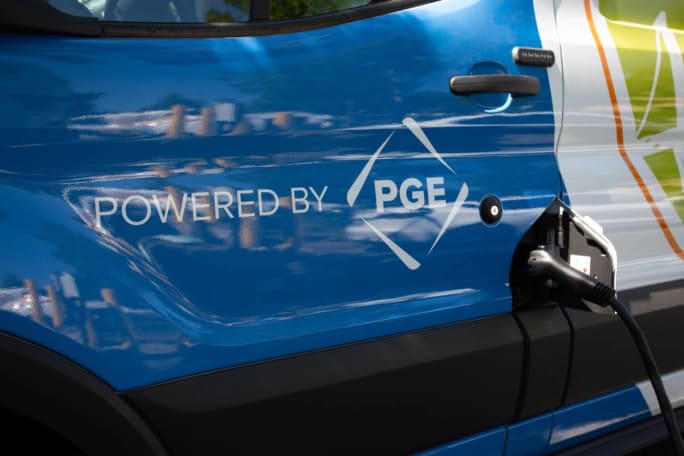
The PGE Drive Change Fund enabled Meals on Wheels People to purchase two electric vehicles and install electric vehicle charging stations at its headquarters, allowing public charging access.
Photo: Meals on Wheels People
To build the Class 3 vehicle, Lightning eMotors partnered with refrigeration manufacturer Volta Air, based in Canada, and solar-panel supplier Merlin Solar of San Jose, Calif. The van is capable of traveling delivery routes while maintaining cargo at refrigerator temperatures – all with zero emissions. Emerald Transportation Solutions of Fayetteville, Georgia installed the refrigeration unit, its battery pack and insulation liner.
“Last-mile delivery of chilled food via electric vehicles is expected to be an emerging trend as more zero-emission vehicles are deployed,” said Bill Kelley, chief technical officer, Lightning eMotors. “Our engineering team worked very closely with Volta Air to assure seamless integration of this innovative battery charging and refrigeration functionality. It’s a pleasure to be able to deliver this innovative van to Meals on Wheels People.”
Originally posted on Charged Fleet
More Green Fleet

Fleet Forward Conference Introduces One-Day Passes for 2026
New one-day registration gives fleet professionals the flexibility to attend Tuesday, Wednesday, or Thursday, with passes available for $199 through Sept. 18.
Read More →
CALSTART Rebrands as Catalyst Mobility, Will Combine with Forth in 2027
CALSTART has rebranded as Catalyst Mobility and will combine with Forth at the start of 2027. The new organization said it is poised to become one of the world's largest, strongest, and most impactful clean transportation nonprofits.
Read More →
Electric Truck and Charging Programs to Boost Sustainability at NY & NJ Ports
Together, the Port Authority of New York and New Jersey and CALSTART will electrify drayage and terminal operations serving the East Coast’s busiest container port. A pair of incentive programs totaling $45 million has launched to accelerate adoption of zero-emission drayage trucks and terminal tractors.
Read More →

Xos Hub Surpasses One Gigawatt-Hour of Energy Delivered in the Field
A single Xos Hub has surpassed one gigawatt-hour of energy across more than 33,600 charging sessions in the field, demonstrating performance that supports Xos' expansion across new products and markets.
Read More →
Carrier Transicold Launches All-Electric Vector 8200 TRU for Diesel-Free On-Site Cold Storage
Carrier Transicold’s first engineless multi-temperature TRU helps fresh- and frozen-food fleets add supplemental cold storage capacity during seasonal peaks.
Read More →
Narro Trucks Introduces Electric Utility Vehicle
Narro Trucks officially launched its operations on Aug. 20 and hosted a ride and drive to showcase its electric truck, which will be produced in Virginia.
Read More →
Samsung SDI Takes Full Control of GM Battery JV as Indiana Plant Pivots to Energy Storage
Samsung SDI is taking full control of its Indiana battery plant with GM, marking a major shift from the EV-focused joint venture Charged Fleet first covered in 2023.
Read More →
NWSA Taps CALSTART to Administer Zero-Emission Drayage Assistance Program
CALSTART will provide free technical assistance services to drayage fleets serving the Ports of Seattle and Tacoma and looking to transition to cleaner technologies and help decarbonize freight hubs.
Read More →
EV Fleet Reality Check: What Operators Wish They Knew Before Electrifying Their Work Vans
Electric work truck upfits bring new compatibility questions. Learn how parts availability, OEM guidance, power demands, and route planning can affect fleet performance.
Read More →
Peterbilt Expands Sourcewell Partnership with Electric Vehicle Lineup
Peterbilt Motors Company’s cooperative purchasing agreement with Sourcewell and its Canadian partner, Canoe Procurement Group, now includes including Peterbilt's battery-electric vehicle lineup.
Read More →