




Work Demands Contribute to Distracted Driving Behaviors
Drivers continue to struggle to obey state laws that prevent cell phone use, due in part by demands or pressure from work that lead drivers to read or send emails while driving.


Drivers continue to struggle to obey state laws that prevent cell phone use, due in part by demands or pressure from work that lead drivers to read or send emails while driving.
Photo: NSC
Drivers continue to struggle to obey state laws that prevent cell phone use, due in part by demands or pressure from work that lead drivers to read or send emails while driving, according to a survey released by the National Safety Council (NSC) and TRUCE Software.
In the survey of 2,001 registered drivers ages 25 and older across the country, 46% say “demands or pressure from work” leads them to glance at, read, or send emails while driving.
Further, NSC and TRUCE said it urges employers to promote a safe driving culture, something the survey indicated many companies may not foster effectively enough. Since October is Distracted Driving Awareness Month, NSC and the observation’s lead sponsor, TRUCE, a company dedicated to decreasing workplace distraction and improving worker safety, are urging employers to enact distracted driving policies at their workplaces to compensate for many drivers’ unwillingness to adhere to state laws.
“Employers are in a unique position to influence behaviors across large groups of individuals by making sure they have the right policies in place and the tools to enforce those policies, changing not just what happens behind the while but also how the rest of the organization communicates with their driving coworkers,” said Joe Boyle, CEO of TRUCE.
The study also observed that approximately 62% of drivers are “very willing” to obey cell phone use laws.
Thousands die each year in distracted driving crashes, though National Safety Council investigations show these crashes are significantly underreported and undercounted, according to the coucil. Despite 48 states banning texting while driving, and 25 states banning handheld use, drivers responding to the NSC-TRUCE survey indicated it will take more than laws to change their behaviors.
Approximately, 61% said they would need to be involved in a near-miss – and 59% said they would have to be involved in a fatal crash – to be dissuaded from using technology while driving. Another 58% cited state laws and 52% cited federal laws as being enough to change behavior. Encouragingly, 56% said they believe employers policies are effective distracted driving deterrents.
Other important findings from the poll include:
More than 65% of drivers would be willing to turn around to get their phone if they realize they didn’t have it within the first 15 minutes of driving.
81% of drivers said they’ve seen other drivers almost cause a crash because they were distracted.
59% of respondents say pressure from family would motivate them the most to answer or make a cell phone call while driving.
Nearly 14% of drivers admitted they would participate in video chat or watch streaming video if there were no laws prohibiting it.
32% of drivers still think they can use their phone safely as long as they pay attention to the road.
Also, 57% say that if their vehicle came pre-set with solutions to eliminate distraction while driving, they would not turn the features off.
Originally posted on Automotive Fleet
More Safety

Volvo Trucks Releases New Safety Recommendations for Traveling with Pets
One of the most important recommendations for professional drivers traveling with pets is to ensure pets are properly restrained while the truck is moving. Other tips are available in the new guide from Volvo Trucks North America and Center for Pet Safety.
Read More →
API Issues Refueling Safety Guidelines
The American Petroleum Institute offers a list of safe vehicle refueling guidelines, including ways to avoid potential problems with static electricity discharges in fall, winter, and early spring.
Read More →
Winter Fleet Prep: Expert Tips to Keep Vehicles Running Smoothly
Cold weather can expose weak batteries, tires, fuel systems, and maintenance gaps fast. Use this winter fleet checklist to prepare trucks and drivers before temperatures drop.
Read More →
When a Work Truck Breaks Down, the Job Can Stop, Too
A work truck breakdown can stop more than the vehicle. Discover how payloads, jobsites, and specialty equipment change the roadside response.
Read More →
What Stronger Long-Term Fleet Service Partnerships Actually Require
Fleet service partnerships rarely fall apart all at once. Learn the three warning signs that trust is eroding and what fleets and providers can do before downtime, frustration, and lost revenue follow.
Read More →
Applause & TRUCE Software Partner to Improve Driver Safety Through AI-Powered Telematics & Employee Performance Management
Applause has integrated TRUCE driving metrics directly into its employee-first performance and safety platform that transforms mobile devices into AI-powered telematics.
Read More →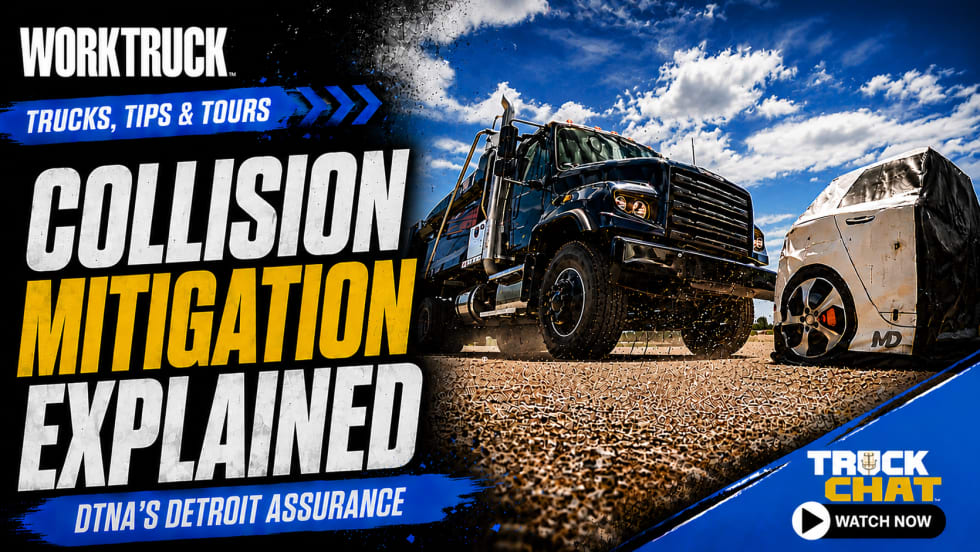
How Detroit Assurance with Active Brake Assist Works
Do you want to see what it is like to experience Detroit Assurance’s Active Brake Assist? In this video, Work Truck will put you in the cab to see how it all works and then hear more details from DTNA’s Mike Young.
Read More →
Get Left of Loss: A 5-Step Workplace Violence Prevention Framework for Fleet Operators
Violence risks do not stop at the driver’s door. Learn five practical steps fleets can take to spot threats early and protect workers before loss occurs.
Read More →
How Better Visibility Cut Speeding Violations by 48%
Fleet leaders don't need more data, they need clearer visibility into what the data is saying. This case study explores how one utility replaced speeding-event counts with a single metric — miles driven in violation — to strengthen safety and significantly reduce speeding violations.
Read More →
13 Safe Driving Tips for Commercial Vehicle Drivers
Make sure you are spending time on the road safely with these important tips.
Read More →