





Related: XL Fleet Launches Sales & Installation Partner Network
XL Fleet Is Going Public: What Does it Mean for Fleets?
The infusion of $350 million will accelerate development of fully electric options and a move into Classes 7 and 8.
September 27, 2020

XL was the first member of Ford’s e-QVM program in 2017. Its systems are currently available on Ford F-150 and F-250 (pictured), Ford E-350 and E-450, Ford Transit, Ford F-59 Super Duty, Chevrolet Express and GMC Savana, Chevrolet and GMC 3500 and 4500.
Photo courtesy of XL Fleet.
3 min to read
On Sept. 18, XL Fleet announced a merger with Pivotal Investment Corporation II, a publicly traded special purpose acquisition company (SPAC).
The combined company will be named XL Fleet and is expected to be listed on the New York Stock Exchange under the ticker symbol “XL.” The anticipated value of the company is about $1 billion, with the transaction expected to be completed in the fourth quarter.
Founded in 2008, XL Fleet is a provider of hybrid and plug-in hybrid powertrain conversions for U.S. and Canadian commercial fleet vehicles built by Ford, Chevrolet, GMC, and Isuzu.
While the overall fleet size with XL’s hybrid and plug-in hybrid systems to date is modest — topping out at an estimated 4,200 units when 2020 is complete — the company claims a client base of more than 200 customers, including FedEx, The Coca-Cola Company, PepsiCo, Verizon, the City of Boston, Seattle Fire Department, Yale University, and Harvard University. Those clients have driven a cumulative 130 million miles.
The combined company is expected to have about $350 million in net cash at closing. According to an investor presentation, XL expects to double its 2020 sales to over 9,000 units in 2021 and grow from there. Where and how?
XL will divide the cash for various initiatives. In addition to scaling existing organizational capacity and operations, other areas of focus will be product development, international expansion, exploration of “buy versus make” opportunities to accelerate product timelines, and development of applications, infrastructure, and vehicle financing under the heading of Electrification-as-a-Service.
On the product side, the merger will allow XL to accelerate its existing product pipeline in vehicle Classes 2 to 6 for existing clients as well as new ones, said Eric Foellmer, director of marketing. Going further, “This (deal) opens us up to explore new opportunities in Classes 7 and 8,” he said.
And it allows the company to widen beyond its hybrid and plug-in hybrid systems to fully electric options, which XL had already been developing, Foellmer said.
However, Foellmer doesn’t anticipate that XL will stray from its core business model, which is to integrate its electrified powertrain platform on existing chasses.
“We’ve been very successful as a powertrain-driven company, and we will continue to leverage chasses from OEM partners like Ford, GM, and Isuzu,” he said. “We’re not going to become a manufacturer that makes the entire vehicle.”
It has been a busy year with companies in the electrification space going public or on that path, particularly with SPAC mergers. (See Nikola, Lordstown Motors, Canoo, ChargePoint, Fisker). Foellmer made sure to point out that XL has been product-ready for years. “Rather than the promise of future product delivery as a result of this funding, we already have vehicles on the road,” he said. “We’ll be able to give (clients) access to a wider array of electrification solutions.”
When it comes to electrification, any unit penetration in wheels on the road is milestones ahead of other upstarts in the space. “We’re a real company with real products that we’re already selling to fleets,” Foellmer said.
Topics:XL FleetPHEVBattery-Electric TrucksPlug-In Hybrid Electric VehiclesHybrid TrucksFuelGreen FleetSmall Fleet
Originally posted on Automotive Fleet
More Fuel

The Smart Way to Build a Mixed-Energy Fleet Isn’t About Picking a Side
Mixed-energy fleets aren’t about picking a winning fuel. Sarah Booth of WEX explains how vehicle data, duty cycles, charging strategy, and real-world costs can help fleets choose the right energy source for each job.
Read More →
Ignoring This Dashboard Warning Could Cost Your Fleet Thousands in Fuel
New research suggests neglected diesel aftertreatment systems could waste up to $30 in fuel per vehicle each day. Here's why vocational fleets should pay attention.
Read More →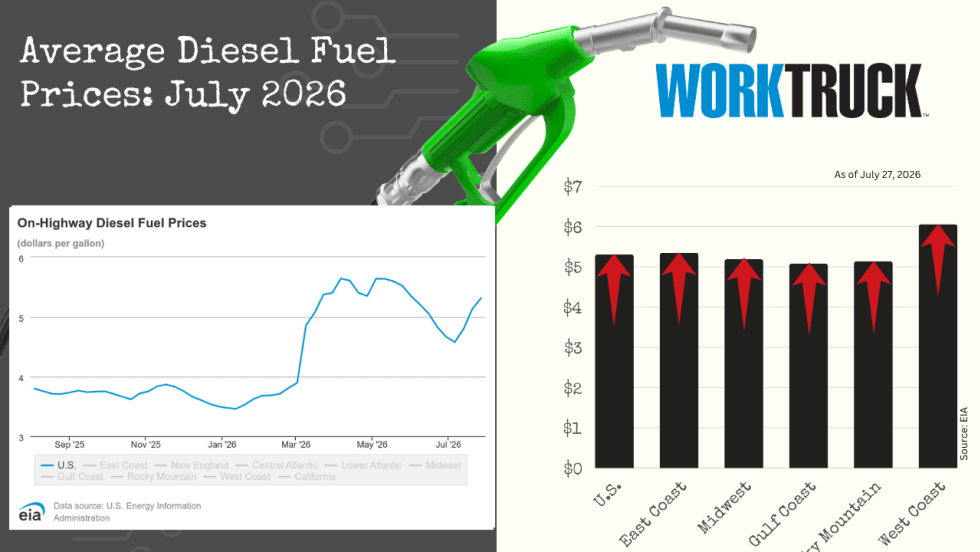
July Diesel Trends Update
The average price of a gallon of diesel increased again this week, and the EIA reported a new national average of $5.31 at the start of the week.
Read More →
WEX Brings Standard Fleet's Connected Vehicle Platform to Fleet Customers
This week’s product launch with Standard Fleet’s connected vehicle platform reflects WEX Venture Capital's strategy of turning startup innovation into customer solutions. Standard Fleet is now available to WEX fleet customers.
Read More →
Teletrac Navman Adds Mixed-Energy Fleet Tools to TN360
The new Energy Hub combines fuel transactions, EV charging data, vehicle range, and energy costs in one dashboard for fleets operating multiple vehicle and energy types.
Read More →
WEX DriverDash adds CITGO, Expands Nationwide Access for Fleets
The DriverDash mobile payment app, by WEX, has been integrated into the CITGO merchant network, which means WEX has expanded its U.S. station footprint with the addition of approximately 4,000 CITGO locations.
Read More →
Mixed Energy Fleet Tips for Balancing EVs, Gas and Diesel Vehicles
Mixed energy fleets are becoming the new normal. Learn how fleet managers are balancing EVs, gas and diesel vehicles while controlling costs and planning for the future.
Read More →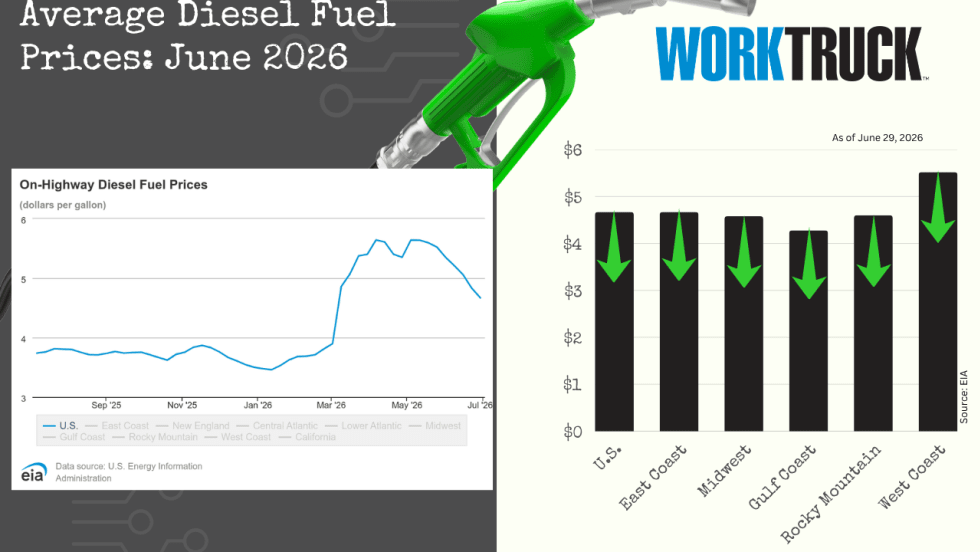
June Diesel Trends Update
The national average price of a gallon of diesel has dropped again, this week by more than 16 cents. All five regions reported lower average prices, ranging from almost 13 cents to more than 28 cents cheaper than a week ago.
Read More →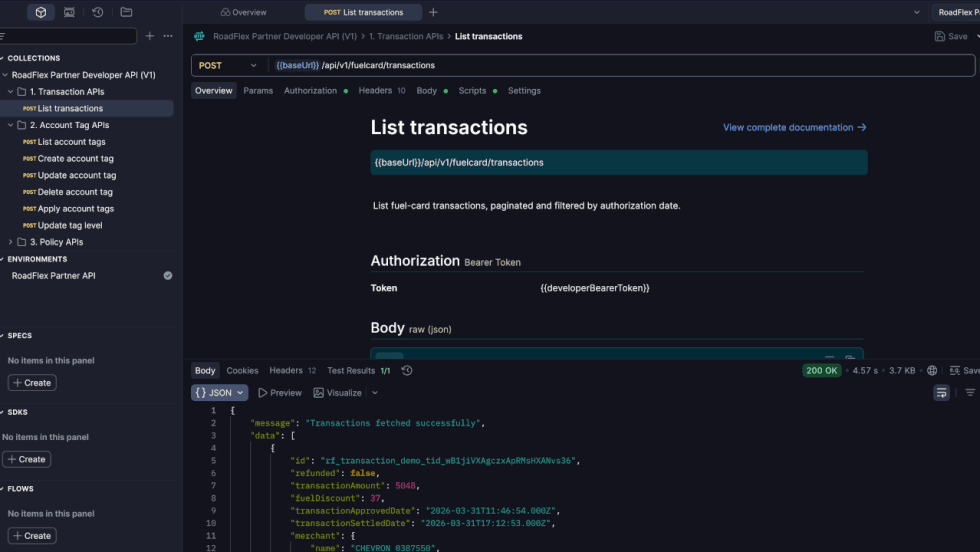
RoadFlex Launches RoadFlex Direct Open API Platform
RoadFlex Direct connects fuel cards, controls, and data to the telematics and fleet management systems fleets already run, from Geotab and Samsara to Fleetio and RTA, with no separate dashboard or double data entry.
Read More →
The Key to Fuel Efficiency Sits in the Cab
Learn how driver behavior, telematics, coaching, and fuel data can help fleets improve fuel efficiency, lower costs, and reduce emissions.
Read More →