





Fleet Safety Tip: Prioritize Your Drivers' Safety With Heat Stress Prevention
What is Cool Paint Technology for Truck Fleets?
The complicated answer? Embedded metamaterial helps lower cabin temperatures and reduce energy usage. The short answer? It helps take the heat out of summer.
August 10, 2024

When parked side-by-side in the sun, a vehicle treated with Nissan's cool paint showed a reduction in exterior surface temperatures of up to 21.6 degrees Fahrenheit and up to 9 degrees Fahrenheit cooler interior temperatures compared to a vehicle with traditional automotive paint.
Photo: Nissan
4 min to read
As part of Nissan's pursuit of differentiated innovations that empower journeys and help create a cleaner, more sustainable society, it has been trialing an automotive paint that can help lower a vehicle's ambient cabin temperature in summer and reduce the energy usage of the air-conditioning system.
Developed in partnership with Radi-Cool, the paint incorporates metamaterial, synthetic composite materials with "structures that exhibit properties not usually found in nature," according to a release from the automaker.
What Benefit Could Cool Paint Technology Have for Work Truck Fleets?
In November 2023, Nissan commenced a 12-month feasibility trial at Tokyo International Air Terminal at Haneda.
In collaboration with Japan Airport Terminal Co., Ltd., Radi-Cool Japan, and All Nippon Airways (ANA) airport service, Nissan's cool paint has been applied to a Nissan NV100 service vehicle operated by All Nippon Airways (ANA) airport services.
The NV100 is Nissan's mini commercial vehicle supplied by Suzuki Motor Corporation as OEM (Original Equipment Manufacturer) supply vehicles.
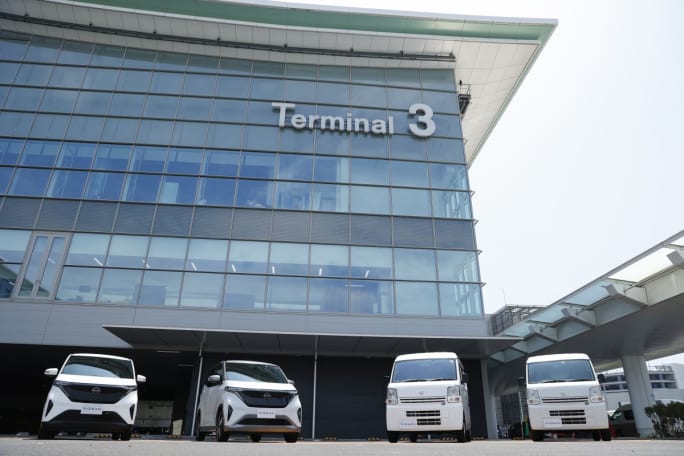
In collaboration with Japan Airport Terminal Co., Ltd., Radi-Cool Japan, and All Nippon Airways (ANA) airport service, Nissan's cool paint has been applied to a Nissan NV100 service vehicle operated by All Nippon Airways (ANA) airport services.
Photo: Nissan
Haneda airport, with its large, open tarmac, provided the perfect environment to evaluate the performance of the paint in real-world conditions, particularly in high-temperature environments.
Although still in the testing phase, the results so far have been impressive. When parked side-by-side in the sun, a vehicle treated with Nissan's cool paint showed a reduction in exterior surface temperatures of up to 21.6 degrees Fahrenheit and up to 9 degrees Fahrenheit cooler interior temperatures compared to a vehicle with traditional automotive paint.
Nissan noted that the paint's cooling performance is particularly noticeable when a vehicle is parked in the sun for an extended period. A cooler cabin not only makes entry more pleasant, but also reduces the need for prolonged air-conditioning use to achieve a comfortable temperature.
This ultimately reduces the load on the engine and, in the case of an electric vehicle, minimizes battery use. These improvements are expected to enhance efficiency and occupant comfort in both types of vehicles.
How Does Cool Paint Technology Work?
Nissan's cool paint contains a metamaterial with two types of microstructure particles that respond to light.
One particle reflects near-infrared rays from sunlight, which would normally cause traditional paint to heat up due to molecular vibrations in the resin. The second particle is the real game-changer, as it generates electromagnetic waves that counteract the sun's rays by redirecting the energy away from the vehicle and into the atmosphere.
Together, these particles reduce the transfer of heat to surfaces such as the roof, hood, doors, and panels.

Dr. Susumu Miura, a senior manager and expert at the Advanced Materials and Processing Laboratory at the Nissan Research Center, is leading the development of this technology.
Photo: Nissan
What on earth does all of this mean for the commercial fleet manager? For the commercial fleet manager, this means Nissan's new paint helps keep vehicles cooler. The special paint uses tiny particles to reflect sunlight and redirect heat away from the vehicle, reducing the amount of heat absorbed by the truck's surfaces. This can help lower the interior temperature, potentially reducing the need for air conditioning and improving fuel efficiency. It also helps protect the vehicle's components from heat-related wear and tear.
Dr. Susumu Miura, a senior manager and expert at the Advanced Materials and Processing Laboratory at the Nissan Research Center, is leading the development of this technology. He has previously contributed to Nissan's award-winning noise-reducing acoustic material and has focused much of his career on finding ways to make cars quieter, cooler, and more efficient.
"My dream is to create cooler cars without consuming energy," Miura explained.
"My dream is to create cooler cars without consuming energy," Miura explained. "This is especially important in the EV era, where the load from running air-conditioning in summer can have a sizable impact on the state of charge."
Improving on Previous Cooling Paint Technologies
While it sounds pretty futuristic, radiant cooling paint isn't new. It is typically used for buildings and structures and is often very thick, requiring application by a paint roller. Devoid of any clear topcoat, it can leave a chalky residue when touched.
A quick Google search shows several options you can buy today for building paints, industrial equipment, and more, but not much for vehicles.
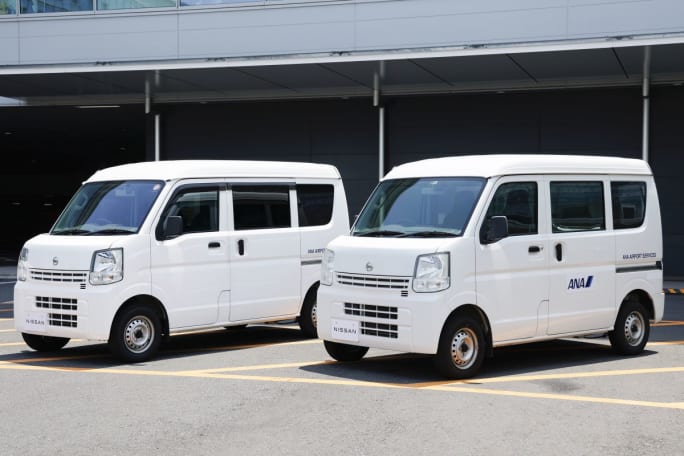
Nissan noted that the paint's cooling performance is particularly noticeable when a vehicle is parked in the sun for an extended period
Photo: Nissan
Key challenges Miura had to consider when developing an automotive version, was to ensure it could incorporate a clear topcoat, be applied via a spray gun (not a roller), and meet Nissan's rigorous internal standards for paint quality.
Since commencing the development in 2021, Miura and his team have tested over 100 samples, and are currently evaluating a thickness of 120 microns, approximately six times thicker than typical automotive paint.
Additionally, the team confirmed resistance to:
Salt and chipping
Peeling
Scratches
Chemical reaction
Color consistency
Repairability
Miura and his team are continuing to explore thinner options that provide the same level of cooling performance as development progresses. Their hope is that, in the future, these options can be made available for special orders in a variety of colors.
Miura sees strong potential for these options, especially in light commercial vehicle applications such as vans, trucks, and ambulances that are constantly on the road.
More Vehicle Insights
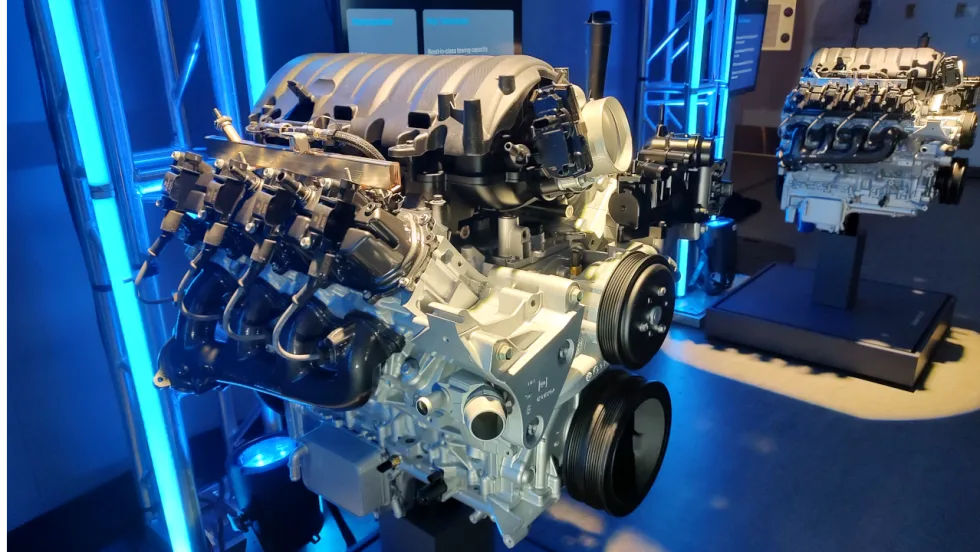
GM Unveils New Sixth-Generation Small Block Engines for 2027 Light-Duty Pickups
General Motors unveiled two new small-block engines, backed by extensive real-world validation and more than 70 years of small-block V8 manufacturing experience, as part of the engine portfolio for the 2027 Chevrolet Silverado 1500 and GMC Sierra 1500.
Read More →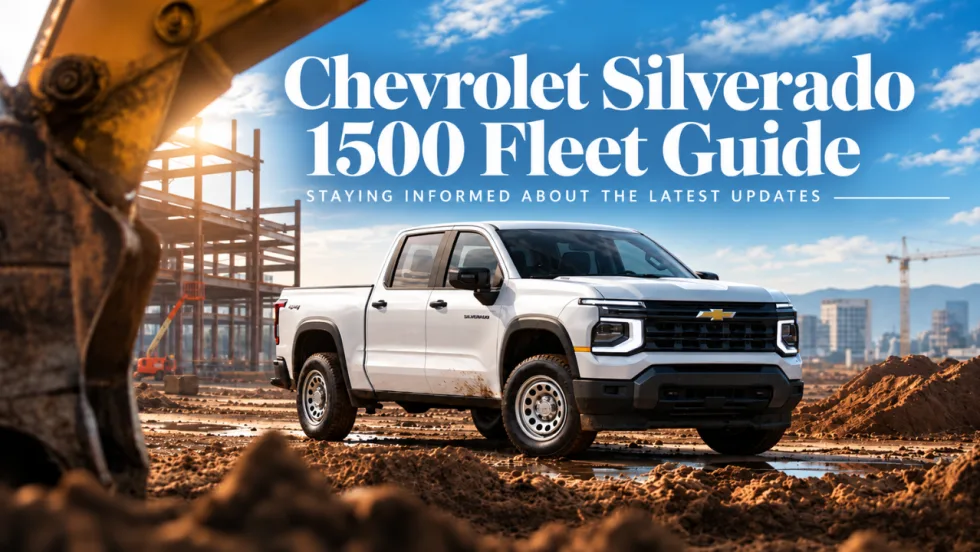
Chevrolet Silverado 1500 Fleet Guide Specs Capability and 2027 Model-Year Updates
The next-generation 2027 Chevrolet Silverado 1500 brings new V-8 engines, updated technology, expanded safety features, and a fleet-focused Work Truck. Here’s what commercial fleets need to know so far.
Read More →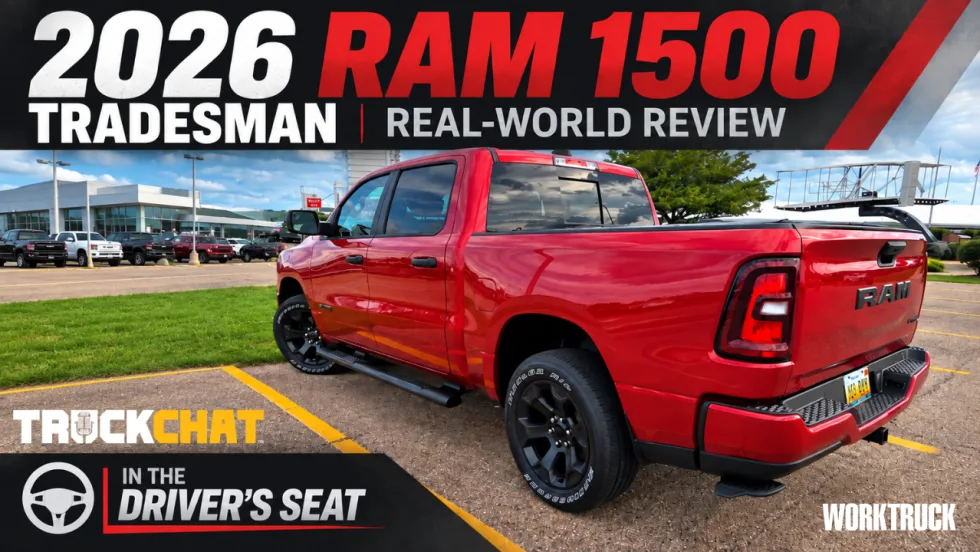
2026 Ram 1500 Tradesman Put to a Real-World Fleet Test
A few days behind the wheel of a 2026 Ram 1500 Tradesman turned into a test of visibility, parking, work-ready features, and even severe-weather driving.
Read More →
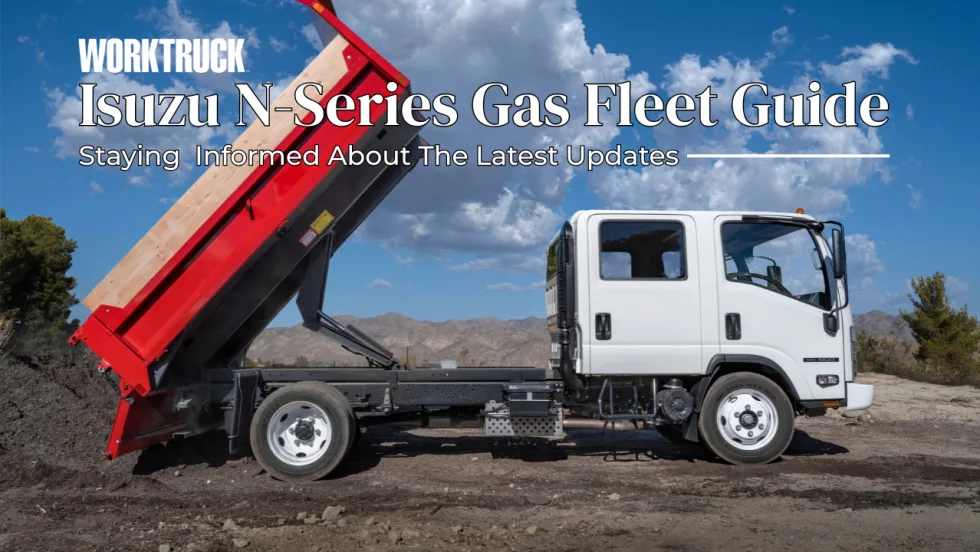
Isuzu N-Series Gas Fleet Guide: Specs, Capability and 2027 Model-Year Updates
Explore Isuzu Truck North America’s N-Series Gas fleet specs, engine performance, GVWR and payload capability, configurations, chassis dimensions, work-focused features, and 2027 model-year information.
Read More →
Ram ProMaster City Fleet Guide Specs Cargo Capacity and 2027 Updates
Work Truck’s Ram ProMaster City Fleet Guide tracks the latest specifications, cargo capability, configurations, fleet technology, pricing, and model-year updates for Ram’s mid-size commercial van.
Read More →
Ford F-150 Fleet Guide Specs Capability and 2026 Model-Year Updates
Explore 2026 Ford F-150 fleet specs, engines, towing and payload capability, configurations, work features, technology, and model-year updates.
Read More →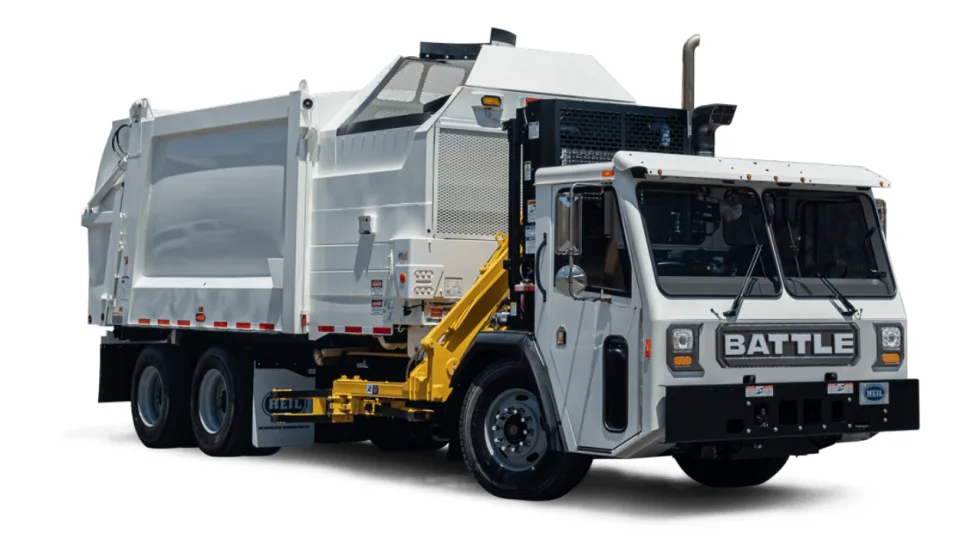
TCI Now Sells & Supports Battle Motors’ Vocational Trucks
Midwest truck dealer Truck Centers, Inc. (TCI) has expanded its transportation solutions with sales and service support for Battle Motors’ heavy-duty vocational trucks at locations in locations in Indiana, Illinois, and Missouri
Read More →
Ram 1500 Fleet Guide Specs, Capability and 2027 Model-Year Updates
Explore always up-to-date Ram 1500 fleet specs, engines, towing and payload capability, configurations, technology, pricing updates, and model-year changes.
Read More →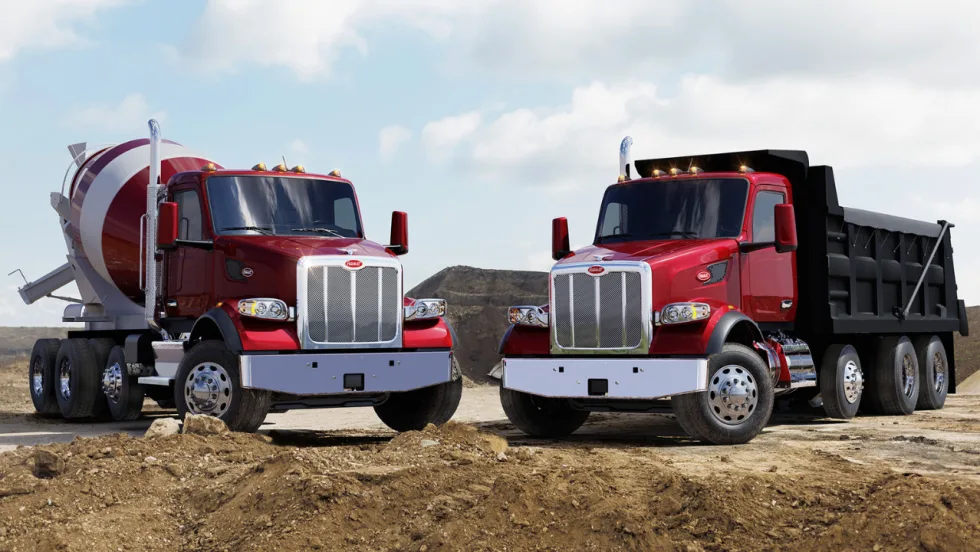
Peterbilt Trucks Equipped with Paccar TX-18 Pro Boost Efficiency for Maryland Fleet
Patuxent Companies is replacing aging trucks with the Peterbilt Model 567 and Model 589, specified with the Paccar TX-18 Pro 18-speed automated transmissions, and is reporting an 8% to 10% improvement in fuel economy.
Read More →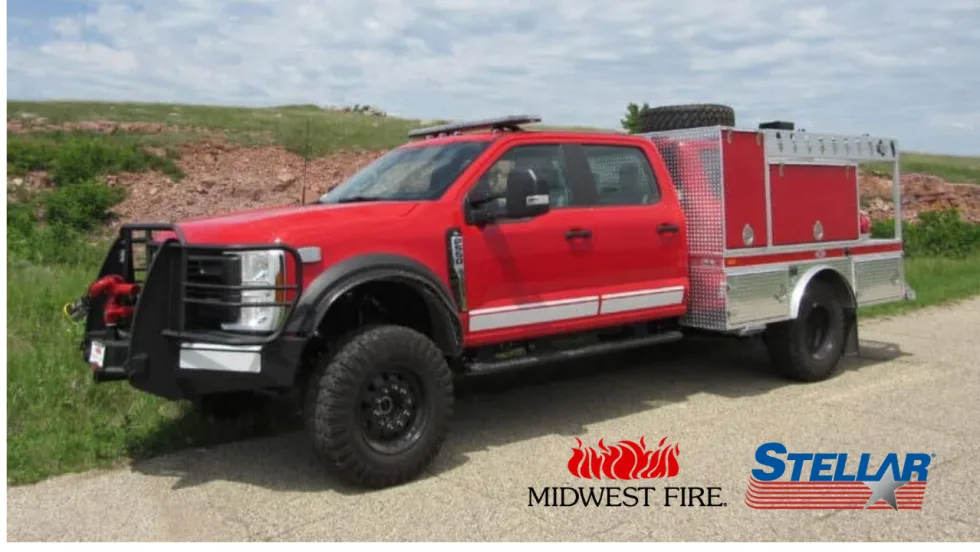
Stellar Expands into Fire Apparatus Market with Acquisition of Midwest Fire
Stellar Industries has acquired Midwest Fire, a custom fire apparatus manufacturer headquartered in Luverne, Minnesota, with nearly four decades of specialized apparatus experience.
Read More →