




Mercedes-Benz Releases S 400 Hybrid
Mercedes' new S 400 hybrid features a lithium-ion battery and produces 18 percent lower CO2emissions than the comparative model, according to the company.
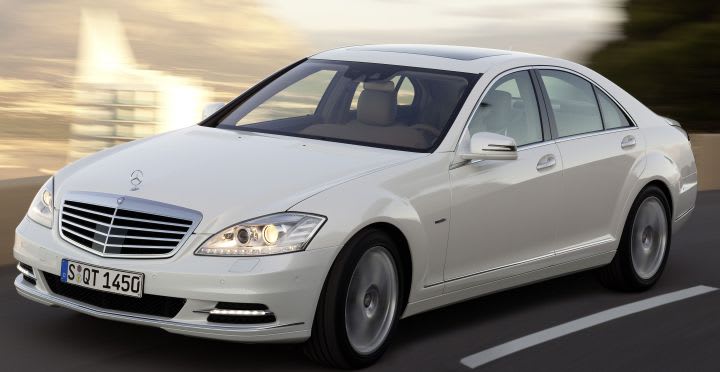
With the new S 400 hybrid, the world's first series production car to feature a hybrid drive system with a lithium-ion battery, Mercedes-Benz is emphatically underlining its claim to leadership with respect to design, comfort, innovation and environmental compatibility. The combination of a further improved V6 petrol engine and a compact hybrid module makes this model the world's most efficient luxury saloon with a petrol engine. Its fuel consumption of 7.9 liters per 100 kilometers (NEDC combined) corresponds to carbon dioxide emissions of 186 grams per kilometer. The combined output is 220 kW/299 hp, with a combined maximum torque of 385 newton meters. The S 400 hybrid accelerates to 100 km/h in 7.2 seconds and has a top speed of around 250 km/h - environmentally compatible drive systems and outstanding performance are not necessarily a contradiction in terms.
The S-Class hybrid offers all the advantages of this drive concept: a comfortable ECO start/stop function automatically switches the engine off when the S-Class comes to a stop - for example at traffic lights. During deceleration, kinetic energy is recuperated and stored by the compact lithium-ion battery in the engine compartment. This energy is put to use when required, for example when accelerating.
During the environmental certification process for the S-Class, more than 40,000 individual processes were examined, analyzed and evaluated to produce a comprehensive eco-profile. It is not only the environmental effects during the vehicle's operating phase that were assessed. Instead engineers examined every environment-related process, from development and production to operation and eventual recycling/disposal. This overall profile provides the basis for the environmental certificate. A detailed presentation of the examination results is available to the interested public in the form of the "Life Cycle" documentation series, which may be found at www.mercedes-benz.com.
For the comparative assessment forming part of the environmental certification process, the S 400 hybrid with a combined output of 220 kW (299 hp) was compared to the 200 kW (272 hp) S 350 petrol model. Even the conventionally powered S 350 impresses with good fuel consumption figures for this vehicle class: only 10.0 to 10.2 liters of fuel per 100 kilometers - depending on the tires. This excellent figure is easily bettered by the S 400 hybrid, which consumes just 7.9 to 8.1 l/100km. This corresponds to a remarkable 21-percent reduction. The S-Class with hybrid technology also achieves top figures when it comes to CO2emissions, which are between 186 and 189 g/km.
Taking the entire lifecycle into consideration, namely production, operation for 300,000 kilometers and recycling/disposal, the S 400 hybrid produces 18 percent lower CO2emissions than the comparative model. This saving per vehicle corresponds to roughly 1.6 times the annual per capita emissions of the average European*. The lower requirement for energy resources caused by the lower fuel consumption during the operating phase leads to a 17-percent reduction in the primary energy requirement. This corresponds to the energy content of around 7000 liters of petrol.
*European Environment Agency: EAA Report 05/2008, Greenhouse gas emission trends and projections in Europe 2008.
In the case of the S 400 hybrid the recycling concept was produced in parallel with development of the vehicle, with the individual components and materials being analyzed during every stage of the process. Aspects given close attention included the segregation and ease of disassembly of certain thermoplastic components such as bumpers and wheel arch, side member, underbody and engine compartment claddings, with a view to easy recycling.
This first use of a lithium-ion battery in a series production car also presented new challenges with respect to eventual disposal and recycling. In collaboration with suppliers and disposal specialists, innovative recycling concepts were developed which enable the valuable material constituents to be retrieved. All in all, it was possible to show a high material recycling rate of 85 percent, and an overall recycling rate of 95 percent. This means that the S-Class already complies with the overall recycling requirement coming into force from Jan. 1, 2015.
More Small Fleet


Developing Budget-Friendly Driver Safety Programs
From driver training and safety meetings to one-on-one coaching and incentive programs, several small fleets share how they have developed a safety culture with their drivers using low- to no-cost resources.
Read More →
Boosting Last-Mile Fleet Uptime, Safety, and Value with AI Vehicle Inspections
AI-powered inspections are transforming last-mile fleets by replacing manual checks with highly accurate automated scans that detect defects in seconds. By giving fleet operations visibility into the daily condition of their vehicles, you can identify trends over the vehicle’s lifecycle that enable improved procurement decisions, route management, driver training and accountability.
Read More →
Five Ways Seat Belts Help Prevent Injuries
There are five ways seat belts protect occupants from injuries, according to the Tennessee Department of Safety and Homeland Security.
Read More →
It’s here: The 2026 Fleet Technology Trends Report
What does AI mean for fleets? Get the answer — and learn other top tech trends.
Read More →
Small Fleets, Big Impact: How Independent Drivers Power Wreaths Across America
Check out how small fleets and independent drivers power Wreaths Across America each December and why their impact matters more than ever.
Read More →
VMS Survey Finds 65% of Small Fleet Managers Run Operations Alone
A new VMS survey shows small fleet managers are stretched thin, with most handling operations solo and eager to adopt digital tools for relief.
Read More →
Tips for Driving Safely on Halloween Night
This video features a reminder from the Connecticut Department of Transportation (DOT) and the Connecticut Police Chiefs Association, urging drivers to prioritize safety this Halloween.
Read More →
AI, Access, and Uptime: VMS’s Next Chapter with David Prusinski
VMS’s new Co-CEO, David Prusinski, shares how an AI-first approach will give small fleets and repair shops the tools to compete like big players.
Read More →
Fleet Managers Share Winter Prep Tips: It's Never Too Early!
Three fleets share best practices to prep vehicles for winter and prevent downtime when the cold sets in.
Read More →