




IIHS Tests Show Benefits of Semitrailer Side Underride Guards
Recent crash test results from the Insurance Institute for Highway Safety make a case for guards designed to prevent side underride crashes.

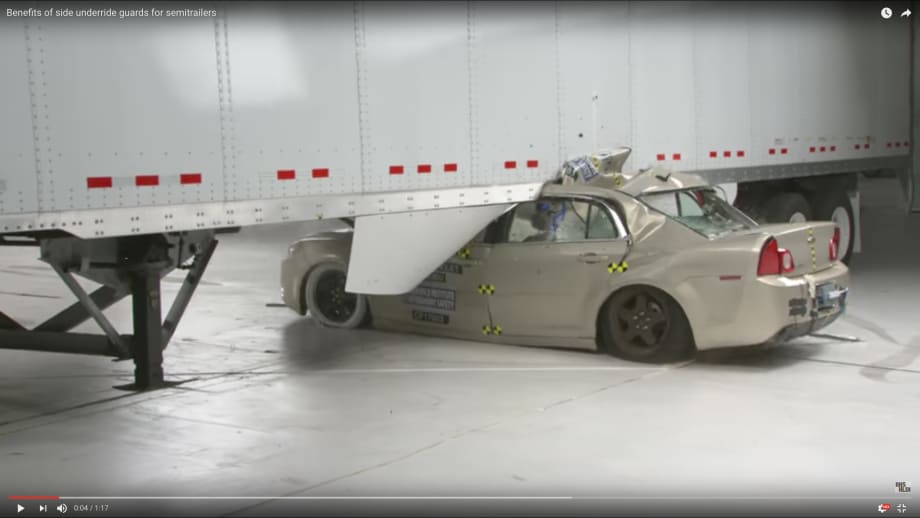
Photo: IIHS
Strong underride guards on the rear of tractor-trailers have helped prevent underride in previous crash tests by the Insurance Institute for Highway Safety, and the institute’s new tests also show how a well-built guard can prevent a passenger vehicle from sliding beneath the side of a semitrailer.
IIHS tests conducted this spring marked the first time the institute has evaluated a side underride guard. IIHS ran two 35-mph crash tests: one with an AngelWing side underride protection device from Airflow Deflector Inc. and a second test with a fiberglass side skirt intended to improve aerodynamics, not to prevent underride. The results were dramatically different, IIHS said.
In both tests, a mid-size car struck the center of a 53-foot-long dry van trailer. In the AngelWing test, the underride guard bent but didn't allow the car to go underneath the trailer. As a result, the car's air bags and safety belt could properly restrain the test dummy in the driver seat. In the second test with no underride guard for protection, the car ran into the trailer and kept going. The impact sheared off part of the roof, and the sedan became wedged beneath the trailer. In a real-world crash like this, any occupants in the car would likely sustain fatal injuries, according to IIHS.
The institute has been testing rear underride guards for several years. In March, IIHS announced the first winners of the new ToughGuard award recognizing rear underride guards designed to prevent underride in a range of crashes into the backs of tractor-trailers. So far, five North American semitrailer manufacturers have qualified for the award.
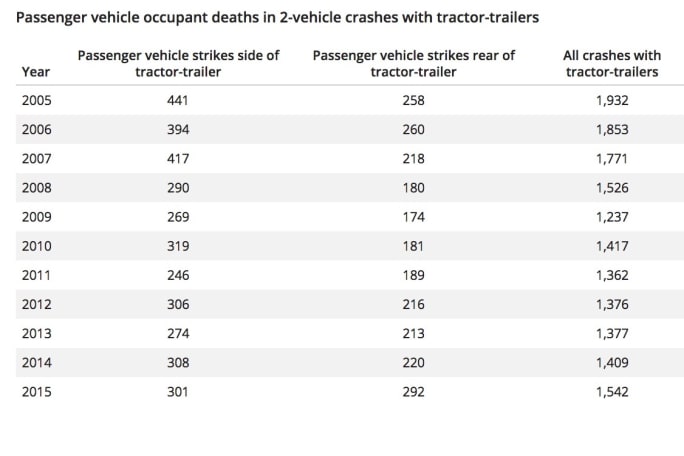
The latest tests illustrate the importance of countermeasures to prevent side underride crashes, too, IIHS said. In 2015, 301 of the 1,542 passenger vehicle occupants killed in two-vehicle crashes with a tractor-trailer died when their vehicles struck the side of a tractor-trailer. This compares with the 292 people who died when their passenger vehicles struck the rear of a tractor-trailer. Because of gaps in federal crash data, IIHS researchers can’t determine exactly how many of these crashes involved underride, but they estimate that underride occurs in about half of fatal crashes between large trucks and passenger vehicles.
A 2012 IIHS study found that strong side underride guards have the potential to reduce injury risk in about three-fourths of large truck side crashes resulting in a fatality or serious injury to a passenger vehicle occupant. This proportion increased to almost 90% when restricted to crashes with semitrailers.
Source: IIHS
Federal law requires large trucks to have rear underride guards but not side underride guards. At least three U.S. cities — Boston, New York and Seattle — mandate side guards on city-owned or contracted trucks as part of Vision Zero initiatives to eliminate crash deaths and injuries, particularly among pedestrians and bicyclists.
“Our tests and research show that side underride guards have the potential to save lives,” said David Zuby, IIHS executive vice president and chief research officer. “We think a mandate for side underride guards on large trucks has merit, especially as crash deaths continue to rise on our roads.”
The wheels on a tractor and trailer offer some underride protection if a passenger vehicle were to strike them. With no side underride guard, only 28% of a 53-foot trailer’s length would be protected from underride. With the AngelWing side underride guard in place, 62% of the trailer’s length would be protected. Side underride guards can be retrofitted to existing semitrailers.
“With the rise of injuries and fatalities due to truck crashes, along with the need for greener technologies, Airflow Deflector's AngelWing side underride guards are an integral part of a long-term eco-friendly and cost-effective safety strategy that will benefit the public at large,” said Robert Martineau, president of Airflow Deflector.
Originally posted on Automotive Fleet
More Safety
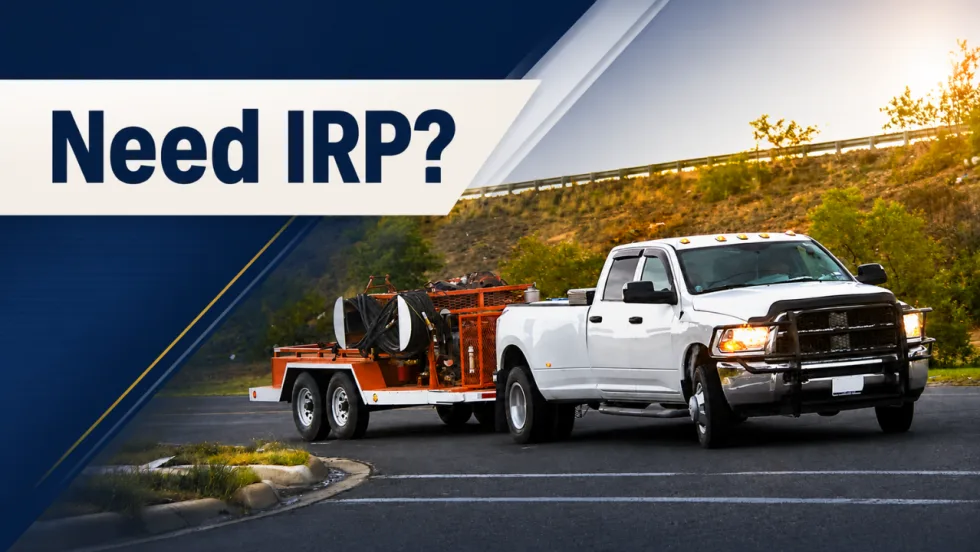
When Work Trucks Under 26,001 Pounds Need IRP Registration
Think trucks under 26,001 pounds are automatically in the clear when it comes to IRP? Not always. Learn where lighter vehicles can still run into trip permit, apportioned registration, and IFTA compliance requirements when crossing state or provincial lines.
Read More →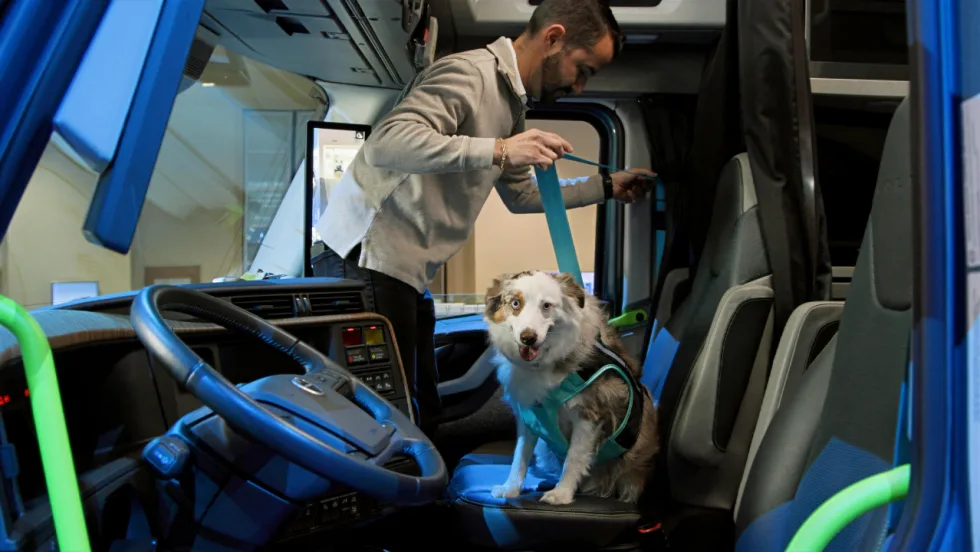
Volvo Trucks Releases New Safety Recommendations for Traveling with Pets
One of the most important recommendations for professional drivers traveling with pets is to ensure pets are properly restrained while the truck is moving. Other tips are available in the new guide from Volvo Trucks North America and Center for Pet Safety.
Read More →
API Issues Refueling Safety Guidelines
The American Petroleum Institute offers a list of safe vehicle refueling guidelines, including ways to avoid potential problems with static electricity discharges in fall, winter, and early spring.
Read More →
Winter Fleet Prep: Expert Tips to Keep Vehicles Running Smoothly
Cold weather can expose weak batteries, tires, fuel systems, and maintenance gaps fast. Use this winter fleet checklist to prepare trucks and drivers before temperatures drop.
Read More →
When a Work Truck Breaks Down, the Job Can Stop, Too
A work truck breakdown can stop more than the vehicle. Discover how payloads, jobsites, and specialty equipment change the roadside response.
Read More →
What Stronger Long-Term Fleet Service Partnerships Actually Require
Fleet service partnerships rarely fall apart all at once. Learn the three warning signs that trust is eroding and what fleets and providers can do before downtime, frustration, and lost revenue follow.
Read More →
Applause & TRUCE Software Partner to Improve Driver Safety Through AI-Powered Telematics & Employee Performance Management
Applause has integrated TRUCE driving metrics directly into its employee-first performance and safety platform that transforms mobile devices into AI-powered telematics.
Read More →
How Detroit Assurance with Active Brake Assist Works
Do you want to see what it is like to experience Detroit Assurance’s Active Brake Assist? In this video, Work Truck will put you in the cab to see how it all works and then hear more details from DTNA’s Mike Young.
Read More →
Get Left of Loss: A 5-Step Workplace Violence Prevention Framework for Fleet Operators
Violence risks do not stop at the driver’s door. Learn five practical steps fleets can take to spot threats early and protect workers before loss occurs.
Read More →
How Better Visibility Cut Speeding Violations by 48%
Fleet leaders don't need more data, they need clearer visibility into what the data is saying. This case study explores how one utility replaced speeding-event counts with a single metric — miles driven in violation — to strengthen safety and significantly reduce speeding violations.
Read More →