




FMCSA to Leave Hours-of-Service Rule Unchanged
WASHINGTON – The Federal Motor Carrier Safety Administration, in a notice to be published in Wednesday’s Federal Register, said it was making no changes to its controversial hours-of-service rule.
WASHINGTON – The Federal Motor Carrier Safety Administration, in a notice to be published in Wednesday’s Federal Register, said it was making no changes to its controversial hours-of-service rule, according to Transport Topics. FMCSA said it was adopting as final its interim final rule of Dec. 17, 2007, which maintained both the 11th hour of driving and the 34-hour restart provisions of the rule that had been overturned previously by a federal court for failing to provide proper notice for public comment and proper explanation of its reasoning.
The rule will become effective on Jan. 19, just one day before Barack Obama is to be sworn in as president, the agency said, and the final rule brings an end to the Bush administration’s more than five-year effort to update HOS rules.
Since first revising the rule in 2003, courts have either invalidated the entire rule or rejected parts of if twice, but FMCSA has continued to maintain the basic framework of the regulation, which includes 11 hours of driving within a window of 14 consecutive hours of work, followed by 10 hours off-duty.
FMCSA also limited drivers’ hours behind the wheel to 60 in seven days, or 70 in eight days, while allowing those clocks to be reset by taking 34 straight off-duty hours. Previously, the rule had allowed for 10 hours of driving in a 15-hour period, but allowed drivers to log on and off duty at will, while requiring just eight hours of rest between shifts.
The 14-hour clock and the 10 hours of mandated rest reduced fatigue, but also created new constraints, and “to offset these constraints, while ensuring fatigue benefits are realized, the agency determined it could allow additional operation flexibility by permitting increased driving hours,” FMCSA said.
More Safety
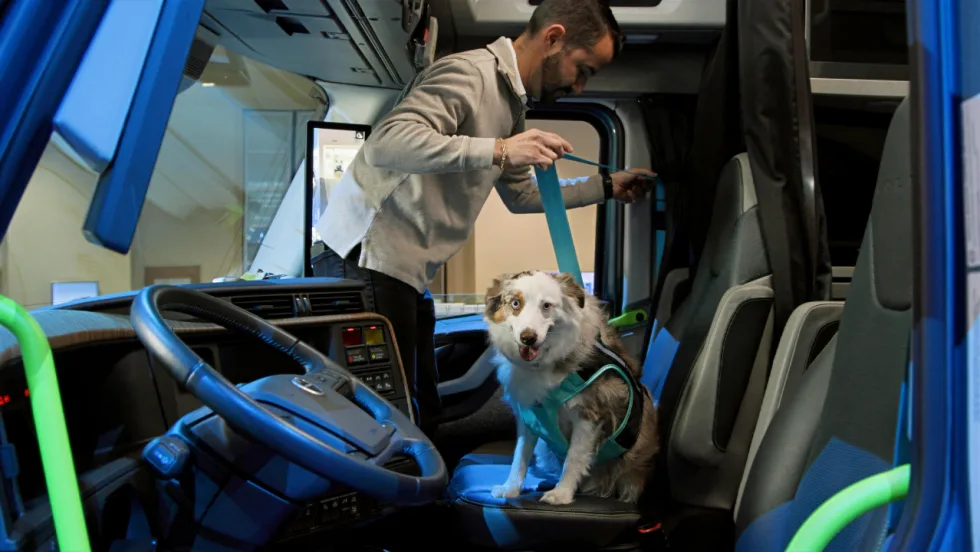
Volvo Trucks Releases New Safety Recommendations for Traveling with Pets
One of the most important recommendations for professional drivers traveling with pets is to ensure pets are properly restrained while the truck is moving. Other tips are available in the new guide from Volvo Trucks North America and Center for Pet Safety.
Read More →
API Issues Refueling Safety Guidelines
The American Petroleum Institute offers a list of safe vehicle refueling guidelines, including ways to avoid potential problems with static electricity discharges in fall, winter, and early spring.
Read More →
Winter Fleet Prep: Expert Tips to Keep Vehicles Running Smoothly
Cold weather can expose weak batteries, tires, fuel systems, and maintenance gaps fast. Use this winter fleet checklist to prepare trucks and drivers before temperatures drop.
Read More →
When a Work Truck Breaks Down, the Job Can Stop, Too
A work truck breakdown can stop more than the vehicle. Discover how payloads, jobsites, and specialty equipment change the roadside response.
Read More →
What Stronger Long-Term Fleet Service Partnerships Actually Require
Fleet service partnerships rarely fall apart all at once. Learn the three warning signs that trust is eroding and what fleets and providers can do before downtime, frustration, and lost revenue follow.
Read More →
Applause & TRUCE Software Partner to Improve Driver Safety Through AI-Powered Telematics & Employee Performance Management
Applause has integrated TRUCE driving metrics directly into its employee-first performance and safety platform that transforms mobile devices into AI-powered telematics.
Read More →
How Detroit Assurance with Active Brake Assist Works
Do you want to see what it is like to experience Detroit Assurance’s Active Brake Assist? In this video, Work Truck will put you in the cab to see how it all works and then hear more details from DTNA’s Mike Young.
Read More →
Get Left of Loss: A 5-Step Workplace Violence Prevention Framework for Fleet Operators
Violence risks do not stop at the driver’s door. Learn five practical steps fleets can take to spot threats early and protect workers before loss occurs.
Read More →
How Better Visibility Cut Speeding Violations by 48%
Fleet leaders don't need more data, they need clearer visibility into what the data is saying. This case study explores how one utility replaced speeding-event counts with a single metric — miles driven in violation — to strengthen safety and significantly reduce speeding violations.
Read More →
13 Safe Driving Tips for Commercial Vehicle Drivers
Make sure you are spending time on the road safely with these important tips.
Read More →