




EPA Keeps Biofuels Levels in Place after Considering Texas’ Request
WASHINGTON, D.C. – Following extensive analysis, U.S. Environmental Protection Agency (EPA) Administrator Stephen L. Johnson announced his decision to deny a request submitted by the State of Texas to reduce the nationwide Renewable Fuels Standard (RFS).
WASHINGTON, D.C. – Following extensive analysis, U.S. Environmental Protection Agency (EPA) Administrator Stephen L. Johnson announced his decision to deny a request submitted by the State of Texas to reduce the nationwide Renewable Fuels Standard (RFS). As a result, the required total volume of renewable fuels, such as ethanol and biodiesel, mandated by law to be blended into the fuel supply will remain at 9 billion gallons in 2008 and 11.1 billion gallons in 2009.
“After reviewing the facts, it was clear this request did not meet the criteria in the law,” Johnson said. “The RFS remains an important tool in our ongoing efforts to reduce America’s greenhouse gas emissions and lessen our dependence on foreign oil, in aggressive yet practical ways.”
Current law authorizes EPA to waive the national RFS if the agency determines that the mandated biofuel volumes would cause “severe harm” to the economy or the environment. The agency recognizes that high commodity prices are having economic impacts, but EPA’s extensive analysis of Texas’ request found no compelling evidence that the RFS mandate is causing severe economic harm during the time period specified by Texas.
The Energy Policy Act of 2005 established the RFS program – and included amendments to the Clean Air Act to set strict criteria for RFS-related waivers. RFS nationwide volume mandates were increased in the Energy Independence and Security Act, which was signed into law in December 2007.
EPA conducted detailed analysis, consulted closely with the Departments of Energy and Agriculture, and carefully considered more than 15,000 public comments in response to the Texas request. This is the first RFS-related waiver request. In a Federal Register notice, EPA is publishing a detailed rationale that will also serve as a framework for any future waiver considerations. For more information, visit www.epa.gov/otaq/renewablefuels.
More Fuel

The Smart Way to Build a Mixed-Energy Fleet Isn’t About Picking a Side
Mixed-energy fleets aren’t about picking a winning fuel. Sarah Booth of WEX explains how vehicle data, duty cycles, charging strategy, and real-world costs can help fleets choose the right energy source for each job.
Read More →
Ignoring This Dashboard Warning Could Cost Your Fleet Thousands in Fuel
New research suggests neglected diesel aftertreatment systems could waste up to $30 in fuel per vehicle each day. Here's why vocational fleets should pay attention.
Read More →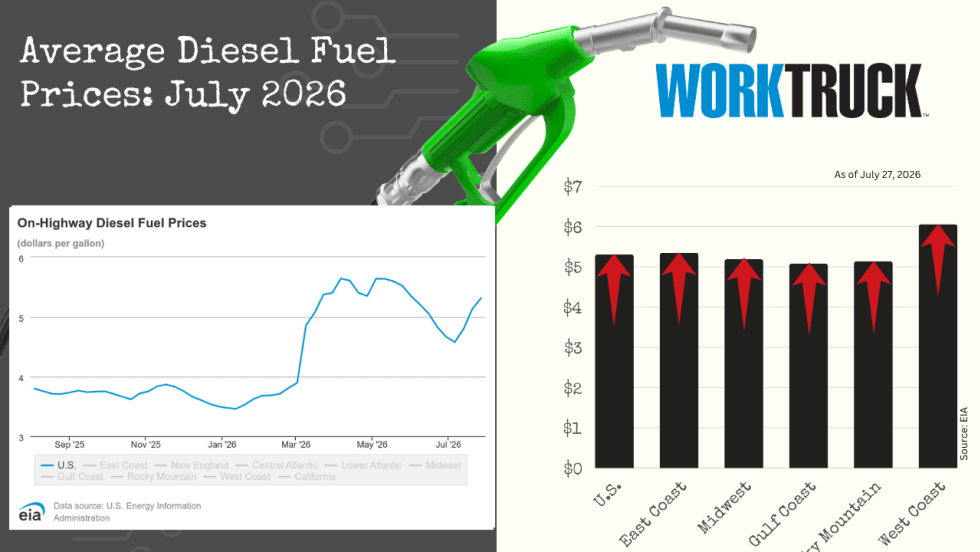
July Diesel Trends Update
The average price of a gallon of diesel increased again this week, and the EIA reported a new national average of $5.31 at the start of the week.
Read More →
WEX Brings Standard Fleet's Connected Vehicle Platform to Fleet Customers
This week’s product launch with Standard Fleet’s connected vehicle platform reflects WEX Venture Capital's strategy of turning startup innovation into customer solutions. Standard Fleet is now available to WEX fleet customers.
Read More →
Teletrac Navman Adds Mixed-Energy Fleet Tools to TN360
The new Energy Hub combines fuel transactions, EV charging data, vehicle range, and energy costs in one dashboard for fleets operating multiple vehicle and energy types.
Read More →
WEX DriverDash adds CITGO, Expands Nationwide Access for Fleets
The DriverDash mobile payment app, by WEX, has been integrated into the CITGO merchant network, which means WEX has expanded its U.S. station footprint with the addition of approximately 4,000 CITGO locations.
Read More →
Mixed Energy Fleet Tips for Balancing EVs, Gas and Diesel Vehicles
Mixed energy fleets are becoming the new normal. Learn how fleet managers are balancing EVs, gas and diesel vehicles while controlling costs and planning for the future.
Read More →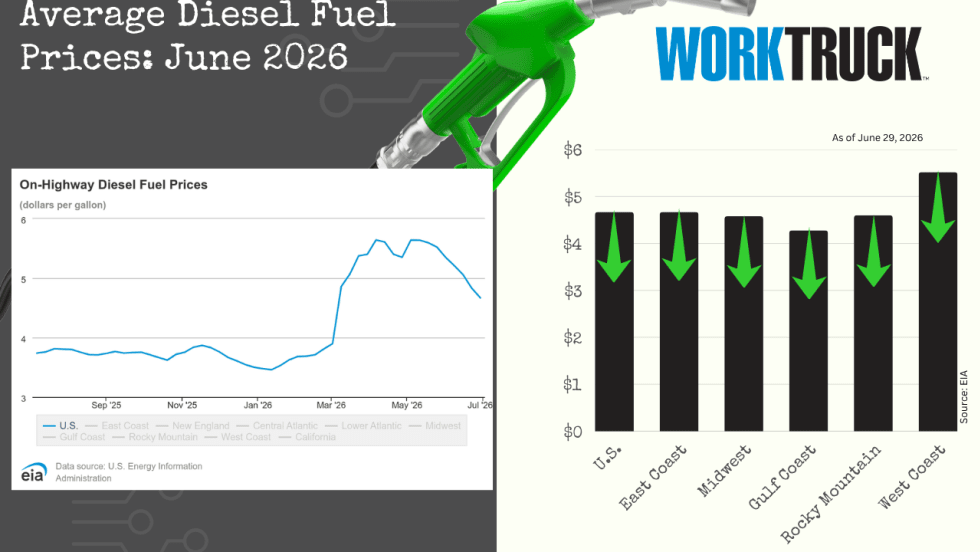
June Diesel Trends Update
The national average price of a gallon of diesel has dropped again, this week by more than 16 cents. All five regions reported lower average prices, ranging from almost 13 cents to more than 28 cents cheaper than a week ago.
Read More →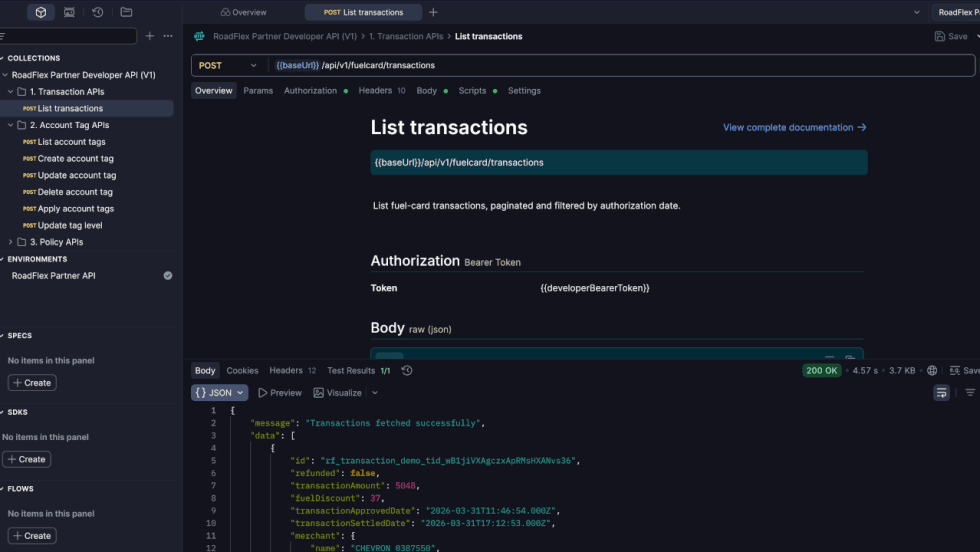
RoadFlex Launches RoadFlex Direct Open API Platform
RoadFlex Direct connects fuel cards, controls, and data to the telematics and fleet management systems fleets already run, from Geotab and Samsara to Fleetio and RTA, with no separate dashboard or double data entry.
Read More →
The Key to Fuel Efficiency Sits in the Cab
Learn how driver behavior, telematics, coaching, and fuel data can help fleets improve fuel efficiency, lower costs, and reduce emissions.
Read More →