




DOT Issues Rule Requiring Electronic On-Board Recorders for Truck Companies with Serious Hours-of-Service Violations
WASHINGTON - The U.S. DOT's Federal Motor Carrier Safety Administration issued a new rule requiring interstate commercial truck and bus companies with serious patterns of hours-of-service (HOS) violations to install electronic on-board recorders (EOBRs) in all their vehicles.
WASHINGTON - The U.S. Department of Transportation's (DOT) Federal Motor Carrier Safety Administration (FMCSA) issued a new rule requiring interstate commercial truck and bus companies with serious patterns of hours-of-service (HOS) violations to install electronic on-board recorders (EOBRs) in all their vehicles. Nearly 5,700 interstate carriers will use EOBRs after the final rule's first year of implementation.
"We are committed to cracking down on carriers and drivers who put people on our roads and highways at risk," "said Secretary Ray LaHood. "This rule gives us another tool to enforce hours of service restrictions on drivers who attempt to get around the rules."
"Safety is our highest priority," said FMCSA Administrator Anne S. Ferro. "In addition to requiring EOBRs for carriers that have already demonstrated a pattern of hours-of-service violations, we will initiate a rulemaking later this year that considers an EOBR mandate for a broader population of commercial motor carriers."
Electronic on-board recorders are devices attached to commercial vehicles that automatically record the number of hours drivers spend operating the vehicle. Driving hours are regulated by federal HOS rules, which are designed to prevent commercial vehicle-related crashes and fatalities by prescribing on-duty and rest periods for drivers.
Under the EOBR final rule, carriers found with 10 percent or more HOS violations during a compliance review will be required to install EOBRs in all their vehicles for a minimum of two years. The rule also provides new technical performance standards for EOBRs installed in commercial motor vehicles, including requirements for recording the date, time and location of a driver's duty status.
Additionally, carriers that voluntarily adopt EOBRs will receive relief from some of FMCSA's requirements to retain HOS supporting documents, such as toll receipts used to check the accuracy of driver logbooks.
The rule will go into effect on June 1, 2012, to ensure EOBR manufacturers have sufficient time to meet the rule's performance standards and to manufacture products to meet industry demand.
[PAGEBREAK]
Electronic On-Board Recorders for Hours of Service Final Rule Q & A
QUESTION 1: Under the EOBR final rule, what population of commercial carriers will be required to install EOBRs?
ANSWER: The new EOBR final rule will require interstate commercial truck and bus companies with serious patterns of hours-of-service (HOS) violations to use electronic on-board recorders (EOBRs) in all their vehicles.
Nearly 5,700 interstate carriers will be required to use EOBRs after the final rule's first year of implementation.
QUESTION 2: What information would be recorded by EOBRs in the final rule?
ANSWER: The final rule would require EOBRs to record basic information needed to track a driver's on- and off-duty status: name; duty status (on-duty/not driving, driving time, sleeper berth, off-duty); date, time, and location of the commercial vehicle and distance traveled.
It would also require EOBRs to use Global Positioning System (GPS) technology or other location tracking systems to automatically identify the location of the commercial vehicle, which would further reduce the likelihood of falsification of HOS information.
QUESTION 3: How will the final EOBR rule be enforced and when will the remedial directive go into affect?
ANSWER: Under the EOBR final rule, commercial carriers found with 10 percent or more HOS violations during a compliance review will be required to install and use EOBRs in all their vehicles for a minimum of two years.
The final rule will go into effect on June 1, 2012 to ensure EOBR manufacturers have sufficient time to meet the rule's performance standards and to manufacture products to meet industry demand.
[PAGEBREAK]
QUESTION 4: What is the penalty if a carrier with a pattern of violations fails to install and use the EOBRS?
ANSWER: That carrier would be prohibited from operating in interstate commerce. For-hire carriers may also have their operating authority revoked.
QUESTION 5: Why didn't FMCSA propose mandatory use of EOBRs for the entire motor carrier industry? Will the Agency consider a broader EOBR mandate in the future?
ANSWER: This final rule issued today is the first of two important steps to ensure carriers are operating in compliance with HOS requirements. FMCSA believes the greatest safety benefit comes from mandating EOBRs for high-risk carriers without delay. By focusing on carriers with high rates of noncompliance with the HOS rules, this final rule will help FMCSA significantly improve highway safety today and will assist carriers in creating an environment where their drivers are focused on safety.
As a second step, FMCSA will initiate a rulemaking later this year that considers an EOBR mandate for a broader population of motor carriers.
QUESTION 6: Would on-board recording devices currently being used by carriers have to be replaced with devices that meet the new EOBR standards?
ANSWER: No. FMCSA proposed that on-board recording devices that were voluntarily installed before the new requirements are implemented may continue to be used through the life of the vehicle.
Any EOBR installed on a commercial vehicle manufactured on or after two years following the publication date of the final rule must meet the new standard.
[PAGEBREAK]
QUESTION 7: What incentives does FMCSA offer to carriers that voluntarily install the EOBRs?
ANSWER: Supporting Documents: Carriers that voluntarily adopt EOBRs will receive relief from some of FMCSA's requirements to retain HOS supporting documents, such as toll receipts used to check the accuracy of driver logbooks.
Compliance Reviews: For carriers that voluntarily adopt EOBRs, FMCSA will revise its compliance review procedures to permit examination of a random sample of drivers' records of on-duty status after an initial sampling of all driver records.
QUESTION 8: Would the final rule violate CMV drivers' privacy?
ANSWER: No. The final rule does not change the requirements for who must comply with HOS rules, and it does not require any additional information concerning drivers' activities while on duty.
The rulemaking is intended to provide a more accurate record of drivers' duty status and significantly reduce the likelihood of falsification of hours-of-service information.
QUESTION 9: What data does FMCSA have to show that the final rule would prevent commercial vehicle-related crashes?
ANSWER: The crash rate for the carriers that will be covered by the EOBR final rule is 40-percent higher than the crash rate of other motor carriers.
The mandatory use of EOBRs will bring non-compliant carriers back in compliance with federal HOS rules. We believe strongly that when carriers follow the rules, crashes will be reduced.
QUESTION 10: How many fatigue-related fatal crashes occur each year?
ANSWER: Generally, FMCSA believes truck driver fatigue is a factor in 5.5-percent of the fatal crashes involving large trucks.
[PAGEBREAK]QUESTION 11: What percentage of fatigue-related crashes can be attributed to those carriers that will be impacted by the EOBR mandate?
ANSWER: Specific data on the number of fatigue related crashes among the carriers that would be covered by the final rule is not available, but these carriers have a clear pattern of violating the HOS rules.
These high-risk carriers represent a group that have crash rates higher than others and are likely to have more fatigue-related crashes because of their high level of noncompliance with the HOS rules.
QUESTION 13: Why did FMCSA decide not to combine the EOBR and HOS rulemakings into a single rulemaking?
ANSWER: There are many issues surrounding EOBRs, including safety benefits, technical requirements, economic considerations, and privacy and legal concerns. To do justice to such a complex issue we initiated a separate rulemaking effort apart from our simultaneous work on the HOS rule.
QUESTION 14: What does the final rule include with regard to technology standards for EOBRs?
ANSWER: With this final rule, FMCSA updates the performance specifications for EOBRs to make best use of modern and efficient communications and information management processes. The final rule provides new technical performance standards including requirements for recording the date, time, and location of a driver's duty status.
QUESTION 15: Will this rule contribute to more lawsuits by those obtaining access to motor carrier data?
ANSWER: No, this rule will not contribute to more lawsuits. The final rule will only require EOBRs to record basic information needed to track a driver's duty status: identity of the driver, duty status, date, time, and location of the vehicle and distance traveled.
More Safety & Compliance

Re-rating Gross Vehicle Weight Ratings (GVWR): Why and How it's Done
Sometimes, it is not in a fleet’s best interests to have a vehicle at a given GVWR. Changing the GVWR to a special value can be done, but the process is complicated.
Read More →
When a Work Truck Gets Stolen, the Real Loss Is Time
A stolen work truck can take more than a vehicle off the road. From tools and access cards to crew downtime, here’s how fleets can prepare for theft before it disrupts the entire workday.
Read More →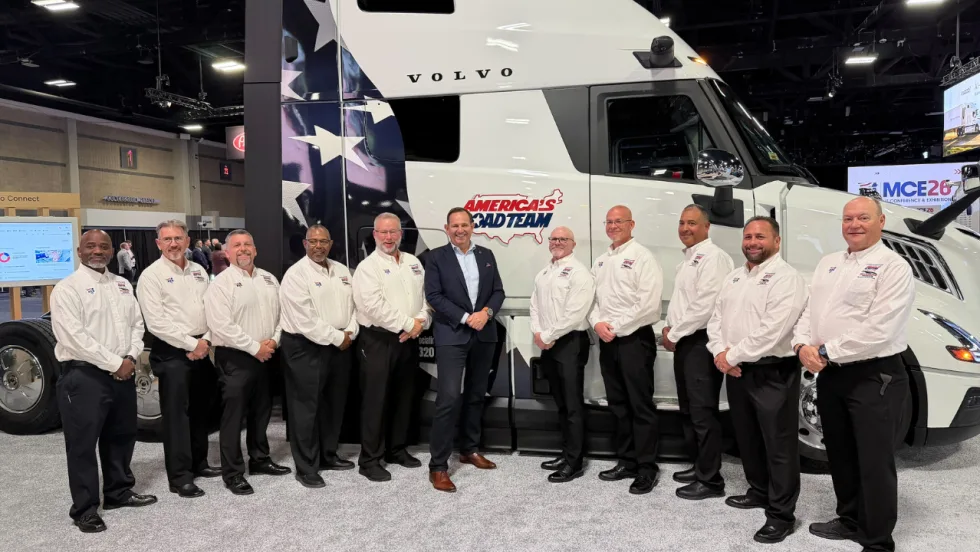
Volvo Trucks Marks 25 Years as Exclusive Sponsor of America's Road Team
Volvo Trucks North America will serve as the exclusive sponsor of the American Trucking Associations' America's Road Team, marking 25 years of Volvo sponsorship. The group of professional drivers promotes safety and the industry as they travel the country.
Read More →From Our Partners




Streamlight’s High-Output Scene Light Recognized with Occupational Safety Award
Streamlight’s Portable Scene Light III (PSL III) won the 2026 Occupational Health & Safety (OH&S) New Product of the Year Award in the Lighting category.
Read More →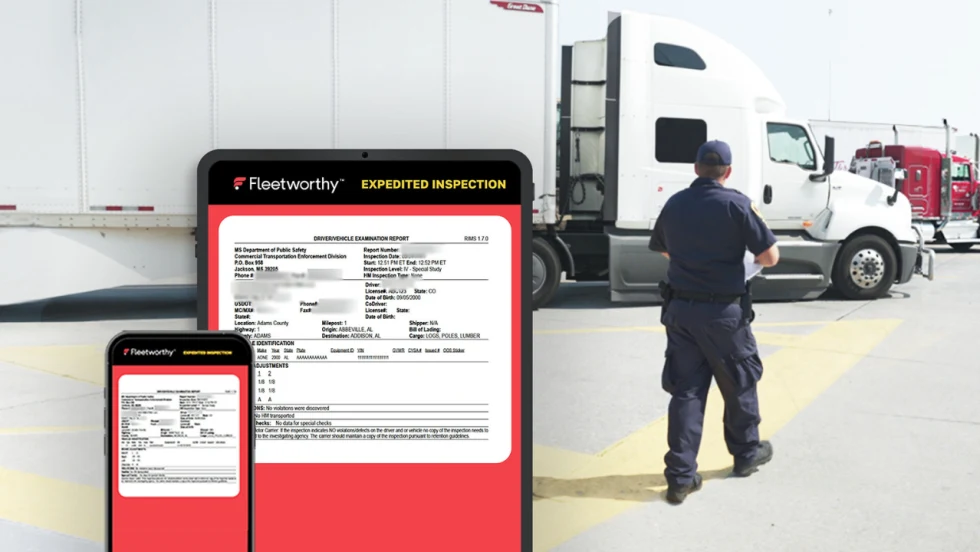
Fleetworthy Expands Expedited Inspection to 5 States
Following its industry-first launch in Nevada, Fleetworthy’s automated inspection technology is now live in California, Michigan, Vermont, and Maine.
Read More →
Crossing State Lines in a Light-Duty Work Truck? Check These Rules First
Crossing state lines in a lighter work truck? J.J. Keller's Kathy Close explains when IRP registration, trip permits, and towing rules come into play.
Read More →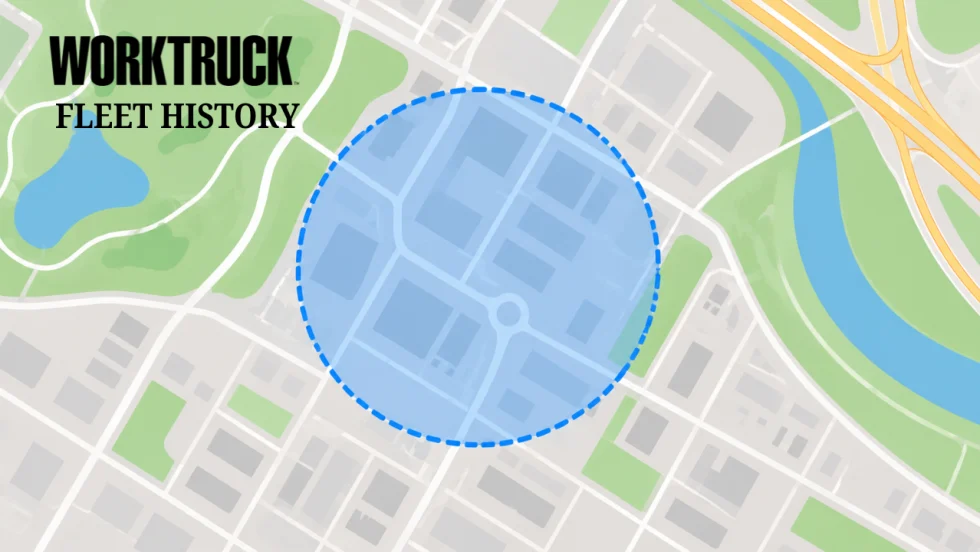
GeoFencing Adds to Your Truck Security Arsenal
Geofencing is a familiar fleet tool today, but its early adoption marked a major shift in vehicle tracking, route monitoring, and the debate over employee privacy.
Read More →
Recalls You Need to Know About in October 2026
In October 2026, what recalls might impact your fleet? Work Truck has the answers in this comprehensive overview of recent NHTSA recalls.
Read More →
Construction Fleets Show Telematics Adoption Alone May Not Reduce Driving Risk
SambaSafety found construction fleets monitor roughly 92% of their vehicles but recorded the highest severe speeding rate among industries studied.
Read More →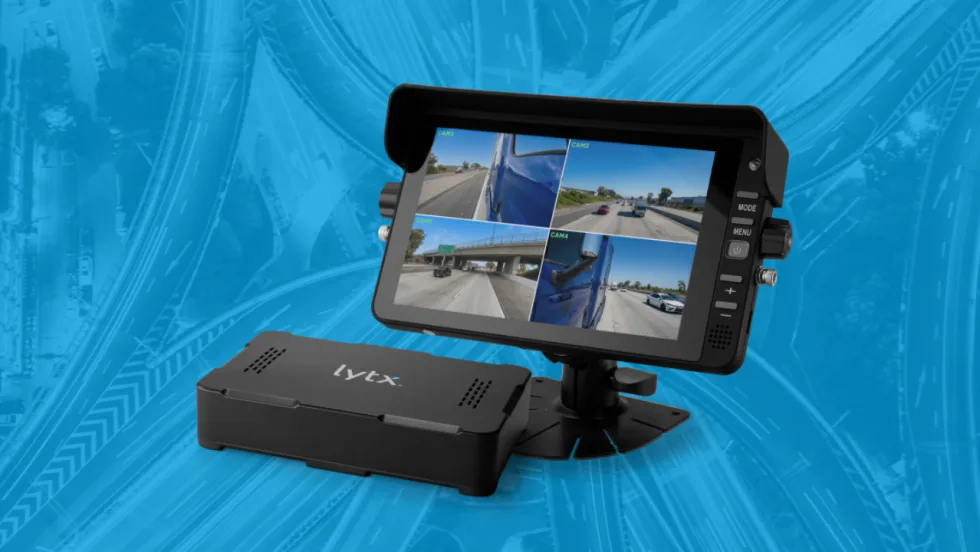
Lytx Launches 360 Hub Kit for Expanded Fleet Camera Visibility
Lytx’s new AI-ready gateway and HD auxiliary camera ecosystem, the Lytx 360 Hub Kit, extends visibility across side, rear, cargo, and blind-zone views to help fleets see more and respond faster.
Read More →