





Learn More: Continental Launches Mobile App for Fleets & Tire Dealers
Contintental Turns 150
Continental was founded in Hannover, Germany, in 1871. Today, Continental has nearly 15,000 employees in the United States.
April 13, 2021
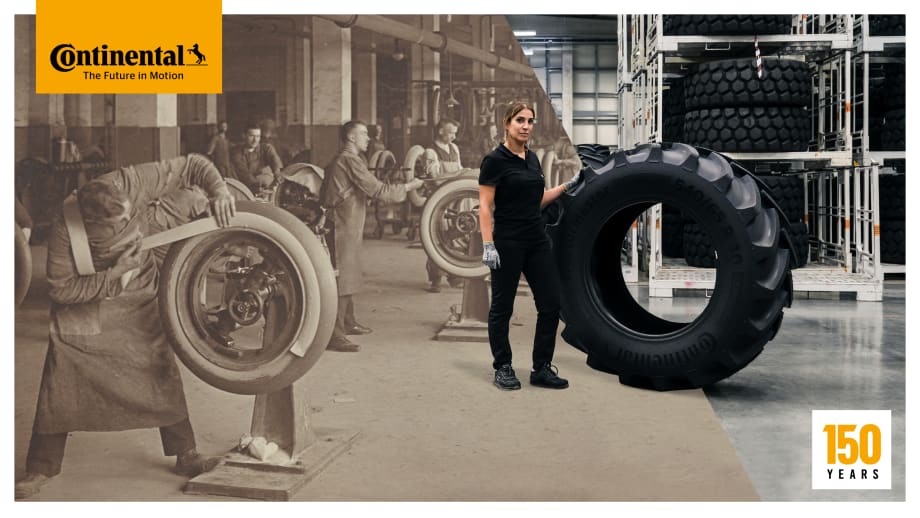
The company has come a long way in 150 years from making hoof buffers and solid tires for carriages to today's advanced tire tech.
Photo: Continental
6 min to read
Tire manufacturer Continental is celebrating its 150th year in business in 2021. The company was founded in Hannover, Germany, in 1871. Today, Continental has nearly 15,000 employees in the United States. Worldwide, three out of every four vehicles on the road are equipped with the company’s tires or automotive technologies. And, an estimated 1 billion people place their trust in Continental every day.
Before cars were even invented, the company began by manufacturing horse “hoof buffers” along with solid tires for carriages and bicycles. In 1904, Continental was the first company in the world to develop automobile tires with a patterned tread, and four years later invented the detachable rim. On the year of its 50th anniversary, in 1921, Continental produced its first commercial truck tires, and became the first German company to produce tires reinforced with pliable cords rather than linen fabric. Six years later, it launched the very first pneumatic tractor tire in Europe.
Did you know? Until 1926, tires were white due to the use of natural rubber latex. Carbon black was added in 1926 as a reinforcing agent to give the tire more resistance to wear and aging. It also gave tires their new characteristic color: black.
The following decades saw continued innovation. In 1955, Continental was the first company to develop air springs for trucks and buses, and the first German company to start manufacturing tubeless car tires, which it had patented after World War II.
By the 1960s, widespread production of radial tires had begun, and Continental employed 26,800 people. It revolutionized the solid tire segment, which are used on forklift trucks, airport vehicles, and other heavy-duty industrial applications, with its ContiSuperElastic tires, leading to what is today the industry standard abbreviation for the category: CSE. In 1967, the company opened the Contidrom test track, which is still used as a global standard today in tandem with the Uvalde Proving Grounds in Texas, where tires have been tested since 1959.
By 1988, the company had almost doubled in size, employing 45,900 people around the world. It had acquired Uniroyal and Semperit in Europe, and General Tire in the United States. Within the next 10 years, the company reinforced its position as a global tire manufacturer by adding sites in Central and South America, Africa, and Eastern Europe. After a 10-year hiatus, Continental re-entered the OTR construction and mining tires segment in 2015, and shortly thereafter restarted production of radial agricultural tires.
Mobility
In 1968, the first electronically controlled driverless car took to the track at the Contidrom, to the amazement of the press and public. More than 400 news outlets reported on the event, with one publication calling it the “Ghost Car.” The car was used to test the performance of Continental’s tires. But the company didn’t stop there.
In 2007, Continental became one of the top five largest automotive suppliers worldwide, and remains involved in actively shaping the future of mobility. In 2012, a highly automated Continental test vehicle was launched in the U.S., covering 15,000 miles of public roads – without any accidents. Today, Continental has a global fleet of automated and autonomous driving test vehicles. They collect data covering more than 9,000 miles per day. The result is around 100 terabytes of data and corresponds to around 50,000 hours of driving footage.
A supercomputer evaluates these test drives and creates virtual worlds in which further real test drives can be simulated. This virtual simulation enables up to 5,000-mile test drives per hour, helping to significantly shorten development times for automated and autonomous driving technologies.
This year, at one of the largest consumer electronics shows in the world, Continental was recognized with three CES 2021 Innovation Awards. This marked Continental’s eighth CES Innovation Award and fifth consecutive year being recognized for its mobility innovations.

In 1904, Continental debuted the first tire with patterned tread.
Photo: Continental
What's Up with the Continental Logo
Continental adopted the “rampant horse” as its logo around 1875. It began with a local veterinarian named Hartmann who invented "hoof buffers" made from soft rubber, designed to prevent horses from slipping on icy surfaces. He held the patent, while Continental produced and distributed them.
But the broader significance of the horse stems from the company’s roots in Hanover, Germany; the thoroughbred racing horse of the same name is a traditional symbol in the region. It first appeared on the coat of arms for the Dukes of Brunswick-Lüneburg in the 14th century and is still in use today in the German state of Lower Saxony.
The rampant horse is one of the most familiar trademarks in the automotive industry, symbolizing strength, agility and endurance. The horse has evolved over the years but remains an iconic symbol of the Continental brand.
Racing Tires
Continental also has a storied history in racing. Continental pneumatic tires were used on the first Daimler Mercedes, which achieved a sensational victory in the 1901 Nice-Salon-Nice car race. All three podium winners at the 1914 French Grand Prix were Daimlers fitted with Continental tires.
Between 1935 and 1940, Mercedes and Auto-Union (known as Audi today) cars fitted with Continental racing tires have a formidable streak of racing triumphs. Four consecutive victories in the German Grand Prix, four wins in the North African Tripoli race, three in Italy, plus numerous speed records help racing drivers like Rudolf Caracciola, Berndt von Rosemeyer and Hans Stuck achieve international fame.
In 1951, in close collaboration with Daimler-Benz and Porsche, Continental repeated its prewar successes on the racetrack. Racing in cars fitted with Continental tires, drivers such as Karl Kling, Stirling Moss, and Juan Manuel Fangio won the 1952 Carrera Panamericana and the French, British, Dutch and Italian Grand Prix. But Continental didn’t limit its high-speed tires to professional racers. In 2003, the company unveiled the ContiSportContact 2 Vmax, the world’s first road tire approved for speeds of up to 224 miles per hour (360 kilometers per hour). Later, Continental was officially recognized by Guinness World Records for selling the fastest road-legal tires in the world.
Continental continues to innovate in the UHP segment with the Continental tire brand as well as acquired brands. In 2016, the company acquired Hoosier Racing Tire Corp., who continues to supply tires for most racing applications throughout the world.
Continental most recently partnered with Extreme E – the most extreme racing series in the world. Utilizing pure electric vehicles, the drivers need a reliable tire that provides grip, traction and excellent performance at every stage of the race, but also a tire that can handle the heavier electric SUV which delivers extra torque upon starting and acceleration.
Continental provides the tailor-made CrossContact tire for all competitors, delivering the necessary grip as drivers explore a wide range of conditions from scorching heat to blistering cold, and muddy, sandy or even icy roads. But we contribute more than tires: Our ContiConnect technology enables the drivers and teams to monitor their tire data in real-time. The system measures tire information like tire pressure, tread depth and temperature via sensors in the tires and transfers it in real-time, enabling the team to adjust their race strategy if necessary.
More Maintenance
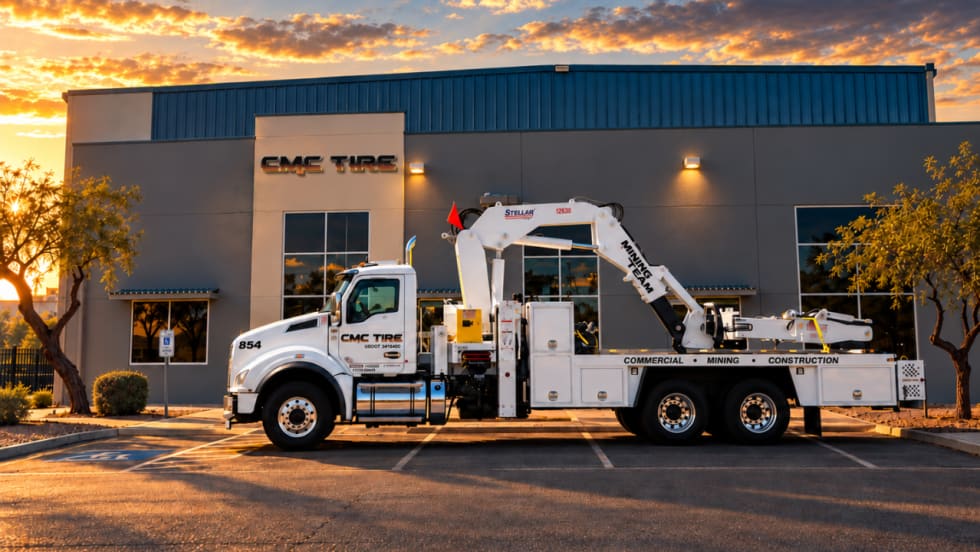
Les Schwab Expands Commercial Tire Footprint Into Arizona
Les Schwab Tires has expanded into Arizona with two commercial tire locations in Phoenix and Tucson, strengthening its fleet service footprint in the Southwest.
Read More →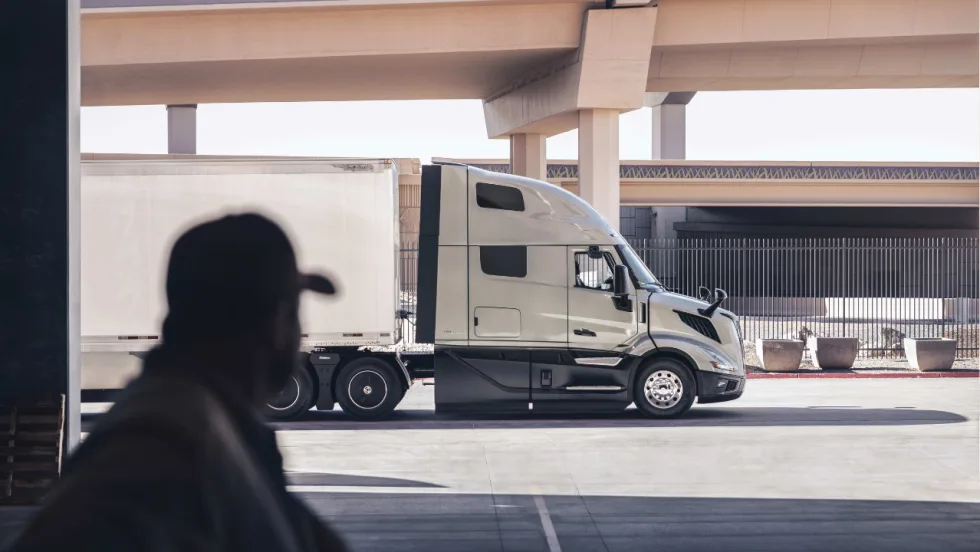
Volvo Trucks’ 'Lock and Leave' Software Updates Go Live Across North America
Unattended over-the-air software updates are now available in Volvo trucks across the U.S. and Canada. The new capability lets trucks stay current with the latest software without interrupting operations or requiring a dealership visit.
Read More →
Why Technician Appreciation Can’t Be a Once-a-Year Thought
For fleets trying to keep skilled technicians, recognition cannot begin and end with Technician Appreciation Week. Learn what year-round appreciation really looks like and why the everyday technician experience matters just as much as pay when fleets are trying to keep good people.
Read More →
How Faster Driver Reporting Can Keep Small Truck Problems Small
When minor damage, warning lights, or equipment issues are reported late, small problems can quickly become bigger maintenance headaches. Conversational AI can help shorten the path from what a driver notices in the field to the person who can act on it.
Read More →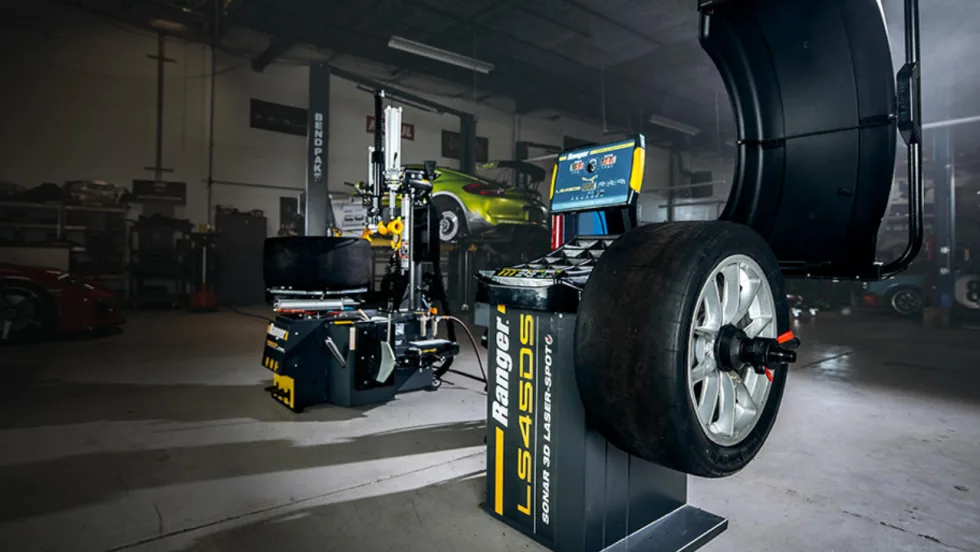
BendPak’s Ranger Wheel Service Equipment Achieves North American Safety Certification
BendPak’s full line of Ranger tire changers and wheel balancers has been ETL certified to UL and CSA standards to improve operator safety.
Read More →
Isuzu & U.S. Department of Labor Celebrate Milestone for Veterans Apprenticeship Program
The Isuzu Veterans Apprenticeship Program (IVAP) signing ceremony highlighted Isuzu’s long-term commitment to veterans, Isuzu dealers, and the skilled workforce supporting its customers and the commercial transportation industry.
Read More →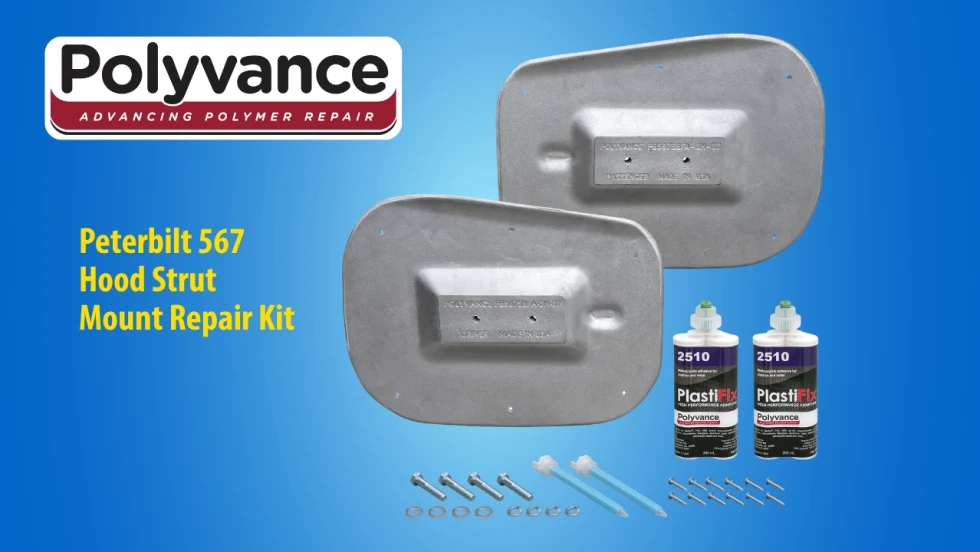
Polyvance Introduces New Peterbilt 567 Hood Strut Mount Repair Kit
Polyvance has launched a repair solution for Peterbilt 567 hood struts, helping truck owners and repair facilities avoid costly hood replacements.
Read More →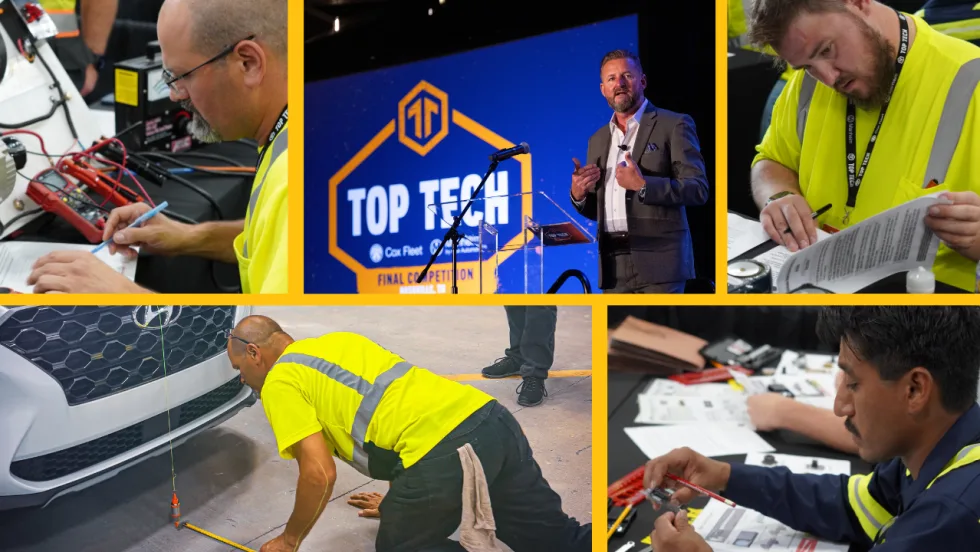
Cox Automotive Celebrates Technical Excellence at 2026 Top Tech Finals
The top technicians from Cox Fleet and Manheim tested their skills in Nashville, Tennessee, at Cox Automotive’s 2026 Top Tech Finals. The overall winners will advance to compete at the American Trucking Association’s TMC SuperTech competition.
Read More →
Grote Industries Appoints Vice President of North American Operations
Grote Industries has appointed Patrick Smith as vice president of North American operations as it celebrates 125 years of innovation and manufacturing excellence. He has more than 20 years of manufacturing leadership experience.
Read More →
Winter Fleet Prep: Expert Tips to Keep Vehicles Running Smoothly
Cold weather can expose weak batteries, tires, fuel systems, and maintenance gaps fast. Use this winter fleet checklist to prepare trucks and drivers before temperatures drop.
Read More →