




Chevrolet Colorado Uses Lightweighting to Create Efficiency
Through the use of lightweight materials and other engineering techniques, Chevrolet said that it expects that its new 2015-MY Colorado 4x4 Crew Cab will weigh between 880 and 1,400 pounds less than a full-size truck.
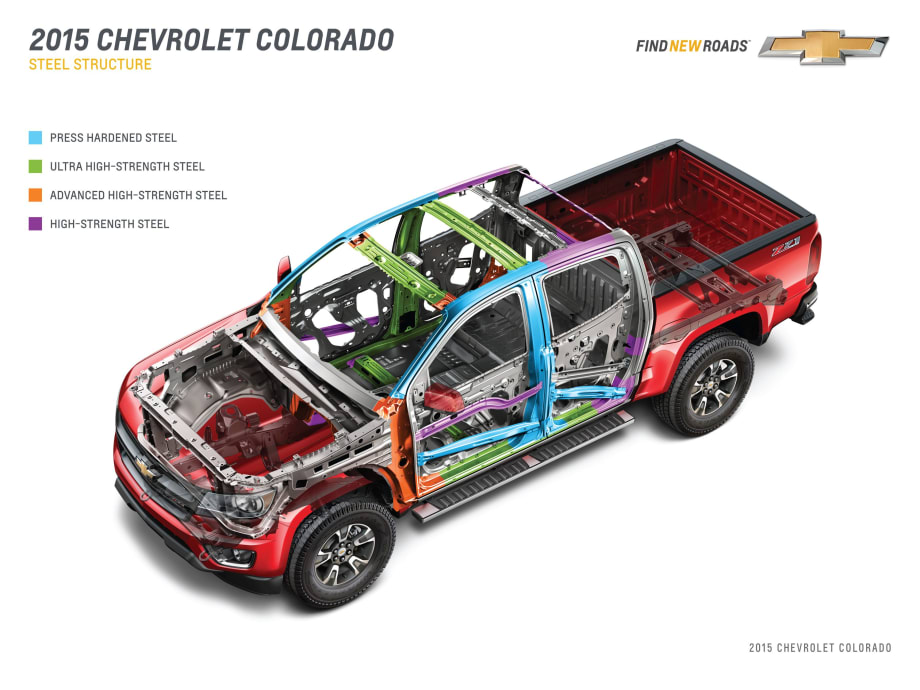
Through the use of lightweight materials and other engineering techniques, Chevrolet said that it expects that its new 2015-MY Colorado 4x4 Crew Cab will weigh between 880 and 1,400 pounds less than a full-size truck.
The Colorado will begin arriving in showrooms this fall at the same time as the new Ford F-150, setting up a sharp contrast between two strategies for reducing the weight of pickups.
In overall size, Colorado fits neatly below the Silverado 1500 in the Chevrolet lineup. The short-bed crew cab is 212.76 inches long, 17 inches shorter than a comparable Silverado 1500, making it an easier fit in many garages. Colorado’s overall width of 74.3 inches is five inches narrower than Silverado and two inches wider than the Equinox, providing easier maneuverability around town with a surprisingly spacious interior, according to the automaker.
Based on GM’s latest testing, Colorado is expected to have up to 6,700 pounds of available towing capability.
In creating Colorado, GM said its engineers chose materials that would make the most of the strength, safety and refinement of the truck, while balancing dependability and cost of repairs and total ownership.
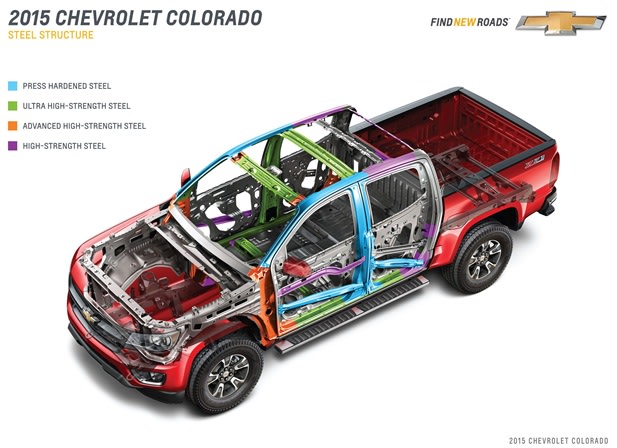
Like Silverado, Colorado extensively uses lightweight, high-strength steels. Fully boxed frames formed primarily from high-strength steel reduce weight and increase stiffness for a quieter ride and better handling. Key areas of the body structure also benefit from high-strength steels, reducing mass and enhancing strength and safety. Overall, about 71 percent of the body structure is comprised of high-strength steels. The pickup box consists of roll-formed steel, which is lighter and stronger than traditional stamped steel.
Major aluminum components include the hood, front steering knuckles, and cylinder heads and engine blocks for both the 2.5L four cylinder and 3.6L V-6.
Reflecting the attention to weight savings found throughout the Colorado, the aluminum heads for the V-6 feature integral exhaust manifolds, which save about 13 pounds over traditional cast-iron manifolds, according to the automaker.
The front of Colorado features a composite grille opening reinforcement with active shutters that seals the front of the truck, reducing aerodynamic drag and improving cooling performance. Another weight-saving feature, electric power steering, also helps improve steering assist for easier maneuverability in tight situations.
Because of its mass-efficient design, Colorado engineers skipped the cost and complexity of turbocharging Colorado’s four-cylinder and V-6 engines.
In addition to the lightweight aluminum cylinder heads and blocks, both engines feature direct fuel injection and continuously variable valve timing for better performance and more-efficient operation. Based on current GM testing, the standard 2.5L four is estimated at 193 hp, while the available V-6 is estimated at 302 hp.
Originally posted on Automotive Fleet
More Green Fleet

Fleet Forward Conference Introduces One-Day Passes for 2026
New one-day registration gives fleet professionals the flexibility to attend Tuesday, Wednesday, or Thursday, with passes available for $199 through Sept. 18.
Read More →
CALSTART Rebrands as Catalyst Mobility, Will Combine with Forth in 2027
CALSTART has rebranded as Catalyst Mobility and will combine with Forth at the start of 2027. The new organization said it is poised to become one of the world's largest, strongest, and most impactful clean transportation nonprofits.
Read More →
Electric Truck and Charging Programs to Boost Sustainability at NY & NJ Ports
Together, the Port Authority of New York and New Jersey and CALSTART will electrify drayage and terminal operations serving the East Coast’s busiest container port. A pair of incentive programs totaling $45 million has launched to accelerate adoption of zero-emission drayage trucks and terminal tractors.
Read More →
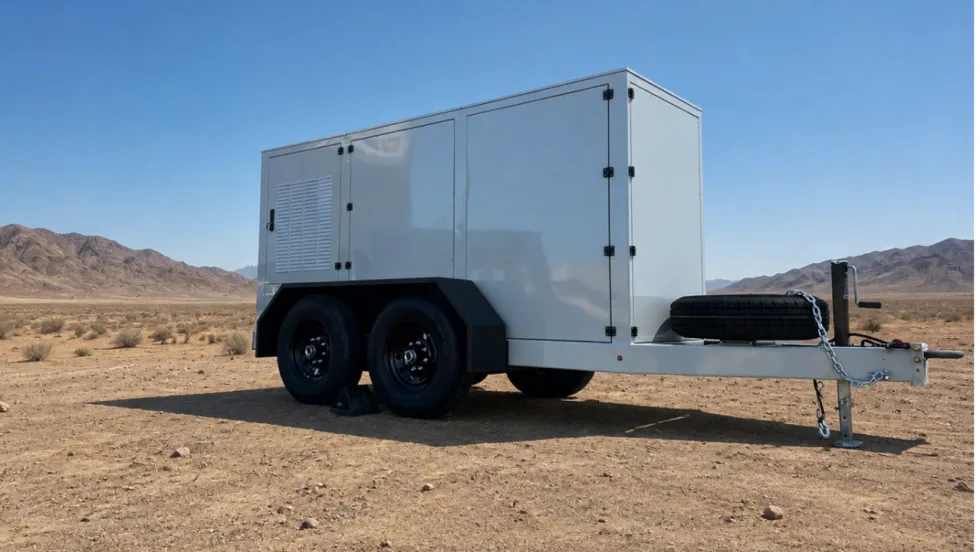
Xos Hub Surpasses One Gigawatt-Hour of Energy Delivered in the Field
A single Xos Hub has surpassed one gigawatt-hour of energy across more than 33,600 charging sessions in the field, demonstrating performance that supports Xos' expansion across new products and markets.
Read More →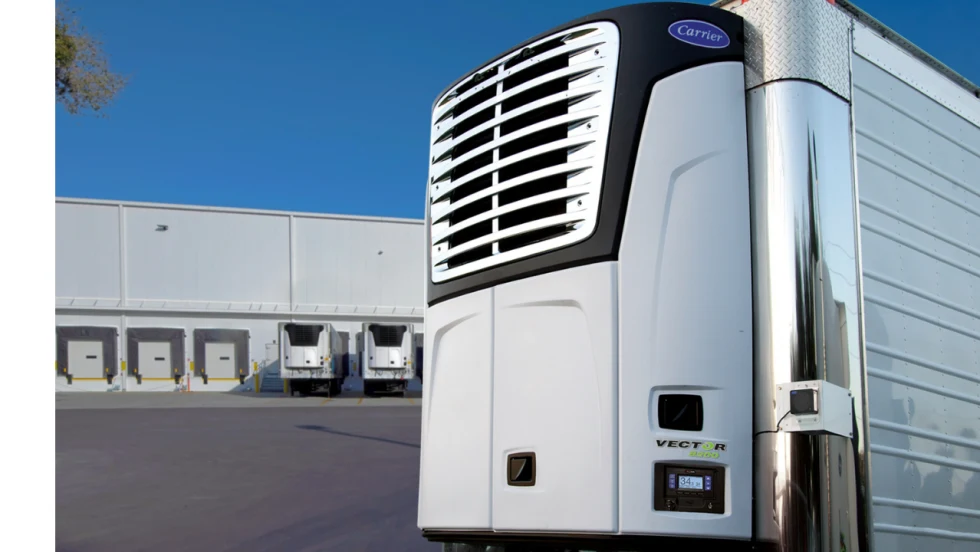
Carrier Transicold Launches All-Electric Vector 8200 TRU for Diesel-Free On-Site Cold Storage
Carrier Transicold’s first engineless multi-temperature TRU helps fresh- and frozen-food fleets add supplemental cold storage capacity during seasonal peaks.
Read More →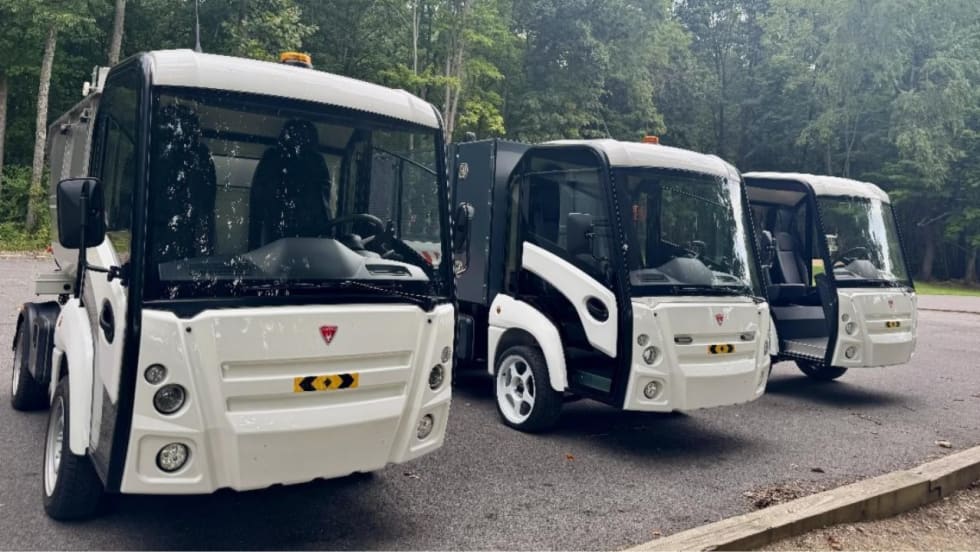
Narro Trucks Introduces Electric Utility Vehicle
Narro Trucks officially launched its operations on Aug. 20 and hosted a ride and drive to showcase its electric truck, which will be produced in Virginia.
Read More →
Samsung SDI Takes Full Control of GM Battery JV as Indiana Plant Pivots to Energy Storage
Samsung SDI is taking full control of its Indiana battery plant with GM, marking a major shift from the EV-focused joint venture Charged Fleet first covered in 2023.
Read More →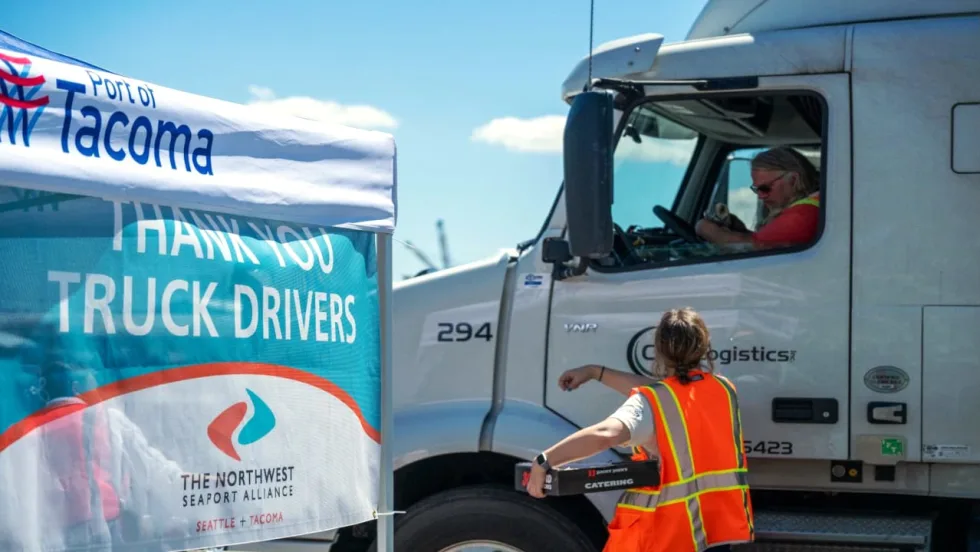
NWSA Taps CALSTART to Administer Zero-Emission Drayage Assistance Program
CALSTART will provide free technical assistance services to drayage fleets serving the Ports of Seattle and Tacoma and looking to transition to cleaner technologies and help decarbonize freight hubs.
Read More →
EV Fleet Reality Check: What Operators Wish They Knew Before Electrifying Their Work Vans
Electric work truck upfits bring new compatibility questions. Learn how parts availability, OEM guidance, power demands, and route planning can affect fleet performance.
Read More →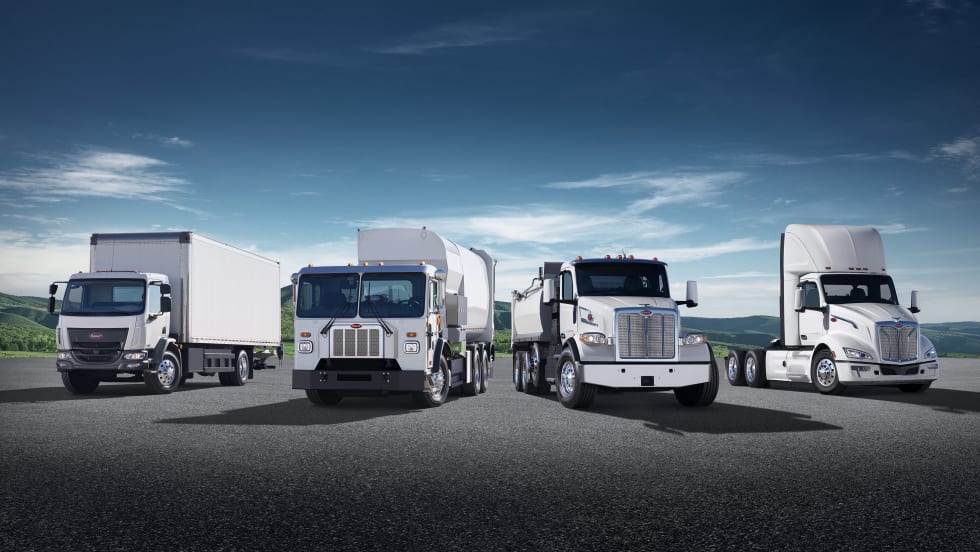
Peterbilt Expands Sourcewell Partnership with Electric Vehicle Lineup
Peterbilt Motors Company’s cooperative purchasing agreement with Sourcewell and its Canadian partner, Canoe Procurement Group, now includes including Peterbilt's battery-electric vehicle lineup.
Read More →