




Top 13 Mistakes Spec'ing Engines & Transmissions
From simply continuing with the status quo to ignoring factors such as application, resale, and weight, mistakes when spec’ing engines and transmissions can be costly.

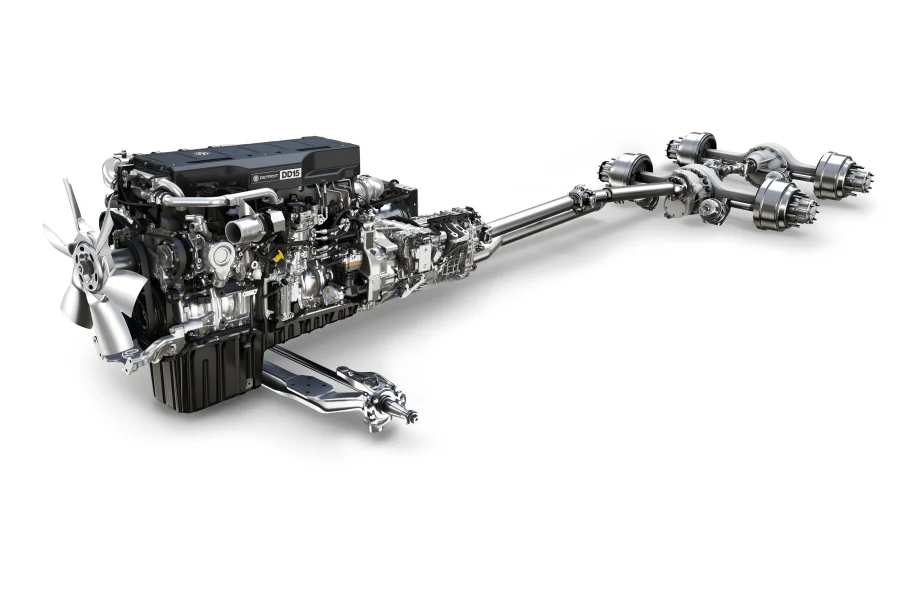
One mistake is not considering the whole truck business case. The powertrain is just part of the truck purchase decision.
Photo courtesy of Daimler Trucks North America
A truck’s engine and transmission are essential components to ensuring these tools can complete the job required.
Mistakes in spec’ing these key components can result in inefficient vehicles, wasted funds, and unhappy drivers. The top 13 mistakes are shared below:
1. Forgetting to Look at the Whole Picture
“Fleet managers shouldn’t focus on one aspect of the powertrain without carefully considering the whole picture. For example, too much focus on fuel economy may impact the truck’s ability to get the job done efficiently. Or, focusing strictly on performance can make the truck too expensive to own and operate,” said Dan Tigges, commercial product & sales support manager at GM Fleet.
When you look at the whole picture, you ensure all components of the truck will work at their best.
“Integrating the powertrain enhances efficiency, safety, reliability, and overall truck performance. The more a truck is designed as one operating unit, with components working together and complementing each other, the better the truck will perform,” said Brian Daniels, manager for Detroit Powertrain and Component Product Marketing.
2. Repeating Specs
“One of the biggest mistakes fleet managers can make is simply buying what they bought last time. Instead, fleet managers should work with their OEM and dealer partners to make sure they’re up to speed with the latest products. Powertrains are evolving, and the new technologies entering the marketplace can significantly improve the bottom line,” said Scott Barraclough, technology product manager for Mack.
3. Ignoring How the Truck Will be Used
“It’s very important not to overvalue engine performance on paper without considering the desired characteristics in real-world applications. To prevent this mistake, fleet managers should think about how they will be using the vehicle in their business and how each powertrain’s strengths and weaknesses will affect getting the job done,” said Tigges of GM Fleet.
4. Disregarding Driver Training
“With all the advancements in technology, design, and spec’ing, the driver is still the most important variable when it comes to fuel economy. That’s why, in addition to spec’ing the right powertrain, driver training is critical to achieving optimal performance,” said Daniels of Detroit.
5. Neglecting Resale
“In some cases, transmission/engine selections can affect resale value. Knowing how long the business will keep the equipment and having a plan on how they plan to sell it and when is important,” said RaNae Isaak, powertrain and TCO consultancy leader for Cummins. Inc.
6. Spec’ing Trucks for Top Speed vs. Cruising Speed
“While trucks traveling over the freeway may want to be capable of speeds higher than 65 mph, the reality is the truck may be spending more time (making money) at lower speeds. Vocational trucks may spend their working day at a much wider range during the day. Knowing what speed the truck needs to be optimized for impacts proper transmission ratio sets and final gearing. In some instances, we have seen transmission and rear axle ratio selections that do not align to the mission at hand. This can either add additional cost if over-spec’ed or lead to a loss of efficiency if under-spec’ed,” said Kurt Swihart, Kenworth marketing director.
7. Over-Spec’ing Trucks
“Often, we see specifications come in with a larger engine or larger transmission than what is required in that application or in that region of the country. This is money the fleet could have saved on upfront costs. For example, we see fleets spec an Allison 4000 series when you can really do with an Allison 3000 series. Understanding the limitations of the engine is important. Some engines have a gross vehicle weight rating (GVWR) or a gross combination weight rating (GCWR) limit to ensure the engine performance requirements are met by the engine OEM,” said Melissa Gauger, product manager, North America Truck Platform for Navistar.
8. Under-Spec’ing Trucks
“Under-spec’ing is another mistake that we see. Fleet managers need to understand what kind of performance they need out of the truck. For example, if you’re going to haul 80,000 pounds, you won’t want to utilize the smallest engine available. If a truck is under-spec’ed, it’s under-spec’ed for the life of the vehicle. Going with a lower rating may result in decreased productivity for the customer in terms of acceleration, startability, and gradeability of that unit, especially if it’s kept for 10 years,” said Gauger of Navistar.
9. Selecting the Wrong Transmission Type
“Automatics, automated, and manuals have their place. Select a transmission ratio set to get both the desired startability and top ratio for cruising speed. Once the overall transmission ratio is selected, then assess how many steps are needed. For example, 9-, 10-, and 12-speed transmission steps can serve mid-range power and GVW or GCW applications. Further, they may be targeted at getting the truck to nominal cruising speeds. Alternatively, the 12-, 13-, and 18-speed platforms offer more flexibility regarding varied terrain, speed, and load,” said Swihart of Kenworth.
10. Discounting Weight Savings
“Weight can be a significant aspect to transmission combinations. Powertrain weight can be a key attribute that fits into the gross payload of a customer’s operation. If not considered, flexibility of operation may not have the margin to expand and grow a business operation,” said Isaak of Cummins.
11. Relying on Bad Data
“The top mistakes often come down to not fully understanding a fleet’s drive-cycle and relying on outdated or incorrect data. We hear many customers say, ‘this is the component I have always ordered, and it has worked in the past.’ This can lead to poor assumptions and spec’ing a truck not optimized for the job,” said Swihart of Kenworth.
12. Disinterest in Horsepower & Torque
“Not fully understanding how horsepower and torque are used with the vehicle can also be an issue. Too much power or torque can provide suboptimal business goals. Equipment can be abused at higher power and torque values and could potentially degrade much faster than the intended purpose. The engine and powertrain can also provide more performance than needed and in turn deliver suboptimal fuel economy.
Operators may be happier, but the bottom line of the business may be suffering. Choosing the right power and torque for the job will ultimately bring the best performance along with optimized fuel economy and have the extended life necessary,” said Isaak of Cummins.
13. Overlooking the Business Case
“Another mistake is not considering the whole truck business case. The powertrain is just part of the truck purchase decision — the total cost of ownership, reliability and durability, vehicle usage, other vehicle characteristics, and more, should all be considered,” said Tigges of GM.
Do you have any additional mistakes to share? Comment below or e-mail me and let's chat!
Lauren Fletcher
Lauren.Fletcher@bobit.com
More Blog Posts

You Can't Tariff an Aluminum Smelter Into Existence
The U.S. wants to rebuild domestic aluminum production, but work truck manufacturers still need material today. What happens to costs and supply in the meantime?
Read More →
Can America Replace Canadian Truck Production Without Hurting U.S. Fleets?
U.S. tariffs are targeting Canadian truck production, but Ford and GM show why moving that manufacturing south isn’t so simple. After 60 years of building one North American supply chain, what could fleets lose by pulling it apart?
Read More →
The Fleet Skills We Keep Missing on Veterans’ Resumes
What if some of the strongest candidates are already out there, but we are overlooking them because their experience is written in a language our industry does not always recognize?
Read More →
Technicians Are Doing More Than Turning Wrenches
Technicians do far more than repair vehicles. Six professionals reveal the problem-solving, pressure, and pride behind keeping fleets moving.
Read More →
WWCD? What Would Coach Do?
A personal reflection on Ed "Coach" Bobit, the mentor who shaped my career, and why I still ask myself one question 12 years later: WWCD?
Read More →
What the Fleet Industry Still Gets Wrong About Talent
What can the fleet industry learn from the women helping shape its future? A look at talent, leadership, sponsorship, and why new perspectives drive progress.
Read More →
AI Isn’t Killing Content, but Lazy Expertise Is
Thought leadership loses value when AI does the thinking. Here’s why authentic industry voices still matter most.
Read More →
Do I Need a U.S. DOT Number?
Whether you operate a small fleet of light-, medium-, or heavy-duty units, or are merely the owner of one truck wanting to ensure you adhere to the law, knowing if you can need a U.S. DOT number can be confusing.
Read More →
Is Retirement in Fleet Now More Like ‘Rewiring’?
Fleet professionals rarely retire for good. They return as advisors, mentors, and consultants, keeping hard-won experience in the industry.
Read More →
What Does Visibility in Fleet Really Look Like?
Advocacy changes things. Visible trust changes things. Structure changes things. Access changes things. A willingness to share connections, rooms, and opportunities, and a belief in someone before it is convenient, changes things.
Read More →