




What You Need to Know About APUs
Evaluating auxiliary power units (APUs) before making any usage decisions can help save time and money for fleets in need of additional power.


As anti-idling laws become more prevalent across the U.S., medium- and heavy-duty truck fleets are turning to onboard generators, called auxiliary power units (APUs), to operate accessory equipment.
Photo: Thermo King
As anti-idling laws become more prevalent across the U.S., medium- and heavy-duty truck fleets are turning to onboard generators, called auxiliary power units (APUs), to operate accessory equipment — such as heating and air conditioning systems for sleeper cabs, halogen lamps for nighttime jobsites, and hoists for aerial bucket trucks or service cranes — without having to idle the main engine.
Considering that the industry averages fuel consumption at idle, for a Class 8 tractor, ranges from 0.6 gallons to 1.1 gallons, according to Thermo King, APUs enable truck fleets to substantially reduce fuel costs while still powering the amenities and tools drivers and crews need to perform their jobs most productively.
But, with a per-vehicle cost of $6,000 to $10,000 (plus installation), and various options to evaluate, the process of selecting the right APU for the application and budget can be daunting.
Combustion-Power vs. All-Electric APUs
The APU market is essentially divided into two types: combustion-power and all-electric (battery power). Although most combustion-powered APUs are fueled by diesel, there are units available that operate on alternative fuels, such as natural gas and propane autogas.
But, which APU type is better? The answer depends on the truck’s application.
“With diesel-powered APUs, there’s virtually unlimited power available to heat and cool as long as fuel is in the APU,” said Bill O’Shea, fleet sales director with Fontaine Modification, a company that installs APUs for OEMs and fleet customers, in addition to other custom services that tailor vehicles for specific vocational applications.
“Battery-powered APUs have the advantage of no noise but have limited run times. Yet, that technology is getting better by the month with more advancements,” O’Shea added.
According to O’Shea, diesel-powered APUs represent 70% of the APUs the company installs for its major fleet customers.
“With the electric APU, you have a captive amount of energy,” said Paul Barbaro, product manager, auxiliary power units for Thermo King, which manufactures both APU types. “You have four APU batteries, with limited ability to leach off the tractor batteries, so you have limited heating, ventilation, and air conditioning (HVAC) capability. When the batteries go dead, there’s no way that you can just start the unit back up again and [instantly] create more APU capacity.”
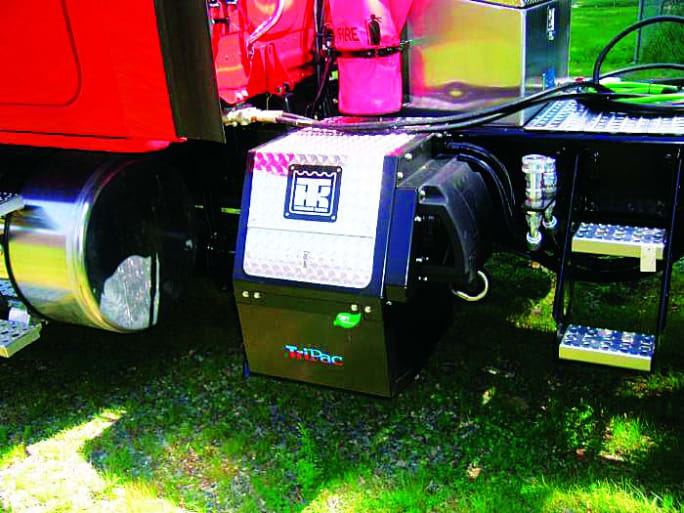
Energy Xtreme offers a utility service vehicle series, which are complete smart power management systems that operate a utility truck’s full electrical load, according to the company.
Photo: Thermo King
Comparing the Capacity of All-Electric APUs
The average [battery-powered] APU will provide up to 10-12 hours of air conditioning capacity and typically longer than that for heating, according to Barbaro of Thermo King.
“But, that’s under non-extreme conditions, when you’re not in Death Valley, Calif., where it’s 125 degrees Fahrenheit. Also, if the driver chooses to use the various ‘hotel’ amenities in the tractor, you’re competing for the same energy that the HVAC would be competing for,” Barbaro noted. “If the driver decides to cook his or her dinner in the microwave, then watch a movie on TV using a DVD player, the energy to do that is now taking energy away from the available HVAC operation. In an extreme condition, it’s possible to run out of battery power quickly.”
Barbaro estimated it takes about six to 12 hours to recharge the batteries for an all-electric APU, either by running the truck engine or plugging directly into an outlet.
He also noted that long-haul applications are best suited for diesel-powered APUs, until battery technology can meet heavier power requirements.
“If you have long-haul drivers at the end of the seventh day of driving, per the hours of service regulations, they have to layover for 34 hours,” Barbaro noted. “We have yet to find an electric APU on the market that can provide comfort for 34 hours. So, if drivers are long haul, and they’re going to be spending their ‘reset’ time in the tractor, you would either have to put them up in a hotel or add idle time to your tractor. You’ll end up with 34 hours of idle time on the tractor every week when they go into their reset. Right now, that’s one significant gap between [the diesel and battery-powered APUs] that we haven’t quite figured out how to overcome just yet.”
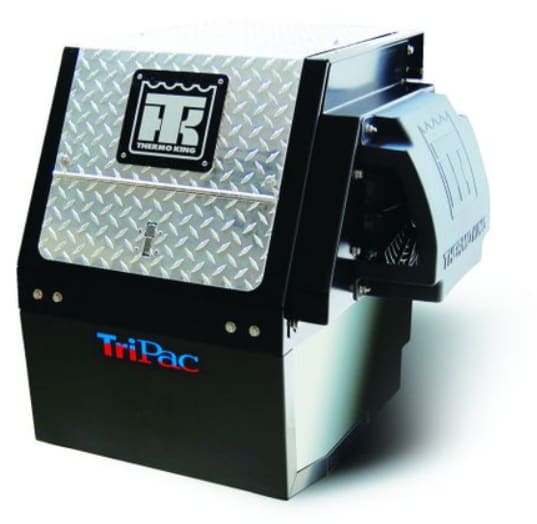
Thermo King offers the TriPac hybrid idle-reduction and temperature management system, which features a 1,000-hour maintenance interval.
Photo: Thermo King
Determining The Best Fit for All-Electric APUs
To determine whether an all-electric APU is the best for a fleet application, take a look at how the vehicles are utilized.
“It may be a smaller sleeper, or even a day cab, that doesn’t require a huge amount of heating and cooling to keep the driver comfortable while he or she is waiting to be loaded or unloaded. That’s where the battery-powered APU fits in real nice,” said O’Shea at Fontaine.
Paul Kokalis, executive vice president with Fontaine Modification, agreed.
“That’s an ideal scenario for [a battery-powered APU], because you’re cooling a much smaller space, providing more run time. Instead of having to run the unit eight hours per day, the driver may only have to run it three hours per day while waiting to load or unload.
Kokalis also pointed out that various Port Authorities are trending toward 100-percent “no idle” policies (including idling from combustion-powered APUs), increasing demand for zero-emissions, all-electric APUs in those instances. “Drivers who are pulling containers in and out of port, where they’re waiting in line for hours at a time, in the heat down in Jacksonville, Fla., for example, and cannot run the main truck engine — they just need a smaller day-cab. That’s a scenario where I think battery-powered APUs are coming around.”
APU Maintenance Needs
“In terms of a diesel-powered APU, anytime you bolt another diesel engine onto your tractor, you have maintenance associated with that,” said Barbaro with Thermo King. “The key is oil changes, fuel filters, and general preventive maintenance of a diesel-powered APU. With an electric APU, maintenance comes down to simple electrical connection maintenance. Somewhere during the lifecycle of the electric APU, you’ll end up doing a battery swap to restore the original capacity. But, you’ll touch [the battery-powered APU] less than a diesel from a maintenance perspective.”
O’Shea with Fontaine concurred. “The advantage of a battery APU: It’s less maintenance, you’re not changing oil, and you don’t have the diesel engine to maintain. Where there are California Air Resources Board (CARB) requirements, you also don’t have to worry about diesel particulate filter and the additional cost of that [approximately $1,500 to $2,000].”
Does the APU Fit the Truck?
Whether the APU is diesel-powered or all-electric, make sure there’s enough space for it on the truck frame before finalizing the APU spec.
“One of the biggest challenges we run up against from an installation standpoint is chassis packaging, especially when you have exhaust after-treatment devices on the frames,” said Kokalis with Fontaine.
Kokalis noted that Fontaine’s biggest challenge is finding the proper place to fit the APU if the chassis has not been properly laid out to accommodate the space needed for the unit.
“If the customer has an APU that really requires 26 inches of space and the chassis only allows for 19 inches, then we have to move fuel tanks or relocate air dryers, etc. So, fleets have to be really careful, because it can be very expensive to have to move a bunch of stuff around to fit an APU, if you don’t plan the chassis out correctly.”
The Bottom Line
Taking the time up front to make sure the APU’s capacity and functionality match what will be demanded of it, will eliminate unpleasant surprises for you — and your drivers — and achieve substantial fuel and operational cost savings that bolster your organization’s bottom line.
More Upfitting
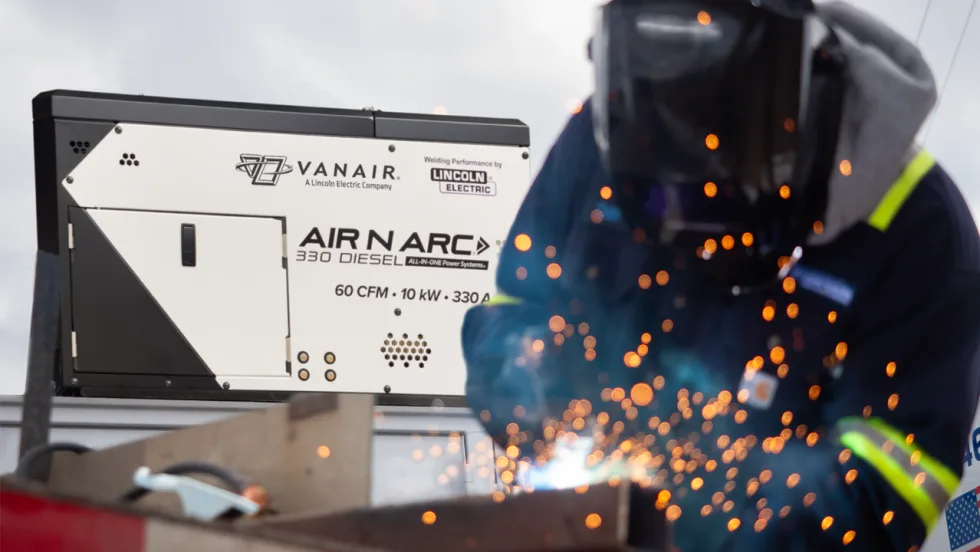
Multitasking: Vanair’s Air N Arc 330 Diesel 60 CFM All-In-One Power System
The Air N Arc 330 Diesel 60 CFM from Vanair consolidates a welder, generator, rotary screw air compressor, battery booster, battery charger, and EV charger into a single 750-pound enclosure driven by one 24.8-horsepower Kubota diesel engine.
Read More →
Buyers Products Awarded Sourcewell Cooperative Purchasing Contract for Snow & Ice Equipment
Buyers Products has been awarded a Sourcewell contract for a wide range of winter maintenance equipment and accessories, including snowplows, municipal plow systems, wing plows, spreaders, and more.
Read More →
Hilltip Introduces the SnowStriker SFT Flex Expandable Box Plow
Hilltip’s new SnowStriker SFT Flex expandable box plow features hydraulically extendable sections that allow operators to adapt the clearing width to changing conditions and applications on the go.
Read More →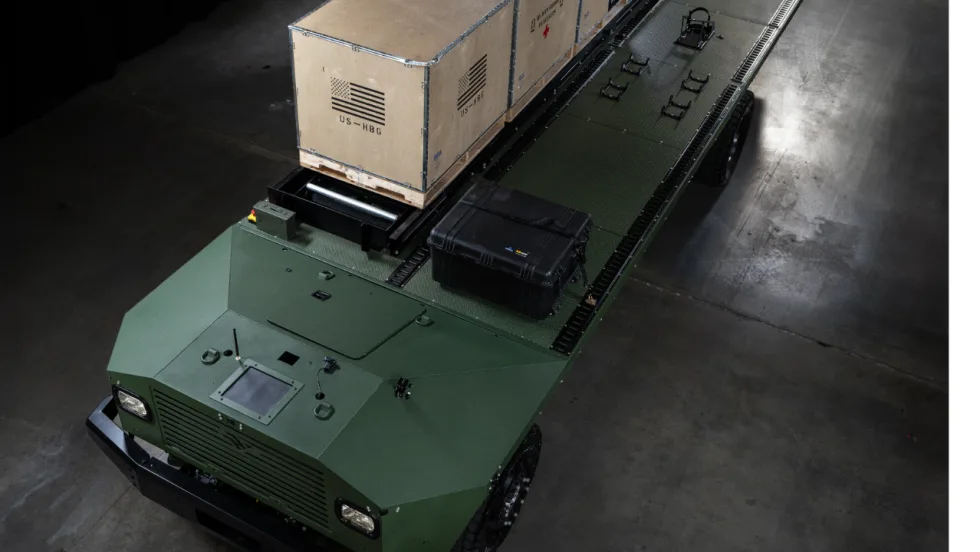
Harbinger Part of Effort to Deliver Autonomous Logistics Capabilities for U.S. Army
American Rheinmetall received an 18-month U.S. Army contract to deliver autonomous, hybrid-powered uncrewed ground vehicles. Harbinger is providing the truck platform for those vehicles.
Read More →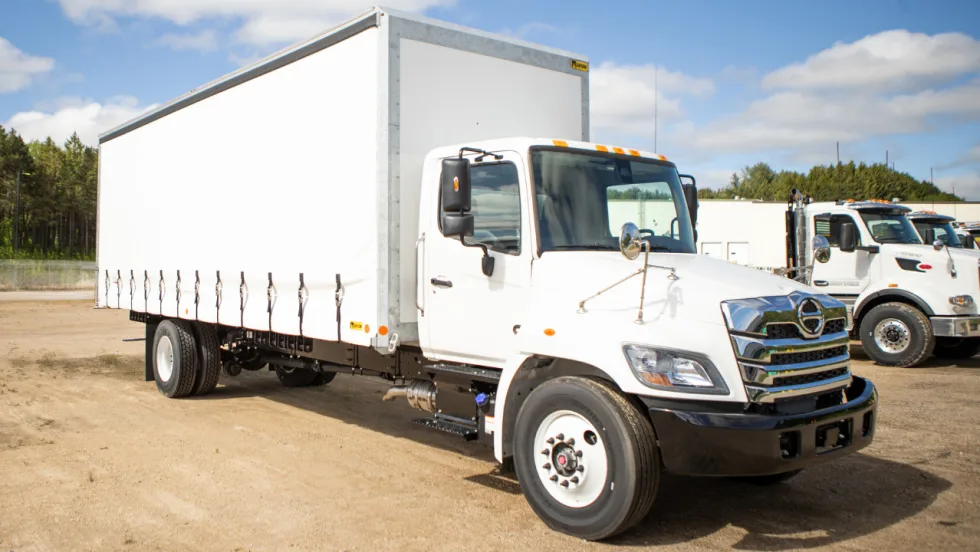
Thinking Outside of the Box: Choosing the Right Truck Body for Your Fleet
Choosing the right truck body can have a major impact on loading efficiency, cargo protection, downtime, and long-term operating costs. Here’s how dry vans, platforms, and curtainsiders compare, plus what fleets should consider before spec’ing their next truck.
Read More →
Fourth Annual Upfit Package of the Year Awards Open for 2027 Entries: One Month Left!
Think your upfit deserves industry recognition? Enter the 2027 Work Truck Upfit Package of the Year Awards before the Sept. 30 deadline. There is less than a month left to get your submissions in!
Read More →
Reading Truck Equipment & Masterack Unite as One of North America's Largest Commercial Vehicle Upfit Networks
Reading Truck Equipment and Masterack have integrated operations to create one of North America's largest and most comprehensive commercial vehicle upfit organizations.
Read More →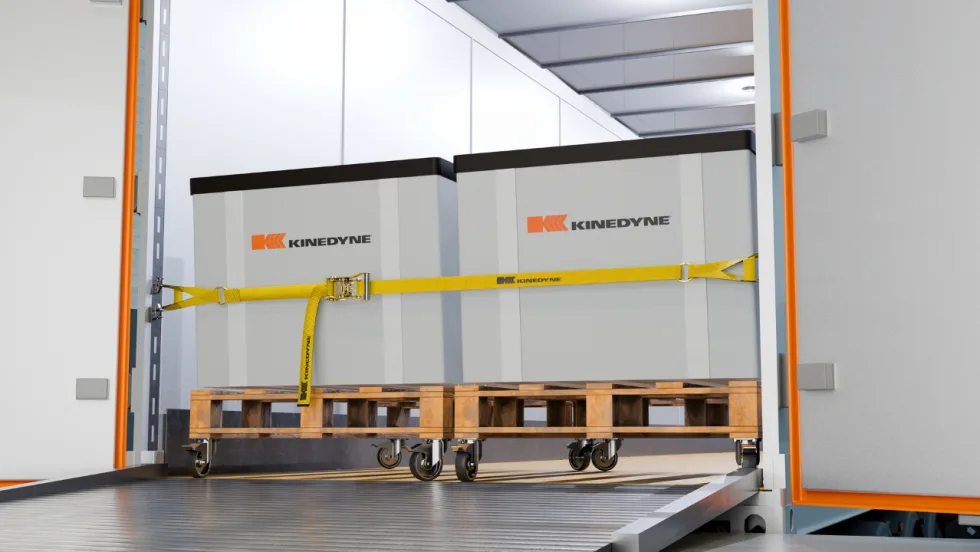
Kinedyne Launches Heavy Duty Logistic Shoring Strap
Kinedyne’s new Heavy Duty Logistic Shoring Strap features a patent-pending four-point design to deliver greater cargo stability, increased strength, and easier handling for rolling and shifting freight.
Read More →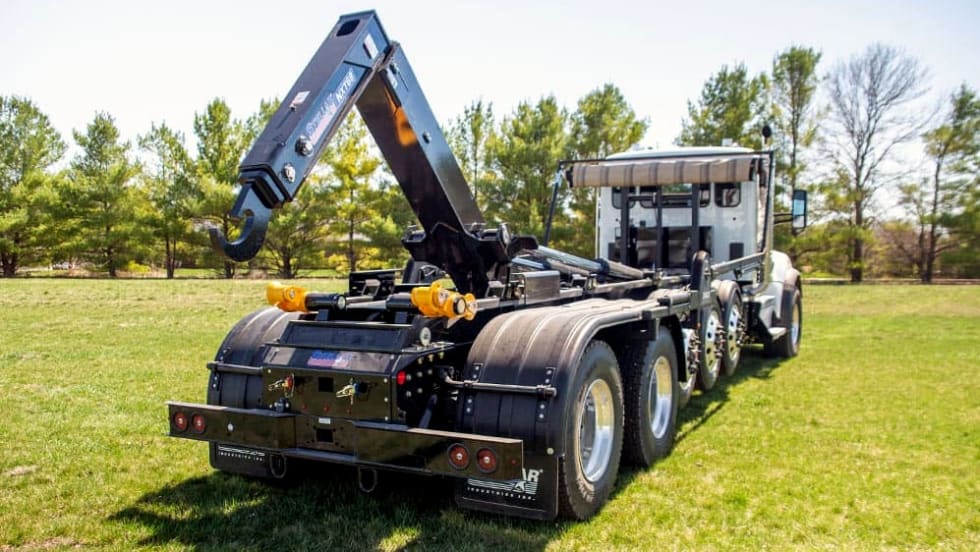
Hooklift Bumper Design from Stellar Showcases Strength & Versatility
Stellar Industries’ new bumper for the NZT Series Hooklifts come in two capacity options: the 20K, designed for Class 3 – 6 chassis with a 20,000-pound pull capacity, and the 90K, built for Class 7 and 8 chassis with a 90,000-pound pull capacity.
Read More →
Maxon Lift Awarded the Wabash Platinum Award for Supply Chain Performance
Maxon Lift, a liftgate manufacturer since 1957, received the Wabash Platinum Award for supply chain performance in 2025. Each year, Wabash presents awards to top suppliers for excellence in supply chain performance.
Read More →