




Dig Deeper: Disaster-Proofing Your Truck Fleet
The First 48 Hours: Fleet Readiness for Real-World Disaster Response
Fleet readiness is mission-critical. Learn why having the right trucks ready before disaster strikes can make or break your emergency response.
by Jake Koester, City Rent a Truck
May 29, 2025
Fleet readiness starts long before the storm. Having the right trucks in place keeps recovery efforts moving when every minute counts.
Photo: City Rent a Truck
4 min to read
When disaster strikes, every hour counts. The difference between an effective response and a stalled recovery often comes down to one question:
Do you have the right trucks ready to go?
The Moment Everything Shifts
Natural disasters rarely give warnings. When they hit, everything changes in an instant. Roads are blocked. Power lines are down. Infrastructure is compromised. As the first responders and restoration crews mobilize, the clock starts ticking.
The first 48 hours after a disaster are critical, but even the most experienced teams can find themselves paralyzed if the vehicles they rely on aren’t immediately available.
The Hidden Vulnerability in Disaster Planning
Most disaster prep focuses on supplies, communication, and logistics. However, very few organizations have a proactive plan for fleet deployment.
Instead, they assume vehicles will be there when needed—until they’re not. The reasons vary:
Lead times for purchasing are too long — trucks often show up after demand has dropped, leaving you stuck with equipment you own but no longer need.
Truck specs don’t match job needs, and upfitters are backlogged.
FMCs require long-term contracts that don’t align with emergency response timelines.
Rental fleets get picked over fast after a disaster. If you’re not first in line, options can disappear quickly.
The result? Crews are ready to go, but trucks aren’t. Work stalls. Communities suffer delays and setbacks that compound by the hour.
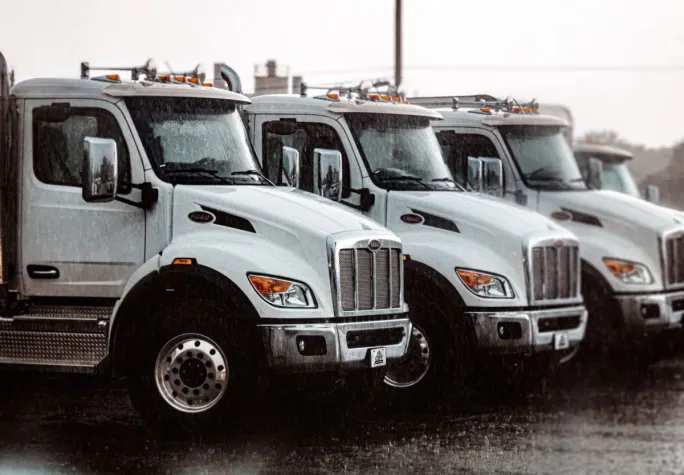
When disaster hits, fast access to work-ready vehicles helps crews restore power, clear roads, and protect communities without delay.
Photo: City Rent a Truck
Bridging the Gap with Work-Ready Vocational Trucks
That’s where specialized rental fleets come in, not only pickups and flatbeds but vocational vehicles made to handle tough conditions and complex jobs. Think dump trucks, bucket trucks, reel loader trucks, service trucks, and fuel trucks, all purpose-built for response work.
The ability to procure and deploy these vehicles on demand, without long-term commitments, is what makes the difference when timelines collapse.
Emergency response crews don’t need trucks in six weeks. They need them in six hours.
That’s why fleet readiness planning should always include a reliable, fast-turn rental partner. That relationship needs to be in place before the storm hits so you’re not scrambling after the market has already been depleted.
Proof in Action
When Hurricane Helene hit Florida late last year, our team mobilized immediately, delivering a fleet of bucket trucks, dump trucks, and reel loader trucks to impacted areas within 48 hours. Utility contractors, municipalities, and storm recovery teams quickly put them to work.
One utility foreman on-site told us, “It makes a big difference having a partner I can call, who I know will have what we need and get it to us fast. We don’t have time to chase down trucks during a storm. Having them show up, built right and ready to work, helped us to hit the ground running.”
That speed didn’t just help one crew; it accelerated the entire response effort across the region. Bucket trucks were used to restore overhead power, reel loaders to reset downed telecom lines, and dump trucks to clear debris and reopen blocked access routes. With pre-staged inventory, we could skip the sourcing scramble and focus entirely on delivering critical vehicles where they were needed without delay.
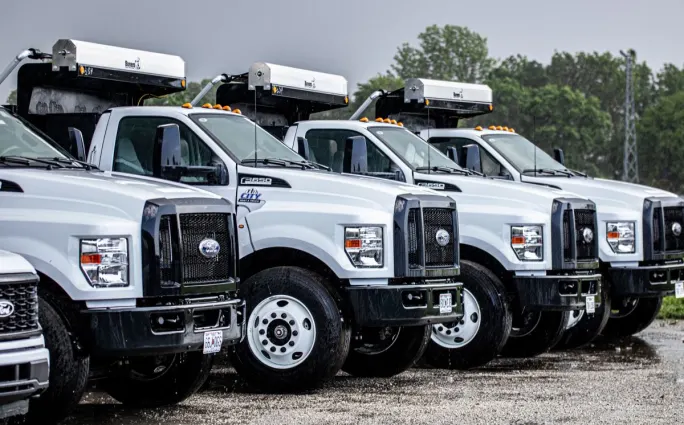
Response teams can’t afford to wait. Pre-planned access to reliable trucks ensures work starts immediately when the call comes in.
Photo: City Rent a Truck
Fleet Readiness = Disaster Readiness
Forward-thinking organizations are no longer treating fleet readiness as an afterthought. They’re building vehicle deployment directly into their disaster response playbooks.
That kind of upfront planning turns chaos into control. When disaster response is part of your mission, your fleet strategy needs to be just as urgent.
To be ready, you need:
A plan for rapid deployment — Know what vehicles you'll need, where they’ll come from, and how quickly they can be on-site. Build that timeline before the disaster hits.
Relationships with suppliers who understand urgency — Not every partner can move at disaster speed. Work with teams that know how to prioritize emergency response and act fast.
Access to trucks that are already built for the job and work-ready — It’s not just about availability but capability. Units must be fully upfitted, tested, and properly configured for field conditions to go to work immediately.
Fleet readiness doesn’t start when the storm hits. It starts now with the right partnerships and processes in place.
Driving Thoughts
The first 48 hours after a disaster are filled with uncertainty. But when you’ve got the right equipment ready to roll, that chaos becomes manageable.
Trucks might not make headlines, but they’re behind every hazard cleared, every power line repaired, and every road reopened.
When time matters most, fleet readiness is mission-critical.
Subscribe to Our Newsletter
More Safety
When Work Trucks Under 26,001 Pounds Need IRP Registration
Think trucks under 26,001 pounds are automatically in the clear when it comes to IRP? Not always. Learn where lighter vehicles can still run into trip permit, apportioned registration, and IFTA compliance requirements when crossing state or provincial lines.
Read More →
Volvo Trucks Releases New Safety Recommendations for Traveling with Pets
One of the most important recommendations for professional drivers traveling with pets is to ensure pets are properly restrained while the truck is moving. Other tips are available in the new guide from Volvo Trucks North America and Center for Pet Safety.
Read More →
API Issues Refueling Safety Guidelines
The American Petroleum Institute offers a list of safe vehicle refueling guidelines, including ways to avoid potential problems with static electricity discharges in fall, winter, and early spring.
Read More →
Winter Fleet Prep: Expert Tips to Keep Vehicles Running Smoothly
Cold weather can expose weak batteries, tires, fuel systems, and maintenance gaps fast. Use this winter fleet checklist to prepare trucks and drivers before temperatures drop.
Read More →
When a Work Truck Breaks Down, the Job Can Stop, Too
A work truck breakdown can stop more than the vehicle. Discover how payloads, jobsites, and specialty equipment change the roadside response.
Read More →
What Stronger Long-Term Fleet Service Partnerships Actually Require
Fleet service partnerships rarely fall apart all at once. Learn the three warning signs that trust is eroding and what fleets and providers can do before downtime, frustration, and lost revenue follow.
Read More →
Applause & TRUCE Software Partner to Improve Driver Safety Through AI-Powered Telematics & Employee Performance Management
Applause has integrated TRUCE driving metrics directly into its employee-first performance and safety platform that transforms mobile devices into AI-powered telematics.
Read More →
How Detroit Assurance with Active Brake Assist Works
Do you want to see what it is like to experience Detroit Assurance’s Active Brake Assist? In this video, Work Truck will put you in the cab to see how it all works and then hear more details from DTNA’s Mike Young.
Read More →
Get Left of Loss: A 5-Step Workplace Violence Prevention Framework for Fleet Operators
Violence risks do not stop at the driver’s door. Learn five practical steps fleets can take to spot threats early and protect workers before loss occurs.
Read More →
Sponsored•July 17, 2026
How Better Visibility Cut Speeding Violations by 48%
Fleet leaders don't need more data, they need clearer visibility into what the data is saying. This case study explores how one utility replaced speeding-event counts with a single metric — miles driven in violation — to strengthen safety and significantly reduce speeding violations.
Read More →