





Download Today: Work Truck’s Guide to Fleet Electrification
The 2026 Powertrain Playbook Is Less About Picking a Winner and More About Building Resilience
EVs keep growing, but fleets are getting strategic. In 2026, energy reliability, targeted adoption, and alternative fuels shape the mix.
January 21, 2026
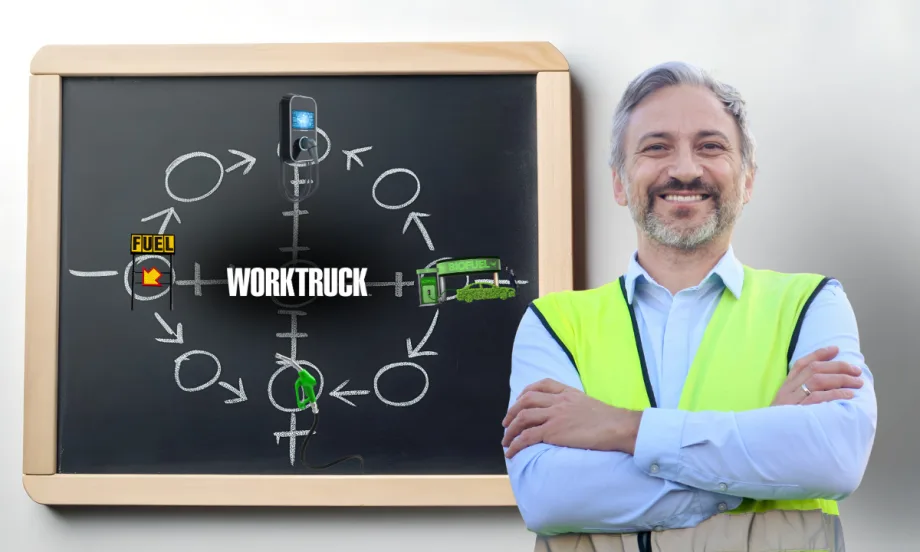
The 2026 powertrain playbook is about optionality, not absolutes. Fleets are mapping fuel, charging, and energy choices side by side to build a strategy that stays viable as costs, infrastructure, and regulations shift.
Credit: Work Truck
10 min to read
For the past few years, fleets have been asked a version of the same question repeatedly: Are you going electric?
In 2026, the better question might be: are you building a fleet strategy that can survive whatever comes next?
Because the reality is, the powertrain conversation is no longer just about emissions targets or new vehicle options. It’s about cost, uptime, infrastructure, energy reliability, and making decisions that still make sense even when incentives change, regulations shift, and the grid gets strained.
If there’s a defining forecast theme for 2026, it’s that fleets are moving away from one-size-fits-all answers. EV adoption will continue, but it will become more targeted. Alternative fuels keep gaining ground. Hybrid stays in the mix. And energy resilience is starting to show up as a core planning metric, right alongside vehicle uptime and total cost of ownership.
EV Adoption Continues, But it Gets More Strategic
One of the clearest signals from multiple fleet and mobility sources is that electric vehicles are not going away. Fleets are still asking for them, still piloting them, and still building them into long-term planning. But the tone is different from what it was a few years ago.
The emphasis is shifting from ambition to application.
“We expect electric vehicle adoption will continue as we hear from clients that they want to have these options as part of their fleet,” said Justin Lisonbee, AVP of Fleet Operations, Enterprise Fleet Management. “We always put their experience first, which means finding the right vehicle for the right application. This includes both hybrid and EV solutions in addition to traditional internal combustion engine vehicles to help meet their needs.”
That’s the most important phrase in that forecast: right vehicle, right application.
The Ford E-Transit illustrates how that philosophy is already translating into real-world results. E-Transit has emerged as the nation’s best-selling electric van, according to Ford Pro. Since launch, E-Transit drivers have saved more than 3 million gallons of gasoline and reduced over 25 million kilograms of CO₂, demonstrating that EVs can deliver measurable operational and sustainability benefits when deployed in the right commercial use cases.
EV adoption is no longer treated like a blanket mission. It’s treated like a portfolio strategy, where fleets add EVs where the math and operations make sense, while continuing to rely on internal combustion engines and hybrid options where infrastructure, duty cycle, and cost still favor them.
Kendra Rupp, Regional Vice President, Client Partnerships at Mike Albert Fleet Solutions, sees EV viability continuing to expand, especially for fleets with predictable routes and daily operations.
“EV adoption will expand across vehicle classes,” Rupp said. “EVs will become more viable for a wide range of fleet applications, especially for predictable daily routes. Lower upfront costs and reduced lifetime expenses will drive broader adoption.”
That forecast reflects where many fleets are today: EVs work beautifully in certain cases. The opportunity is growing, but it’s still tied to operations and route predictability, not hype.
EV adoption may be getting more targeted, but pricing is one of the biggest reasons fleets are still watching this space closely, especially after the incentive-driven swings in late 2025.
“As expected, electric vehicle (EV) sales spiked ahead of the expiration of federal incentives and slowed significantly in the closing months of 2025,” said Jay Collins, senior vice president and general manager, WEX Energy Transition. “We think price parity between EVs and comparable internal combustion engine (ICE) vehicles will likely come into focus in 2026, and total cost of ownership may lead commercial EV sales in late 2026 and beyond.”
Collins tied that to battery economics.
“EV batteries cost around $150 per kWh in 2022, and they are expected to dip toward $80 per kWh in 2026,” he said. “Considering up to 40% of an EV's cost is the battery itself, the price parity with ICE-fueled vehicles will be short-lived.”
And if that pricing curve holds, fleets could be looking at a very different purchase conversation sooner than expected.
“As batteries become even cheaper, EVs will be cheaper to buy than ICE vehicles, potentially as much as one-third cheaper with comparable ICE models by 2027,” Collins said.
Then you go into your existing grid/energy reliability section, which still matters because even if EVs get cheaper, fleets still have to be able to charge them without breaking operations.
The Grid Is Becoming a Fleet Planning Issue
If EV adoption is tied to reliability, fleets must think beyond vehicles and charging stations. They have to think about the grid.
According to Ananya Gupta, Group Product Manager at Ford Pro, grid strain is driving smarter charging, and fleets can help ease grid constraints. Using its software tools, Ford Pro deployed demand-response and dynamic pricing strategies to optimize depot charging for Southern Company’s fleet, demonstrating the ability to reduce total charging demand by 0.5 megawatts (500 kW) of power during a 30-minute demand response event through smart charging.
“Fleets vary and operate differently with unique duty cycles, local utility rates, site-specific variables, but the lessons and the data from this pilot with Southern Company allow us to tailor-manage charging to each scenario,” Gupta said.
This is not just a charging strategy. It’s a resilience strategy.
And it reinforces a broader theme in 2026 forecasts: uptime is no longer only about mechanical reliability. It’s also about energy availability.
Energy Reliability Moves to Center Stage
No one in the submitted responses pushed that theme harder than the Propane Education & Research Council, which framed 2026 as a year where fleets start asking tougher questions about what powers their vehicles and whether they can depend on that fuel source when it matters most.
“Heading into 2026 and beyond, energy reliability will be an important factor influencing fleet operations,” said Joel Stutheit, senior manager of autogas business development at the Propane Education & Research Council. “While fleet owners have long considered uptime from a mechanical perspective, it’s going to be more critical that they also evaluate how the energy that powers their vehicles can impact downtime.”
Stutheit points to grid vulnerability as a growing issue, not just a theoretical concern.
“A recent Department of Energy report projects that blackouts in the U.S. could increase 100-fold by 2030 as the electric grid struggles to keep up with surging demand from home energy use, manufacturing, and AI-driven data centers,” Stutheit said.
Whether fleets agree with the scale of that projection or not, the takeaway is clear: fleets are starting to consider diversification as part of their fuel strategy, especially if they operate in regions vulnerable to outages or have mission-critical service needs.
“More fleet owners are looking beyond single-fuel solutions, exploring options like propane autogas that can operate independently of the grid,” Stutheit said. “Because it’s stored on site and has a long shelf life, it’s ready when fleet owners need it to keep operations running.”
This is the kind of forecasting shift that tends to sneak up on fleets. A few years ago, fuel strategy was mostly about cost and emissions. Now it’s also about reliability and service continuity.
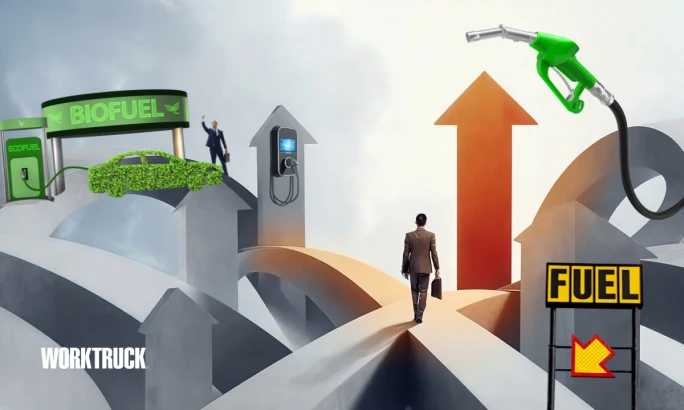
In 2026, fleet powertrain strategy is less about picking one winner and more about building resilience. EVs, hybrids, diesel, and alternative fuels all stay in play as fleets balance cost, uptime, and energy reliability.
Credit: Work Truck
Propane Autogas Momentum Builds on Stability
Alongside reliability, Stutheit emphasizes something fleets have been craving: stability.
“The stability and affordability of propane autogas will continue to drive adoption,” Stutheit said. “In 2026, we expect propane autogas to gain momentum among commercial fleets as a cost-effective alternative fuel.”
He points to relatively stable vehicle and fuel pricing compared with electric and diesel options, positioning propane autogas to reduce operational costs without sacrificing emissions reductions, reliability, or performance.
And this is where the 2026 powertrain story becomes less about ideology and more about economics and practicality. Fleets are building their strategy around what they can afford, what they can support, and what they can rely on.
Fleets Are Still Balancing Emissions Goals with Reality
Another key theme is that fleets are trying to meet sustainability expectations while staying realistic about what their operations and budgets can handle.
Rupp’s forecast about rightsizing is part of that story, especially for fleets that currently use oversized diesel trucks for work that could be handled by smaller, more fuel-efficient vehicles.
“Fleet rightsizing will accelerate,” Rupp said. “Organizations will continue replacing oversized diesel trucks with smaller, fuel-efficient vehicles tailored to specific job needs. This shift reduces total cost of ownership and aligns with sustainability goals.”
Rightsizing is a powerful lever because it impacts cost, fuel spend, maintenance, and emissions without requiring a full technology overhaul. It’s also a reminder that not every sustainability gain requires a new powertrain. Sometimes it requires a smarter match between vehicle and work.
Alternative Fuels Hold Their Position as Regulations Shift
Another reason fleets are being cautious about placing all bets on one powertrain is regulatory volatility.
Federal and state emissions rules remain in flux, and fleets are watching for what stays, what changes, and what becomes enforceable.
“Federal and state emissions regulations remain in flux, so fleet owners can’t assume that investing in new diesel trucks is a smart move,” Stutheit said. “Greenhouse Gas Phase 3 standards are still in effect, so fleets will look for practical solutions to meet these requirements until those regulations are fully revoked or future rules become clearer.”
Stutheit predicts that diesel will continue to decline over the long term, while propane autogas will hold its position as a compliance-friendly fuel solution.
Whether fleets agree with that trajectory or not, the uncertainty itself is driving behavior. When rules are in motion, fleets tend to hedge. They diversify. They avoid committing to a single path that could become risky if incentives shift or compliance targets tighten.
Stutheit also predicts a cooling of the aggressive EV mandate climate.
“A new administration in Washington and changing political facts on the ground mean subsidies for EVs and zero-emissions mandates will be in retreat for the next several years, at least,” he said.
That forecast reflects what many fleets are already feeling: the external push for electrification may not be as uniform as it once seemed, and fleet strategies must account for shifting incentives and requirements.
Targeted Electrification Becomes the Dominant Approach
While the political and regulatory landscape may shift, the operational direction remains toward electrification… where it works.
Rajesh Rudraradhya, Chief Technology Officer at Lytx, predicts that zero-emission adoption will become more targeted.
“Fully electric vehicles will be deployed where they best fit, depot-based and predictable routes,” Rudraradhya said, “while many fleets continue to invest in efficient diesel solutions until infrastructure and cost concerns are resolved.”
That’s the most realistic summary of where fleets are landing for 2026. EVs will grow, but many fleets will continue operating mixed powertrain portfolios because infrastructure and cost challenges aren’t resolved uniformly across regions or vocations.
And in 2026, fleets are more comfortable saying that out loud.
Uptime And Downtime Planning Still Rule Everything
All this still comes back to uptime.
A powertrain decision doesn’t matter if it creates operational disruption. Fleets are being forced to look at downtime from every angle: mechanical downtime, charging downtime, repair-cycle downtime, and even downtime tied to replacement-vehicle availability.
Vanessa Wilkin, Vice President, Enterprise Mobility, framed the downtime issue in a way that applies across all powertrain types.
“From hazardous road conditions to distracted driving and unexpected encounters with animals, fleet vehicles face unique challenges on the road,” Wilkin said. “And when vehicles are out of service, downtime directly impacts revenue.”
Wilkin notes that truck rental options with features such as towing and lift gates can help minimize disruptions by providing appropriate replacements during repairs. She also points fleets back to policy planning, emphasizing the importance of having the right coverage for replacement mobility in the event of an accident.
Powertrain choices influence downtime, but so does everything around them: maintenance readiness, replacement strategy, and how fleets plan for disruptions that will happen no matter what fuels they use.
The 2026 Powertrain Decision Is Not a Single Decision
The 2026 forecast isn’t pointing to one powertrain winning and everyone else losing.
It’s pointing to fleets building strategies that can flex, scale, and withstand uncertainty.
EV adoption continues because fleets and clients want options, and because EVs can be a great fit in predictable routes and depot-based applications. Hybrid remains a practical bridge. Diesel continues to serve many vocations where infrastructure and cost still make it the most viable option. Alternative fuels like propane autogas are growing because fleets want stability and reliability, especially as grid vulnerability and regulatory shifts raise questions.
And across it all, energy resilience becomes a new fleet KPI.
In 2026, the fleets that feel most confident won’t be the ones that picked a single path early. They’ll be the ones who built a powertrain strategy that protects uptime, controls cost, and keeps operations moving, even when conditions change.
That’s the real forecast: not a winner, but a smarter playbook.
A Forecast Series Built for Fleet Planning, Not Guesswork
The forces shaping 2026 won’t hit fleets one at a time. They’ll hit all at once. Read the full Work Truck forecast series for more insights on how fleets can plan smarter and stay ahead.
Subscribe to Our Newsletter
More Green Fleet

Fleet Forward Conference Introduces One-Day Passes for 2026
New one-day registration gives fleet professionals the flexibility to attend Tuesday, Wednesday, or Thursday, with passes available for $199 through Sept. 18.
Read More →
CALSTART Rebrands as Catalyst Mobility, Will Combine with Forth in 2027
CALSTART has rebranded as Catalyst Mobility and will combine with Forth at the start of 2027. The new organization said it is poised to become one of the world's largest, strongest, and most impactful clean transportation nonprofits.
Read More →
Electric Truck and Charging Programs to Boost Sustainability at NY & NJ Ports
Together, the Port Authority of New York and New Jersey and CALSTART will electrify drayage and terminal operations serving the East Coast’s busiest container port. A pair of incentive programs totaling $45 million has launched to accelerate adoption of zero-emission drayage trucks and terminal tractors.
Read More →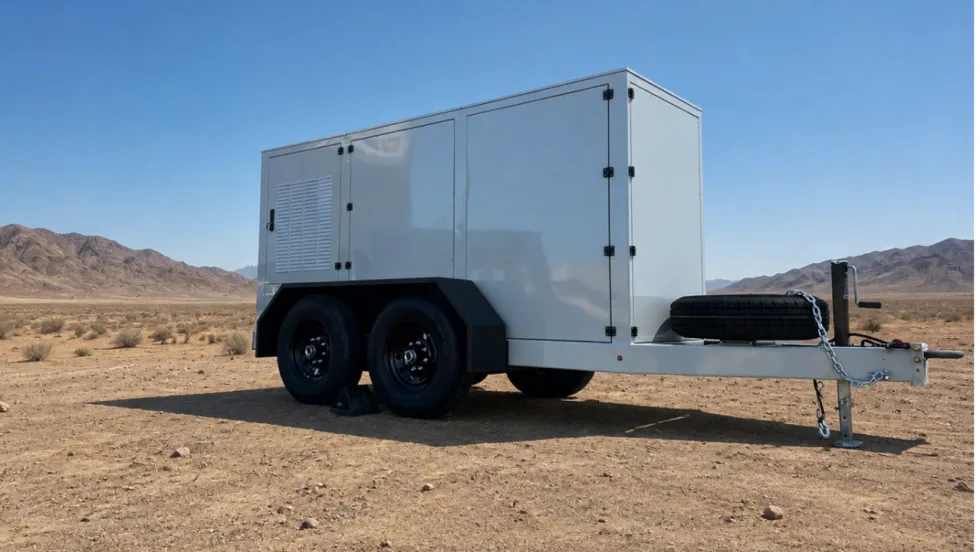
Xos Hub Surpasses One Gigawatt-Hour of Energy Delivered in the Field
A single Xos Hub has surpassed one gigawatt-hour of energy across more than 33,600 charging sessions in the field, demonstrating performance that supports Xos' expansion across new products and markets.
Read More →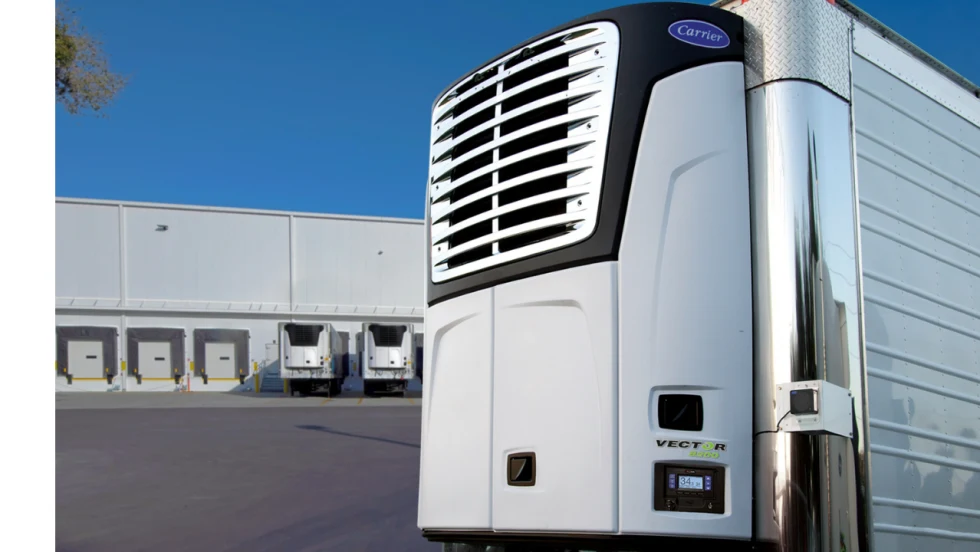
Carrier Transicold Launches All-Electric Vector 8200 TRU for Diesel-Free On-Site Cold Storage
Carrier Transicold’s first engineless multi-temperature TRU helps fresh- and frozen-food fleets add supplemental cold storage capacity during seasonal peaks.
Read More →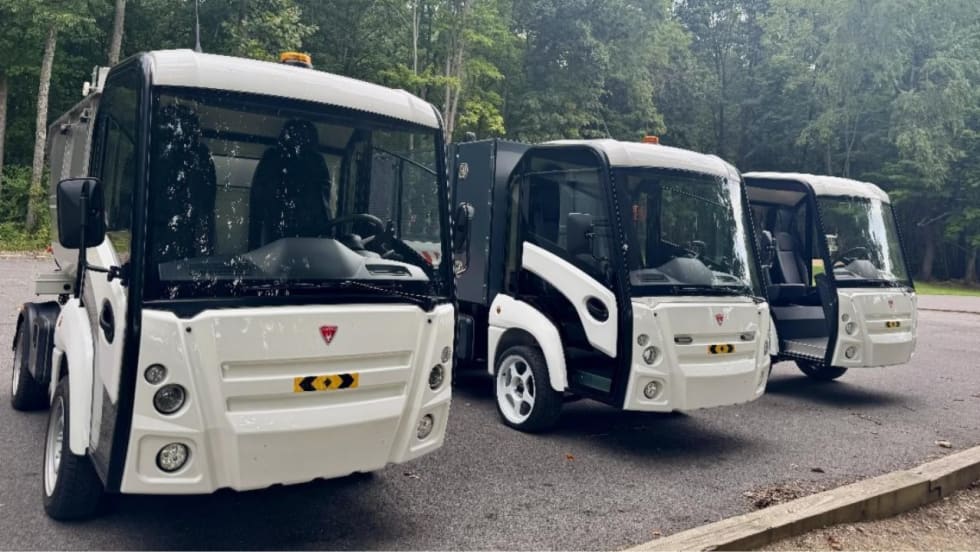
Narro Trucks Introduces Electric Utility Vehicle
Narro Trucks officially launched its operations on Aug. 20 and hosted a ride and drive to showcase its electric truck, which will be produced in Virginia.
Read More →
Samsung SDI Takes Full Control of GM Battery JV as Indiana Plant Pivots to Energy Storage
Samsung SDI is taking full control of its Indiana battery plant with GM, marking a major shift from the EV-focused joint venture Charged Fleet first covered in 2023.
Read More →
NWSA Taps CALSTART to Administer Zero-Emission Drayage Assistance Program
CALSTART will provide free technical assistance services to drayage fleets serving the Ports of Seattle and Tacoma and looking to transition to cleaner technologies and help decarbonize freight hubs.
Read More →
EV Fleet Reality Check: What Operators Wish They Knew Before Electrifying Their Work Vans
Electric work truck upfits bring new compatibility questions. Learn how parts availability, OEM guidance, power demands, and route planning can affect fleet performance.
Read More →
Peterbilt Expands Sourcewell Partnership with Electric Vehicle Lineup
Peterbilt Motors Company’s cooperative purchasing agreement with Sourcewell and its Canadian partner, Canoe Procurement Group, now includes including Peterbilt's battery-electric vehicle lineup.
Read More →