





Learn More: How to Match the Right Oil to a Truck Engine
Spec'ing Medium-Duty Powertrains for Optimum Performance
These 13 questions will help avoid risks associated with spec’ing powertrains and achieve the right balance.
November 3, 2011
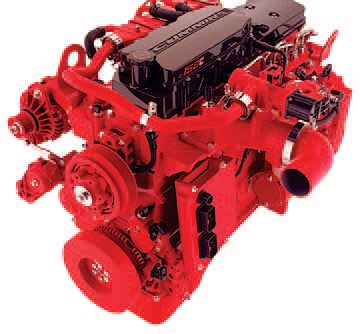
The 2011 Ford F-750 Super Duty, for example, offers the Cummins ISB 6.7L inline diesel engine with 10 engine hp ratings, ranging from 200 hp with 520 ft.-lb. of torque to 360 hp with 800 ft.-lb. of torque.
Photo: Cummins
9 min to read
Engine, transmission, drive-axle ratio - these are the three components of a truck's powertrain. Each must be compatible with one another and geared appropriately for the truck, as a whole, to perform properly.
For light-duty pickup trucks, this process is relatively simple. There may be two to three engines, one to two transmissions, and three to four different drive-axle ratio options. In some cases, such as with the 2011 Chevrolet Silverado 2500/3500 HD pickup, if the diesel engine option is selected, the transmission and rear axle ratio selections are already made - Allison 1000 6-speed automatic transmission and a 3.73 drive-axle ratio.
Medium-duty (Class 4-7) truck powertrains, however, are considerably more complex to spec. The 2011 Ford F-750 Super Duty, for example, offers the Cummins ISB 6.7L inline diesel engine with 10 engine hp ratings, ranging from 200 hp with 520 ft.-lb. of torque to 360 hp with 800 ft.-lb. of torque. Then there are nearly a dozen different transmissions and drive-axle ratios to choose from. Each component selection impacts a truck's overall performance, fuel economy, and acquisition cost.
How do you evaluate the myriad options to put together a powertrain combination that fits your fleet's application - and budget?
What is the Truck Application?
1. Why is this truck needed?
Will the truck be hauling stone, debris, pieces of pipe, pallets of sod, medical supplies, or bulk paper products? The answer to this question will help determine payload and gross vehicle weight rating (GVWR) requirements.
2. Will a trailer be pulled with this truck?
If pulling a trailer, what is the total weight of the trailer and its payload? This equation addresses gross combination weight rating (GCWR) requirements - the maximum allowable weight of the truck and payload combined with the trailer and its contents.
3. How will the truck be driven?
Will it be driven in the inner-city for stop-and-go deliveries? Operate on highways at full speed? Or, will it be used for off-road applications running at slower speeds? Answers to these questions impact all three powertrain component decisions.
4. What terrain will the truck be driven on?
Will the truck be operated on flat roads? Or, will it be used to pull heavy loads over hills? The application sets the parameters for choosing the right engine torque ratings and rear-axle ratios for best performance regarding terrain.
5. How many miles per year?
Use this information to confirm whether to spec a diesel or gas engine (if available), depending on how long it takes to recoup the higher initial cost of diesel through proposed fuel economy savings.
What's the Impact of Chassis Size?
6. What GVWR chassis is needed?
The starting point is to estimate the max payload requirements. (See question 1.) This information is important to consider because it narrows down which class truck best fits a fleet's needs, and truck class determines the number and type of engine and transmission combinations available.
The following is a truck classification breakdown by GVWR:
Class 4: 14,001-16,000 lbs.
Class 5: 16,001-19,500 lbs.
Class 6: 19,501-26,000 lbs.
Class 7: 26,001-33,000 lbs.
If you assume 9,000 lbs. as a generic weight number for the chassis and add 12,800 lbs, as max payload, including body weight, the total chassis and payload equals approximately 21,800 lbs. gross vehicle weight (GVW). This means your application requires a Class 6 chassis, with corresponding powertrain options.
What About Engine Options?
7. Gasoline or diesel engine?
In most cases, gas is not an option for medium-duty trucks. However, some manufacturers, such as Ford (F-450 and F-550) and Isuzu (N-Series), offer both gasoline and diesel engines. How do you decide between gas and diesel?
While diesel offers better fuel efficiency and engine longevity, gas engines have a much lower upfront cost - a difference of $8,000 or more, depending on make and model.
Therefore, the key deciding factor is the total miles the truck will be driven annually (refer to your answer to question 5) and whether the driver will log enough miles to recoup the higher investment in the diesel engine in a reasonable amount of time.
A general rule of thumb is the 25,000- to 30,000-mile threshold. If you project the truck will exceed 30,000 miles annually, diesel makes sense. If less than 30,000 miles, then a gas engine may be more cost-effective. However, run the numbers to confirm what works best for your fleet.
Contact the manufacturer's representative for approximate fuel economy numbers for both gas and diesel to plug in the calculations.
8. What horsepower & torque ratings are required?
If the truck is a Class 4 or 5 (up to 19,500 lbs. GVWR), at most there are only two engine options - gas or diesel - depending on the manufacturer. And with diesel, there is usually only one horsepower rating to choose from.
However, with diesel engines for Class 6 and 7 trucks, there may be 10 or more horsepower and torque ratings to consider, making engine selection significantly more complex. The approximate cost difference between the lowest and highest horsepower ratings, when factoring in a heavier transmission required for the higher horsepower engines, can run an additional $8,500-$10,000, or more.
The variance in engine horsepower/torque availability and cost is common across all Class 6 and 7 truck original equipment manufacturers (OEMs).
How do you choose among the various horsepower and torque options? At this stage, involve the equipment upfitter and truck OEM representative for their counsel. They often have experience working with fleets in your industry and can offer specific recommendations. The following general principles based on common applications can help serve as a guide:
When to spec higher horsepower and torque:
Over-the-road applications with a heavy load, such as a towing and recovery vehicle.
Hilly, mountainous regions.
Over-the-road applications, pulling a heavy trailer.
When to spec lower to mid-range horsepower and torque:
Pick-up and delivery applications in which the truck does not often reach full highway speed.
Slower speed applications such as an asphalt spreader, a dump body, mechanic's crane, or service body truck.
Over-the-road applications on flat terrain with a lighter load.
What About the Truck's Transmission?
9. Who will drive the truck?
Will the truck be assigned to a specific driver or will it be spec'd so that anyone can drive it? If the truck has one driver, what is that driver's skill-set? Can he or she operate proficiently with a manual transmission? This answer helps determine transmission selection.
10. Manual or automatic?
How do you decide which is best for your fleet? Consider the benefits of each.
Manual transmission:
Better fuel efficiency, that is, if the driver is skilled and can shift gears proficiently.
Lower initial cost. The manual transmission for medium-duties ranges from $2,000-$4,000 less than a corresponding automatic transmission, depending on the truck's make, model, and GVWR.
Greater shift control, which can be an advantage for off-road applications and driving on hills and bends. Once again, driver skill is important here.
Automatic Transmission
Enhanced safety. Drivers can keep their eyes on the road and hands on the steering wheel. There's no need to worry about the driver inadvertently allowing the truck to roll backward when at a stoplight on a hill.
Expanded driver pool. More driver options are offered because the automatic transmission doesn't require as skilled a driver. The more skill the truck requires to operate, the higher the cost to find qualified drivers.
Less driver effort. The driver doesn't have to constantly push in with one foot and actively shift gears with one hand. The automatic transmission does the work.
11. What size and model transmission?
For Class 4 and 5 trucks, there are typically only two options: one manual and one automatic transmission. Depending on the truck's make and model, an automatic may be the only transmission available.
With Class 6 and 7 trucks, however, multiple manual and automatic transmission options are available. Here are the key points to consider for transmission size and model:
Compatibility with engine horsepower and torque ratings. Whether automatic or manual, select only the transmission options that match the chosen engine's horsepower and torque ratings.
Gross Combination Weight Rating (GCWR) requirements. If trailering is important to the application, which transmission option provides the most capacity? For instance, two Allison automatic transmissions are compatible with the same 660-lb.-ft. torque engine. However, the 2500 Allison offers only 33,000-lbs. GCWR, while the 3000 Allison bumps it up to 60,000-lbs. GCWR.
Wide ratio or close ratio. This pertains to automatic transmissions only. If the application is primarily over-the-road at highway speeds on relatively flat terrain, a close ratio transmission will suffice. Opt for a wide ratio when requiring greater low-end reduction to run trucks for both on- and off-highway use and pick up and delivery with numerous starts and stops.
12. PTO or no PTO?
The National Truck Equipment Association (NTEA) defines power take-off (PTO) as a mechanical device, mounted on the transmission, used to transmit engine power to auxiliary equipment.
Essentially, PTOs are spec'd with the transmission to run equipment such as dump bodies, wheel lifts for tow trucks, or spray bodies for pest control companies. If operating flat beds or box trucks, for example, that don't require engine power to run equipment, then a PTO is not required.
Understanding the Drive-Axle Ratio
13. Which drive-axle ratio best fits the application?
The rear-axle ratio represents the relationship between driveshaft revolutions (driven by the transmission) and rear-axle revolutions. In medium-duty trucks, this gear ratio ranges from as low as 2.69:1 to as high as 7.17:1, depending on the truck class, make and model, and rear-axle capacity.
As with engine and transmissions, axle ratio options are limited in Class 4 and 5 trucks. For instance, an Isuzu NPR cab-over rated at 14,500-lbs. GVWR with diesel and automatic offers one ratio: 5.125:1. The conventional cab Ford F-550 provides just a handful of ratios to choose from, ranging from 4.30:1 to 4.88:1 with the diesel.
In contrast, the larger Class 6 and 7 trucks present as many as 30 or more ratio options. How do you decide which is the best fit?
The following general guidelines should help point you in the right direction:
High numerical ratios. This is for maximum towing and payloads and on hilly terrain with steep grades.
Mid-range numerical ratios. Spec this ratio when the truck requires flexibility for operating on varied terrain with moderate towing and payloads.
Low numerical ratios. This makes sense for flat terrain, lighter loads, and running at consistent highway speeds.
The rule of thumb is the higher the numerical ratio, the greater the pulling power, but at the expense of fuel economy.
The Powertrain Checklist
The powertrain consists of the engine, transmission, and drive/rear-axle ratio. The objective is to fit the right pieces together to perform the tasks assigned for the truck, including for pickup and delivery, dump application, and on-highway transport.
Engine. Diesel or gasoline (if available)? If diesel, what horsepower and torque ratings should be spec’d?
Transmission. Manual or automatic? (Manual transmission is limited by class and manufacturer.) If opting for the automatic transmission, which size and capacity will match the engine selection?
Drive/Rear-axle ratio. What drive-axle ratio best fits the application? And is it compatible with the engine and transmission selected? If running trucks on steep-graded hills, will the selected rear-axle ratio match the job description?
Subscribe to Our Newsletter
More Vehicle Research
2026 Ram 1500 Tradesman Put to a Real-World Fleet Test
A few days behind the wheel of a 2026 Ram 1500 Tradesman turned into a test of visibility, parking, work-ready features, and even severe-weather driving.
Read More →
Isuzu N-Series Gas Fleet Guide: Specs, Capability and 2027 Model-Year Updates
Explore Isuzu Truck North America’s N-Series Gas fleet specs, engine performance, GVWR and payload capability, configurations, chassis dimensions, work-focused features, and 2027 model-year information.
Read More →
Chevrolet Silverado 1500 Fleet Guide Specs Capability and 2027 Model-Year Updates
The next-generation 2027 Chevrolet Silverado 1500 brings new V-8 engines, updated technology, expanded safety features, and a fleet-focused Work Truck. Here’s what commercial fleets need to know so far.
Read More →
Ram ProMaster City Fleet Guide Specs Cargo Capacity and 2027 Updates
Work Truck’s Ram ProMaster City Fleet Guide tracks the latest specifications, cargo capability, configurations, fleet technology, pricing, and model-year updates for Ram’s mid-size commercial van.
Read More →
Ford F-150 Fleet Guide Specs Capability and 2026 Model-Year Updates
Explore 2026 Ford F-150 fleet specs, engines, towing and payload capability, configurations, work features, technology, and model-year updates.
Read More →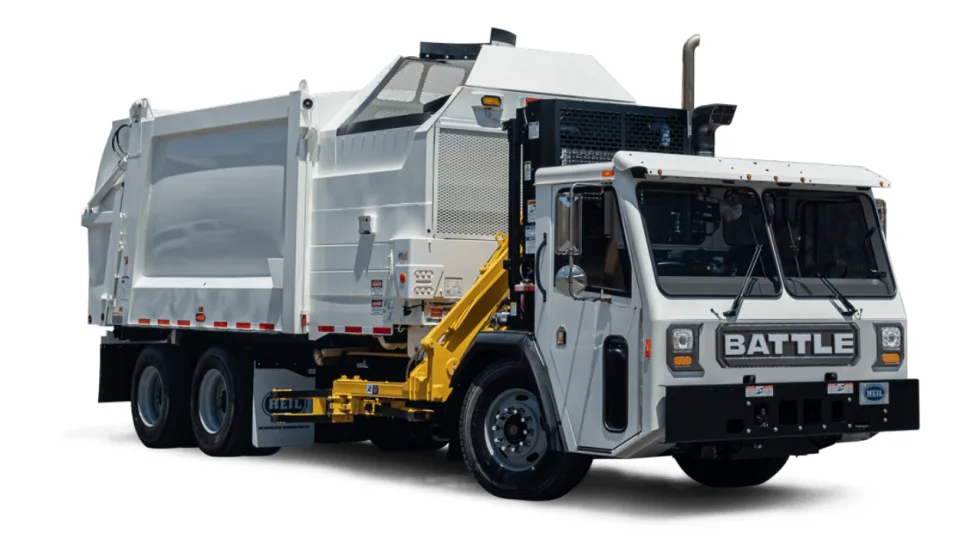
TCI Now Sells & Supports Battle Motors’ Vocational Trucks
Midwest truck dealer Truck Centers, Inc. (TCI) has expanded its transportation solutions with sales and service support for Battle Motors’ heavy-duty vocational trucks at locations in locations in Indiana, Illinois, and Missouri
Read More →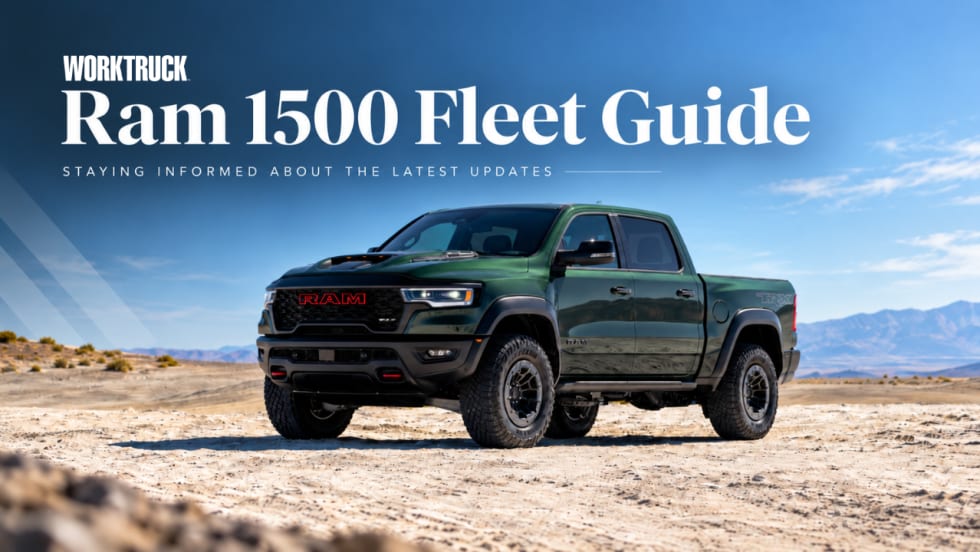
Ram 1500 Fleet Guide Specs, Capability and 2027 Model-Year Updates
Explore always up-to-date Ram 1500 fleet specs, engines, towing and payload capability, configurations, technology, pricing updates, and model-year changes.
Read More →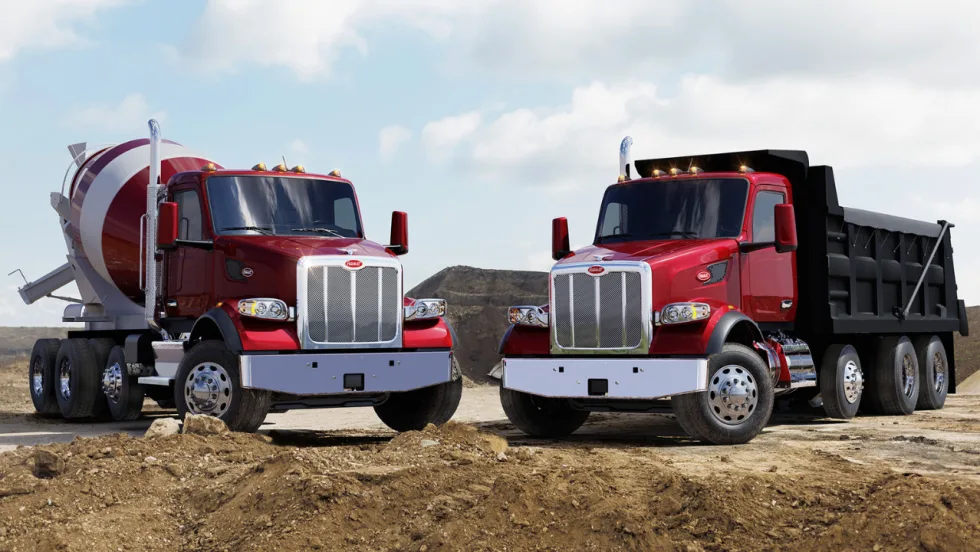
Peterbilt Trucks Equipped with Paccar TX-18 Pro Boost Efficiency for Maryland Fleet
Patuxent Companies is replacing aging trucks with the Peterbilt Model 567 and Model 589, specified with the Paccar TX-18 Pro 18-speed automated transmissions, and is reporting an 8% to 10% improvement in fuel economy.
Read More →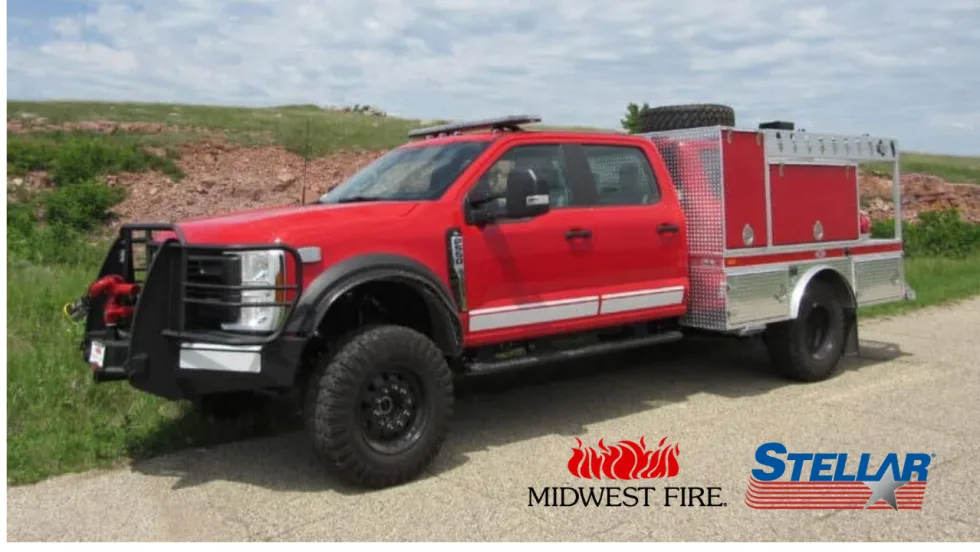
Stellar Expands into Fire Apparatus Market with Acquisition of Midwest Fire
Stellar Industries has acquired Midwest Fire, a custom fire apparatus manufacturer headquartered in Luverne, Minnesota, with nearly four decades of specialized apparatus experience.
Read More →
Recalls You Need to Know About in August 2026
If you have Altec, Chrysler, Ford, Heil, General Motors, International, Mack Trucks, Paccar, Rivian, Royal Truck, Toyota, US Truck Body, or Volvo Trucks vehicles in your fleet, you should check these important recalls issued by the National Highway Safety Administration.
Read More →