




Q&A: Trends in Medium-Duty Electrification
Work Truck hosted a Q&A with Scott Zion, of Motiv Electric Trucks, to discuss current trends related to the electrification of medium-duty commercial trucks. He has more than 30 years of experience working with commercial BEVs.

What are the latest trends in the transition to medium-duty battery electric trucks?
Photo: Work Truck
Battery-electric trucks have gained traction in some applications, and incentives have helped motivate some fleets to explore electrification. But, what are the latest trends in the adoption of medium-duty electric trucks?
To get some insights, Work Truck spoke with Scott Zion, chief product and engineering officer at Motiv Electric Trucks. He's responsible for the company's product roadmap and for ensuring Motiv’s technologies and finished vehicles are designed, validated, and tested to perform at the highest quality standards while also meeting customer expectations.
Zion has worked with electric vehicles since the early 1990s, when he was at Ford. In recent years, he was responsible for establishing the fuel cell and battery-electric vehicle programs at Hino, with a focus on Class 6-8 trucks. He also spent time at Xos as director of medium-duty vehicles and then as head of engineering. He also has served as the chief product officer at Bollinger, where he focused on Class 4-5 vehicles.
A Q&A with Zion of Motiv Electric Trucks
Work Truck: What are the key technical challenges that currently prevent or hamper the widespread adoption of commercial battery-electric trucks, particularly in final-mile delivery and regional transport roles?
Zion: When it comes to technology, the vehicle side of the technology is pretty robust. Trucks are being used. They're being tested. They're being evaluated. When you look at the motors, the batteries, and so forth, the technology is pretty up for the job. From this point, in my opinion, it's really just a matter of continuous improvement. Getting more efficient powertrains, getting better, lower-cost batteries.
I do believe the big challenge right now is going to be in the infrastructure side of things, and also in the battery technology. But I think there are opportunities going forward where those things are going to continuously improve, and then you'll see a much wider adoption of this technology.
Work Truck: What infrastructure developments are most critical to supporting a large-scale transition to electric trucking, and what are the differences between the needs for urban versus rural logistics?
Zion: Medium-duty trucks, meaning Class 4-6, are really kind of like the sweet spot for electrification. They typically have fixed routes. They come home to a depot at night and can be charged. And this is one of the things I like about the Motiv vehicles. Motiv is developing vehicles around Level 2 charging so that it doesn't require a lot of unique infrastructure.
But I do think that is going to be the biggest challenge, how do you get a large number of vehicles charging overnight. From that perspective, the middle- and last-mile delivery vehicles’ routes are typically shorter than, say, long haul. I definitely see a lot more challenges with the infrastructure and really the time it takes to recharge a battery on one of those vehicles,” he continued. “Those are going to be a little more challenging. So, Class 4-6 seems to be the ideal class of vehicles for electrification.
Work Truck: What role do software and telematics play in optimizing the performance and the efficiency of battery-electric trucks across fleets?
Zion: Ido see software and telematics as being a very, very important to the future of electric vehicles. My theory is that a lot of these electric vehicle startups suffer from what they don't know, they don't know. And the more people that can go out there and turn over rocks and find issues and fix those issues, that's the better your vehicle will be. And software is very, very key in doing that. Telematics is also very, very critical because it allows you to flip the game on service of the vehicle. You can be more proactive than reactive.
A lot of people who acquire medium-duty trucks don't really buy them with the same mindset you and I would have if we're buying an electric car for our personal use. For each of them, they're always looking at a return on the investment. They treat them more like tools, and every day that that tool is not being used, they're not generating revenue with that tool.
So, telematics can be a very, very useful tool to the OEM and to the customer to be proactive, to identify when things don't look exactly right. Also from an OEM’s perspective, having telematics and understanding how customers are using these vehicles, we can take what we learn from those and be able to refine our testing and evaluation processes so that we can optimize a vehicle from a durability and a reliability perspective to better suit that customer's needs. Anything we can do to improve the efficiency of the vehicle, through software, through controls, results in more range and helps to alleviate those range anxieties.
Work Truck: From a fleet operator's perspective, how does the total cost of ownership for battery electric trucks compare to diesel or alternatives today? And then also, how do you think it'll compare in five or 10 years?
Zion: TCO is a real hot topic right now, and it's been one of the key aspects of convincing people to switch over from diesel to electric. One of the things I see in the industry is that no two customers calculate TCO the exact same way. A lot of people look at the acquisition cost, they look at the maintenance costs, and then they compare the two between diesel and electric. There are other costs that should be factored in there too, just the normal cost of operation, and then obviously the cost of disposal of the vehicle once you're done using the vehicle at the end of its product life cycle.
The biggest challenge I also see from our customers in their TCO calculations is the cost that they would have to pull together to support that calculation. Many times, in larger organizations or larger fleets, those costs are tracked by different departments and trying to get all that data together so that you are doing a true apples-to-apples comparison tends to be a bit of a challenge because they're not collected under person within an organization. So, I think that's the biggest thing about TCO.
You mentioned the future. I do think that as we look at EV technology today compared to where it was back in the 90s, like when I started, costs have come down dramatically. Battery costs are dropping. Efficiencies are improving. Like I mentioned with your first question, the hardware in the vehicle is pretty solid and pretty robust. There's just nowhere else to go except to drive those costs down, and a lot of that will come with scale. Once the market accepts more vehicles, then the scaling will help drive some of those costs down and then further improve that TCO calculation.
Work Truck: As we look at this transition, what policy or regulatory measures have been the most effective in accelerating adoption, and where are the biggest gaps that may be holding back EV adoption?
Zion: Well, there's no doubt that the combination of incentives and regulations has really helped push the EV industry forward. More people are adopting electrification over diesel or gasoline. Unfortunately, that's a bit of a carrot and the stick, and the stick is kind of going away, and the carrots are getting smaller.
I think what we're going to see as we go forward with current regulations and incentives, the direction that they're heading, you're going to see in which of these segments the TCO calculations are paying off. And I do think that the medium-duty trucks, despite incentives and regulations, still make financial sense. It does make good business case for that. This is a very sweet spot for electrification.
It'll be interesting to see how this progresses going forward, but I do think that medium-duty will show that there is merit in electrification. I think it will continue on, maybe not as strong as it would have been with the incentives and with the regulations, but I think there's definitely a space for electrification in the medium-duty market.
Work Truck: What would be the elevator pitch to the general consumer, a non-fleet person? How would you explain to them why we need battery-electric commercial vehicles in these classes, or potentially other classes?
Zion: I think obviously that the first impact, depending on whether this person was in the industry or not, is obviously there’s the cost trade-off. For the owner operators, longer term, I believe, several years out, these vehicles will start having a much larger ROI after the initial amortization of the initial purchase prices.
But I definitely think that there's a lot of benefit in the environmental impact. There's a lot of focus on clean air, clean air regulations, and having zones where they can't have emissions. And, you know, for somebody that grew up in a big city and had to deal with smog and everything like that, that's a huge improvement. Even the noise quality, these vehicles are so quiet, and the performance. I can't tell you how many times you're on a highway and you get a semi-truck passing another semi-truck, and you're stuck behind them for what seems like hours as one is trying to overtake the other. And you know, you get electrified vehicles in there, they can tend to accelerate.
You know, the performance of electric vehicles is very noticeably improved over a traditional diesel or gasoline vehicle. So, I think there's a lot of merit to that, and I also think there are opportunities here to just overall, provide a much more eco-friendly solution for moving goods to and from.
More Green Fleet

Fleet Forward Conference Introduces One-Day Passes for 2026
New one-day registration gives fleet professionals the flexibility to attend Tuesday, Wednesday, or Thursday, with passes available for $199 through Sept. 18.
Read More →
CALSTART Rebrands as Catalyst Mobility, Will Combine with Forth in 2027
CALSTART has rebranded as Catalyst Mobility and will combine with Forth at the start of 2027. The new organization said it is poised to become one of the world's largest, strongest, and most impactful clean transportation nonprofits.
Read More →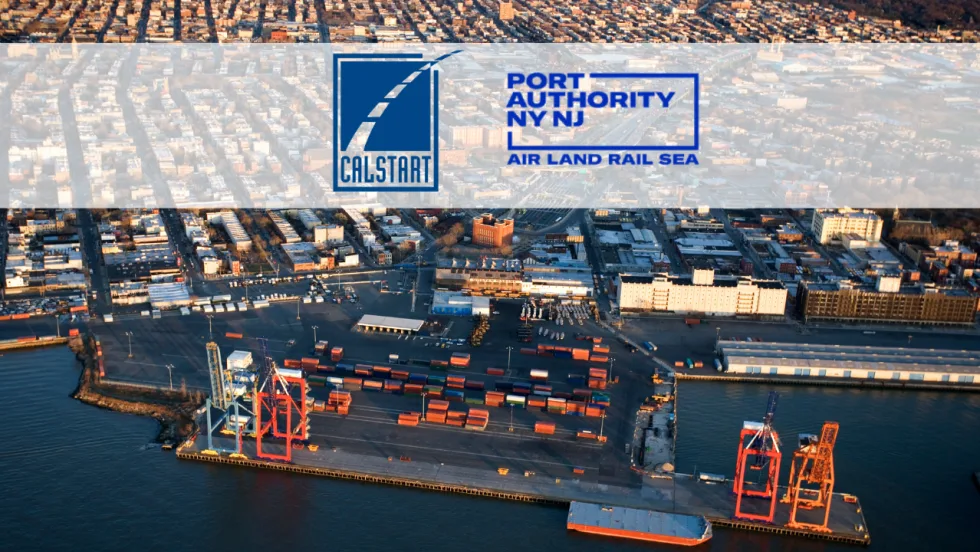
Electric Truck and Charging Programs to Boost Sustainability at NY & NJ Ports
Together, the Port Authority of New York and New Jersey and CALSTART will electrify drayage and terminal operations serving the East Coast’s busiest container port. A pair of incentive programs totaling $45 million has launched to accelerate adoption of zero-emission drayage trucks and terminal tractors.
Read More →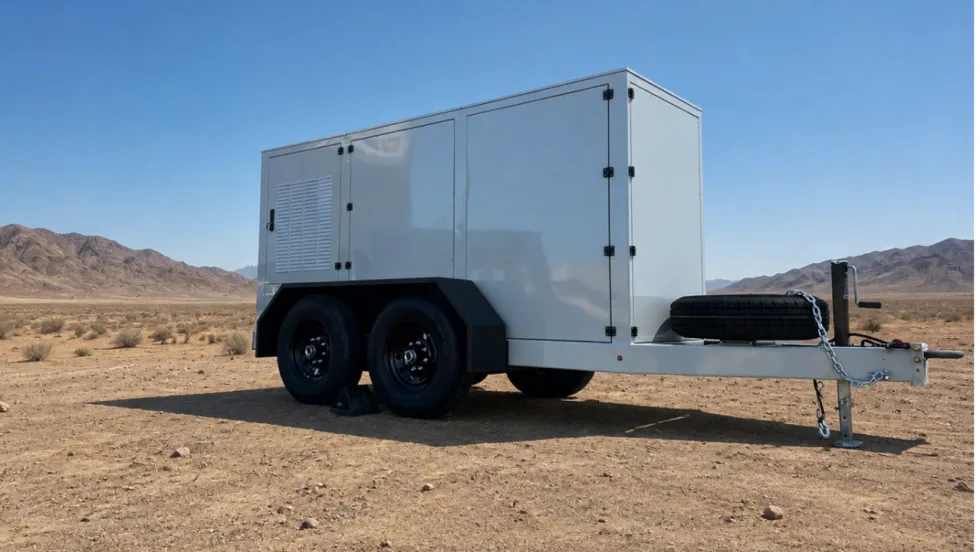
Xos Hub Surpasses One Gigawatt-Hour of Energy Delivered in the Field
A single Xos Hub has surpassed one gigawatt-hour of energy across more than 33,600 charging sessions in the field, demonstrating performance that supports Xos' expansion across new products and markets.
Read More →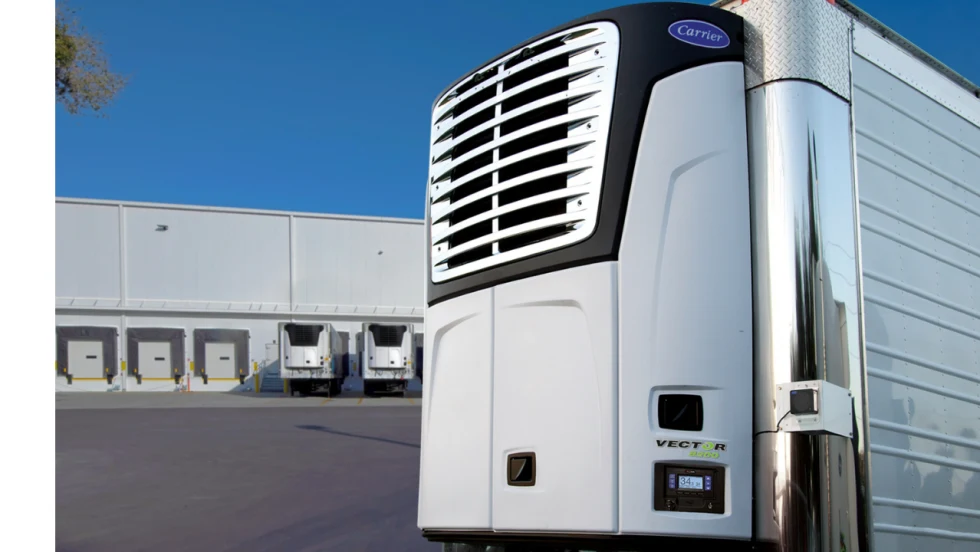
Carrier Transicold Launches All-Electric Vector 8200 TRU for Diesel-Free On-Site Cold Storage
Carrier Transicold’s first engineless multi-temperature TRU helps fresh- and frozen-food fleets add supplemental cold storage capacity during seasonal peaks.
Read More →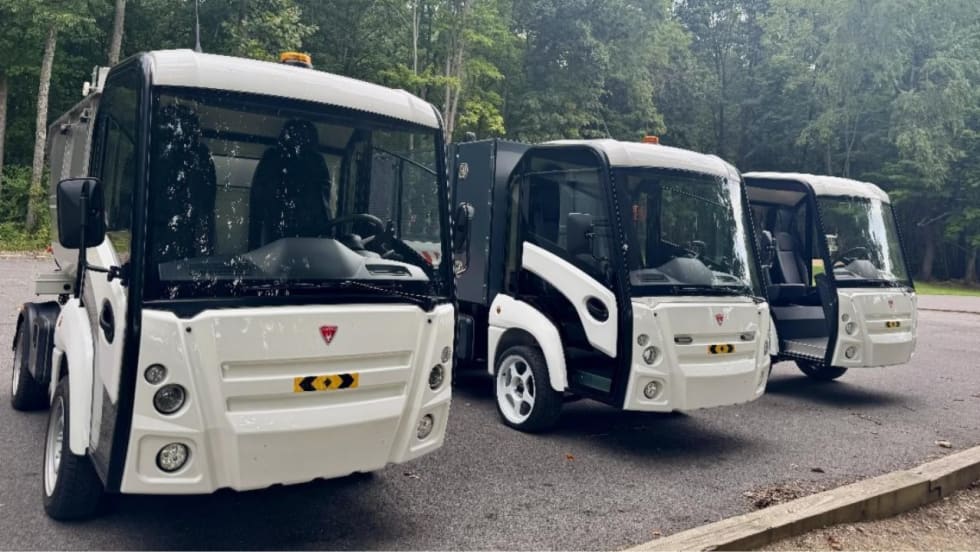
Narro Trucks Introduces Electric Utility Vehicle
Narro Trucks officially launched its operations on Aug. 20 and hosted a ride and drive to showcase its electric truck, which will be produced in Virginia.
Read More →
Samsung SDI Takes Full Control of GM Battery JV as Indiana Plant Pivots to Energy Storage
Samsung SDI is taking full control of its Indiana battery plant with GM, marking a major shift from the EV-focused joint venture Charged Fleet first covered in 2023.
Read More →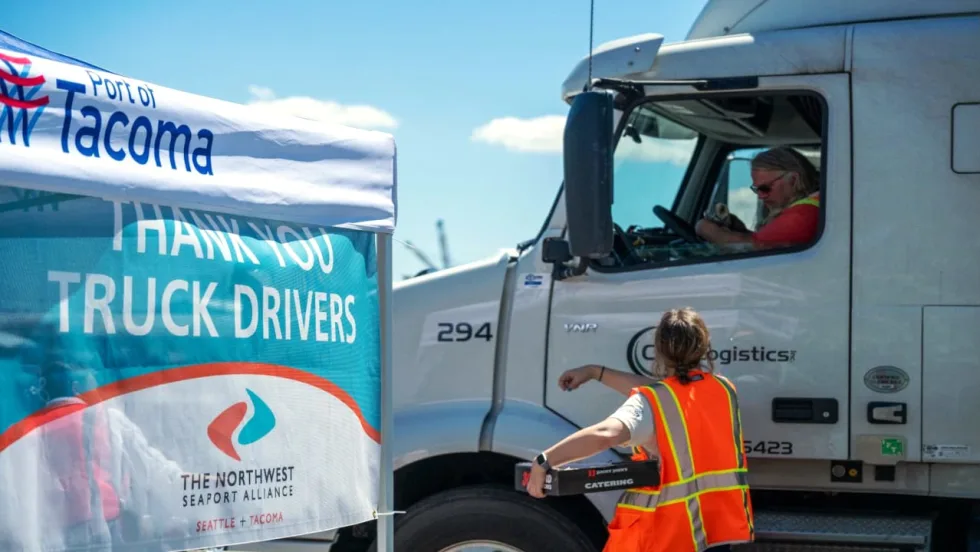
NWSA Taps CALSTART to Administer Zero-Emission Drayage Assistance Program
CALSTART will provide free technical assistance services to drayage fleets serving the Ports of Seattle and Tacoma and looking to transition to cleaner technologies and help decarbonize freight hubs.
Read More →
EV Fleet Reality Check: What Operators Wish They Knew Before Electrifying Their Work Vans
Electric work truck upfits bring new compatibility questions. Learn how parts availability, OEM guidance, power demands, and route planning can affect fleet performance.
Read More →
Peterbilt Expands Sourcewell Partnership with Electric Vehicle Lineup
Peterbilt Motors Company’s cooperative purchasing agreement with Sourcewell and its Canadian partner, Canoe Procurement Group, now includes including Peterbilt's battery-electric vehicle lineup.
Read More →