




Prepping Fleets for Winter Fuel Concerns
Experts share how to prepare your fleet for the colder temperatures of winter and how fuel is impacted.

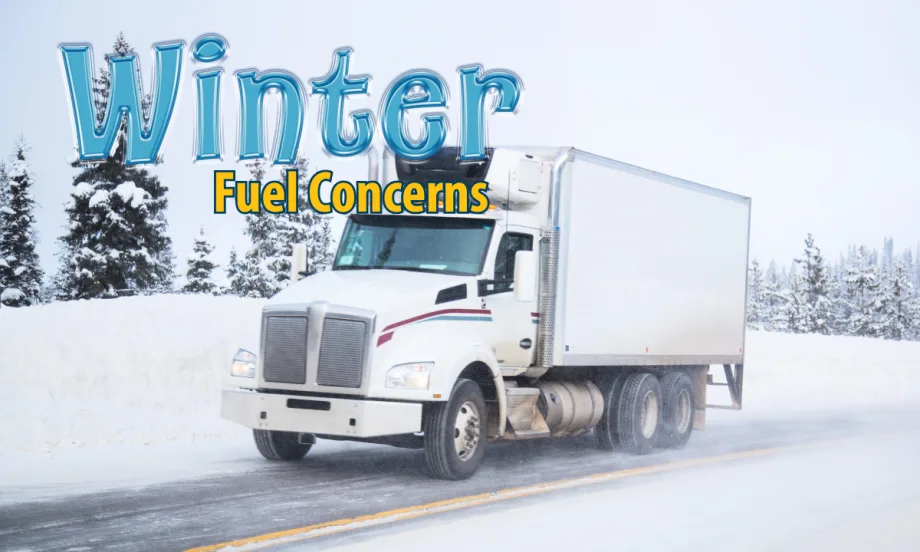
When it comes to fuel, what concerns do fleets face when temperatures drop?
Photo: Work Truck
Slick roads, poor visibility, freezing temperatures, and traffic delays are among the challenges fleets may face each year as colder temperatures arrive. However, the wheels don’t roll if the colder temperatures negatively impact fuel systems.
What fuel choices are most impacted by cold weather, which have the least concerns, and where do battery-electric vehicles fall within that continuum?
Diesel Care: Prevent Gelling
Eric Simms, a product development and quality control manager at Rislone, said the biggest problem associated with diesel fuel in cold weather is fuel gelling.
“There's paraffin wax in diesel. It's just part of the process at the refineries. It's in all diesel, no matter what,” Simms explained. “And in those cold temperatures, it can cause it to gel or kind of thicken up.”
That, he continued, can cause clogging and problems in fuel filters and fuel lines, and result in engines failing to start or starting to stall.
“Gelling can cause downtime. Repairs and maintenance are one thing, but downtime is also costly,” he pointed out.
While there is no official temperature at which gelling begins, temperatures do not have to reach freezing. Simms said as temperatures drop to around 40 degrees, it’s time to keep gelling in mind and prepare.
“It doesn't have to be technically freezing, but just being cold can cause gelling to start. But definitely, once you get down to below freezing or even closer to zero, every degree that it drops, it definitely will exponentially gel up more and more,” Simms explained.
Gelling may first start where the diesel fuel is found in a smaller volume, like fuel lines, with the fuel tank, a larger volume, gelling later.
When gelling occurs, results can vary. Possibly, a diesel engine may fail to start. Or, it may start but then have to be idled for a while, which increases fuel consumption. But, gelling can also cause stalling.
“If you're able to get it started, and it essentially sucks up a big hunk of that paraffin wax that's gelled in there, it can cause it to stall out and then leave you on the side of the road,” Simms cautioned.
But, fleets can prepare for the fight against fuel gelling.
First, Simms said it is important to use winterized diesel when available. That availability is seasonal, likely becoming available at the pump in the colder areas first.
Next, even with winterized diesel, Simms said it is important to use a fuel additive with anti-gelling properties. That is even more important in warmer environments found in the southern states, where winterized diesel may not be readily available at the pump as easily as in places like Michigan, Minnesota, or other seasonally colder areas.
Additives, like those from Rislone, can be used at any time, and there is no need to wait for the bitter cold. Simms pointed out that typically, the additive will need to go into the tank about every 5,000 miles.
But, does it matter when you pour in the additive? Should it be on an empty tank, or another approach?
“I personally typically recommend maybe a half-full tank, just so that you're getting a little bit stronger dosage, getting into the system, and then topping up,” he suggested.
Diesel-powered fleets also have to be prepared for cold starts and a loss of efficiency in cold weather when the lower temperatures can thicken the oil and reduce fuel volatility. According to Simms, all of that can result in a decline in fuel efficiency.
“We recommend, obviously, if you can keep it inside in a warmed building, that would be ideal. But engine block heaters can help to keep those issues from happening,” he explained.
For fleets that operate both diesel and gasoline vehicles, while diesel may require more care and preparation during the colder seasons, gasoline does not pose the gelling concerns.
Condensation Concerns
Whether running on diesel or gasoline, fleets need to keep fuel tanks filled to reduce condensation and water buildup in the fuel.
Condensation formed in a partially filled tank promotes the growth of microorganisms that can clog fuel filters and restrict fuel flow, pointed out Brian Kernke, general manager of fuel quality for Love's Travel Stops.
Fuel filters and heaters should be checked, and Kernke suggested draining the water weekly out of the fuel filter using the filter drain valve. He also recommends draining off any water and/or sediment by opening the drain at the bottom of the fuel tanks.
Propane Autogas: Ready to Roll
So, for fleets powered by propane autogas, what are the winter fuel concerns?
Actually, there are none.
“Propane autogas really doesn't have any concerns or issues with cold weather. It's more of a misconception that people have about propane,” said Joel Stutheit, senior manager of autogas business development at the Propane Education & Research Council (PERC). “Propane doesn’t change from a vapor to a liquid state and become unusable in engines until negative 44 degrees Fahrenheit, so the cold weather doesn't affect it or the performance.”
Stutheit pointed out a key advantage of propane autogas is that there is no need for engine block heaters and no concerns about fuel gelling, as there are with diesel. But, that does not mean to turn a blind eye to regular maintenance on propane autogas vehicles just because it’s winter.
“Just like any other systems, you're going to do your routine inspections to make sure that you're up on the maintenance of it and everything is in good repair,” Stutheit added.
And Stutheit pointed out another advantage of propane autogas over diesel, and that is tied to efficiency.
“One thing about propane auto gas vehicles is they actually warm quicker than diesel vehicles, so you don't have that long lead time of idling in cold weather,” he pointed out. “Drivers are able to start that vehicle and get it on the road quicker than with a diesel.”
Battery-Electric Fleets
Battery-electric vehicles face several challenges in cold weather, but fleets can take steps to mitigate some of those.
Scott Zion, chief product and engineering officer for Motiv Electric Trucks, has worked with battery-electric vehicle platforms for more than 30 years.
According to Zion, the main challenges for BEVs in cold weather are reduced range, longer charging times, increased energy demand for heating, thermal management inefficiencies, and reduced regen in slippery conditions.
Cold temperatures slow down chemical reactions in lithium-ion batteries, which can reduce available driving range by 20–40% or more, depending on conditions and vehicle configuration, Zion said.
But with the cold also comes charging challenges.
Battery packs charge more slowly when cold, and in some extremely cold conditions, they won’t charge at all until the pack is heated to a suitable level first. Zion said even DC fast charging can be significantly impacted if the battery isn't pre-conditioned or pre-heated.
However, to confront those two key challenges and the others Zion shared, fleets can take steps to prepare for winter.
Zion suggests fleets ensure trucks and chargers support battery and cabin pre-conditioning — heating the battery and cabin before departure or before charging.
He also recommends installing or enabling heated enclosures or shelters around chargers to reduce the impact of ambient cold, especially in regions with subzero temperatures.
Also, ensure battery management systems (BMS) and vehicle software are up to date. Winter optimizations may be included in over-the-air (OTA) updates from OEMs.
Fleets should train operators on cold-weather driving best practices, like limiting HVAC use and planning for extra charging time. It is also important to make them aware of how the weather can impact regenerative braking.
Cold-weather maintenance checks are also important. Inspect and maintain insulation, thermal management components, tires, and brake systems since regenerative braking may behave differently in cold weather.
More Fuel

The Smart Way to Build a Mixed-Energy Fleet Isn’t About Picking a Side
Mixed-energy fleets aren’t about picking a winning fuel. Sarah Booth of WEX explains how vehicle data, duty cycles, charging strategy, and real-world costs can help fleets choose the right energy source for each job.
Read More →
Ignoring This Dashboard Warning Could Cost Your Fleet Thousands in Fuel
New research suggests neglected diesel aftertreatment systems could waste up to $30 in fuel per vehicle each day. Here's why vocational fleets should pay attention.
Read More →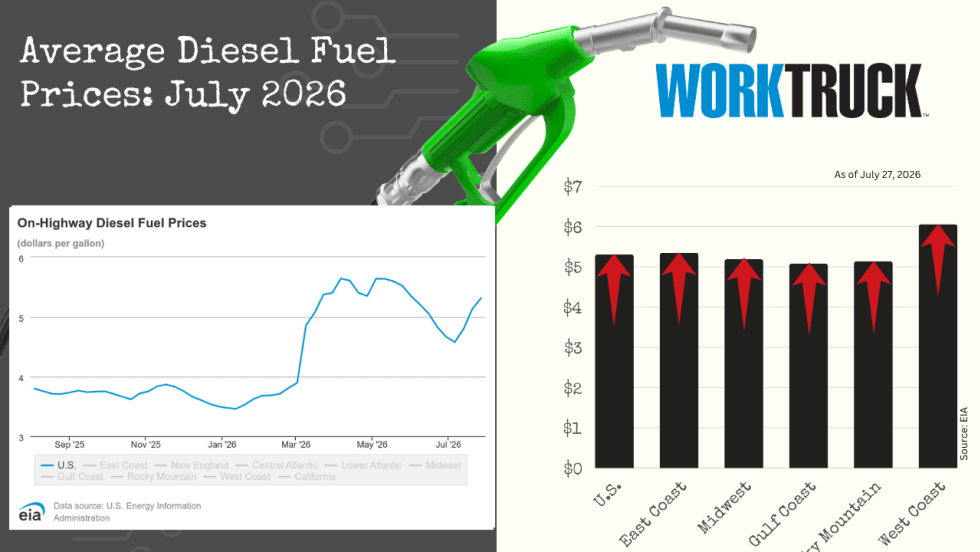
July Diesel Trends Update
The average price of a gallon of diesel increased again this week, and the EIA reported a new national average of $5.31 at the start of the week.
Read More →
WEX Brings Standard Fleet's Connected Vehicle Platform to Fleet Customers
This week’s product launch with Standard Fleet’s connected vehicle platform reflects WEX Venture Capital's strategy of turning startup innovation into customer solutions. Standard Fleet is now available to WEX fleet customers.
Read More →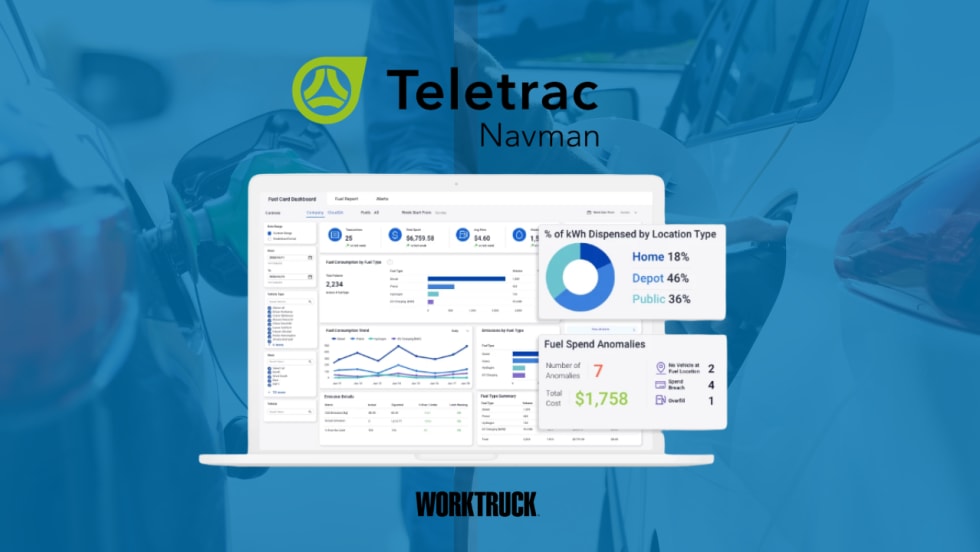
Teletrac Navman Adds Mixed-Energy Fleet Tools to TN360
The new Energy Hub combines fuel transactions, EV charging data, vehicle range, and energy costs in one dashboard for fleets operating multiple vehicle and energy types.
Read More →
WEX DriverDash adds CITGO, Expands Nationwide Access for Fleets
The DriverDash mobile payment app, by WEX, has been integrated into the CITGO merchant network, which means WEX has expanded its U.S. station footprint with the addition of approximately 4,000 CITGO locations.
Read More →
Mixed Energy Fleet Tips for Balancing EVs, Gas and Diesel Vehicles
Mixed energy fleets are becoming the new normal. Learn how fleet managers are balancing EVs, gas and diesel vehicles while controlling costs and planning for the future.
Read More →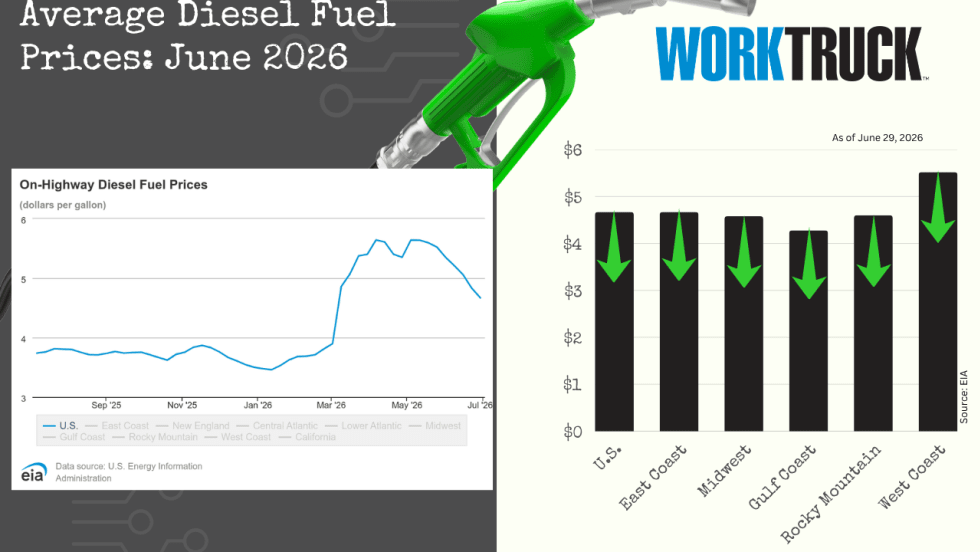
June Diesel Trends Update
The national average price of a gallon of diesel has dropped again, this week by more than 16 cents. All five regions reported lower average prices, ranging from almost 13 cents to more than 28 cents cheaper than a week ago.
Read More →
RoadFlex Launches RoadFlex Direct Open API Platform
RoadFlex Direct connects fuel cards, controls, and data to the telematics and fleet management systems fleets already run, from Geotab and Samsara to Fleetio and RTA, with no separate dashboard or double data entry.
Read More →
The Key to Fuel Efficiency Sits in the Cab
Learn how driver behavior, telematics, coaching, and fuel data can help fleets improve fuel efficiency, lower costs, and reduce emissions.
Read More →