




Lubricants & the Shift Toward Automatic Transmissions
Exploring the trend toward automatic transmission technology, Allison Transmission shared the transition could be aligned to fleets finding that automatic transmissions (ATs) are easier and less costly to maintain.
Photo: Work Truck/Canva
Within the heavy-duty on-road sector, and for work trucks specifically, three transmission types are commonly available: automatic, automated manual, and manual.
The past decade has seen a significant change in the prevalence of these transmission types, in particular in North America, where automation rates have increased from approximately 70% to 95%, according to data from Eaton.
Exploring the trend toward automatic transmission technology, Allison Transmission – a manufacturer of fully automatic transmissions for medium- and heavy-duty commercial vehicles – shared that the transition could be aligned to fleets finding that automatic transmissions (ATs) are easier and less costly to maintain. This results in a lower lifetime cost, as well as improved vehicle uptime.
The Drivers of the Automation Trend
Like many trends within the trucking sector, the journey to improved fuel economy has been a key influence on transmission technology.
In fact, research from the North American Council for Freight Efficiency has highlighted that fleets are realizing a 1% to 3% improvement in fuel economy by using automated manual transmissions (AMTs) over manual gearboxes. Exploring automatic transmissions and their impact on fuel economy, a study by Frost & Sullivan found that automatic transmissions can improve fuel economy by 3% to 5%.
In addition to their fuel economy benefits, AMTs can also lower maintenance costs by reducing clutch repairs. This is because AMTs tend to lower the need for repairs caused by improper gear shifting and overuse of the clutch brake by the driver, compared to manual transmissions. Added to this, AMTs and ATs can also improve driver safety, as they allow the driver to have greater focus on the road rather than gear shifting which can also help improve driver awareness.
Automatic or automated manual transmissions significantly reduce the impact of driver behaviour on both fuel consumption and component wear. Although manual transmissions offer a lower initial cost, compared to automatic or AMTs, and can be an effective solution for fleets with experienced drivers, when considering the lifetime cost of training, maintenance and fuel, ATs and AMTs offer a lower total cost of ownership solution.
Transmission Fluids & Their Properties
Each type of transmission technology has specific hardware architecture that will require different fluid formulations to effectively lubricate the component parts. For example, this may include different friction modifiers, varying levels and types of anti-wear and corrosion protection additives to prevent wear and corrosion to the hardware’s soft yellow metals.
Each transmission fluid is created to provide optimum performance of friction plates or clutches and to be compatible with the transmission’s seal materials. There are other important characteristics to consider; for example, low temperature performance, foaming and aeration control are vital characteristics of a high-quality transmission fluid.
The exact criteria for a transmission fluid is defined by the Original Equipment Manufacturer (OEM), so that the transmission hardware and lubricant work together to deliver the performance and reliability that fleets require, while providing protection to the transmission hardware. This is why using the right fluid in the transmission is vital.
For this reason, checking the OEM manual for its recommendation on transmission fluids should always be the first step if needing to top up or replace a transmission fluid. This will help protect the transmission hardware and deliver optimal performance and, where relevant, maintain the OEM warranty.
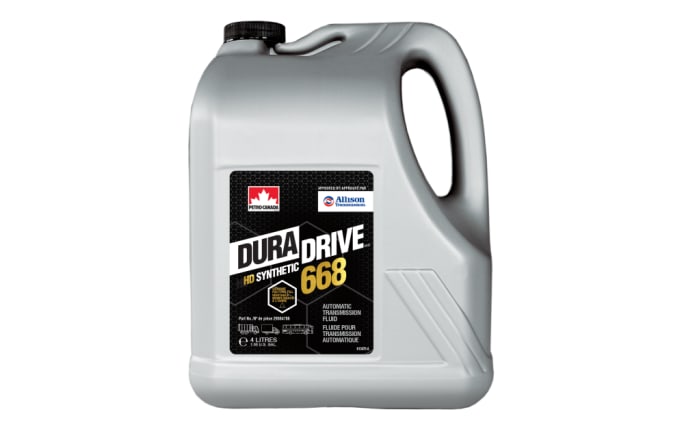
Petro-Canada Lubricants’ DuraDrive HD Synthetic 668 is specially formulated for Allison Transmission’s TES 668 specification and provides enhanced anti-shudder durability, excellent oxidation control, and optimal wear protection.
Photo: Petro-Canada Lubricants
A Focus on Automatic Transmission Fluids
Automatic transmission fluids differ from their automated manual and manual counterparts. They are formulated to deliver optimum and stable clutch-friction performance through the life of the fluid by providing the required lubrication, cooling and viscosity at low and high temperatures. Automatic transmission fluids are fill-for-life and are formulated with superior oxidation resistance and shear stability to protect the moving parts of the hardware for the duration that the transmission is in service.
The transition toward automatic transmissions has been a catalyst for the development of new lubricant formulations. For example, Petro-Canada Lubricants’ DuraDrive HD Synthetic 668 is specially formulated for Allison Transmission’s TES 668 specification and provides enhanced anti-shudder durability, excellent oxidation control, and optimal wear protection. Innovative transmission fluids can now offer a smoother operation and superior performance to provide fleet owners and operators with a lower total cost of ownership.
The past decade has seen a shift toward automated transmission technology, with fleets benefitting from improved fuel economy as well as reduced maintenance costs. The transition has also resulted in the formulation of new transmission fluids that offer greater protection with lower viscosities, which enable both the transmission hardware and lubricant to work together to support fleets on their journey toward improved fuel economy.
About the Author: Darryl Purificati is the Sr. Technical Advisor, OEM/Automotive at HollyFrontier Lubricants & Specialties, which includes the Petro-Canada Lubricants brand. This article was authored and edited according to WT editorial standards and style to provide useful information to our readers. Opinions expressed may not reflect that of WT.
More Maintenance
Les Schwab Expands Commercial Tire Footprint Into Arizona
Les Schwab Tires has expanded into Arizona with two commercial tire locations in Phoenix and Tucson, strengthening its fleet service footprint in the Southwest.
Read More →
Volvo Trucks’ 'Lock and Leave' Software Updates Go Live Across North America
Unattended over-the-air software updates are now available in Volvo trucks across the U.S. and Canada. The new capability lets trucks stay current with the latest software without interrupting operations or requiring a dealership visit.
Read More →
Why Technician Appreciation Can’t Be a Once-a-Year Thought
For fleets trying to keep skilled technicians, recognition cannot begin and end with Technician Appreciation Week. Learn what year-round appreciation really looks like and why the everyday technician experience matters just as much as pay when fleets are trying to keep good people.
Read More →
How Faster Driver Reporting Can Keep Small Truck Problems Small
When minor damage, warning lights, or equipment issues are reported late, small problems can quickly become bigger maintenance headaches. Conversational AI can help shorten the path from what a driver notices in the field to the person who can act on it.
Read More →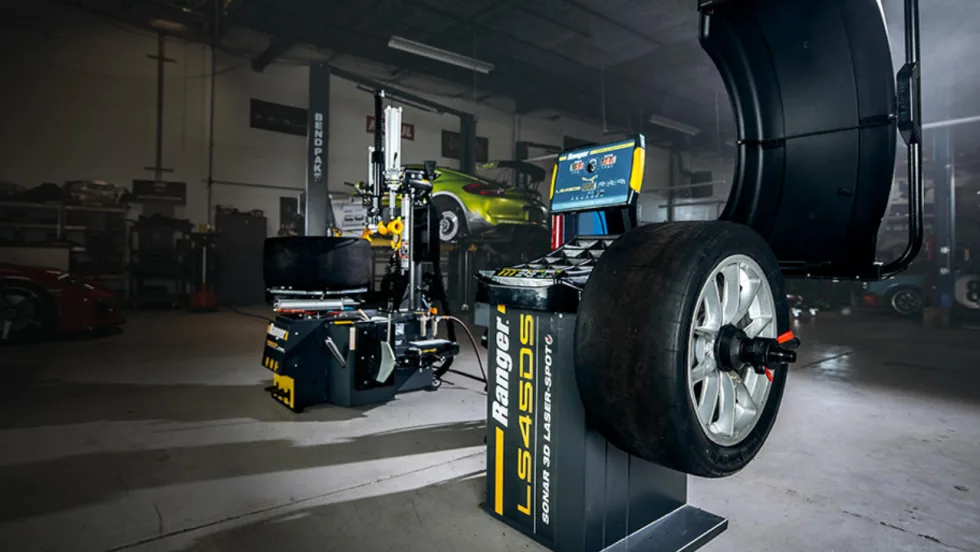
BendPak’s Ranger Wheel Service Equipment Achieves North American Safety Certification
BendPak’s full line of Ranger tire changers and wheel balancers has been ETL certified to UL and CSA standards to improve operator safety.
Read More →
Isuzu & U.S. Department of Labor Celebrate Milestone for Veterans Apprenticeship Program
The Isuzu Veterans Apprenticeship Program (IVAP) signing ceremony highlighted Isuzu’s long-term commitment to veterans, Isuzu dealers, and the skilled workforce supporting its customers and the commercial transportation industry.
Read More →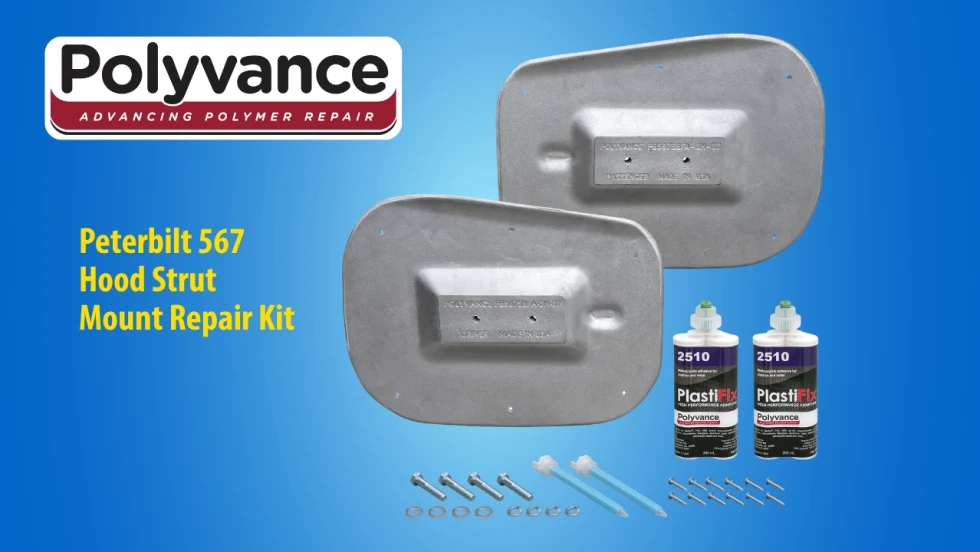
Polyvance Introduces New Peterbilt 567 Hood Strut Mount Repair Kit
Polyvance has launched a repair solution for Peterbilt 567 hood struts, helping truck owners and repair facilities avoid costly hood replacements.
Read More →
Cox Automotive Celebrates Technical Excellence at 2026 Top Tech Finals
The top technicians from Cox Fleet and Manheim tested their skills in Nashville, Tennessee, at Cox Automotive’s 2026 Top Tech Finals. The overall winners will advance to compete at the American Trucking Association’s TMC SuperTech competition.
Read More →
Grote Industries Appoints Vice President of North American Operations
Grote Industries has appointed Patrick Smith as vice president of North American operations as it celebrates 125 years of innovation and manufacturing excellence. He has more than 20 years of manufacturing leadership experience.
Read More →
Winter Fleet Prep: Expert Tips to Keep Vehicles Running Smoothly
Cold weather can expose weak batteries, tires, fuel systems, and maintenance gaps fast. Use this winter fleet checklist to prepare trucks and drivers before temperatures drop.
Read More →