





Dig Deeper: Kraft Heinz Deploys Orange EV Electric Trucks at Ohio Facility
Kraft Foods Pursues Sustainability with Steps 'Big & Small'
The food company eliminated more than 50 million truck miles globally and took the equivalent of more than 50,000 truck shipments off the road between 2005 and 2009, significantly reducing fuel consumption and vehicle emissions.
November 8, 2010
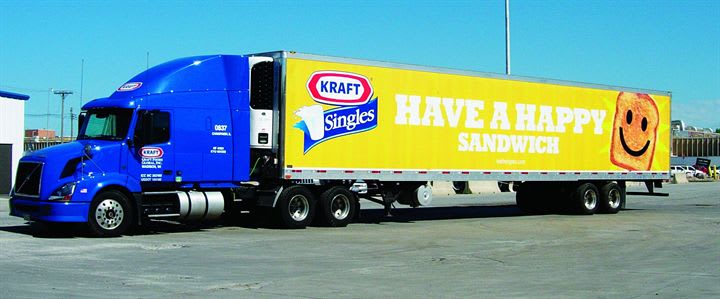
Kraft requires all carriers to shut off tractor engines while parked at its shipping locations.
Photo: Kraft Foods
5 min to read
With steps "both big and small" since 2005, Kraft Foods has taken giant strides in the company's transportation/distribution sustainability efforts, significantly reducing fuel consumption and vehicle emissions, according to Mike Cole, director of transportation, Kraft Foods North America.
Globally, Kraft Foods "eliminated more than 50 million truck miles and [the equivalent of] more than 50,000 truck [shipments] between 2005 and 2009," said Cole.
"We've made significant progress in reducing the amount of fuel we use by cutting down on the distance our fleets travel; partnering with third-party logistics providers and industry, trade, and government agencies; and applying new technologies - all with the goal of saving fuel and reducing our CO2 emissions," Cole explained. "Reducing our petroleum fuel use also reduces the extent to which we are affected by petroleum cost increases."
Headquartered in Northfield, Ill., Kraft Foods is the world's second-largest food company, with annual revenues of approximately $48 billion and distribution in more than 160 countries. Its stable of brands includes such familiar names as Oreo, Nabisco, Jello, Velveeta, Maxwell House, Oscar Mayer, Ritz, Cadbury, and Kraft. Kraft Foods' U.S. fleet numbers a reported 5,156 vehicles.
Transportation a Key Focus in Sustainability Efforts
Because of its potentially "big impact," transportation/distribution is one of six sustainability focus areas at Kraft Foods, along with agricultural commodities, packaging, energy, water, and manufacturing waste, according to Cole.
"Our success is the result of many individual projects, and we're looking at our supply chain end-to-end around the world for opportunities. And our approach is about all of us taking steps, both big and small, to do our part," said Cole.
In 2009, Kraft Foods' transportation/distribution sustainability efforts eliminated about 4.5 million truck miles - the equivalent of approximately 750,000 gallons of diesel fuel and nearly 16.6 million lbs. of CO2, according to Cole.
"Sustainability is now part of how all of our businesses are evaluated, so it's on all our leaders' minds," said Cole. "All of our sustainability projects need to make business sense in the long run. Otherwise, they wouldn't be sustainable. With any project, there's going to be an up-front investment, but if it's done right, these projects will be good for our business, people, and the environment."
'SmartWay' Partnership Provides Critical Resource
An important resource in implementing Kraft Foods' successful sustainability measures has been the company's partnership with the SmartWay program, sponsored by Environmental Protection Agency (EPA).
The agency "helped us adopt new technology, such as auxiliary power units (APUs) to reduce idling, as well as many other technologies," Cole pointed out.
A "great source of ideas and know-how," SmartWay also helped Kraft Foods develop a no-idling policy at its distribution centers and plants and aided the company's decision to reduce the governed top speed on all over-the-road tractors from 65 to 62 miles per hour, said Cole.
In addition, the food company contracts with more than 100 SmartWay-certified carriers for 80 percent of its freight - up from 70 percent in the past year, according to Cole. "We've done this by a combination of encouraging current carriers to join SmartWay and recruiting new carriers who are already partners," he added.
In 2009, Kraft Foods was one of only five consumer products companies to earn the SmartWay Excellence Award. The distinction recognizes leadership and innovation in reducing emissions and fuel consumption.
Idling Policy, Trucking Options & Improved Efficiency Spotlighted
A no-idle policy, instituted in 2008, requires all carriers shut off tractor engines promptly while parked at Kraft Foods shipping locations. Signs featuring the SmartWay logo are posted in yards and around facilities as policy reminders for employees and drivers.
According to Cole, compliance with the no-idling policy is fostered through monitoring by local security and/or trailer spotting services. The local service notifies warehouse supervisors when non-compliance is spotted. "But we have not had any issues," said Cole.
Kraft Foods has deployed trucking alternatives, including waterway and rail, in its U.S. and global operations, "where it makes business sense," said Cole. For example, shipping wheat via water to a Kraft Foods Toledo, Ohio, flour mill eliminated 1 million road miles, replaced 10,000 truck shipments, and reduced 2,000 tons of CO2 emissions.
While rail and truck combinations can reduce fuel consumption and CO2 emissions, and provide greater capacity, "rail isn't always an option," said Cole. "That's why we're making our existing truck equipment more efficient."
Based on its experience with 11 hybrid powertrain/electric vehicles, later divested in a company sale, Kraft Foods is exploring hybrid technology "in other parts of our fleet, as we've seen new technology can deliver serious sustainability results," said Cole.
Kraft Foods has also taken a leadership role in promoting increased truck productivity, reducing fuel use in transporting products without compromising safety, said Cole.
The company joined International Paper in forming the Coalition for Transportation Productivity - a group of more than 160 shippers, carriers, and industry associations committed to increasing gross vehicle weights on interstate highways from 80,000 to 97,000 lbs. with an additional axle.
"This change would improve the utilization of existing equipment and infrastructure without changing the size of the trucks," said Cole.
Technology Helps Trim Fuel Use & Cut Emissions
High-tech solutions have provided key improvements in trimming emissions and fuel consumption in the Kraft Foods fleet. The company's "Super Truck" initiative uses software provided by Transportation/Warehouse Optimization (TWO), a distribution systems developer based in Franklin, Tenn.
The TWO software helps "optimize outbound replenishment truckloads, maximize weight and cube, and ultimately put more products on fewer trucks," Cole explained. The initiative has removed the equivalent of 1,500 trucks from the road and more than 1 million miles off the U.S. highway system, "improving use of available equipment with fewer trucks on the highway and fewer miles driven," he added.
Five years ago, Kraft Foods recognized the emerging need to manage product/supply shipments "as a 'network' of potentially connected shipments versus a collection of random one-way movements," said Cole.
The company worked with Oracle Transportation Management to create Project MOST (Management of Optimized Sustainable Transportation). The collaboration produced software, now commercially available, that measures truck movements and designs new trip segments to minimize "empty miles" - trailers driven without product cargo.
Eliminating more than 500,000 miles in 2009, the software is used by Kraft Foods' private fleet and its top 50 carriers. Oracle recognized Kraft Foods for its work with a 2009 'Enable the Eco-Enterprise' award, Cole noted.
Subscribe to Our Newsletter
More Green Fleet
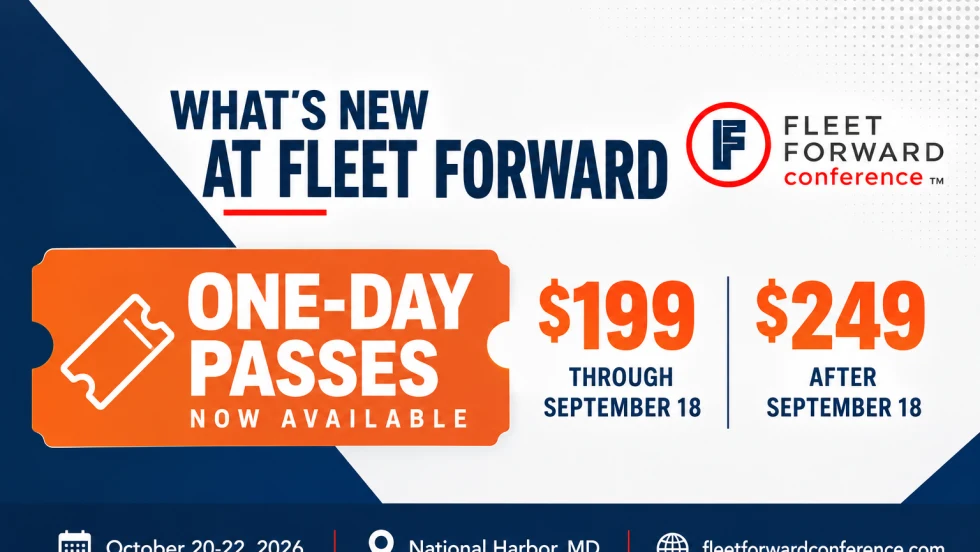
Fleet Forward Conference Introduces One-Day Passes for 2026
New one-day registration gives fleet professionals the flexibility to attend Tuesday, Wednesday, or Thursday, with passes available for $199 through Sept. 18.
Read More →
CALSTART Rebrands as Catalyst Mobility, Will Combine with Forth in 2027
CALSTART has rebranded as Catalyst Mobility and will combine with Forth at the start of 2027. The new organization said it is poised to become one of the world's largest, strongest, and most impactful clean transportation nonprofits.
Read More →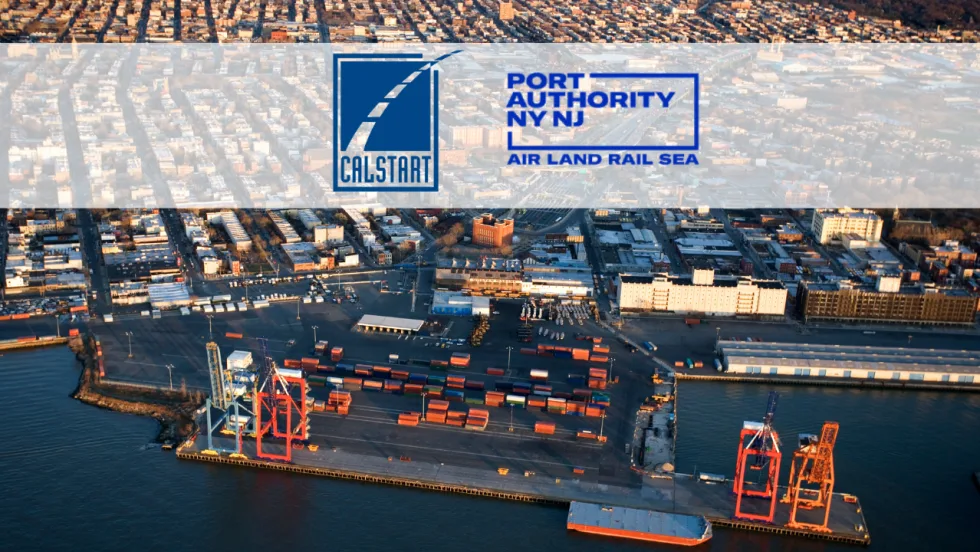
Electric Truck and Charging Programs to Boost Sustainability at NY & NJ Ports
Together, the Port Authority of New York and New Jersey and CALSTART will electrify drayage and terminal operations serving the East Coast’s busiest container port. A pair of incentive programs totaling $45 million has launched to accelerate adoption of zero-emission drayage trucks and terminal tractors.
Read More →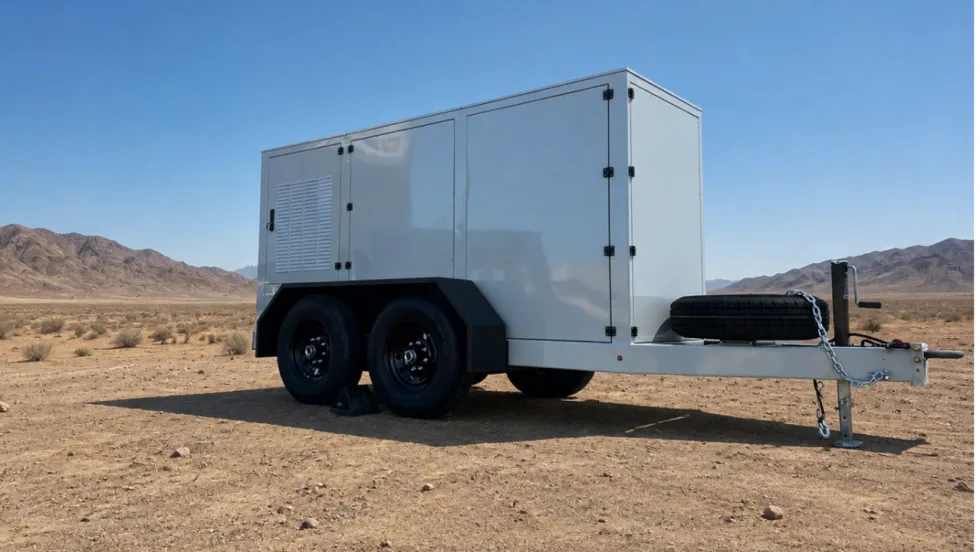
Xos Hub Surpasses One Gigawatt-Hour of Energy Delivered in the Field
A single Xos Hub has surpassed one gigawatt-hour of energy across more than 33,600 charging sessions in the field, demonstrating performance that supports Xos' expansion across new products and markets.
Read More →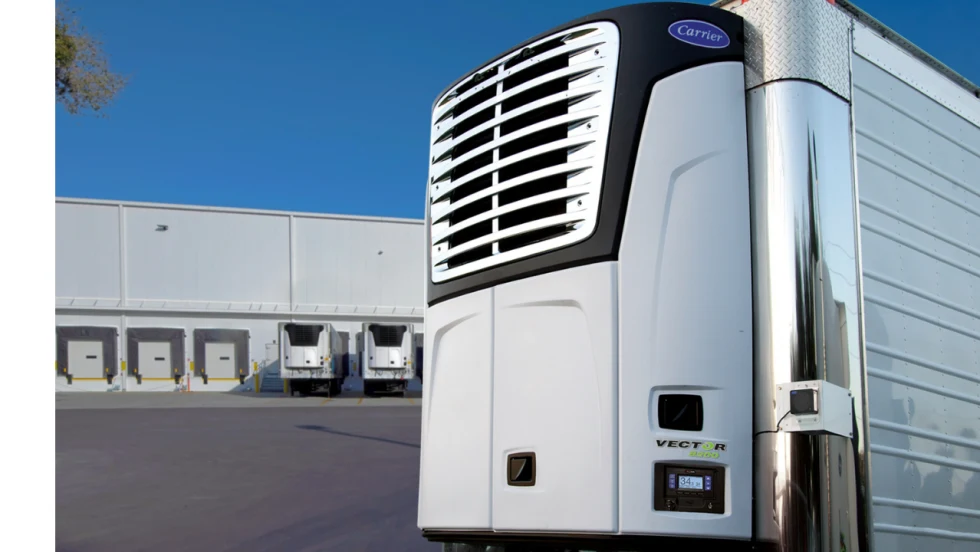
Carrier Transicold Launches All-Electric Vector 8200 TRU for Diesel-Free On-Site Cold Storage
Carrier Transicold’s first engineless multi-temperature TRU helps fresh- and frozen-food fleets add supplemental cold storage capacity during seasonal peaks.
Read More →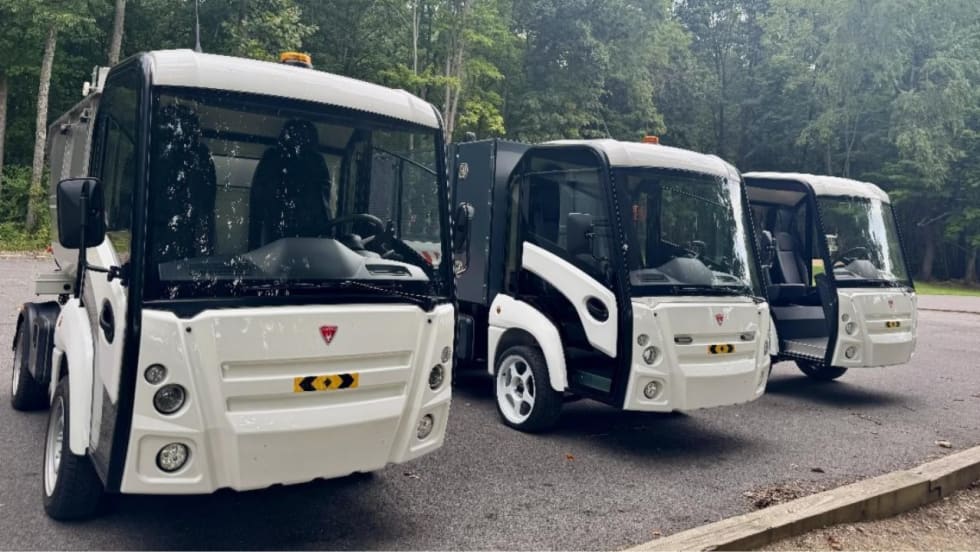
Narro Trucks Introduces Electric Utility Vehicle
Narro Trucks officially launched its operations on Aug. 20 and hosted a ride and drive to showcase its electric truck, which will be produced in Virginia.
Read More →
Samsung SDI Takes Full Control of GM Battery JV as Indiana Plant Pivots to Energy Storage
Samsung SDI is taking full control of its Indiana battery plant with GM, marking a major shift from the EV-focused joint venture Charged Fleet first covered in 2023.
Read More →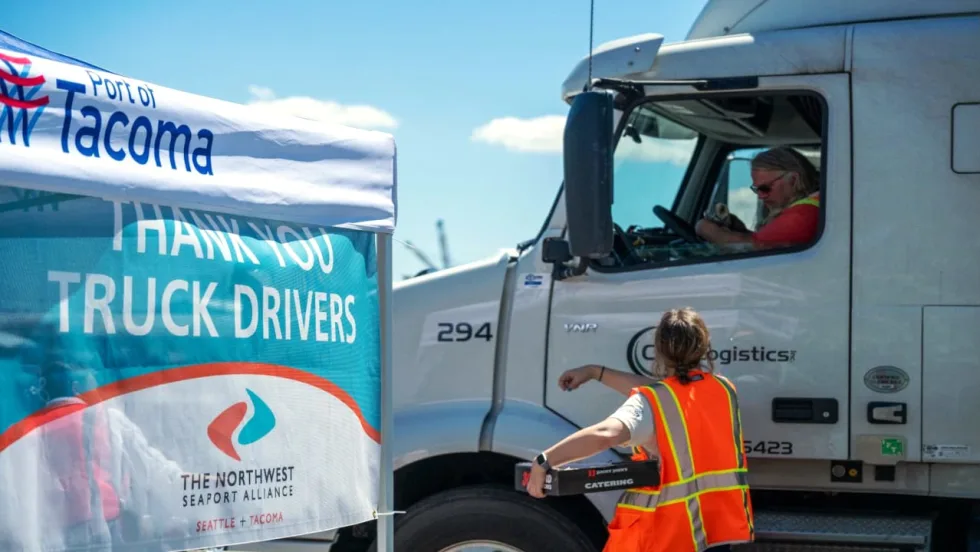
NWSA Taps CALSTART to Administer Zero-Emission Drayage Assistance Program
CALSTART will provide free technical assistance services to drayage fleets serving the Ports of Seattle and Tacoma and looking to transition to cleaner technologies and help decarbonize freight hubs.
Read More →
EV Fleet Reality Check: What Operators Wish They Knew Before Electrifying Their Work Vans
Electric work truck upfits bring new compatibility questions. Learn how parts availability, OEM guidance, power demands, and route planning can affect fleet performance.
Read More →
Peterbilt Expands Sourcewell Partnership with Electric Vehicle Lineup
Peterbilt Motors Company’s cooperative purchasing agreement with Sourcewell and its Canadian partner, Canoe Procurement Group, now includes including Peterbilt's battery-electric vehicle lineup.
Read More →