




Related: Part 1 - Tire PMs: Low-Tech Solutions for Cost Control
Electrical Systems: Proactive Measures for Protection
In part two of this six-part series, tips for maintaining electrical systems are shared, including helpful tools and best practices for battery maintenance and replacement.
by Bob Stanton, CPM, CPFP
March 6, 2017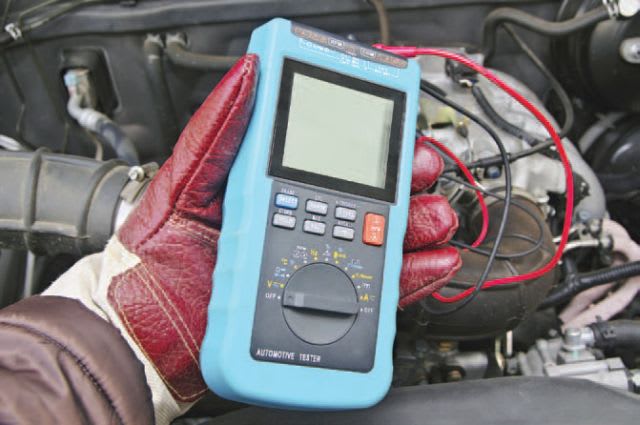
Using a voltmeter or
multimeter (pictured) is
necessary for checking
a battery’s charge. (Photo: iStockphoto.com)
5 min to read
Today’s truck is essentially a data engine. Part I of this series referenced OBD-II, telematics, electronic logging devices, and other data generators currently or soon to be on board. These tools — along with such others as two-way satellite communication common in road tractors, laptops, and onboard navigation systems — all have two things in common: Their reliability depends on the integrity of the truck’s electrical system and they all represent augmentation or added electrical loads not found on trucks five or 10 years ago. And yet, the capacity and characteristics of a truck’s electrical system has not changed in over 50 years!
In 1988, anticipating a technological revolution, the Society of Automotive Engineers (SAE) opened the dialogue on increasing the standard voltage on automotive and truck electrical systems. The dialogue continued throughout the 1990s and favored 42-volt systems. Fortunately for the benefit of our shop tools and employees, the industry engineered away the perceived need for higher voltage, leaving us with the 12-volt system we know and love. What has changed is the capacity, component efficiency, and engineering of a truck’s electrical system to accommodate higher load demands.
A further complication not often mentioned in discussions on electrical system maintenance and longevity is the high heat generated by engines equipped with selective catalytic reduction (SCR). Temperature (high heat or extreme cold) is among the most destructive elements jeopardizing electrical system integrity. Even when batteries are located outside of the engine compartment, several components, connectors, and wiring harnesses remain within that high heat space under the hood and can be subjected to the potentially damaging high temperatures routinely generated by SCR-equipped engines.
Of the many component systems inherent in trucks today, the electrical system is the most vulnerable, the most prone to breakdowns, and still the least understood. These facts all beg the question, have preventive maintenance (PM) procedures kept up? In spite of its 50-year-old architecture, the demands posed by today’s componentry have loaded the system like never before. Recognizing the importance, vulnerability, and necessity of electrical components, do our PM processes meet these challenges?
Electrical System Recognition
PM and routine maintenance processes that fail to recognize the interdependence of electrical system components are doomed. PM and routine maintenance processes that fail to incorporate the logical order of electrical component diagnosis are doomed. To many people, electricity is mysterious but in fact, electricity is logical, consistent, and even predictable.
The first step in updating electrical preventive maintenance processes is to recognize its components as one unified and interdependent system, rather than as individual components (e.g. battery, starter, and alternator). Even the National Institute for Automotive Service Excellence (ASE) exam recognizes this; the exam is called T6 Electrical/Electronic System (or A6 for automotive).
By approaching electrical as a system, the PM process can be tailored to check system componentry in a logical diagnostic order, thus avoiding component misdiagnosis and/or chasing the wrong problem.
Checking Batteries
Batteries are the heartbeat of the system; all checks begin here. Beyond cleaning terminals and connections, PMs should include the use of a voltmeter or at the very least a hydrometer to check the battery’s state of charge after the surface charge has been removed. Hopefully, the state of charge is 12.4-12.6 volts. If under that voltage, the battery should be charged to that state and rechecked. If overcharged, any number of causes is possible; all should be checked and corrected and the battery should be replaced. Do not simply replace the battery and expect the overcharge or undercharge condition to self-correct; it will not.
Testing Load
When the battery is fully charged, the next PM step is to perform a load test using a carbon pile or similarly capable testing device. Although many PMs don’t include this step, it’s really the only way to determine the true health of the battery because it does its work under load. The ATA’s Technology & Maintenance Council’s recommended PM practices include this step as do many trucking and transportation firms.
If a PM inspection checklist is utilized, adding the battery load test to the process and documenting it using a checklist will pay dividends in electrical system longevity and integrity.
Evaluating Voltage Drop
Another test, performed even less often, is a voltage drop test. This test is critically important in determining the health of the charging/starting system. Proficient and consistent utilization of this test performed on the starter and alternator will prevent premature and/or misdirected replacement of either component. Cable or connector resistance issues leading to decreases in voltage are often disguised and incorrectly diagnosed as alternator or starter failures. Adding “test cables” by truly testing them using a voltage drop test rather than relying on a cursory visual check will pay dividends in lower operational costs and breakdowns.
Replacing Batteries
A final word on battery replacements: technicians will often replace an entire battery set (two or four batteries) when the health of even one battery in that set is suspect. A best practice is for all removed batteries to be placed on a trickle charger for 24 hours and their state of charge rechecked. If the charge state recovers, those recovered batteries can be placed back in inventory at no charge and used as a new battery would be used. This practice will likely reduce new battery purchases by 30% or more.
Measuring Electrical System Maintenance
There is one place within any maintenance program where the relative effectiveness of the electrical system maintenance program can always be observed and evaluated. Whether there are concerns over electrical system maintenance costs, questions about the quality of the maintenance program, or questions about the rate of electrical system component replacement, do not inspect batteries currently installed. Instead, inspect the batteries, starters, and alternators located in the return/recovery/warranty areas of the shop or parts section for a visual reference of the program’s effectiveness.
Just as tire carcasses in the scrap pile will tell you all you need to know about your tire program, the batteries, starters, and alternators located in the return/rebuild/warranty or scrap areas will tell the story about the quality of the electrical system maintenance in any shop. They disclose replacement practices, maintenance quality, adherence to standards, warranty processes, battery age, etc. Further and perhaps in concert with your electrical parts supplier(s), these inspections, especially if done with a volt meter, can lead to program modifications that result in fewer replacements, greater component longevity, and lower costs overall.
The next installment in this series will cover suggested PM processes for aftertreatment systems.
About the Author:
Bob Stanton, CPM, CPFP is an independent fleet consultant and retired public sector fleet manager with 42 years of experience. He can be reached at victorybob@gmail.com.
Subscribe to Our Newsletter
More Maintenance
Les Schwab Expands Commercial Tire Footprint Into Arizona
Les Schwab Tires has expanded into Arizona with two commercial tire locations in Phoenix and Tucson, strengthening its fleet service footprint in the Southwest.
Read More →
Volvo Trucks’ 'Lock and Leave' Software Updates Go Live Across North America
Unattended over-the-air software updates are now available in Volvo trucks across the U.S. and Canada. The new capability lets trucks stay current with the latest software without interrupting operations or requiring a dealership visit.
Read More →
Why Technician Appreciation Can’t Be a Once-a-Year Thought
For fleets trying to keep skilled technicians, recognition cannot begin and end with Technician Appreciation Week. Learn what year-round appreciation really looks like and why the everyday technician experience matters just as much as pay when fleets are trying to keep good people.
Read More →
How Faster Driver Reporting Can Keep Small Truck Problems Small
When minor damage, warning lights, or equipment issues are reported late, small problems can quickly become bigger maintenance headaches. Conversational AI can help shorten the path from what a driver notices in the field to the person who can act on it.
Read More →
BendPak’s Ranger Wheel Service Equipment Achieves North American Safety Certification
BendPak’s full line of Ranger tire changers and wheel balancers has been ETL certified to UL and CSA standards to improve operator safety.
Read More →
Isuzu & U.S. Department of Labor Celebrate Milestone for Veterans Apprenticeship Program
The Isuzu Veterans Apprenticeship Program (IVAP) signing ceremony highlighted Isuzu’s long-term commitment to veterans, Isuzu dealers, and the skilled workforce supporting its customers and the commercial transportation industry.
Read More →
Polyvance Introduces New Peterbilt 567 Hood Strut Mount Repair Kit
Polyvance has launched a repair solution for Peterbilt 567 hood struts, helping truck owners and repair facilities avoid costly hood replacements.
Read More →
Cox Automotive Celebrates Technical Excellence at 2026 Top Tech Finals
The top technicians from Cox Fleet and Manheim tested their skills in Nashville, Tennessee, at Cox Automotive’s 2026 Top Tech Finals. The overall winners will advance to compete at the American Trucking Association’s TMC SuperTech competition.
Read More →
Grote Industries Appoints Vice President of North American Operations
Grote Industries has appointed Patrick Smith as vice president of North American operations as it celebrates 125 years of innovation and manufacturing excellence. He has more than 20 years of manufacturing leadership experience.
Read More →
Winter Fleet Prep: Expert Tips to Keep Vehicles Running Smoothly
Cold weather can expose weak batteries, tires, fuel systems, and maintenance gaps fast. Use this winter fleet checklist to prepare trucks and drivers before temperatures drop.
Read More →