




Driving Higher Returns with Smart Work Truck Remarketing
Discover how fleet managers can optimize work truck remarketing by leveraging market trends, technology, and maintenance strategies to boost resale value and drive better returns.


Staying on top of market trends, technology advancements, and maintenance practices is key to maximizing work truck resale value.
Photo: Work Truck
Remarketing work trucks isn't just about selling vehicles; it's a strategic process that requires understanding market trends, buyer behaviors, and the latest technologies.
We caught up with Kevin Heersink, assistant vice president of Truck Rental at Enterprise Mobility, and Jeff Krogen, vice president of Remarketing at Enterprise Fleet Management, to get their insights on how fleet managers can optimize their remarketing efforts.
Macroeconomic Factors Shaping the Market
From rising interest rates to fluctuating fuel prices, macroeconomic factors play a significant role in work truck remarketing trends this year.
“We are seeing that interest rates, supply chain disruptions, and overall access to capital are the primary factors that have affected both retail and wholesale demand for work trucks. It is much more difficult to acquire trucks than it was four to five years ago, so we recommend closely monitoring these ongoing trends and being proactive in anticipating upcoming needs,” Heersink said.
Krogen added that while fuel prices always impact the cost of ownership and buying decisions, recent stability has had less of an effect.
“Concerning fuel prices, they are always a significant factor in the cost of ownership and often drive used car buying decisions. Sudden changes in fuel prices tend to also drive consumer behavior. However, with lower and more stable prices in recent times, there has been less of an impact on the decision-making process. For example, in November 2024, gas prices decreased 6% from the same time last year, according to Cox Automotive,” Krogen shared.
Technology's Impact on Remarketing
Recent advancements in technology have transformed how work trucks are managed and remarketed. Telematics and data analytics are driving better outcomes, and AI is starting to make its presence known.
“The strides our industry has made in telematics specifically have allowed us to monitor our trucks more closely than ever before. This helps us ensure vehicles are well-maintained and reliable. Keeping our trucks in excellent condition helps drive improved remarketing outcomes,” Heersink explained.
Krogen noted that telematics systems provide valuable insights that improve vehicle resale values.
“Telematics systems provide accurate vehicle mileage and increased visibility to vehicle health, providing an opportunity to act sooner on maintenance and keep vehicles in better working condition that often translates to more favorable remarketing outcomes. Even with recent technological advances, we have yet to see the full impact of how a more AI-driven, predictive approach to fleet remarketing can enhance various aspects of the process for increased efficiency, speed, and profitability,” Krogen said.
The Growing Push for Sustainability
Electric and alternative-fuel work trucks are becoming more common, but they come with unique remarketing challenges.
“We have yet to see a sufficient volume of data on used EV work trucks due to new models being introduced later to the EV market than their retail sedan and SUV counterparts. This has led to challenges in residual forecasting,” Krogen noted. “Due to pricing volatility in the new EV market, some early adopters have experienced higher depreciation rates, which in some cases have extended the cycles of such vehicles.”
He also pointed out that some fleets struggle to integrate alternative-fuel trucks due to uncertainties around government policies.
“There are a limited number of commercial buyers willing to incorporate alternative fuel work trucks into their fleets due to the uncertainty surrounding government policy. However, some fleets have successfully integrated these types of vehicles with careful planning,” Krogen explained. “Fleet managers should consider the total cost of ownership, including infrastructure, maintenance, and charging, before making decisions.”
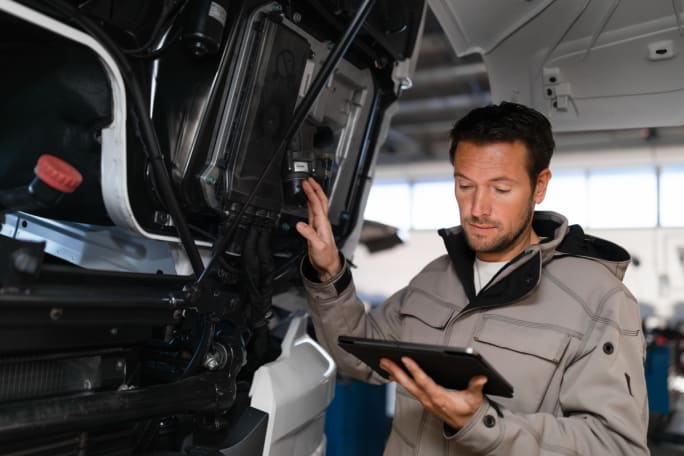
Remarketing work trucks involves more than just selling vehicles — it's about strategy, timing, and knowing what buyers want.
Photo: Enterprise Fleet Management
Key Factors Affecting Resale Value
When it comes to maximizing resale value, Heersink emphasized that mileage and condition are the two biggest factors.
“The primary factors that are affecting the resale value of work trucks are the overall age and mileage of the vehicles, with lower mileage trucks in high demand,” Heersink said.
Krogen agreed, adding that proper maintenance and repair quality are critical.
“The biggest factors currently influencing resale value for work trucks continue to be mileage, condition, and timing to market. These basic principles have not changed and remain as critical as ever. Therefore, it is crucial to ensure that vehicles are optimally maintained and repaired to retain their resale value,” Krogen explained. “If you choose to recondition trucks before preparing them for sale, it is important to ensure the quality of the repair. A subpar repair can negatively impact the vehicle’s value, negating the benefits of reconditioning.”
Shifts in Work Truck Buyer Types
The types of buyers purchasing remarketed work trucks are evolving, with small businesses and individual contractors taking a more significant role.
“Based on our analysis of the recent market trends, we have noticed a steady demand for work trucks throughout the year despite the typical seasonal decline. Interestingly, we have seen that supply remains in check due to increased demand, especially in the southeast region, post-hurricane impact,” Krogen explained. “Most buyers continue to be businesses, government agencies, and contractors, but small businesses and individual contractors have started playing a more prominent role, particularly following the pandemic.”
Impact of Aftermarket Upfits
Fleet managers often wonder if aftermarket upfits and customizations add or detract from a vehicle’s resale value. Krogen shared the type of modification matters greatly.
“It’s important to ensure that aftermarket upfits or customizations made to the vehicle are proper for the chassis of the truck and that they meet the needs of the job in hand, while at the same time keeping in mind the resale market and future buyers who may be interested in purchasing the truck once it is no longer needed,” he said.
He added that modifications like safety features can enhance value.
“Certain modifications such as the addition of safety features like automatic braking and lane departure could add value to the truck and make it more desirable for potential buyers. On the other hand, if a truck is upfitted with a body that doesn't make sense for its Gross Vehicle Weight Rating (GVWR) in the resale market, it can negatively impact the resale value,” Krogen explained.
Remarketing Advice for New Fleet Managers
For those new to truck remarketing, Heersink and Krogen offered valuable advice.
“For fleet managers new to the world of truck remarketing, we recommend maintaining quality trucks, having a proactive marketing plan, and networking with others in the industry to stay on top of trends,” Heersink advised.
Krogen emphasized the importance of transparency and working with trusted partners.
“My advice would be to prioritize building a reputation of honesty and transparency in the remarketing process. The remarketing world is centered around trust, and if you want to build trust with potential buyers, it's essential to be transparent about a truck’s history and condition,” he said. “Another important tip is to choose a reputable and trusted remarketing process or company to work with. Reputable companies will have a large network of buyers and can help get the best price for the vehicle.”
Driving Thoughts
Remarketing work trucks has changed significantly, with shifting buyer types, the influence of advanced technologies, and ongoing market fluctuations. For fleet managers, optimizing this process means staying informed and adapting to new trends.
Start by tracking key macroeconomic factors, maintaining vehicles to keep them in top condition, and carefully considering the impact of aftermarket upfits on resale value. And never underestimate the importance of trust and transparency when working with buyers; those relationships can directly impact your success.
Want more ways to improve your remarketing strategy? Subscribe to our Work Truck newsletter for exclusive expert insights, actionable tips, and the latest trends to help you maximize your fleet's remarketing returns.
More Remarketing
AP Fleet Management Expands Remarketing Program for Commercial Work Trucks
AP Fleet Management expanded its commercial vehicle remarketing program with dedicated resale services and an online marketplace for used work trucks.
Read More →
REP Inspection Services Launches, Delivering Professional Equipment Inspections
REP Inspection Services, led by someone with more than 30 years of industry experience, has launched its professional inspection services for trucks, trailers, and equipment across the commercial vehicle industry.
Read More →
Introducing Work Truck’s 2025 Remarketing Report Series
Work Truck’s 2025 Remarketing Report Series uncovers how data, timing, and technology are reshaping resale value and driving smarter fleet strategies.
Read More →
Fleet Remarketing Outlook 2026: EVs, Policy, and the Power of People [Part 4]
From EVs to policy changes, the 2026 fleet remarketing outlook is all about people, progress, and finding opportunity in stability.
Read More →
Digital Fleet Remarketing: How Tech and Transparency Build Buyer Confidence [Part 3]
Technology and trust are reshaping fleet remarketing in 2025. See how data, transparency, and partnerships drive better resale outcomes.
Read More →
Fleet Replacement Strategy 2025: When to Hold and When to Fold [Part 2]
Knowing when to sell or hold is key in 2025. Discover how fleet professionals use data and TCO insights to make smarter remarketing calls.
Read More →
The 2025 Work Truck Remarketing Market: Prices, Pressure, and What Comes Next [Part 1]
Fleet remarketing in 2025 is stabilizing. Experts share how prices, rates, and new tech are shaping used truck values and resale strategies.
Read More →
Copart and One Inc. Partner to Improve Auto Claims Process
ChatGPT said: One Inc and Copart partner to speed up lienholder payments, helping insurers process total loss vehicle claims faster and improve customer experiences.
Read More →
Fleet Remarketing Industry Council Launches to Shape Future Resale Value
What if fleets could shape how their vehicles are valued after resale? Now they can.
Read More →
CAR Partners with NAFA Fleet Management Association For 2026 Event
The event will connect fleet managers with vehicle remarketers to delve into topics that help fleet operations find remarketing solutions.
Read More →