





Do You Know? Top 5 CDL Drug & Alcohol Clearinghouse FAQs
Changes to Pre-employment Investigations for Drug and Alcohol Program Violations Now in Effect
The rules have changed regarding how fleets check potential drivers' drug and alcohol testing history.
November 10, 2022

Beginning January 6, 2023, the Clearinghouse will have three years’ worth of recent history compared to what was requested directly from previous employers.
Photo: Work Truck
3 min to read
Beginning Jan. 6, 2023, one of the categories of questions appearing on the Federal Motor Carrier Safety Administration safety performance history inquiry will be removed. Motor carriers will no longer have to ask former employers questions about Part 382 violations.
What is Part 382? This is part of the Code of Federal Regulations covering Transportation, Title 49. This title is broken into seven chapters. Chapter 3 covers FMCSA and Department of Transportation, parts 300-399.
Part 382 covers controlled substances and alcohol use in testing. According to the FMCSA, "The purpose of this part is to establish programs designed to help prevent accidents and injuries resulting from the misuse of alcohol or use of controlled substances by drivers of commercial motor vehicles."
Are Safety Performance Histories Still Required?
Yes, motor carriers will still need to contact a driver’s former FMCSA employers from the past three years to confirm the following:
General employment verification, typically confirming that the employee worked there, dates of employment, vehicles operated, and the like;
DOT crash history within the previous three years. These are accidents as defined in §390.5 and appearing on the former employer’s accident register (§390.15); and
Other accidents not qualifying as DOT crashes that the former employer is willing to provide (not mandated to do so). These might be minor fender benders that show a pattern of unsafe driving.
Additional questions on the inquiry are only permitted if they do not violate state and federal employment laws.
How do you Learn of FMCSA Testing Violations?
Violations occurring under Part 382 are captured by the CDL Drug and Alcohol Clearinghouse. Pre-employment queries of the database will reveal drivers who have not yet completed the return-to-duty process and/or follow-up testing plan.
There has been an overlap between the Clearinghouse query and the safety performance history inquiries since the database’s launch in 2020.
Beginning Jan. 6, the Clearinghouse will have three years’ worth of recent history compared to what was requested directly from previous employers.
How do Carriers Discover DOT Testing Violations in Other Modes?
Motor carriers must contact former employers directly when an applicant:
Worked in a mode other than highway in the previous three years, and
Was subject to DOT testing.
Examples include rail, transit, pipeline, air, or maritime positions.
The motor carrier must ask the former employer the questions appearing in §40.25(b). A violation occurring under another DOT mode follows the employee to the highway mode and requires the return-to-duty process and follow-up tests (§382.501(a)).
Copies of Testing Records
The process of requesting additional information or copies of records does not change with the new safety performance history format.
If previous drug and alcohol history reveals a DOT testing violation but no indication of a completed follow-up testing program, the new employer must request information from the former employer to learn where the process left off.
The new carrier will need a copy of the substance abuse professional’s follow-up plan and a record of completed tests. The specific records, additional questions, and the parties requesting and releasing the information must be identified when the driver signs a written consent.
Planning Ahead & Key Dates to Know
In preparation for Jan. 6, the motor carrier should consider the following measures:
Train everyone involved with vetting drivers on the new process,
Make sure safety performance history forms are updated, and
Communicate with service agents who provide driver qualifications and/or drug and alcohol services to ensure they are aware and ready to implement the new requirements.
Even though the prescribed method of gathering data on prospective and new drivers has changed, the information has not. Motor carriers must still act on what they receive.
Do you truly understand driver exceptions? Or what the entry-level driver training (ELDT) requirements are? What about the top most frequently asked questions about emergency equipment? Work Truck has all of the top updates, resources, and more.
Subscribe to Our Newsletter
More Safety

Volvo Trucks Releases New Safety Recommendations for Traveling with Pets
One of the most important recommendations for professional drivers traveling with pets is to ensure pets are properly restrained while the truck is moving. Other tips are available in the new guide from Volvo Trucks North America and Center for Pet Safety.
Read More →
API Issues Refueling Safety Guidelines
The American Petroleum Institute offers a list of safe vehicle refueling guidelines, including ways to avoid potential problems with static electricity discharges in fall, winter, and early spring.
Read More →
Winter Fleet Prep: Expert Tips to Keep Vehicles Running Smoothly
Cold weather can expose weak batteries, tires, fuel systems, and maintenance gaps fast. Use this winter fleet checklist to prepare trucks and drivers before temperatures drop.
Read More →
When a Work Truck Breaks Down, the Job Can Stop, Too
A work truck breakdown can stop more than the vehicle. Discover how payloads, jobsites, and specialty equipment change the roadside response.
Read More →
What Stronger Long-Term Fleet Service Partnerships Actually Require
Fleet service partnerships rarely fall apart all at once. Learn the three warning signs that trust is eroding and what fleets and providers can do before downtime, frustration, and lost revenue follow.
Read More →
Applause & TRUCE Software Partner to Improve Driver Safety Through AI-Powered Telematics & Employee Performance Management
Applause has integrated TRUCE driving metrics directly into its employee-first performance and safety platform that transforms mobile devices into AI-powered telematics.
Read More →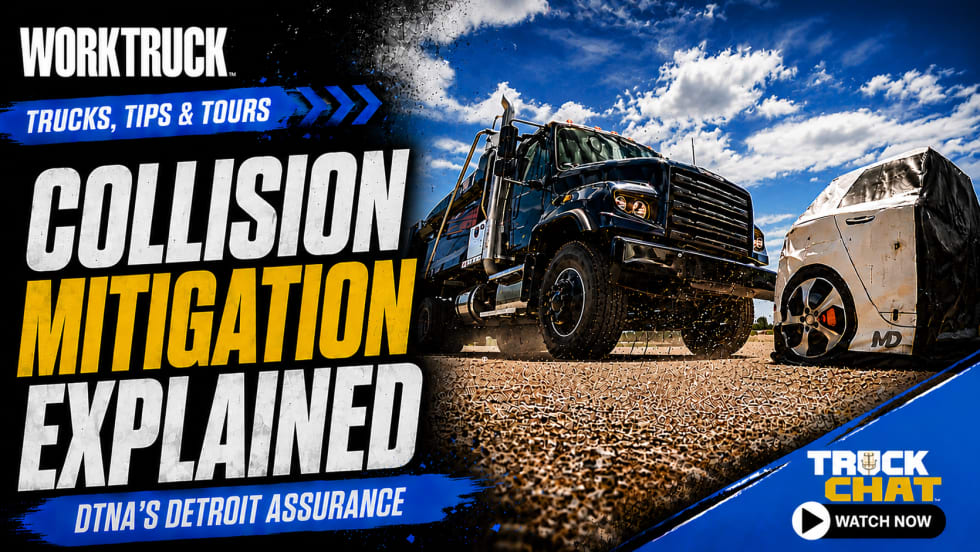
How Detroit Assurance with Active Brake Assist Works
Do you want to see what it is like to experience Detroit Assurance’s Active Brake Assist? In this video, Work Truck will put you in the cab to see how it all works and then hear more details from DTNA’s Mike Young.
Read More →
Get Left of Loss: A 5-Step Workplace Violence Prevention Framework for Fleet Operators
Violence risks do not stop at the driver’s door. Learn five practical steps fleets can take to spot threats early and protect workers before loss occurs.
Read More →
Sponsored•July 17, 2026
How Better Visibility Cut Speeding Violations by 48%
Fleet leaders don't need more data, they need clearer visibility into what the data is saying. This case study explores how one utility replaced speeding-event counts with a single metric — miles driven in violation — to strengthen safety and significantly reduce speeding violations.
Read More →
13 Safe Driving Tips for Commercial Vehicle Drivers
Make sure you are spending time on the road safely with these important tips.
Read More →