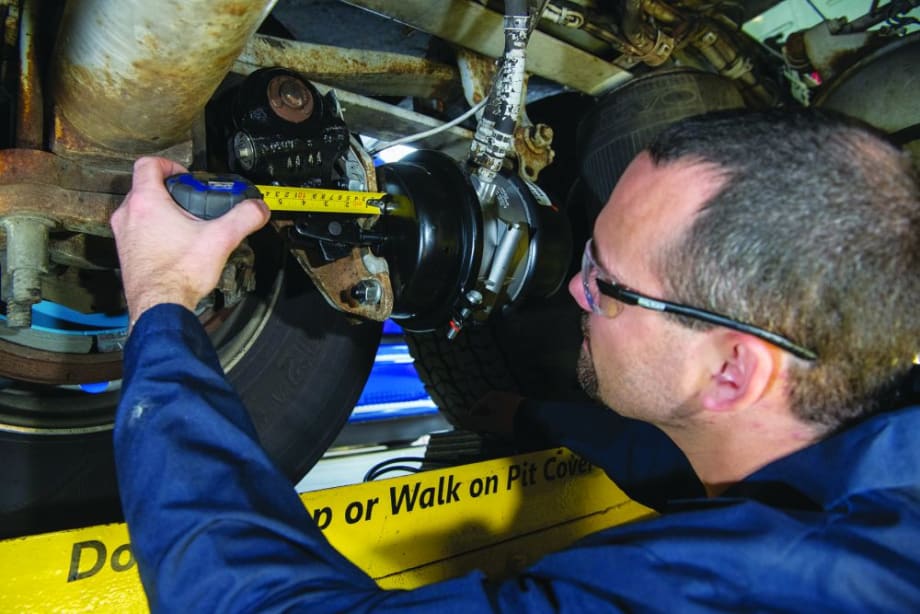
Choosing the right friction and rotors (also known as a friction couple) for the duty cycle and application will maximize service life.
Photo: Bendix
11 min to read
Each August, the Commercial Vehicle Safety Alliance (CVSA) promotes Brake Safety Week. During this week, commercial motor vehicle inspectors focus on identifying brake violations and taking commercial motor vehicles with brake-related out-of-service violations off the road.
Ad Loading...
Devoting a week to brake safety also allows motor carriers to educate their drivers and maintenance service providers on the importance of brake system safety.
Ad Loading...
During last year’s Brake Safety Week, 12% of the 43,565 commercial motor vehicles inspected were placed out of service for brake-related violations — that’s 5,156 commercial motor vehicles taken off the road just because of brake violations. This statistic alone underscores the importance of proper brake spec’ing and maintenance. Of course, having brakes that are the right fit for the truck and are functioning properly is also critical to safety.
To that end, following these spec’ing and maintenance tips can help fleets avoid violations and operate a safer fleet.
Tip 1: Know the Difference Before You Spec
Spec’ing brakes starts with the choice between hydraulic, air disc, and exhaust.
“The key differences in how fleets spec hydraulic brakes, air brakes and exhaust brakes are the variety of applications that they may be used for, evaluating the equipment and its purpose, and whether they will be using consistent brakes or mixing variations,” said Alicia Wong, director brakes NA at Meritor. Wong offered these tips for spec’ing each brake type:
Hydraulic Brakes: “When spec’ing hydraulic brakes, it is important to evaluate the application of the vehicles, as well as the widths and liner grades for different braking/life requirements. Flexible mounting configurations can ease the vehicle packaging, and fast shoe replacement designs can minimize repair and service time,” she said. “The brakes should be designed to suit a wide torque requirement band for a variety of applications and should assure stabilized alignment to maximize brake response and stopping power.”
Air Brakes: Wong said application matters for air brakes, too. “Air brakes work great for trucks that require superior stopping performance or ones that typically run hotter from severe performance or increased weight,” she explained. “In general, air disc brakes offer enhanced performance and reduced brake drag, along with an increased brake life and reduced service time. Fleets with air disc brakes can expect reduced downtime, maximized fuel economy, and reduced overall total cost of ownership (TCO).”
Exhaust Brakes: For exhaust brakes, Wong recommends utilizing retarders, as they assist in slowing down a vehicle. “Then the life of the air brakes can be extended,” she said.
Ad Loading...
Tip 2: Spec Friction and Rotors Together
When spec’ing hydraulic or air brakes, it’s important to ensure the friction meets stopping distance standards — FMVSS105 for hydraulic brakes and FMVSS121 for air brakes.
Mark Holley, director, marketing and customer solutions, wheel-end – Bendix Commercial Vehicle Systems, said choosing the right friction and rotors (also known as a friction couple) for the duty cycle and application will maximize service life.
“It is important to spec a friction and rotor combination that are engineered to wear optimally to truly maximize brake friction and rotor life,” he said. “For example, you wouldn’t want to put economy-grade friction materials on a work truck. The economy-grade friction formulation is not designed to withstand the demanding conditions — frequent stops, heavier loads, higher brake temperatures — found in severe-duty applications. As a result, it will wear quickly and may not provide the same braking performance as friction designed specifically for severe duty applications. The duty cycle alone may not optimize your friction life and therefore will likely result in more equipment downtime and higher replacement part costs.”
Tip 3: Assess Cost Beyond the Sticker Price
Holley said when spec’ing brakes or purchasing replacement parts, it’s important to look at cost per mile rather than the up-front cost of the parts or brake system alone.
“For the best braking performance, we encourage fleets to replace friction ‘like-for-like.’ To get the best performance and service life when selecting air disc brake replacement pads, choose genuine OEM friction and rotor as a set (the friction couple) by application,” he said. “Don’t select pads or rotor solely based on cost — there’s a lot more to the equation.”
Ad Loading...
Holley suggests conducting a fleet test to understand total cost per mile versus just the price of the friction. “Don’t select friction based solely on price,” he said. “Generally, you get what you pay for.”
Wong said fleets should assess TCO when investing in air brakes, too. “Air brakes are a more expensive initial investment for fleets, but will actually reduce TCO, which is why we’re seeing a trend towards air brakes becoming much more popular,” she said. “The cost to convert a drum brake system to an air brake system can be costly because you are not only changing the foundation brakes, but also changing the hubs, rotors, mounting torque plates, air chambers, and air lines. But, when you consider overall maintenance costs, air brakes can actually decrease the total cost of ownership of a truck over time."
Tip 4: Create Inspection Checklists
Once a truck is outfitted with the proper brake system, it’s important to maintain it properly. Performing pre- and post-trip inspections can help fleets stay on top of maintenance and catch needed repairs sooner.
“Brakes are the number-one violation for roadside inspections, so all components of the brake system must routinely be inspected and maintained. This includes, but is not limited to, hoses, connections, pads, etc.,” said Fred Fakkema, Vice President, Safety & Compliance, Zonar. “Brakes take time to check during proper pre- and post-trip inspection. These inspections should include checking the brake lines, chamber, clamps, pushrod, slack adjuster, shoes, and drums.”
When making inspection checklists, it’s helpful to keep in mind what commercial motor vehicle inspectors look for.
Ad Loading...
“Inspectors follow a 37-step procedure for brake hoses/tubing, which includes the examination of both driver operating requirements and vehicle mechanical fitness,” Fakkema said. “This also involves checking/testing eight brake features: air brake mechanical components, steering axle air brake mechanical components, brake adjustment, air system’s pressure to 90-100 psi, antilock braking system (ABS) if applicable, air loss rate, low air pressure warning device, and tractor protection system.”
Fleets can also break inspections into daily, weekly, and monthly checks. Bendix offers these checklists to help fleets prepare for Brake Safety Week:
Daily visual checks: Look for damaged or loose-hanging air chambers, pushrods, or slack adjusters. Slack adjusters on each axle should be extended out to the same angle or it could indicate an out-of-adjustment brake or a broken spring brake power spring.
Weekly checks: Inspect air disc brake rotors for cracks and inspect drum brakes for wear and/or cracked linings.
Monthly checks: Check for moisture in the air system, as contamination can lead to deterioration of air seals, brake-modulating valves, and brake chamber diaphragms, all of which lead to system leaks.
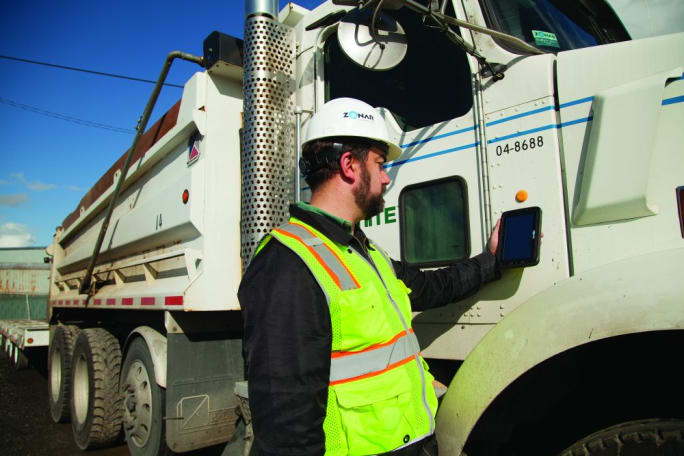
To streamline the inspection process, using an Electronic Verified Inspection Reporting (EVIR) can help ensure vehicles meet federally mandated pre- and post-trip inspection requirements.
“Mobile options for EVIR can make performing inspections more efficient and accurate, as inspection outcomes are instantly collected, stored, and integrated into maintenance software,” Fakkema said. “EVIR Mobile also allows drivers to receive alerts when repairs are done so drivers can quickly get on with their route once confirmed. And, if an inspection reveals any serious defects, fleet managers are alerted so they can make a plan for resolving any issues.”
Ad Loading...
Why Focus on Brakes?
Brake violations are both dangerous and more common than other violation types.
According to the FMCSA’s latest “Large Truck and Bus Crash Facts” report, “brake system” was the third most cited vehicle-related factor in fatal commercial motor vehicle and passenger vehicle crashes.
Brake violations are more common than other violation types. During the CVSA’s 2020 International Roadcheck, commercial motor vehicle and driver inspection and enforcement initiative, brake system and brake adjustment violations accounted for more vehicle violations than any other vehicle violation category at 38.6%.
According to the Federal Motor Carrier Safety Administration’s (FMCSA) Motor Carrier Management Information System, brake-related violations held eight spots on the list of the top 20 vehicle violations in 2020.
Tip 5: Tailor Maintenance to the Brake Type
Wong said each brake type has some key maintenance to-dos to be aware of:
Hydraulic brakes: “Weather can impact hydraulic brakes, especially in the winter months with rain, mud, and snow catching into wheel-end brake assemblies,” she said. “To maintain as much up-time as possible, regularly inspect wheel ends, look at wear patterns on brake shoes or pads, and monitor wheel bearings for wear or improper adjustment.”
Air brakes: When maintaining air brakes, Wong said it’s important to check the brake pad friction thickness to make sure it isn’t worn below the minimum; this ensures even brake pad wear. She also recommends checking for stress cracks in the rotors and ensuring boots and seals are in good condition and that the caliper can slide easily. “Because air brakes are built with fewer components, maintenance is simpler and takes less time, which increases vehicle uptime,” she said. “Servicing air brakes often include simply checking for pad wear and, versus the more extensive evaluation needed with drum brakes. Replacing brake pads on a vehicle with air brakes can be performed in less than half the time that it takes to change brake shoes.”
Exhaust brakes: “Exhaust brakes require minimal upkeep while remaining effective, but scheduling proper inspections and repairs is crucial to effectiveness.
Tip 6: Check Hoses and Tubing
Brake hoses and tubing are a critical part of the braking system, so it’s important to ensure they are free of chaffing and kinks, which data show are common problems. During the 2019 Brake Safety week, violations of the federal regulation governing brake tubing and hose adequacy included 2,704 violations for chaffed rubber hoses and 1,683 for kinked thermoplastic hoses. Looking at the FMCSA’s data for the 2020 fiscal year, brake hose or tubing chafing and/or kinking accounted for more than 34,000 inspection violations.
Because of the prevalence of hose and tubing violations, Bendix includes the following in its Brake Safety Week tips:
Pre-trip walkarounds and visual inspections in the shop that include checks of tubing and hose condition, positioning, and connections.
Performing 90- to 100-psi brake applications with the wheels chocked and the parking brakes released, listening for leaks that could be associated with hoses and/or tubing.
Ad Loading...
Tip 7: Grease Components Properly
While air disc brakes do not require greasing, for hydraulic and air brake vehicles, it’s important to properly grease components like slack adjusters and camshafts. Regular greasing of S-cam brake tubes and automatic slack adjusters helps prevent rust and corrosion.
Greasing automatic slack adjusters also protects the adjuster’s internal gear sets, clutches, and other components from premature wear. At the same time, forcing new lubricant into the automatic slack adjuster pushes out the old grease, along with any contaminants or water. This simple bit of maintenance helps maintain the correct brake stroke and provides optimal stopping performance.
Conversely, when automatic slack adjusters aren’t greased, the grease inside can become like clay and loses its ability to lubricate the slack.
“All wheel ends have moving parts that require lubrication at certain intervals,” Holley said. “Fleets should grease components at the wheel end and undercarriage on a routine basis, per the OEM recommendations. This will go a long way in keep things working properly and help extend service life.”
When making inspection checklists, it’s helpful to keep in mind what commercial motor vehicle inspectors look for.
Photo: Zonar Connect
Tip 8: Monitor Mileage
Just like fleets may monitor mileage for oil change intervals, they should also monitor mileage for brake systems. “Monitor mileage on your brake systems to make sure you are performing recommended maintenance at specified intervals,” Holley advised. “With proper maintenance, your components will last longer and provide better performance with higher levels of safety. Fleets and owner operators can help lower total cost of ownership (TCO) by reducing downtime and lowering costs for replacement parts.”
Ad Loading...
Wong said maintenance manuals will offer proper guidance on when to perform inspections but reminds fleets that harsher operating environments can impact inspection intervals. “Don’t take your brakes for granted!” she warned. “Consider your fleet’s application, loads and maintenance intervals to ensure you’re getting the best performance possible.”
Tip 9: Don’t Take Shortcuts
Both Fakkema and Holley cautioned against taking shortcuts when it comes to inspections and maintenance.
For drivers, the shortcut may happen during pre- and post-trip inspections. “Without a checklist that guides drivers through the proper safety inspection steps, it is easy to overlook some or all of them — especially for brakes,” Fakkema said. “Unfortunately, some drivers are also tempted to skip the steps altogether to get on the road faster.”
Fakkema cited a tragic crash that could have been prevented had the driver given his truck a proper inspection.
“In an incident I recall from years ago, a driver felt something wrong with his brakes as he went down a mountain. He pulled into a repair shop and found 14 out of 18 brakes were out of adjustment or needed to be replaced,” he said. “However, even after repair, the driver did not reinspect the brakes. Unfortunately, while driving on the freeway later, traffic came to a fast stop. The driver braked hard, but the brakes were still out of adjustment causing him to rear-end the commuter van in front of the truck, killing four of the passengers. Sadly, brake incidents such as this occur way too often."
Ad Loading...
For fleets, cutting corners may come in the form of making replacement choices that cut costs. “Never do a one wheel-end brake job,” Holley warned. “Change all pads or brake shoes across the axle.”
Remember the ‘Why’
If maintenance and inspections seem like a pain, it’s important to remember the “why” behind the action.
When brakes aren’t properly maintained and violations put the truck out of service, the result is unnecessary downtime. “Fleets should not have their trucks sitting idle on the side of the road when these brake violations are easily preventable through proper maintenance and inspections,” Fakkema said.
Of course, safety is the most important reason to spec the right brakes and keep them in optimal condition. Brakes that aren’t installed correctly or are poorly maintained reduce braking capacity and increase stopping distance of trucks, which in turn results in safety risks to all drivers on the road.
“Faulty brakes can be an existential threat to a fleet,” Fakkema said. “While brakes are designed to withstand tough conditions, they will never last the entirety of the vehicle’s life. Failure to maintain brake systems will ultimately lead to conditions that are sometimes deadly.”
Les Schwab Tires has expanded into Arizona with two commercial tire locations in Phoenix and Tucson, strengthening its fleet service footprint in the Southwest.
Unattended over-the-air software updates are now available in Volvo trucks across the U.S. and Canada. The new capability lets trucks stay current with the latest software without interrupting operations or requiring a dealership visit.
For fleets trying to keep skilled technicians, recognition cannot begin and end with Technician Appreciation Week. Learn what year-round appreciation really looks like and why the everyday technician experience matters just as much as pay when fleets are trying to keep good people.
When minor damage, warning lights, or equipment issues are reported late, small problems can quickly become bigger maintenance headaches. Conversational AI can help shorten the path from what a driver notices in the field to the person who can act on it.
The Isuzu Veterans Apprenticeship Program (IVAP) signing ceremony highlighted Isuzu’s long-term commitment to veterans, Isuzu dealers, and the skilled workforce supporting its customers and the commercial transportation industry.
The top technicians from Cox Fleet and Manheim tested their skills in Nashville, Tennessee, at Cox Automotive’s 2026 Top Tech Finals. The overall winners will advance to compete at the American Trucking Association’s TMC SuperTech competition.
Grote Industries has appointed Patrick Smith as vice president of North American operations as it celebrates 125 years of innovation and manufacturing excellence. He has more than 20 years of manufacturing leadership experience.
Cold weather can expose weak batteries, tires, fuel systems, and maintenance gaps fast. Use this winter fleet checklist to prepare trucks and drivers before temperatures drop.