





Learn More: Spec’ing Last-Mile Truck Bodies with Drivers in Mind
5 Reasons to Consider a Hydraulic-Free Electric Liftgate
RISE Robotics, a company first formed to develop exoskeletons, has now launched a hydraulic-free electric liftgate. This liftgate regenerates power into the battery while the loaded liftgate is being lowered during deliveries. Here are five reasons you should try it.
April 22, 2025
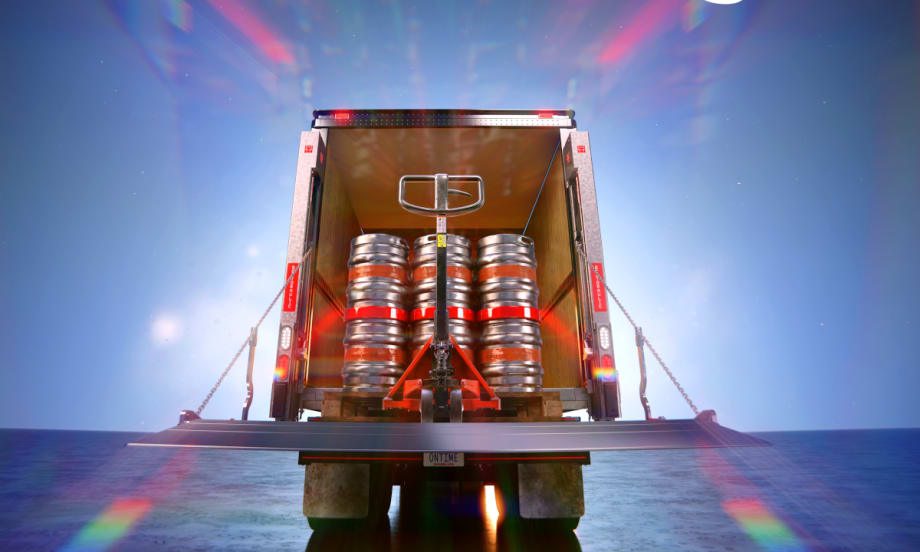
RISE Robotics' Beltdraulic Railgate 5500 is fully electric, and weighs much less than a traditional hydraulic liftgate.
Photo: RISE Robotics
9 min to read
Liftgates are nothing new, and a variety of mechanisms have been used over the years to raise and lower them. But thanks to a robotics company that started by developing exoskeletons, now there is a new way, and it’s fully electric with no need for hydraulics or hoses.
Unlike traditional hydraulic systems, RISE Robotics’ Beltdraulic Railgate features a fluid-free design that removes pumps, hoses, and the risk of oil leaks. With no hydraulic components to maintain, the new electric liftgate eliminates common service issues like seasonal oil changes, cracked hoses, and frequent system inspections.
The Need for Liftgates & A Better Design
Arron Acosta, co-founder and vice president of business development at RISE Robotics, even suggested that the name liftgate is not truly fitting for delivery fleets.
“I actually think they should be called lower gates, because the job they do is they go from a distribution center to the ground,” Acosta said.
They deliver all the things that consumers eat, drink, and buy at stores. While the delivery trucks and trailers are usually loaded at a warehouse or distribution hub dock, the liftgate’s function is simply to lower the product to the ground so it can be delivered into a business.
Over the years, liftgates have operated through a variety of mechanisms and functions. There are rail liftgates, which are mostly for heavy-duty usage like food and beverage deliveries.
Then there are other styles, like the ones that tuck under a vehicle, which are tasked to handle lighter loads. Most all use some sort of hydraulics to operate. Acosta pointed out that some manufacturers have experimented with screw-drive mechanisms, and others have used pulleys with cables or chains.
Tony Eiermann, senior consultant at Eiermann Fleet Services, has worked closely with the RISE Robotics team and brings to the table experience gained as both an end user of liftgates as well as previously working for a major liftgate manufacturer.
“Liftgates I've always called the redheaded stepchild piece of equipment, because it's one of those necessary evils that companies need to have to operate,” he said.
“The industry as a whole has liftgates as a convenience to help move things off of trucks, because your trucks and trailers are typically 48 inches off the ground, and the liftgates help move products down to the ground,” Eiermann explained. “It's usually expensive, and you have to put it on there to be able to operate.”
Preventing Downtime Caused by Liftgates
Eiermann has known Acosta for about five years and met with him and Hiten Sonpal, co-founder and CEO of RISE Robotics, to discuss the concept of a liftgate with an electric linear actuator. Eiermann thought it was a very interesting concept.
“The biggest thing with liftgates is downtime. If a liftgate goes down, it slows the business down,” Eiermann said. “When I worked at Waltco, I worked on projects about the best way to minimize downtime.”
One of the biggest issues that causes downtime for liftgates is batteries. In high-intensity logistics operation—such as food, beverage, or parcel delivery—a dead battery can immediately sideline a truck, delaying dozens of stops and triggering cascading failures across tightly scheduled routes.
Operators often face several hours of lost time coordinating jump-starts or battery swaps, not to mention the labor cost of the stalled vehicle and potential delivery penalties. Replacement batteries and roadside assistance add up quickly, and many fleets have little margin for error when operating at full daily capacity.
For many operators, battery failure isn't a minor inconvenience—it's a significant operational disruption.
Another issue, he pointed out, is how liftgates need to be able to endure abuse, and noted that is hard to mitigate.
It is just a fact of the delivery industry that drivers are rough on liftgates. When operating in tight spaces during deliveries, liftgates strike docks and face other hazards.
“They’re going to hit things. It’s the nature of the beast,” Eiermann said. “Especially with rail gates on the rear—the type of gates that we're talking about here—it can start ruining the integrity of the rails. Then the rollers and the slide pads inside the gate start to bend, or the structure itself starts to bend or get fatigued, and that causes maintenance issues.”
While this damage is inevitable, RISE has designed its system for easy serviceability. The Beltdraulic Railgate is installed using a bolt-on architecture that allows for rapid removal and replacement, helping get the vehicle back in service faster when damage does occur.
Heavy Liftgates Reduce Available Payload
Weight also plays a role with liftgates, as the weight of the liftgate reduces the vehicle's payload capacity accordingly. A Beltdraulic Railgate system typically weighs about 200 pounds less than a comparable hydraulic system, helping to preserve payload—adding over $5,000 in revenue potential per truck in a beverage delivery application.
“When you start putting all the pieces and components together, it gets heavier and heavier. Your typical trailer now has lost about 2,000 pounds to 3,000 pounds worth of capacity because of the lift gate on the back,” Eiermann said. “Typically, that’s what a pallet weighs, so now you've lost a pallet that you can't put on that trailer.”
Liftgates can be used on either trailers or straight trucks. However, Eirmann said they are more likely to be used on 53-foot trailers, like ones used for beverage deliveries.
Liftgates: Working Hard on Daily Deliveries
How many times a day is a liftgate lowered and raised?
A lot.
“You're talking about something that could run anywhere from 12 to 20 stops a day. And it could be anywhere from four to 10 cycles per stop, depending on how that driver unloads. So, the duty cycle could be very, very high. It's not just a one-and-done,” Eiermann explained.
That means about 100 times per day in a typical food and beverage application.
Eiermann worked closely with fleets like Walmart, Walgreens, Frito-Lay, PepsiCo, and others while at Waltco. From those experiences, he learned that while fleets keep trailers for a long time, maybe even 20 years, liftgates are cycled out and replaced about every seven to ten years.
“That's one thing that we've talked about. How can we extend that life cycle? Maybe match it closer to the trailer life cycle?” Eiermann said.
The Path to Liftgates for RISE Robotics
Acosta said they wanted to make a better competitor to hydraulic liftgates. First, they looked at using air compression and screws, then the team cast a wider net.
“We introduced the alternative to the hydraulic concept to a variety of machine makers, including all the lift gate companies. And we told them, ‘You know, here's something that's more efficient, more productive, and more reliable than hydraulics’,” Acosta said.
He also said the battery industry was facing challenges because of no-idling laws in some urban areas, where liftgates are commonly needed at delivery stops. Without the engine idling, batteries were drawn down quickly as a liftgate raised and lowered multiple times during deliveries.
The RISE team asked for an OEM to provide a liftgate they could modify with RISE’s Beltdraulic activation system. Anthony Liftgates provided one so the RISE non-hydraulic system could be tested against the normal hydraulic operation.
“In our early demo that we did with Anthony Liftgates, right out of the gate, we had three times the number of cycles per battery charge. And then we did a little bit more iteration on that, and we got it up to six times the number of cycles per battery charge,” Acosta shared.
At first, they tested both raising and lowering while loaded. But then, the RISE team realized that in liftgate deliveries, the full weight of a load is not lifted—just lowered. The lifting action raises minimal weight, meaning just the weight of the driver and whatever he uses to roll the pallets off.
“So, we started to see some really big impact from the fact that we can regenerate power. Our system, when it lowers, actually spins the motor like a generator,” said Acosta as he also pointed out how hydraulic systems push the fluid back into a reservoir when the liftgate is lowered.
To equate what the RISE liftgate does to something else in the trucking world, regenerating energy when the fully weighted liftgate is lowered is similar in function to regenerative braking.
But then RISE also explored what batteries to use.
Sonpal said typical liftgates use a bank of lead-acid batteries, but RISE uses a single lithium-ion battery for the whole solution. Using a higher-voltage battery to run a 48-volt system also means the wires are thinner and smaller, which makes installation easier.
There are also significant weight savings in using one lithium-ion battery as opposed to a bank of lead-acid batteries. And of course, in delivery fleets, again, weight reduction increases payload ability.
With RISE, there are no hydraulics and no liquids running through hoses, which again leads to weight savings.
RISE launched the first round of pilot programs in the first quarter of 2025 and expanded the number of participating pilot companies in the second quarter. The liftgates will start full production in the last half of the year.
“We have a couple of preferred customers, but we're looking for more preferred customers,” Acosta said. “We're kind of looking primarily at large or mid-sized companies, like food and beverage fleets, as our first customers after the pilots,” Acosta said.
In March, RISE unveiled its Beltdraulic Railgate 5500 at the American Trucking Associations’ 2025 Technology & Maintenance Council (TMC) Annual Meeting & Transportation Technology Exhibition in Nashville, Tennessee.
Why Choose a Non-Hydraulic Electric Liftgate?
No one can better explain why fleets should transition to non-hydraulic electric liftgates than the team at RISE Robotics.
So, the RISE team has provided five compelling reasons to consider switching to a fluid-free, all-electric liftgate, which are:
1. Safety & Control
RISE’s belt-driven design enables precise control, ensuring smooth operation throughout the entire process. The platform opens and closes at a consistent speed, eliminating sudden or jerky movements. Say goodbye to uncontrolled swinging platforms, tangled chains, or banging sounds. This precision reduces the risk of back injuries caused by liftgates slamming to the ground.
2. Low Maintenance
Being 100% fluid-free, this liftgate eliminates the need for hydraulic fluid checks or replacements, significantly reducing preventive maintenance requirements. With no pumps, hoses, reservoirs, control valves, or filters, there’s no need to crawl under the trailer for repairs. Plus, you won’t have to deal with messy hydraulic leaks or cleanups. The system comes with a five-year maintenance-free warranty on all parts, including the battery, translating into substantially lower maintenance costs.
3. Enhanced Performance
The use of electric motors directly on the cylinders allows for faster operation and lower cycle times. The two cylinders are so precisely controlled that the platform remains level to within a fraction of an inch. The increased speed means you can add extra stops to your route (boosting revenue) or finish your daily route faster (reducing overtime expenses).
4. Improved Efficiency
Instead of relying on inefficient pumps to circulate hydraulic fluid, this liftgate uses high-efficiency brushless motors and pulleys. Like an electric car, the gate regenerates energy when lowered, charging the batteries. Normally, the gate’s battery charges from the truck’s starter batteries using always-on dual-pole connections, drawing power only when the vehicle is running via the accessory circuit. However, if you’re consistently lowering heavy loads (2,000 pounds or more), the liftgate batteries will return to base fully charged, even if disconnected from the truck batteries. This design reduces the risk of dead batteries and contributes to fuel savings.
5. Built-in Intelligence
The Beltdraulic Liftgate has built-in connectivity, allowing integration with telematics systems. Real-time performance metrics and diagnostics are available remotely, providing fleet managers and maintenance teams with actionable insights into the liftgate’s performance, cycle counts, battery health, and any signs of misuse.
Subscribe to Our Newsletter
More Upfitting
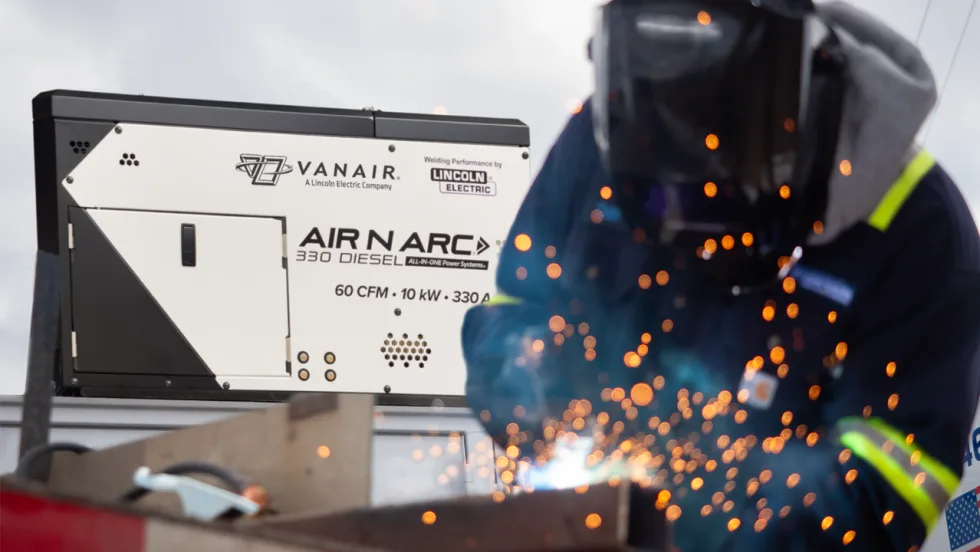
Multitasking: Vanair’s Air N Arc 330 Diesel 60 CFM All-In-One Power System
The Air N Arc 330 Diesel 60 CFM from Vanair consolidates a welder, generator, rotary screw air compressor, battery booster, battery charger, and EV charger into a single 750-pound enclosure driven by one 24.8-horsepower Kubota diesel engine.
Read More →
Buyers Products Awarded Sourcewell Cooperative Purchasing Contract for Snow & Ice Equipment
Buyers Products has been awarded a Sourcewell contract for a wide range of winter maintenance equipment and accessories, including snowplows, municipal plow systems, wing plows, spreaders, and more.
Read More →
Hilltip Introduces the SnowStriker SFT Flex Expandable Box Plow
Hilltip’s new SnowStriker SFT Flex expandable box plow features hydraulically extendable sections that allow operators to adapt the clearing width to changing conditions and applications on the go.
Read More →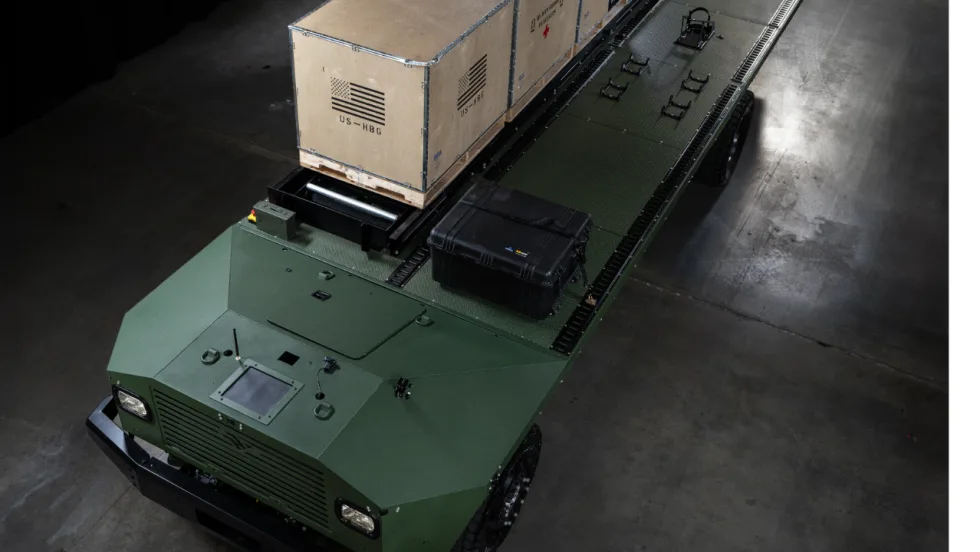
Harbinger Part of Effort to Deliver Autonomous Logistics Capabilities for U.S. Army
American Rheinmetall received an 18-month U.S. Army contract to deliver autonomous, hybrid-powered uncrewed ground vehicles. Harbinger is providing the truck platform for those vehicles.
Read More →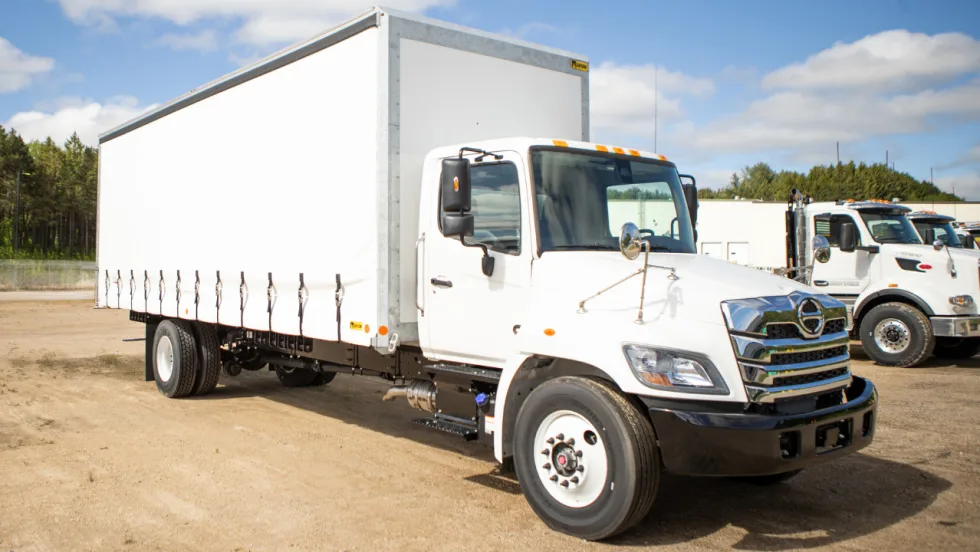
Thinking Outside of the Box: Choosing the Right Truck Body for Your Fleet
Choosing the right truck body can have a major impact on loading efficiency, cargo protection, downtime, and long-term operating costs. Here’s how dry vans, platforms, and curtainsiders compare, plus what fleets should consider before spec’ing their next truck.
Read More →
Fourth Annual Upfit Package of the Year Awards Open for 2027 Entries: One Month Left!
Think your upfit deserves industry recognition? Enter the 2027 Work Truck Upfit Package of the Year Awards before the Sept. 30 deadline. There is less than a month left to get your submissions in!
Read More →
Reading Truck Equipment & Masterack Unite as One of North America's Largest Commercial Vehicle Upfit Networks
Reading Truck Equipment and Masterack have integrated operations to create one of North America's largest and most comprehensive commercial vehicle upfit organizations.
Read More →
Kinedyne Launches Heavy Duty Logistic Shoring Strap
Kinedyne’s new Heavy Duty Logistic Shoring Strap features a patent-pending four-point design to deliver greater cargo stability, increased strength, and easier handling for rolling and shifting freight.
Read More →
Hooklift Bumper Design from Stellar Showcases Strength & Versatility
Stellar Industries’ new bumper for the NZT Series Hooklifts come in two capacity options: the 20K, designed for Class 3 – 6 chassis with a 20,000-pound pull capacity, and the 90K, built for Class 7 and 8 chassis with a 90,000-pound pull capacity.
Read More →
Maxon Lift Awarded the Wabash Platinum Award for Supply Chain Performance
Maxon Lift, a liftgate manufacturer since 1957, received the Wabash Platinum Award for supply chain performance in 2025. Each year, Wabash presents awards to top suppliers for excellence in supply chain performance.
Read More →