




Need a Lift? Remember to Spec the Right Liftgate
The primary reasons to buy a liftgate include reducing the risk of injury and the ability to increase efficiency and productivity. However, there are several points to remember when considering available options.

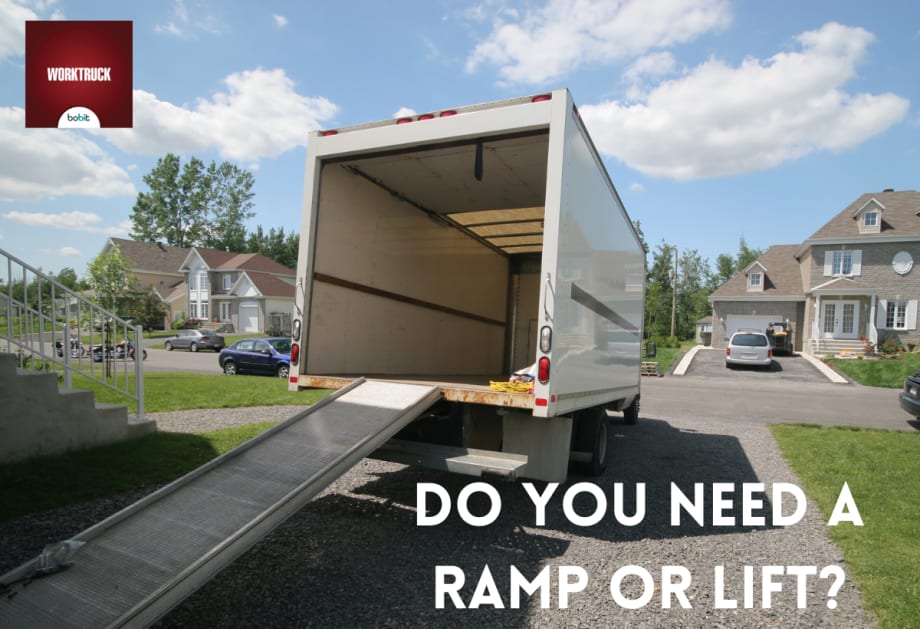
How your trucks are used is an important factor in considering whether you need a liftgate, ramp, or other device.
Photo: Work Truck
A properly spec’ed liftgate equips operators to load and unload heavy cargo from their trucks more efficiently, reducing operator fatigue and injury risk, shortening delivery times, and improving productivity (and profit) per stop. But, with a wide range of types and options to choose from, what should fleet managers consider when selecting a liftgate that best fits the job — and their budgets?
But first, what is a liftgate? At the most basic definition, a liftgate is a device connected to a truck or trailer that raises and lowers to make moving cargo easier.
While the definition might be simple, the options and features of a liftgate are far from basic.
Here are 10 points to consider when spec'ing a liftgate for your truck or trailer, from the type of truck and van that needs a lift, differences in liftgate platform height and size, and so much more.
1. What Type & Size of Truck or Van Needs the Lift?
Is it a pickup truck, straight truck, van, or trailer application being spec’ed? This is the starting point for proper gate selection, because the answer begins to narrow the types of liftgates compatible with the vehicle, according to Jody Lakins, manager of inside sales for Waltco Lift Corp.
For example, if it’s a pickup chassis upfitted with a service body, there’s likely not enough ground clearance to install a stow-away gate (also known as a tuckaway, tuck-under, or fold-away gate), which is stored underneath the truck body.
A more suitable liftgate would be either a conventional liftgate (mounted to the truck frame folding flush to the pickup bed) or a rail gate (where the rails are mounted on the sides of the rear of the body).
If it’s a medium-duty straight truck, there are even more types of gates to choose from. The stow-away is also an option here, along with a rail or cantilever gate (which tilts at various degrees to enable level loading on un-level surfaces).
Heavy-duty trailers usually take a slider (which are large platform gates that store underneath the trailer), cantilever, or rail gate.
2. What is the Truck Body Spec?
If the liftgate is for a dry van body, the body’s width — for example 96 or 102 inches — impacts the liftgate’s overall width and available platform sizes.
Also, determine whether the body will be spec’ed with a roll-up or swing-open rear door.
“With the roll-up door, you can put most any type of gate on,” Lakins said. “But, with the swing door, you have the hinges near the outer edge of the rear of the body that prevents you from being able to install a rail gate because the rails obstruct the doors. So, if you know it’s a swing-door application on a straight truck, you can install a cantilever or stowaway-style gate. With a swing door on a trailer, you can do a stow-away, cantilever, and even a slider gate.”
3. What is the Truck Bed Height?
When looking at bed height, consider both laden (fully loaded) and unladen (empty) bed height because “you’re losing two to three inches when the suspension gives in under the weight,” advised Anton Griessner, vice president of marketing & business development for MAXON Lift Corp.
Lakins agreed. “Even if the truck is empty, once you hang the liftgate, the body is going to squat a little. Then, once you put weight into the truck, it’s going to squat even more,” Lakins explained. “The last thing you want to do is spec a stow-away gate that requires 40 inches of bed height, and you only have 36 inches after the truck is loaded.”
4. How Will the Productbe Transported onto the Liftgate?
Will the product require a pallet jack, dolly, or cart? Will the driver also need to ride on the platform with the cargo? The answers to these questions determine the requirements for platform ride, weight capacity, and dimensions.
5. Do You Need a Standard or Level-Ride Platform?
Does the fleet application call for a level-ride platform (which remains level at each stage in the lifting and lowering process) or a standard ride (which tilts slightly as it approaches the ground)?
“You might have very top-heavy loads, such as bread carts, which don’t work well with the standard ride because they’ll tip over,” said Griessner of MAXON. “Level ride keeps the platform completely level from the truck bed down to the floor.”
According to Lakins of Waltco Lift Corp.: “If you have a tall bread cart on a standard-ride platform, as the gate goes down the platform is going to arch considerably toward the ground and gravity will take over, causing the cart to topple. We would steer the company toward a rail-type lift with level ride and light capacity in this application and go from there.”
Also, consider what kind of liftgate operation switches and controls are most suitable for the application, advised Thomas Walker, president of Anthony Liftgates Inc.
“You might want a handheld remote — there are some wireless and plug-in cord versions available. It’s becoming more common that operators ride the liftgate with the product, so the right type of controls allow operators to manage and keep hold of their load a little bit more easily,” Walker said.
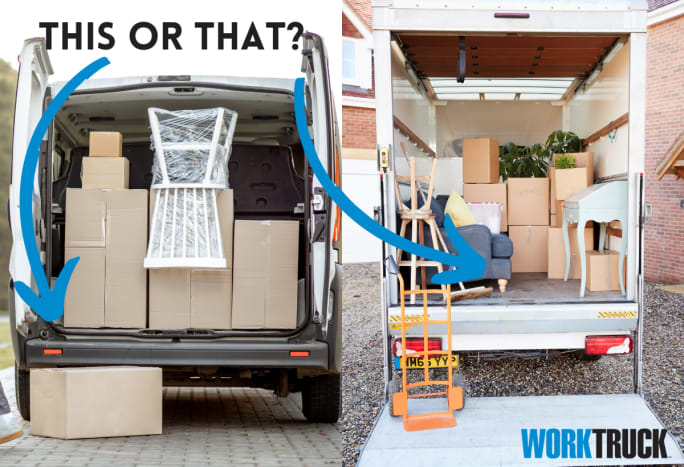
Would your drivers prefer stepping up and down from a high vehicle, or crouching down inside a cramped one, or an easy lift up and down with gear as needed?
Photo: Work Truck
6. What is the Required Platform Weight Capacity?
“A customer may say, ‘I have a 1,500-lb. load, so all I really need is a 2,000-lb. capacity liftgate.’ However, they forget to include the weight of the pallet, pallet jack, driver, or anything else that might be used to handle the cargo on the liftgate,” Griessner cautioned. “An electric pallet jack by itself weighs 300-350 lbs. Then, you need to consider the driver and if there might be a second guy on the platform. So, you start with 500-600 lbs. before considering the maximum load you want to carry there.”
7. What Lift Platform Size Do You Need?
“Make sure you have a large enough platform surface to work from. You don’t want to have a person putting a 4-foot-by-4-foot pallet on a less than 3-foot deep platform,” said Lakins of Waltco. “In our industry, you see this quite a bit because sometimes the fleet is buying based on their budget, not for what the operation actually calls for. In the long run, it’s not good for the company because their employees won’t use the liftgate the way it was intended to and risk injury.”
Also, account for any cargo retention options, which take away usable platform space, Griessner of MAXON recommended.
“If you’ve spec’ed a cart stop, remember that it takes about 16 inches off the tip of the platform. So, make sure the cart still fits on the platform when the cart stop is raised,” he said.
8. What is the Liftgate’s Expected Duty Cycle?
“From an occasional-use standpoint, you would typically go with something that never has to be touched,” Lakins said. “If you’re running a 24-foot box truck — and you need to use the liftgate only once a week — you’re not going to want a rail gate that blocks the back of the truck every time you want to get into the back from the dock to load it. You would select a stow-away type gate because it’s almost like ‘out of sight, out of mind.’ You only use it when you need to use it.”
Since liftgate batteries tend to be charged off the trucks’ engine, the number and frequency of deliveries also impact liftgate specification.
“Where you run into issues is figuring out how quickly you can recharge the batteries,” said Griessner with MAXON. “Suppose you have 25 stops per day, with multiple up and down cycles, and you only have minutes between those stops. You’ll need additional power spec’ed to ensure you have enough battery power to complete the deliveries.”
For heavy, frequent use, Griessner also recommended dual-pump configurations.
“If you have a failure with one pump, you can switch over to the other pump. This way, you can keep the gate going throughout the day, without risking downtime or productivity loss,” he noted.
9. Where Will the Truck be Operated?
In cold weather conditions, Walker of Anthony Liftgates advised fleet managers to consider spec’ing “power down” capabilities.
“Instead of having to rely on gravity to lower the gate in cold weather when [the liftgate] oils typically get thicker (which can cause the liftgate to lower more slowly), fleet managers can specify a ‘power down’ function that basically pushes the liftgate down in colder weather,” he said.
What about trucks operating on hilly terrain, where the liftgate lowers onto steep inclines? “This is where cantilever gates come into play,” said Lakins with Waltco. “The cantilever has a tilt function allowing the operator to tilt the platform at different degrees. If unloading on a hill and the platform starts to come down, the driver can tilt the platform's edge back toward the edge of the truck and keep your cargo from rolling off the platform's edge.”
10. Do You Need a Steel or Aluminum Platform?
According to Griessner with MAXON, an aluminum platform provides a 10% to 15% overall liftgate weight advantage over steel, contributing to increased payload capacity, fuel economy, and productivity.
“With some stow-away gates, where you must manually open and fold the platform, the lighter weight aluminum makes the process easier,” Griessner said.
The aluminum platform also offers anti-corrosion benefits, especially for fleets operating in Snowbelt regions where steel is vulnerable to rust from road salts. But, aluminum comes with a price premium of approximately 20%, Griessner cautioned.
For fleets that prefer the lower cost of steel platforms, but are concerned about corrosion resistance, many liftgate manufacturers offer an option to galvanize the steel platforms to protect them from rust.
The bottom line is that in-depth research and a complete understanding of the vehicles that will be upfitted with liftgates will ensure maximum productivity and return on investment.
Editor's Note: Updated Oct. 19, 2022
More Upfitting
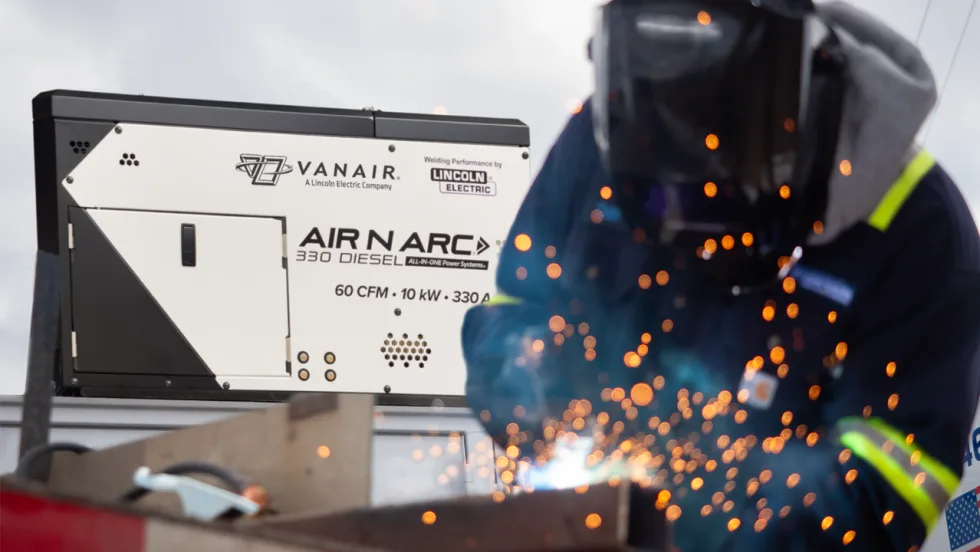
Multitasking: Vanair’s Air N Arc 330 Diesel 60 CFM All-In-One Power System
The Air N Arc 330 Diesel 60 CFM from Vanair consolidates a welder, generator, rotary screw air compressor, battery booster, battery charger, and EV charger into a single 750-pound enclosure driven by one 24.8-horsepower Kubota diesel engine.
Read More →
Buyers Products Awarded Sourcewell Cooperative Purchasing Contract for Snow & Ice Equipment
Buyers Products has been awarded a Sourcewell contract for a wide range of winter maintenance equipment and accessories, including snowplows, municipal plow systems, wing plows, spreaders, and more.
Read More →
Hilltip Introduces the SnowStriker SFT Flex Expandable Box Plow
Hilltip’s new SnowStriker SFT Flex expandable box plow features hydraulically extendable sections that allow operators to adapt the clearing width to changing conditions and applications on the go.
Read More →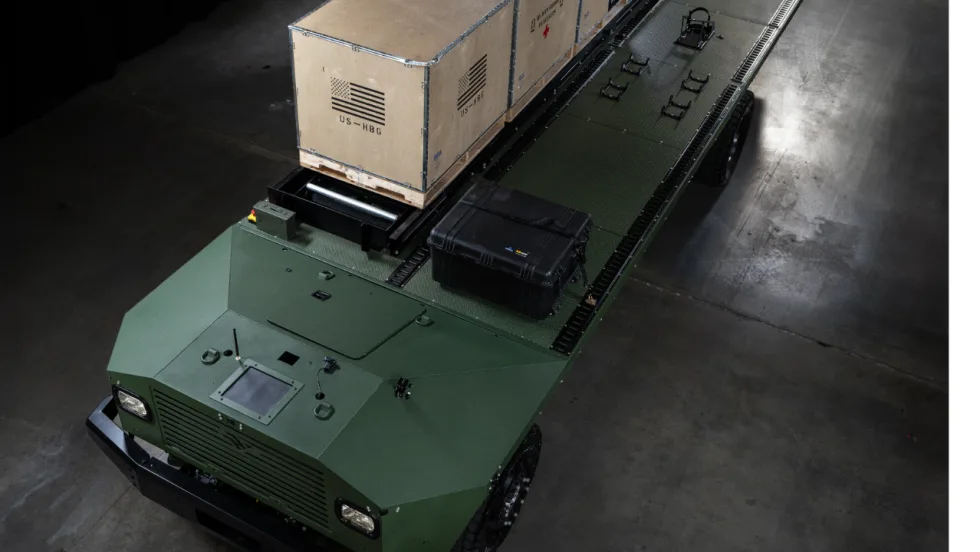
Harbinger Part of Effort to Deliver Autonomous Logistics Capabilities for U.S. Army
American Rheinmetall received an 18-month U.S. Army contract to deliver autonomous, hybrid-powered uncrewed ground vehicles. Harbinger is providing the truck platform for those vehicles.
Read More →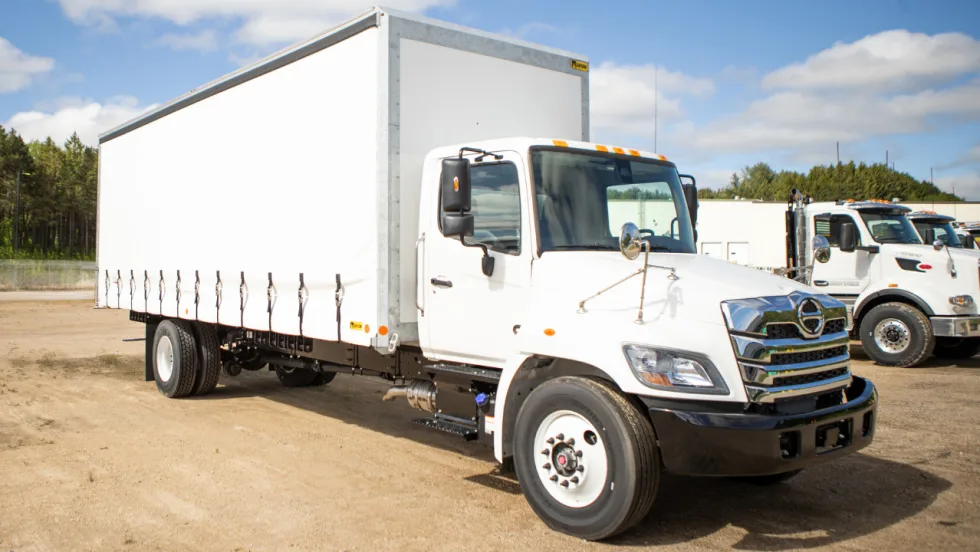
Thinking Outside of the Box: Choosing the Right Truck Body for Your Fleet
Choosing the right truck body can have a major impact on loading efficiency, cargo protection, downtime, and long-term operating costs. Here’s how dry vans, platforms, and curtainsiders compare, plus what fleets should consider before spec’ing their next truck.
Read More →
Fourth Annual Upfit Package of the Year Awards Open for 2027 Entries: One Month Left!
Think your upfit deserves industry recognition? Enter the 2027 Work Truck Upfit Package of the Year Awards before the Sept. 30 deadline. There is less than a month left to get your submissions in!
Read More →
Reading Truck Equipment & Masterack Unite as One of North America's Largest Commercial Vehicle Upfit Networks
Reading Truck Equipment and Masterack have integrated operations to create one of North America's largest and most comprehensive commercial vehicle upfit organizations.
Read More →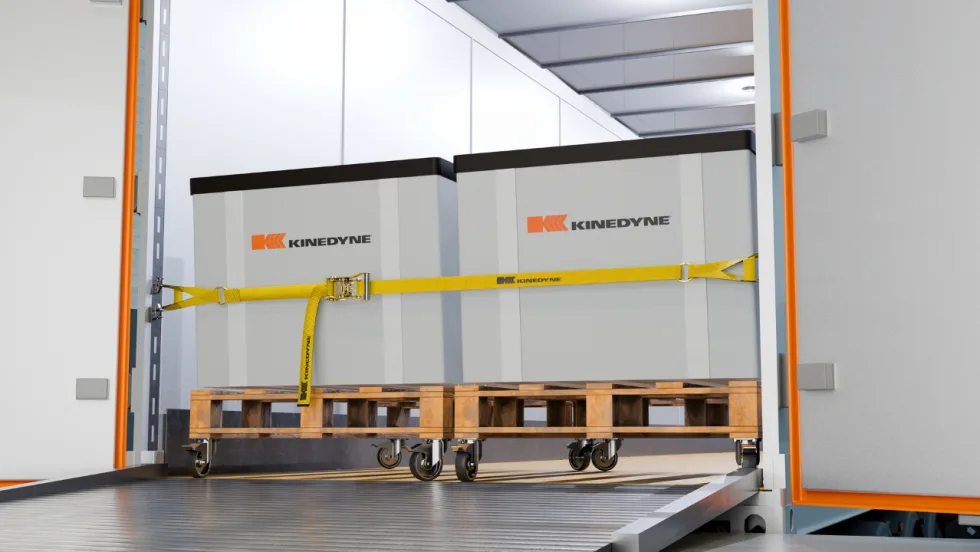
Kinedyne Launches Heavy Duty Logistic Shoring Strap
Kinedyne’s new Heavy Duty Logistic Shoring Strap features a patent-pending four-point design to deliver greater cargo stability, increased strength, and easier handling for rolling and shifting freight.
Read More →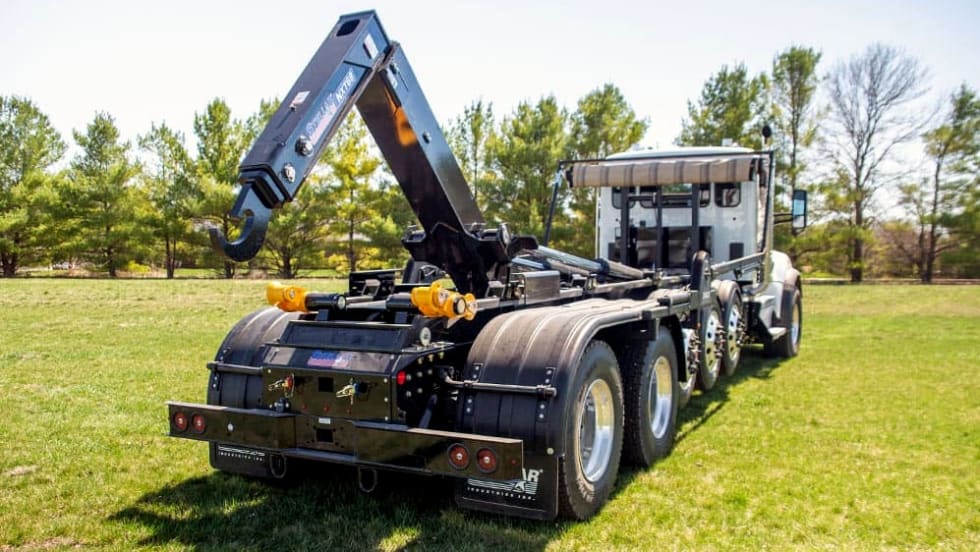
Hooklift Bumper Design from Stellar Showcases Strength & Versatility
Stellar Industries’ new bumper for the NZT Series Hooklifts come in two capacity options: the 20K, designed for Class 3 – 6 chassis with a 20,000-pound pull capacity, and the 90K, built for Class 7 and 8 chassis with a 90,000-pound pull capacity.
Read More →
Maxon Lift Awarded the Wabash Platinum Award for Supply Chain Performance
Maxon Lift, a liftgate manufacturer since 1957, received the Wabash Platinum Award for supply chain performance in 2025. Each year, Wabash presents awards to top suppliers for excellence in supply chain performance.
Read More →