




Is Your Company's Pickup Truck Really a CMV?
The notion that a company pickup truck might be a commercial motor vehicle (CMV) may seem highly unlikely to some.

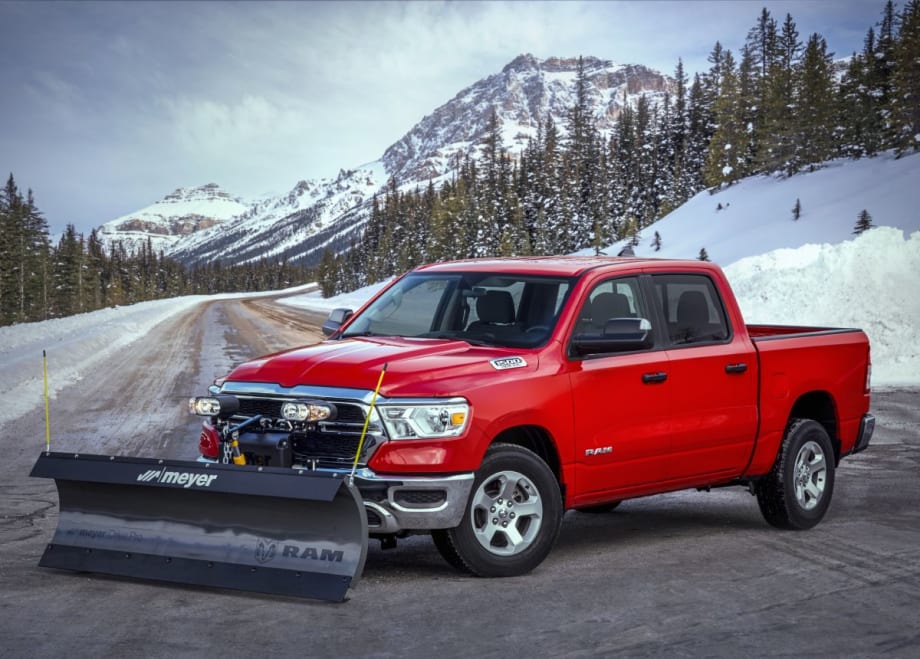
An examination of the Federal Motor Carrier Safety Regulations (FMCSRs) could very well reveal that some smaller fleet vehicles qualify as regulated CMVs.
Photo: Ram
The notion that a company pickup truck might be a commercial motor vehicle (CMV) may seem highly unlikely to some.
Common arguments against classifying a pickup as a CMV often include the truck:
Is not transporting cargo, and
Is too small.
But, an examination of the Federal Motor Carrier Safety Regulations (FMCSRs) could very well reveal that some smaller fleet vehicles qualify as regulated CMVs.
Is it a CMV? How Do I Know?
When determining whether a smaller vehicle is a CMV, consider the following:
Commerce involves anything that moves business forward, such as hauling supplies and tools to and from a worksite, dropping off workers, or just visiting a worksite. If you are not hauling freight for someone else, you can still be considered a private (motor) carrier.
The weight threshold of 10,001 pounds or greater in the CMV definition (§390.5) includes the truck, load, and any attached trailer (including a small utility trailer). This weight is based on the manufacturer’s specifications of the truck by itself or with a trailer. If you exceed the manufacturer’s weight specifications, the actual weight of the vehicle or vehicle combination is used to determine applicability. If the actual weight is 10,001 pounds or greater, you have a CMV.
Any size vehicle hauling placardable amounts of hazmat is a CMV.
If the vehicle only meets the definition when pulling a trailer, you would only be concerned about observance of the safety regulations on those days it meets the definition.
It’s a CMV. Now What?
Even if you find you (mistakenly) didn’t identify your pickup truck as a CMV, all hope is not lost. If you demonstrate a good faith effort to comply with the regulatory requirements going forward, this will lessen the impact during an FMCSA audit.
Pickups that are defined as CMVs must be reflected on your FMCSA registration (MCS-150) as straight trucks. And, you need to adjust your number of drivers, trailers, and vehicle miles traveled.
Next, you must make sure that both the driver and vehicle meet all applicable safety regulations.
The vehicle and any attached trailer are subject to such areas as:
Cargo securement.
Weigh station stops for roadside inspections (depending on the state).
Annual vehicle inspections.
Daily pretrip and post-trip vehicle inspections.
Recordkeeping for repairs and preventative maintenance.
Equipment requirements.
Vehicle standards.
The driver of a regulated vehicle, including a pickup, must have a complete driver’s qualification (DQ) file. If current operators do not have a file, you must generate one as soon as possible.
Never try to hide a violation, such as backdating documents to give the appearance records were created prior. Falsification is frowned upon and carries a hefty price tag for fines. A best practice is to place note in the file indicating the date you discovered the violation and what you are doing going forward so that the violation is not repeated.
For instance, someone within the organization will be given the role of maintaining driver qualification files. You could indicate that all vehicles are being properly classified going forward and only qualified drivers will be assigned to them.
In addition, the operator of the vehicle is subject to hour-of-service (HOS) limits. The company may be required to equip the vehicle with an electronic logging device (ELD) unless it qualifies for one of the exceptions. However, an exception to the ELD requirements may not remove all HOS requirements.
ELDs exceptions used for pickups may include:
Vehicles manufactured before model year 2000, when electronic control modules were not required.
Drivers who are required to use a standard paper log no more than eight days within any 30-consecutive-day period. Examples include “intermittent” or “occasional” drivers and drivers eligible for a short-haul exception in §395.1(e). These drivers may continue to use paper logs when necessary in place of ELDs.
Drivers claiming exceptions such as utility service vehicles and certain agricultural operations.
Don’t Cut Your Fleet Short
When deciding which of your vehicles and drivers are subject to the federal safety regulations, don’t limit yourself to the big rigs. CMVs come in a variety of shapes and sizes, and are used for variety of business activities, not just hauling freight.
Always compare the vehicle or vehicle combination against the definition of CMV in §390.5.
More Operations
A buyer's guide to fleet management software in 2027
Buying fleet management software in 2027 means looking beyond features and price. As fleet operations, technology and expectations evolve, this guide explores what today’s fleet professionals should consider when choosing a system that can deliver value now and adapt to what comes next.
Read More →
How to Build a Lasting Fleet Career by Staying Curious and Connected
Tina Kourakos never planned on a career in fleet. More than 30 years later, she says curiosity, strong relationships, and a willingness to keep learning helped turn an unexpected assignment into a career spanning fleet management and OEM leadership.
Read More →
Think You Know Trucks? Take Our 19-Question Fleet Trivia Challenge
From chicken lights to diesel engines and trucking history, test your knowledge with 19 questions from the 2026 Work Truck Exchange and Heavy Duty Trucking Exchange.
Read More →From Our Partners
Basic Tracking vs Next Generation Fleet Technology
Sponsored by AT&T Business

5 Facts Every Fleet Manager Should Know About Embedded Telematics
Sponsored by Stellantis/Mobilisights
How AI Video Telematics Boosts Driver Safety and Helps to Avoid Unnecessary Costs
Sponsored by Verizon Connect

Charting the 8 Bottom-Line Benefits of Workforce Optimization
Sponsored by Verizon Connect

Where’s My Truck: Inside the Fleet Logistics Work Nobody Sees
Shades of Fleet video thumbnail featuring Lauren Fletcher beside the text “The People Behind the Process, Keeping Fleets Moving,” with fleet vehicles and logistics imagery in the background.
Read More →
Work Truck Seeks Fleet and Industry Insights on 2026 Trends and 2027 Forecasts
Work Truck is seeking insights from fleet leaders and industry partners on the trends that shaped 2026 and what commercial fleets should prepare for in 2027. Participate today!
Read More →
It's 10 p.m... Do You Know Who Has Access to Your Fleet?
Preventing cargo theft requires investment in technology, operational processes, and employee training. In an industry with tight margins, it can be difficult to justify investments whose value is measured by incidents that might never occur.
Read More →
GeoFencing Adds to Your Truck Security Arsenal
Geofencing is a familiar fleet tool today, but its early adoption marked a major shift in vehicle tracking, route monitoring, and the debate over employee privacy.
Read More →
Truckers’ Strike Rumors, New GM Engines, and Hidden Idling Costs Lead This Week’s News
Truckers’ strike rumors, GM’s new 2027 engines, hidden idling costs, racing lessons, IRP rules, and more headline this week’s Truck Chat Weekly Cheat Sheet.
Read More →
Shades of Fleet Wants to Hear From You About Building a Culture of Care
Fleet leaders, we want to hear from you. Share how empathy, trust, and creating space for people can strengthen your team, improve performance, and support retention.
Read More →
What Racing Can Teach Work Truck Fleets About the Work Nobody Sees
Race car driver and mechanical engineer Isaac Johnson shares practical lessons on preparation, relationships, setbacks, and building teams that perform when it counts.
Read More →