



Cost-Cutting Initiatives that Work
One service fleet manager has found several ways to cut costs through the use of data analysis, creative solutions, and use of tried-and-true methods.
by Daryl Lubinsky
March 12, 2018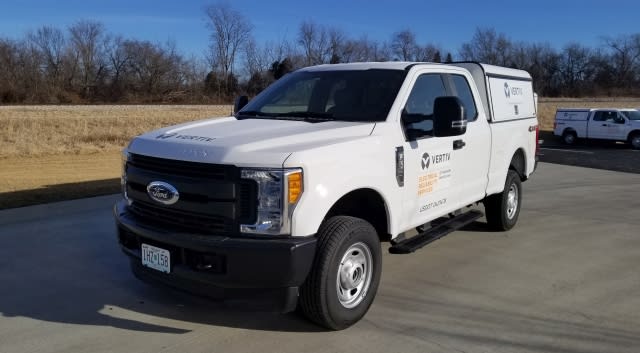
Vertiv operates a number of vehicles, but is currently under contract with Ford for all of its replacement units. (Photo courtesy of Vertiv)
6 min to read
The Columbus, Ohio-headquartered Vertiv fleet was made up almost completely of Dodge Ram trucks with the Hemi V-8 5.7L engine at the time Dave Buhn became fleet operations manager for the company in 2016. Buhn eventually decided to switch much of the Vertiv fleet to Ford F-150 trucks with the 2.7L engine. Lower vehicle acquisition cost was just one benefit of that decision.
“The smaller engine they have in place today, that’s turbocharged and has more horsepower than the Hemi V-8 that we were using,” said Buhn, who oversees a fleet of about 1,800 vehicles.
Vertiv, formerly Emerson Electric/Emerson Network Power, designs and builds infrastructure for data centers that house the storage for computer servers and other systems for such large companies as AT&T, Apple, and Facebook. About 90% of Vertiv’s fleet drivers are engineers who service the data centers and about 10% are sales staff.
The company employs more than 20,000 people and operates more than 25 manufacturing and assembly facilities around the world. The U.S. fleet serves seven different business units with offices in all 50 states.
“I was able to achieve more horsepower with a smaller engine, lighter weight, less fuel, and across-the-board savings on maintenance,” Buhn said. He also noted the new Ford trucks are approximately 700-pounds lighter than the previous trucks because of their aluminum body.
That initiative alone resulted in a 10% annual reduction in maintenance costs. It was one of many cost-cutting and efficiency-related initiatives that Buhn implemented soon after starting with Vertiv.
When he first started with the company, he began working on reorganizing his fleet’s data as it was shown in the computer program of Vertiv’s fleet management company, Element. Then, he worked on a program to reduce the number of different models in the fleet to further improve efficiencies.
That process led to many additional cost-controlling initiatives Buhn would implement in a little more than two years with Vertiv.
Bailment Pool Alleviates Downtime
Vertiv’s fleet includes GM, Chrysler, and Ford vehicles but is currently under contract with Ford for all of its replacement vehicles. The field engineer fleet is mostly cargo vans and pickup trucks, while the sales vehicles are mostly cars and SUVs. Buhn decided to implement a bailment pool at a local Ford dealership, which includes about 30 of the most common vehicles the fleet uses out in the field. He started the system with Ford models and noted that the initiative has decreased fleet vehicles’ downtime and rental costs.
“We can draw from that pool within just a few weeks, which eliminates about 16 weeks of build time from the manufacturers,” said Buhn, who previously managed the fleets for Scotts Miracle-Gro and American Electric Power. Once a Vertiv fleet vehicle comes out of service for maintenance or for collision repair, the fleet brings a vehicle out of the bailment pool for a faster replacement time. Vertiv does not pay for the bailment pool vehicles until they come into service, or until a cutoff time of about eight months, when the company must start paying Ford for the vehicle’s storage costs.
Statistical Analysis Determines Optimal Lifecycles
Buhn’s cost-cutting initiatives did not stop there. Using an Element Fleet Management program, Buhn performed statistical modeling analyses to study when maintenance costs increase related to vehicle depreciation. The analyses help him determine optimal vehicle lifecycles.
“By doing so, can I extend the life of the lease? What is the magic number of replacing vehicles? I’m trying to determine when it is optimal to change out certain vehicles and at what time,” Buhn said.
The Element program shows him the costs associated with his fleet vehicles every month, broken out by model and year.
“You can take different chunks of costs for all different types of vehicles,” he said. “Then you can put all these things on a graph, do a regression analysis, and see where your costs will be in the future.”
At the time he started with Vertiv, the fleet leased vehicles for a term of four years or 100,000 miles. He determined that by using synthetic oil, his fleet could stretch the life of the lease out to five years or 150,000 miles.
“We were replacing vehicles too quickly, and by replacing vehicles too quickly, we were incurring more licensing and titling costs, more sales tax costs, and more interest rate costs by turning vehicles more quickly,” Buhn said. “Every time we would buy a vehicle, the cost for the vehicle was higher, thus the interest rate sales tax turning the licensing and titling was all being done more often and quicker than stretching the payments and the life of the vehicle out a little further.”
Buhn decided to change the fleet’s Element Fleet Management fuel card to a service card that combines fuel and maintenance.
“The service card for fuel and maintenance, and the connection of the national accounts with our fleet management company are all tied together. This bundling saves costs,” he said. “It automatically takes a card out of service when I replace a vehicle, and when a new vehicle comes on board, that card is already being processed and turned on by the time that vehicle goes into service.”
In 2016, the Vertiv fleet paid $25,000 in toll violations. Vertiv managed the toll violations for its drivers who rang up toll costs while driving through toll roads, bridges, and tunnels.
Buhn was able to make some changes to address this issue. Now, the vehicles are registered with the fleet management company in states where toll transponders are used. That means Vertiv pays no toll violations at all.
“My drivers and managers don’t have to go out and register the vehicles, as they are already pre-registered through the fleet management company,” he said.
Focus on Tires & Oil, Lowers Expenses
Buhn implemented a program for his fleet to buy tires only from Bridgestone-Firestone, Michelin, and Goodyear through Element’s national account program.
“Through Element’s national accounts, I can get volume discounts on the number of tires I buy,” he said, adding that the discounts were on the higher-priced tires, but pay off in the long run. “The life of the tires far exceeds the cost of buying lesser-quality tires,” he said.
The fleet also moved to synthetic oils “as much as possible where we increase the life of our engines and vehicles,” Buhn said.
Buhn is working on reducing costs associated with U.S. Department of Transportation (DOT) regulations by switching as many vehicles as possible to under 10,000 pounds GVW. He is also working on determining the need for certain vehicles, as well as the number of vehicles and where they are needed.
“We’re re-evaluating sales vehicles and operations vehicles right now, so we’re in the process of determining whether we need to cut vehicles or ramp up vehicles in certain areas.”
For the vehicles that remain, he tries to make them as functional as possible for drivers.
“Anywhere I can see a benefit to putting in functionality for safety, or navigation systems for our salespeople to make their work life better, I try to do so. I’m not trying to increase the cost of the vehicle astronomically, but if those parameters are in place by the manufacturers where I can see a value and increase the safety and ergonomics and design of the vehicle, I try to put those elements in place as much as possible,” Buhn concluded.
Subscribe to Our Newsletter
More Operations

Automotive Fleet Opens 2026 Personal Use Survey for Commercial Fleet Managers
Less than two weeks left! Commercial and corporate fleet managers are invited to share how their organizations handle company vehicle personal-use policies, charges, and driver eligibility.
Read More →
What Resilient Fleets Do Differently When Conditions Change
Fleet resilience is about more than reacting to disruption. Lauren Fletcher talks with AP Fleet’s Alex Coveney about flexibility, planning, scaling, and what helps fleets adapt when business conditions shift.
Read More →
If We Want the Next Generation in Automotive, We Have to Give Them a Reason to Care
The automotive industry talks constantly about its workforce shortage. But before we can recruit the next generation, we may need to do a better job giving kids a reason to care about automotive in the first place.
Read More →
Ram ProMaster City Under $40K, Truck Tariffs, and AI Maintenance Lead the News
A sub-$40K commercial van, tariff questions, AI-powered maintenance, and a new EV production strategy headline this week’s Truck Chat Cheat Sheet.
Read More →
Bob Adamsky Shares the Fleet Lessons You Usually Learn the Hard Way
After more than 30 years in fleet, Arrow International’s Bob Adamsky has learned that the job is about far more than vehicles. He shares the lessons he wishes every fleet manager could learn a little earlier.
Read More →
Why Fleet Leaders Have to Keep Asking Why
What if the biggest fleet improvements start with one simple question? After decades managing budgets, policies, technology, teams, and some of the largest fleet operations in the business, Jeff Hurrell shares why fleet leaders should keep asking “why” before deciding what comes next.
Read More →
Drones, EV Reality, Truck Production & Smarter Fleet Operations Lead This Month
August’s biggest work truck stories go beyond the vehicle, from disaster-response drones and EV reality checks to truck production, roadside uptime, and smarter fleet operations.
Read More →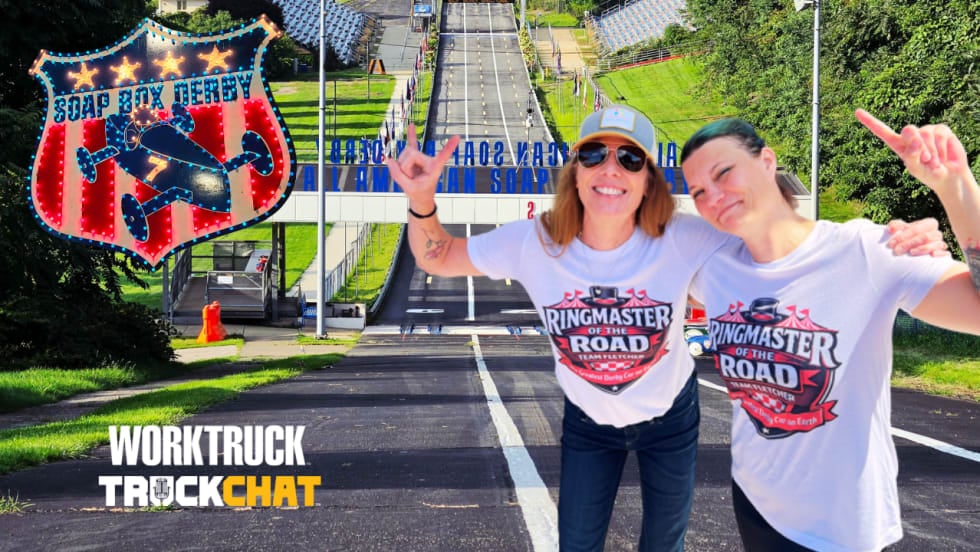
Team Fletcher Takes 2nd Overall at the Corporate Soap Box Derby
Team Fletcher came to Akron as a rookie and left with a win over Team Brown, a second-place overall finish, and $22,000 raised for The Hourglass Foundation. See how race day unfolded.
Read More →
Shades of Fleet Call for Voices: Fleet's Hidden Heroes
Fleet’s hidden heroes are often the ones keeping everything moving behind the scenes. September’s Shades of Fleet is looking for dispatchers, coordinators, parts specialists, and other support pros to share their stories.
Read More →
What is the WEX NAM Summit?
What makes the WEX NAM Summit different from other fleet industry events? It's a meeting of the minds that brings fleet and mobility leaders together to discuss emerging trends, AI, new solutions, best practices, and the future of the industry.
Read More →