




20-Point Checklist for Proper Truck Selection
The challenge in selecting the right truck is to balance sufficient capability with a price point that fits within an ever-tightening budget. Here are 20 suggestions that can be used in proper truck selection.


In today’s economic environment, fleet managers are under increasing pressure by senior management to thoroughly justify any new-vehicle purchase.
Why do we absolutely need this truck right now? What is the business case for it? If we need a new truck, do we really need diesel as we’ve always spec’ed or will gasoline do the job? Is a full-size pickup really needed or would a mid-sized, more fuel-efficient truck suffice? Do we use four-wheel drive enough to justify the added expense compared to two-wheel drive?
The operative word here is "need." The challenge is to balance sufficient truck capability with a price-point that fits within an ever-tightening budget. Therefore, what you’ve always done to spec trucks may not work as well today.
How do you achieve a balance? The key is to focus on what is absolutely needed in a truck to perform a specific job — nothing more, nothing less. Whether you’re writing specs for light-duty trucks, medium-duties, or both types, here’s a 20-point checklist to help guide your decision-making.
1. The Right GVWR
Gross vehicle weight rating (GVWR) is the maximum amount of total vehicle weight, including the weight of the truck and its entire payload (equipment, fuel, drivers, and cargo) a truck is able to carry, start, and stop safely as determined by manufacturers.
What GVWR should you focus on? Suppose you plan to haul six pallets of stone on a flat bed. Each pallet weighs 1,800 lbs. The net payload requirement, therefore, is 10,800 lbs., plus the weight of body. If the flatbed weighs 2,000 lbs., the gross payload is 12,800 lbs. If the weight of the truck, driver, and fuel is estimated at 9,000 lbs., your total chassis and payload is approximately 21,800-lb. gross vehicle weight (GVW). In this case, you’ll look at a minimum of 22,000 lb. GVWR.
2. Trailer Requirements
Will your truck tow a trailer? What is the total weight of the trailer and its payload? This addresses gross combination weight rating (GCWR) requirements — the maximum allowable weight of truck and payload combined with the trailer and its contents.
Does the truck’s GCWR fit your requirements? Sometimes, adjusting the engine, transmission, or even rear-axle ratio selection will gain the needed GCWR.
3. Gasoline vs. Diesel
Which is the best engine choice for your fleet? As a general rule of thumb, if you plan to run the vehicle 25,000 miles or less per year, gasoline may be the more economical option. However, run your own fuel economy analysis to confirm for your specific situation. If, for example, the diesel option costs $8,000 more up-front than gasoline, how many months (or years) will it take to recoup the investment in diesel, based on your annual miles?
In addition, your trailer requirements or aftermarket equipment specification may require a diesel engine, regardless of actual annual mileage.
4. Diesel Engine HP/Torque Requirements
This requirement primarily applies to 25,950-lb. GVWR trucks and larger. These size trucks have more than a dozen horsepower (hp) and torque options from which to choose. If the engine is underspecified, you face performance and potential premature maintenance issues. If you overspec, you pay a much higher cost per unit without a corresponding return on investment. How do you strike the right balance?
In general, higher hp and torque are spec’ed for over-the-road applications with heavy loads or pulling a heavy trailer. Lower to mid-range hp and torque applications include pick-up and delivery, where the truck does not need to achieve full highway speed often or is consistently using slower speed functions, such as with an asphalt spreader or dump body.
5. Transmission Selection
Should you go with manual or automatic? If you opt for the automatic transmission, what size and capacity will match your engine selection? Do you need a power take off (PTO) included in your spec?
Another consideration: Who will drive the truck? Do you have a specific driver in mind or will there be multiple drivers? If one driver, what is that driver’s skillset? Can he or she operate proficiently with manual transmission? Answers to these questions determine the transmission selection.
6. Fuel Economy
This factor is especially important today given the consistent increase in fuel costs. For trucks under 8,500 lb. GVWR, fuel economy ratings can be found on www.fueleconomy.gov, created by the U.S. Department of Energy and the U.S. Environmental Protection Agency. Search by specific model or compare multiple models by clicking on "Compare Side-by-Side." Select a model-year and the site will guide you from there.
Evaluating fuel economy for trucks above 8,500 lb. GVWR is more difficult. You’ll need to rely on more anecdotal evidence because so many factors affect fuel economy, depending on the truck’s application and daily load requirements. Contact three to four peers in your industry who use the makes and models you’re evaluating and gain a feel from them regarding the real-world fuel economy they’re achieving.
7. Cab Configuration
How many people, including the driver, will the truck carry? Most manufacturers offer three pickup configurations: Regular Cab (fits up to three passengers), Extended Cab (fits up to six passengers, albeit snugly), and Crew Cab (fits up to six passengers, more comfortably). The Extended Cab typically makes sense if the truck will usually carry three or fewer people, but may need the option to transport more people on occasion or require extra storage space in the cab. The Crew Cab is a good fit to transport more than three people on a regular basis.
Another thing to keep in mind: In some cases, the cab configuration limits the bed or body size installed on the truck or chassis. Therefore, you’ll need to balance the cab size with body length.
8. Truck Cab Type
This consideration applies to Class 3 and larger trucks that offer the choice of cab-overs (also known as tilt-cabs or low cab forward) and conventional cabs. Examples of cab-overs include Isuzu NPR, Chevolet W-Series, Nissan UD, Mitsubishi Fuso, and Ford Low Cab Forward. Conventional cabs include chassis such as Ford F-550, Chevrolet Kodiak C5500, Hino 185, and International 4100, among others.
9. Bed Length & Chass Cab-to-Axle
With full-size pickups, the choice is between a standard length pickup bed (6.5 feet) or long bed (8 feet). Some Crew Cab models offer one bed option, usually just under 6 feet, depending on truck class and manufacturer. What size bed do you need?
In terms of chassis cabs, your truck body requirements dictate the length. Most upfitters describe length in terms of cab-to-axle (CA). For example, a 12-foot flat bed typically will require an 84-inch CA; 14-foot takes a 108-inch CA; 16-foot, 120-inch CA; and so forth.
10. Truck Tire Size
For example, if you’re running an industrial rollback to carry Bobcats and other heavy equipment on the rear, your truck’s tire size directly impacts the load angle of the body as it tilts. If the tires are too tall, the tilt angle will be too steep to roll the equipment up.
Another issue is the height of the truck dock. Typically, a Class 6 or larger truck with 22.5-inch wheels and tires requires a high dock. Choose the tire size that works best for your application.
11. Real-Axle Ratios
The rear axle ratio represents the relationship between driveshaft revolutions (driven by the transmission) and rear axle revolutions. In medium-duty trucks, this gear ratio ranges from as low as 2.69:1 to as high as 7.17:1, depending on the truck class, make and model, and rear axle capacity.
Will your truck run primarily over the road or operate short distances at a job site? This factor helps evaluate approximately what axle ratio is required. The typical rule of thumb is the higher the ratio, greater pulling power is gained, but at the expense of fuel economy. The inverse often holds true. Lower the ratio to improve fuel economy, but you’ll sacrifice pulling power. Find the ratio that best fits the balance you’re trying to achieve. (See Specing Rear Axle Ratios sidebar.)
12. Two- or Four-Wheel Drive
Will you operate the truck off-road enough to justify a business case for the $3,000-$4,000 greater investment in four-wheel drive (4WD)? Some vocations, such as underground utility contractors, require 4WD. Keep in mind that availability of 4WD is often limited by truck class and manufacturer. If 4WD is a must for your application, ensure that your GVWR requirements fit what’s available. You may need to reduce payload capacity truck size to gain the 4WD option.
13. Scheduled Maintenance Intervals
What is the typical oil change interval? Some trucks offer an oil-life monitor that alerts drivers to change oil based on driving conditions instead of a set number of miles. What about coolant change intervals? How often will the air or fuel filters need changing? Your answers to these questions will help estimate and compare truck maintenance costs.
14. Service Network
How extensive is the dealer network to handle service work and provide parts? How far away is the nearest truck dealer to your operations? The farther away you are from a truck manufacturer’s dealer support, the greater the challenge in getting warranty work done in a timely fashion.
15. Manufacturer's Warranty
What are the warranty mileage and time limits? What exactly is covered? The transmission warranty may be different from the engine warranty, which may be different from the bumper-to-bumper. Ask your truck dealer or manufacturer’s rep for a copy of the warranty statement for the truck you’re considering before purchasing to eliminate unwanted surprises. Also, investigate the warranty terms for roadside assistance in case of breakdown. The coverage here is often different from the standard warranty. What is offered? How long is it in effect?
16. Safety
What safety specs does your company require? Airbags, spot mirrors, daytime running lamps, and traction control are just a few options to consider. A truck’s turning radius is important to assess maneuverability and crash avoidance. Another safety factor is visibility. How long, in terms of feet, is the sightline from driver to ground? Truck OEM material should make this stat available. The shorter the sightline, the better equipped the driver will be to see children who might be playing in neighborhood streets, for example.
The bottom line here is that added safety features may lower operational costs (including repairs, body damage, and liability) and, thus, lower insurance premiums. Check with your insurance company to determine how specific safety features may impact your premiums.
17. Brake Systems
This option is important when spec’ing medium duties. Should you opt for hydraulic or air brakes? Air brakes provide greater stopping power, but come at a higher price, adding as much as $4,000 or more to the total truck cost. In some cases, however, air brakes are a necessary investment. Which will best fit your application and budget? A good starting point is to consult your truck OEM rep for feedback.
18. Fuel Tank Configurations
This specification is relevant with chassis cabs. Suppose your application requires a tuck-under liftgate with a 48-inch platform. If you select a chassis with a rear, in-frame fuel tank, you may discover the rear tank interferes with the size platform lift gate you require. In this case, you need to spec a side-saddle tank to fit that gate. Confirm what works best with your upfitter.
19. Rear Suspensions
Too much suspension rigidity for the wrong application may cause driver and crew discomfort, leading to lower employee morale and job productivity. Yet, if you intend the truck to handle constant, heavy loads, you may need to spec a stiffer, heavier-duty suspension or risk premature performance and maintenance issues. Select the suspension that best matches your application.
20. Acquisition & Lifecycle Costs
Which manufacturer offers the best price for the truck spec you need? How does the price fit in the context of other factors for comparison, such as warranty, maintenance intervals, dealer network, etc.? What are resale costs relative to similarly spec’ed trucks? In other words, does this truck offer the best overall value over the time you will own and operate the truck or just the lowest price at the time of purchase?
The Bottom Line
When selecting the right truck to do a job, several factors must be considered that address both capability and cost. The objective is to strike the right balance between the two. Then, when you’re asked to justify a vehicle purchase request by senior management, you’ve gathered the information required to present a compelling case.
More Vehicle Research
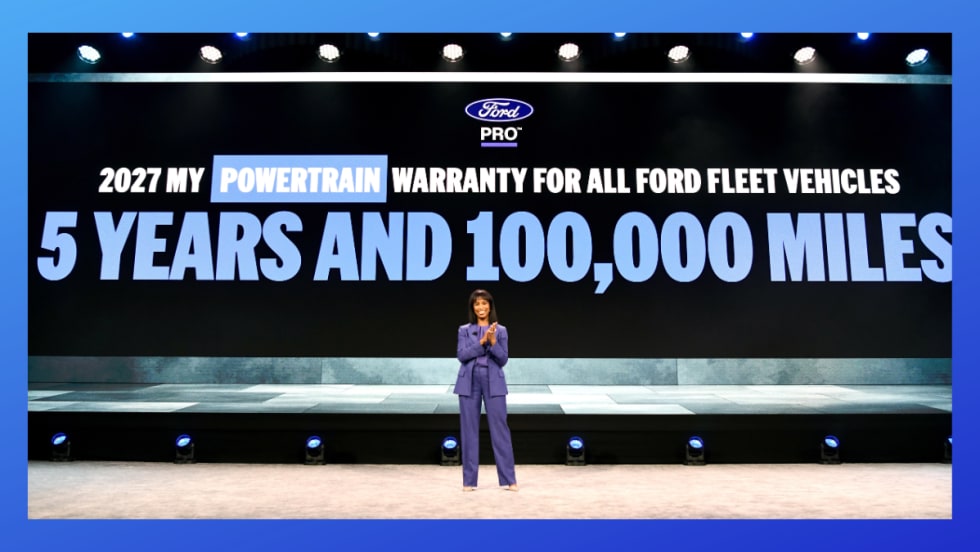
Ford Pro Extends 5-Year/100,000-Mile Limited Powertrain Warranty to Ranger, Maverick and E-Transit
Ford Pro expands its 5-year/100,000-mile Limited Powertrain Warranty to the 2027 Ranger and E-Transit for eligible fleet buyers.
Read More →
Are You Tracking Your Fleet's True Total Cost of Ownership?
Bobit Business Media surveyed 190 fleet professionals and found that while most fleets are tracking costs, fragmented systems and data gaps are keeping true TCO visibility out of reach. With rising pressure to control spend in an increasingly volatile environment, the gap between what fleets think they know and what the data actually shows is wider than you might expect. See how your peers are managing costs today and where the industry still has room to improve.
Read More →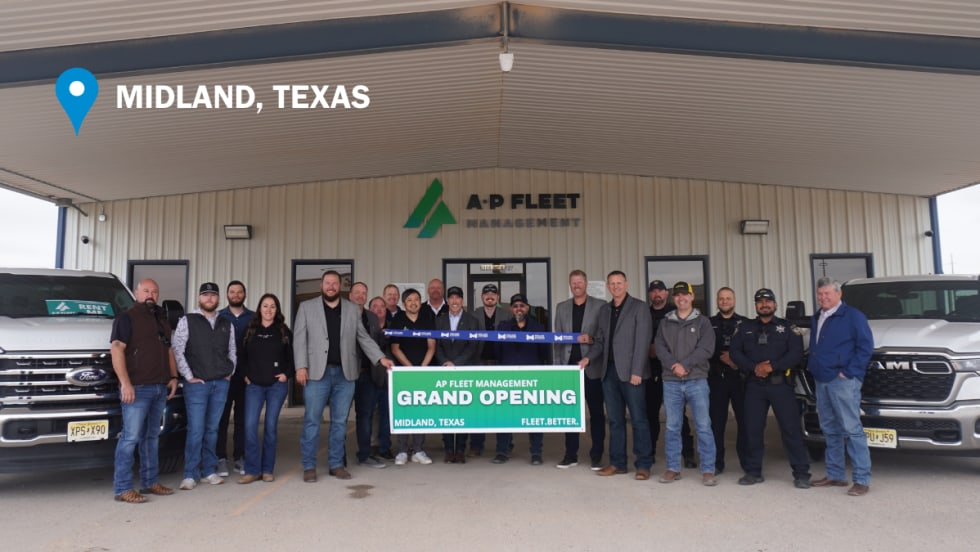
AP Fleet Management Opens Midland Hub to Expand Access to Upfitted Work Trucks in Texas
AP Fleet Management’s new Midland location expands access to bucket trucks, crane trucks, vans, and faster upfitting services for Texas fleets.
Read More →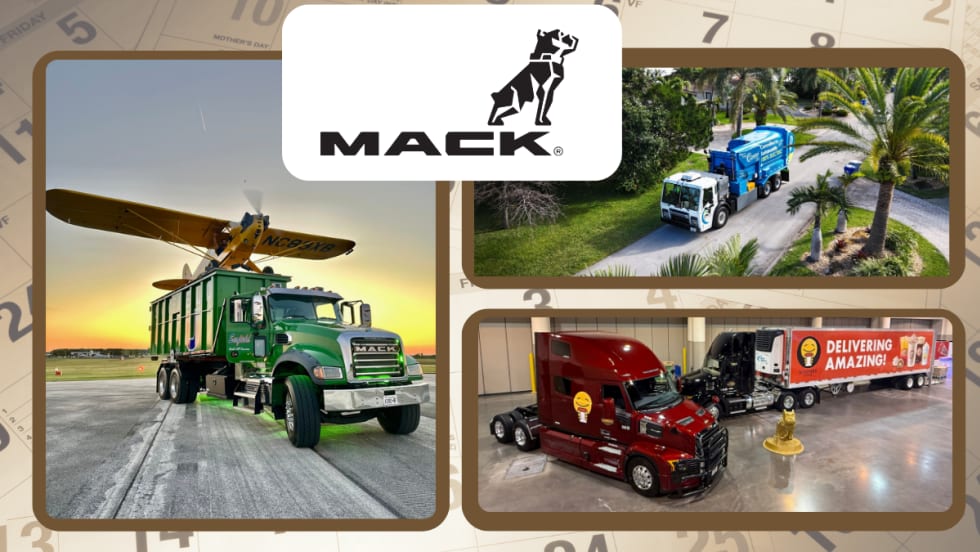
Mack Trucks Announces 2027 Mack Calendar Contest Winners
From a 1954 L Model still on the job to battery-electric trucks like the LR Electric and MD Electric, this year’s Mack Trucks Calendar Contest winners showcase the full range of capabilities, models, and years.
Read More →
Why the PALFINGER ETC MH 40 IH Is More Than a Bucket Truck
Take a closer look at the PALFINGER ETC MH 40 IH material handler, a 40-foot articulated telescopic aerial lift designed for utility, telecom, sign work, or any task that requires an elevated work platform with a jib.
Read More →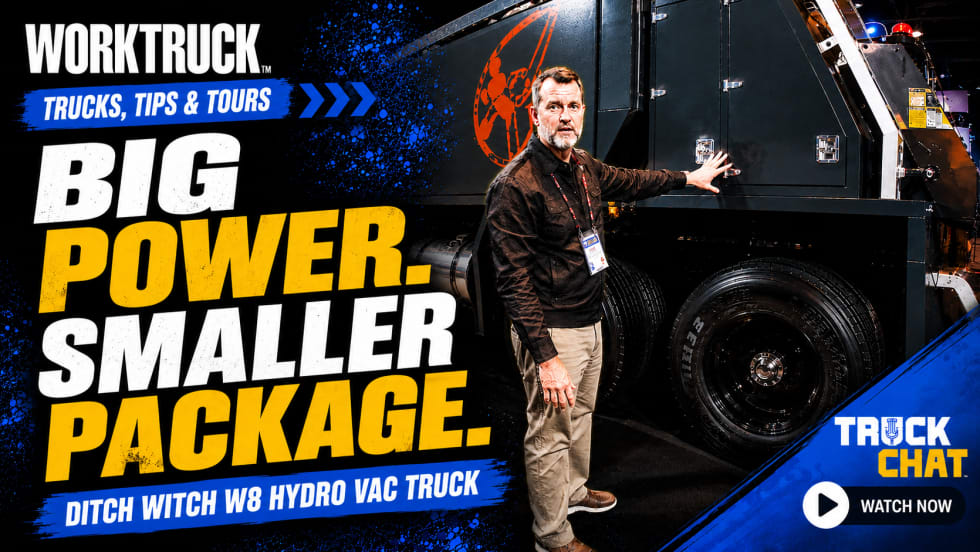
Ditch Witch W8 Hydro Vac Truck Walkaround
The Ditch Witch W8 hydro vac truck delivers serious hydro excavation performance in a more compact package than the larger W12. This walkaround video explains the Warlock Series’ direct-drive blower system, cyclonic filtration, safe excavation technology, and powerful vacuum performance.
Read More →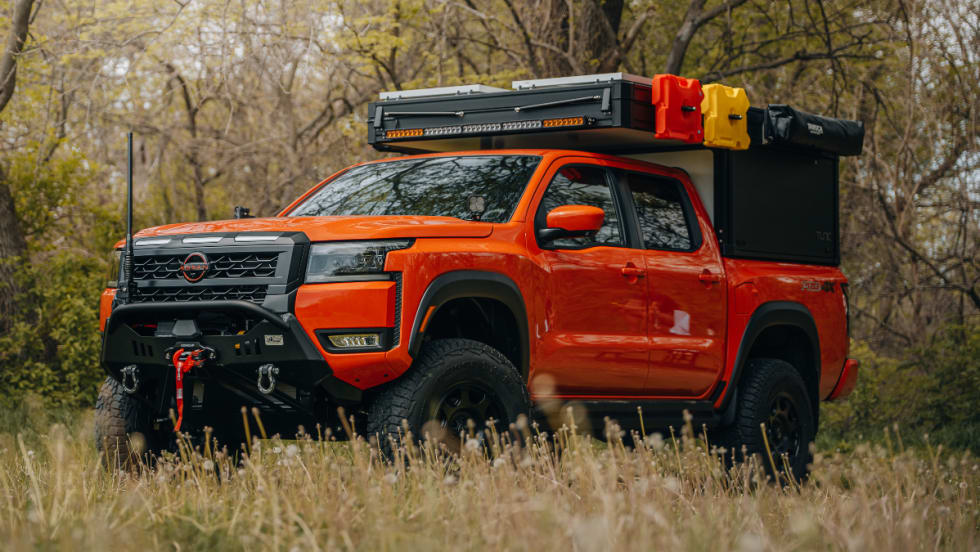
Nissan Frontier Overland Build Spotlights Real-World Truck Capability
Nissan’s latest Frontier build is aimed at overlanders, but the rugged platform and durability story could resonate with fleet buyers too.
Read More →
Why Fleet Managers Are Replacing Departmental Vehicles with Shared Motor Pools
Departmentally assigned vehicles often create hidden costs through underutilization, poor visibility, and increased administrative burden. This white paper explores how shared motor pool strategies help fleets reduce costs, improve accountability, and optimize vehicle utilization.
Read More →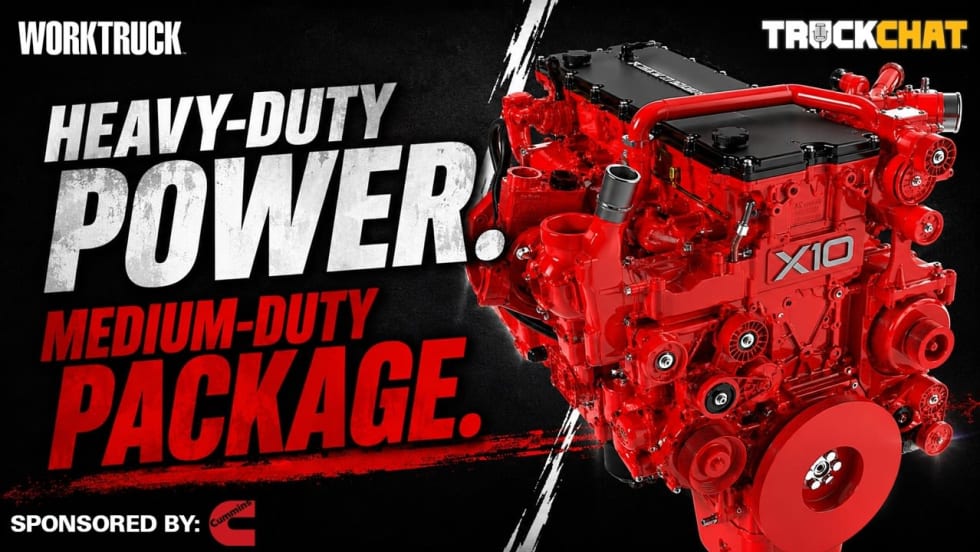
A Smarter, Right Sized Workhorse: The Cummins X10 Engine
Cummins’ new X10 engine delivers heavy-duty power in a lighter, more efficient package. Watch to learn more about specs, torque, PTO capability, and more.
Read More →
Work Truck Solutions Supports Ford Pro Commercial Vehicle Center Program
Ford Pro now requires all dealers participating in its 2026 CVC Program to maintain an active Work Truck Solutions subscription. Three different subscription packages are available to equip every dealer with the specialized tools they need.
Read More →