





Dig Deeper: Purolator Hits Road as Electric Courier
Purolator Courier Goes 'Green' with New Electric Delivery Vehicle
Urban package delivery routes usually include lots of stops and starts, but require relatively little long-range driving. Purolator Courier is developing the Quicksider EV, an electric green solution.
January 1, 2008
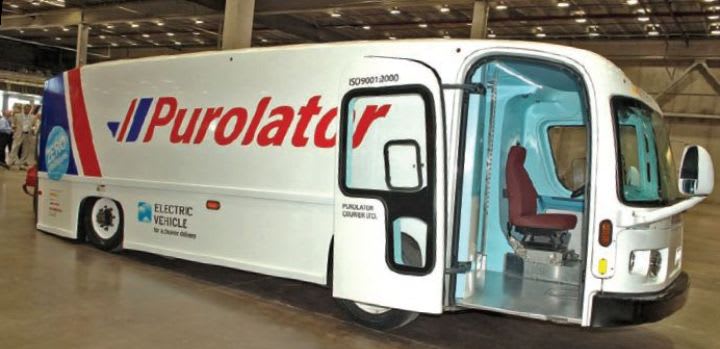
The Quicksider EV delivery van displays its kneeling capabilities during its introduction.
Photo: Purolator
3 min to read
Contrary to popular belief, urban package delivery vehicles spend more time parked while making deliveries or doing pickups than they actually spend on the road. As it turns out, the average delivery vehicle only travels 23 miles a day. Purolator Courier’s new electric vehicle (EV), the Quicksider, fits this kind of driving.
While operating, Purolator’s Quicksider EV is a zero-emission vehicle. Emissions associated with charging its battery are expected to be fewer than 20 percent of those produced by a conventional diesel-powered, curbside delivery vehicle. The Quicksider EV will be tested and evaluated for performance on the streets of Toronto.
Preliminary design work on the Quicksider EV began at Toronto-based Unicell Limited in 2000. In 2003, Purolator joined the development team to provide key insights and recommendations to make the electric vehicle more effective for use in a courier environment.
After analyzing courier routes and terminal operations with Purolator drivers, managers, and engineers, Unicell enhanced its original designs with features to help maximize efficiency in delivery operations.
Drivetrain systems manufacturer ArvinMeritor joined the project team in 2004 to design and build the electric axle drivetrain, regenerative braking system, and system integration of motors, gears, and controls for a working prototype vehicle. The Transportation Development Centre of Transport Canada has also supported the project throughout its development.
High Features & Low Maintenance
The Purolator Quicksider EV combines several operation-enhancing features, including automatic doors, a tight turning radius, and a pneumatic suspension enabling the truck to kneel to curb level to unload packages. With its advanced electric drivetrain, the Quicksider EV is expected to require less maintenance than a conventional diesel-powered curbside delivery vehicle.
The 16-ft. fiberglass-bodied van is built on a stainless-steel chassis and uses a sodium nickel chloride battery that provides a 40-mile range and top speed of 65 mph. Cargo capacity is 10-percent more than a conventional 16-ft. step van. The electric motors in the powertrain deliver a combined 230 hp and are currently powered by a sodium nickel chloride battery pack. Another partner in the program, Electrovaya, is working on a lithium-ion battery pack for testing in the Quicksider EV.
With one-piece body aerodynamics, the van shows half the drag of conventional delivery vehicles, a feature that leads to greater mileage. In fact, during the testing, (traditionally performed by taking a vehicle up to 37 mph, placing it in neutral, and measuring the distance before it stops), officials had to double the length of the testing area to get results.
In addition to the Quicksider EV prototype, Purolator added 30 new hybrid-electric vehicles (HEVs) to its curbside delivery fleet across Canada, with 28 in Vancouver, one in Ottawa, and one in Montreal. The vehicles join Purolator’s national green fleet, which includes 19 HEVs and one fuel-cell hybrid electric vehicle, in service in Toronto since 2005.
Subscribe to Our Newsletter
More Green Fleet

Fleet Forward Conference Introduces One-Day Passes for 2026
New one-day registration gives fleet professionals the flexibility to attend Tuesday, Wednesday, or Thursday, with passes available for $199 through Sept. 18.
Read More →
CALSTART Rebrands as Catalyst Mobility, Will Combine with Forth in 2027
CALSTART has rebranded as Catalyst Mobility and will combine with Forth at the start of 2027. The new organization said it is poised to become one of the world's largest, strongest, and most impactful clean transportation nonprofits.
Read More →
Electric Truck and Charging Programs to Boost Sustainability at NY & NJ Ports
Together, the Port Authority of New York and New Jersey and CALSTART will electrify drayage and terminal operations serving the East Coast’s busiest container port. A pair of incentive programs totaling $45 million has launched to accelerate adoption of zero-emission drayage trucks and terminal tractors.
Read More →
Xos Hub Surpasses One Gigawatt-Hour of Energy Delivered in the Field
A single Xos Hub has surpassed one gigawatt-hour of energy across more than 33,600 charging sessions in the field, demonstrating performance that supports Xos' expansion across new products and markets.
Read More →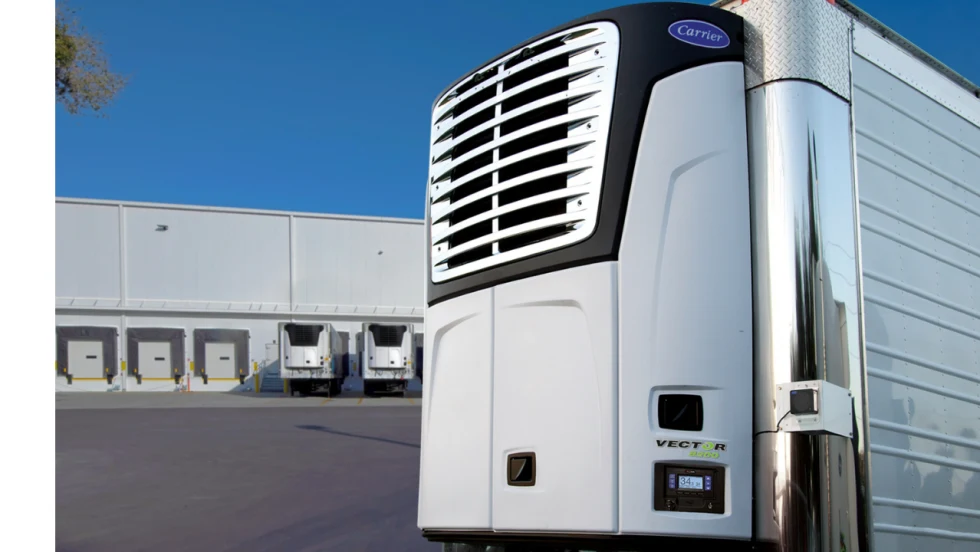
Carrier Transicold Launches All-Electric Vector 8200 TRU for Diesel-Free On-Site Cold Storage
Carrier Transicold’s first engineless multi-temperature TRU helps fresh- and frozen-food fleets add supplemental cold storage capacity during seasonal peaks.
Read More →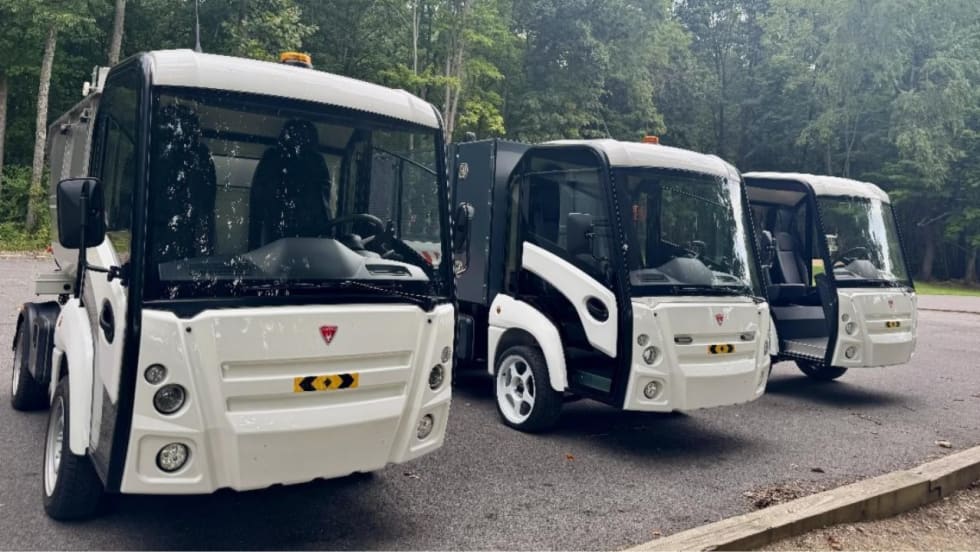
Narro Trucks Introduces Electric Utility Vehicle
Narro Trucks officially launched its operations on Aug. 20 and hosted a ride and drive to showcase its electric truck, which will be produced in Virginia.
Read More →
Samsung SDI Takes Full Control of GM Battery JV as Indiana Plant Pivots to Energy Storage
Samsung SDI is taking full control of its Indiana battery plant with GM, marking a major shift from the EV-focused joint venture Charged Fleet first covered in 2023.
Read More →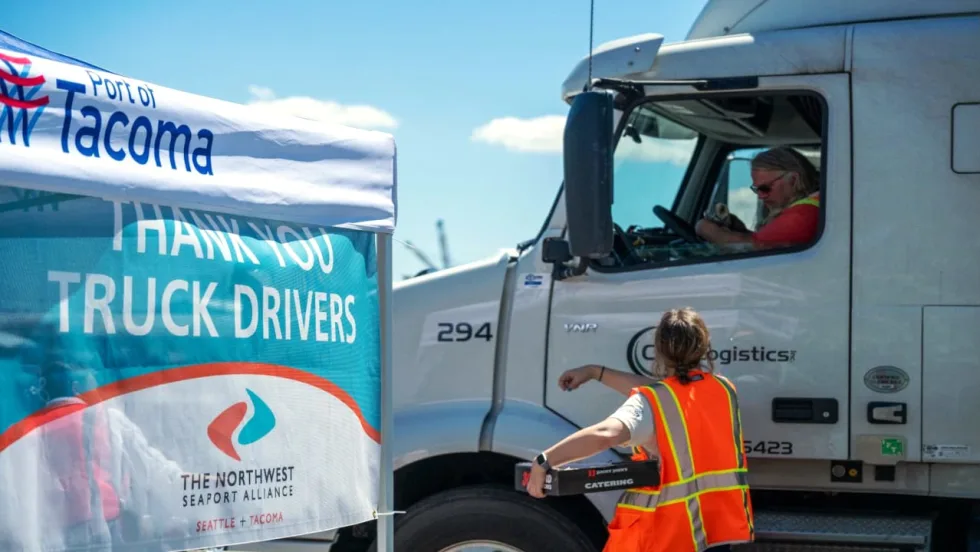
NWSA Taps CALSTART to Administer Zero-Emission Drayage Assistance Program
CALSTART will provide free technical assistance services to drayage fleets serving the Ports of Seattle and Tacoma and looking to transition to cleaner technologies and help decarbonize freight hubs.
Read More →
EV Fleet Reality Check: What Operators Wish They Knew Before Electrifying Their Work Vans
Electric work truck upfits bring new compatibility questions. Learn how parts availability, OEM guidance, power demands, and route planning can affect fleet performance.
Read More →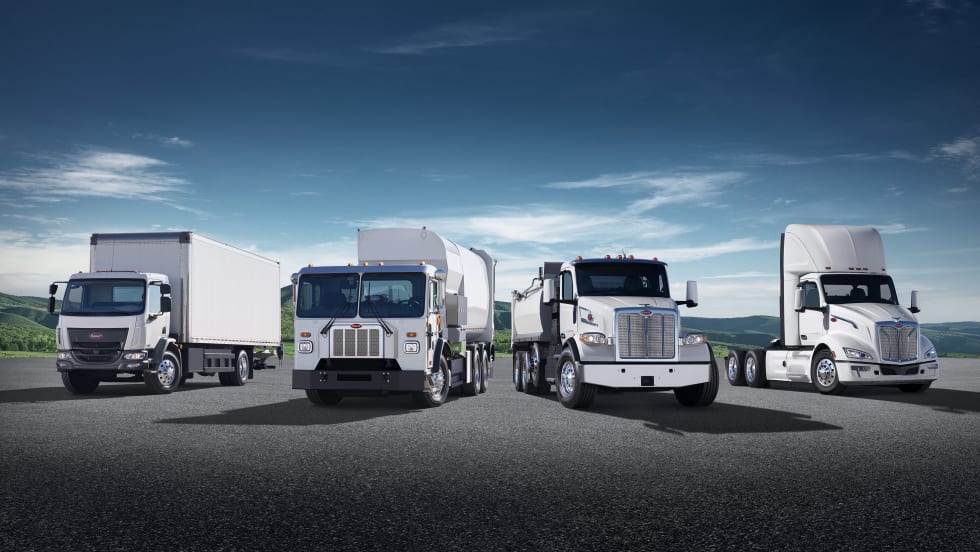
Peterbilt Expands Sourcewell Partnership with Electric Vehicle Lineup
Peterbilt Motors Company’s cooperative purchasing agreement with Sourcewell and its Canadian partner, Canoe Procurement Group, now includes including Peterbilt's battery-electric vehicle lineup.
Read More →