




Fleet 101: Getting the Most Out of Your ePTO Today and Tomorrow
The Value of Choosing the Right Hoses and Fittings to Optimize Thermal Management of EVs
Learn how smart thermal management can boost EV performance, safety, and longevity with practical tips for hose sizing, fittings, and system design.
by Steve Powell, Jeff Berger & Nathan Green of Parker Hannifin
May 15, 2025
Thermal management is critical to the performance, safety, and longevity of electric work trucks, especially when operating in tough conditions.
Photo: Work Truck
8 min to read
As manufacturers look for ways to electrify their fleets, one of the biggest stumbling blocks continues to be concerns around thermal management. Such challenges have a major impact on the selection and design of hose and fitting systems, as these components play a key role in ensuring peak performance and the safety and durability of electric vehicles (EVs), regardless of the ruggedness of the terrain.
Thermal management in electric vehicles (EVs) serves to regulate the temperature of the vehicle's components to ensure they operate within their optimal temperature ranges. Such management is crucial for an EV’s safety and drivability. The process for doing so is very complex, as each component must be evaluated to ensure it operates at the right temperature to keep components working optimally.
Batteries, in particular, need to operate within a designated temperature range and may need to be cooled or heated, depending on the situation. Operating outside the proper temperature range can have an adverse effect on the battery’s range, fuel economy, and how quickly it can be charged. In addition, the electric motor and all of the power electronics also need to be cooled efficiently.
Standards Driving EV Progress Nationwide
Many of the industry’s efforts to govern electric vehicles have been led by the California Air Resources Board. However, the work in California is increasingly driving activities elsewhere, including those by state and local agencies. By 2040, only zero-emissions medium- and heavy-duty vehicles will be allowed. These deadlines and standards may be relaxed, but for now, the industry is working toward these goals.
Air quality is especially concerning in areas near ports because these areas often represent the worst air quality in a state and are near neighborhoods that typically consist of impoverished populations. In various states, specific legislation has been developed to address these areas.
Efforts are also underway by multiple states to collaborate on relevant legislation issues to form the largest-ever national partnership focused on air quality. While new standards are being developed for thermal management systems, existing standards can be used, many of which originated in automotive and industrial markets. Standards such as ISO 1179 for proper leak-free fitting styles or SAE J20R for hoses to convey thermal fluids can be utilized to ensure that the power electronics are all protected.
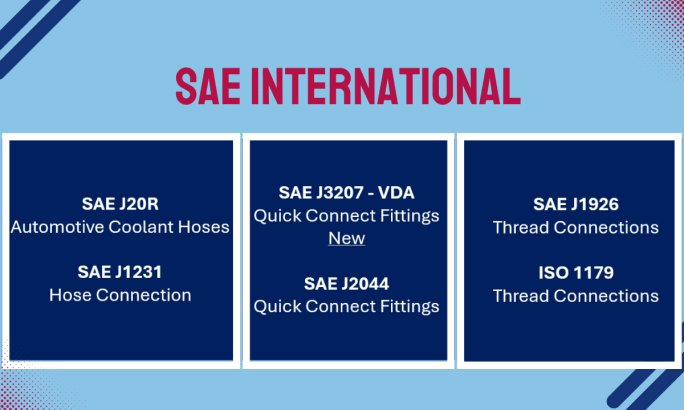
SAE International is the lead in connecting and educating mobility professionals to enable safe, clean, and accessible mobility solutions.
Photo: Work Truck | Parker Hannifin
Where is Thermal Management Especially Critical?
Thermal management offers multiple benefits throughout a vehicle, but there are three areas where it is especially critical: inside the cab, where there are lots of electronics that need to be cooled; at the energy source, which, in this case, is the battery; and the individual components, including the pumps, motor, inverters, and chillers.
Cooling requirements differ for vehicles with an internal combustion engine (ICE) vs. a battery. In a battery thermal management system, there is a dedicated system for managing coolant requirements for the batteries and a secondary loop to be used for the components doing the work for propulsion.
As previously stated, the batteries themselves are especially temperature sensitive, needing to operate within a very specific temperature range to avoid damage. Since the batteries are typically one of the most expensive components in the system, it makes financial sense to do everything possible to protect them from damage. Generally, 5-25 degrees Celsius is the ideal operating temperature for peak battery performance. During the colder months, it may be necessary to circulate warm water around the batteries to keep them from losing performance.
The sizing of components also matters in addition to temperature. Hoses, for example, work best in sizes between ½ inch and 5/8 inch. And working pressures of 2 bars or less are ideal. Fittings are available in a wide array of styles. Typically, they are pre-installed by the battery manufacturer and should not be changed out.
The most common fittings are:
Hose barb
VDA
SAE J2044
The specific inverters (motor controllers) used for EVs also work best within specified temperature ranges, although their ranges are wider than that of batteries, with 40-60 degrees Celsius acceptable. The ideal hoses for inverters are also between 1/2 inch and 5/8 inch with similar working pressures. The specified inverters usually come with threaded ports. Threaded adapters can be utilized to connect to the rest of the system via the hoses.
The newer-to-market e-motors have nearly identical target temperature ranges as the inverters for EVs and work best with the same type of hoses. Fittings for the e-motors are most often BSPP or ORB threaded ports.
One of the legacy components borrowed from the ICE design is the coolant pump with flow rates up to 95 liters per minute for very large over-the-road vehicles. These pumps work best in temperatures ranging from -40 to 120 degrees Celsius. They are most often available with a hose bead with no options to change.
The radiator, which has also been borrowed from ICEs, works at operating temperatures and pressures similar to those of the coolant pump. It is also offered with hose bead fittings that fit up to 1-1/2 inch hoses.
Design Considerations for the Fluid Conveyance System
When designing a fluid conveyance system, multiple decisions must be made as you work your way down the decision tree.
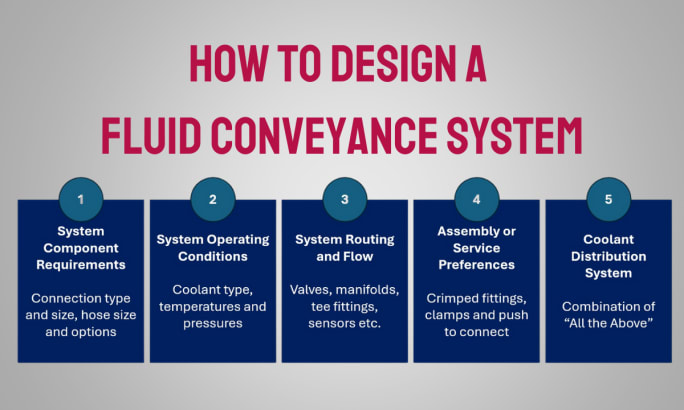
When designing a fluid conveyance system, try using this decision tree to guide discussions with vendors.
Photo: Work Truck | Parker Hannifin
Here are just a few of the many questions you’ll need to address:
1. What components are necessary?
It’s important to consider all system requirements before selecting components. For example, what size hose and type of connection do you need?
2. What are the operating conditions?
How aggressive is the environment? What types of challenges will the system be subjected to?
3. What coolant type should be used?
When deciding, don’t forget to ensure material compatibility between the hose and fittings you select and the chemical makeup of the coolant. Also, system limits should be considered for optimum performance.
4. Will valves be required?
Among other advantages, valves restrict flow to certain circuits during operation vs. charging. They also isolate components to enhance system maintenance and, equally importantly, allow for component removal without draining the entire system and introducing air or other contaminants.
There are many valves from which to choose. Air bleed valves, for example, allow for air removal for optimal cooling performance. Isolation valves, in contrast, are ideal for securing a vacuum fit. Whichever type of valve you choose, valves should most often be placed in areas of greatest maintenance and at the highest elevation of the system.
5. Will sensors be used?
Sensors are valuable for tracking temperature and pressure changes to integrate data that extends component life cycle. Most EVs on the road today have many sensors, more often located near manifolds or fittings, for easy integration.
6. Are there any design preferences?
Similarly, are there any historical or MRO preferences in the system? These choices will lead to the selection of the right hoses and fitting styles.
7. How will you connect the hose or tube?
Although National Pipe Tapered (NPT) is the most common today, there is a movement within the industry toward elastomeric options.
8. Do you prefer an integrated or separable/threaded connection?
The integrated option is molded directly into the component and can’t be changed, such as in the case of a hose bead. A threaded connection, in contrast, can be adapted. Each system designer will have a preference, but these choices will limit the options available for the hoses and fittings.
9. Is the plan to use hose beads manufactured according to SAW J1231 or proprietary designs?
Beads allow the hose to be pushed on with ancillary clamps. There are also clamp-less technologies called push-on which create a reliable leak-free performance and are much faster to assemble. In contrast, clamped hoses may take longer to assemble and are prone to leaks if misassembled. They also have the potential to restrict flow.
10. How do you choose a preferred quick connection?
If you plan on using a quick connection, know there are two primary styles on the market today. SAE J3207, also known as VDA, represents a newer approach than the older SAE J2044 connection. The advantages of the newer products are their ergonomic assembly, reduced cycle time, and full-flow capability. However, they are known to have limited hose compatibility.
11. What should be considered when choosing a threaded port?
There are also two primary styles of threaded ports:
Tapered designs, which are well known and can provide reliable sealing on the first install. However, they are known to present installation challenges and have reliability issues when used on connections that are disconnected frequently.
O-ring seals, which work better in harsh environments, and their assembly procedures result in a more reliable performance.
12. What about coolant system distribution design considerations?
Manifolds allow for the concentration of connection points and eliminate some threaded adapters. Material choices include metals (stainless and aluminum, which are robust) or plastics, which eliminate the need for additional threaded adapters.
13. Should I choose rubber or thermoplastic hoses?
Selecting hose material is very dependent on the application and the characteristics of the materials. Typically, rubber hoses are more flexible but weigh more than lighter thermoplastic hoses, which might not bend as tight but can be thermoformed. Thus, it is recommended to fully understand the needs of the vehicle or equipment requirements before selecting a product.
Building a Stronger EV Fleet Foundation
Smart thermal management is one of the keys to unlocking better performance, longer life, and improved safety for electric work trucks. From choosing the right hose sizes to understanding connection types and system design, paying attention to these details now sets fleets up for long-term success.
Want more practical insights to keep your fleet moving forward? Subscribe to Work Truck for expert advice, real-world solutions, and the latest updates shaping the world of vocational trucks and vans.
Topics:Maintenance
Subscribe to Our Newsletter
More Maintenance

How Faster Driver Reporting Can Keep Small Truck Problems Small
When minor damage, warning lights, or equipment issues are reported late, small problems can quickly become bigger maintenance headaches. Conversational AI can help shorten the path from what a driver notices in the field to the person who can act on it.
Read More →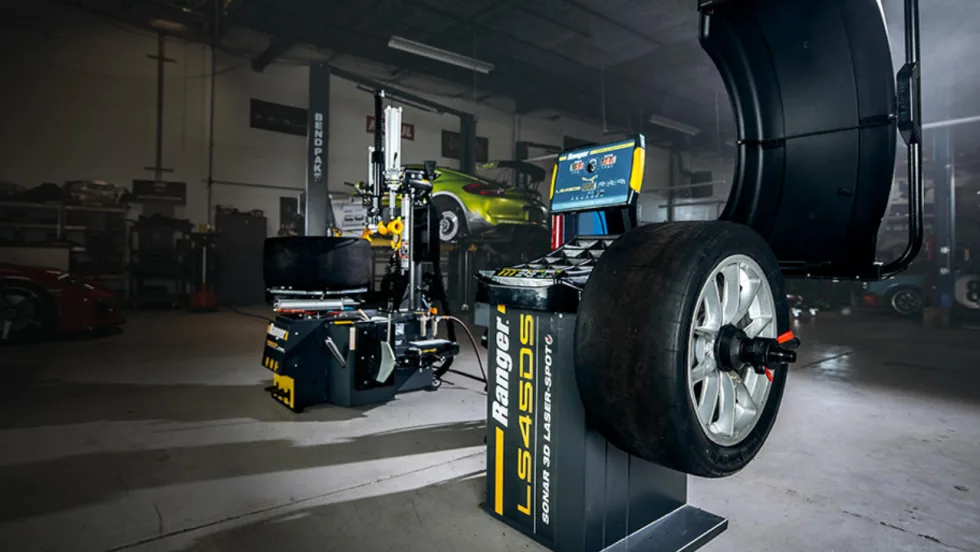
BendPak’s Ranger Wheel Service Equipment Achieves North American Safety Certification
BendPak’s full line of Ranger tire changers and wheel balancers has been ETL certified to UL and CSA standards to improve operator safety.
Read More →
Isuzu & U.S. Department of Labor Celebrate Milestone for Veterans Apprenticeship Program
The Isuzu Veterans Apprenticeship Program (IVAP) signing ceremony highlighted Isuzu’s long-term commitment to veterans, Isuzu dealers, and the skilled workforce supporting its customers and the commercial transportation industry.
Read More →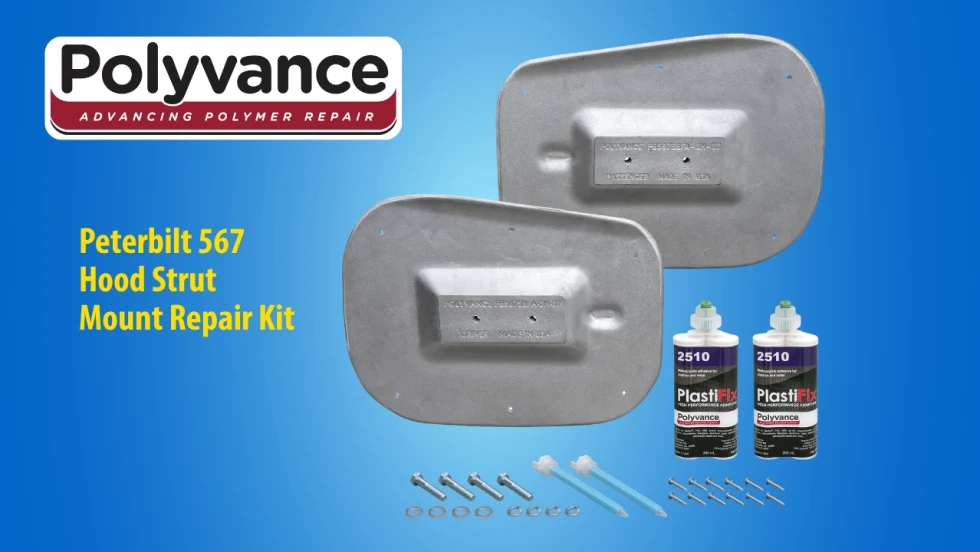
Polyvance Introduces New Peterbilt 567 Hood Strut Mount Repair Kit
Polyvance has launched a repair solution for Peterbilt 567 hood struts, helping truck owners and repair facilities avoid costly hood replacements.
Read More →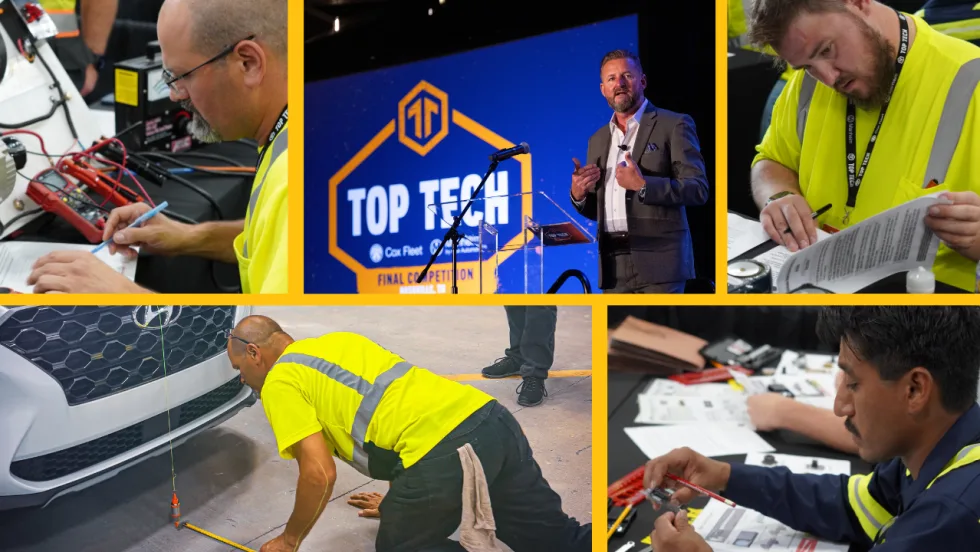
Cox Automotive Celebrates Technical Excellence at 2026 Top Tech Finals
The top technicians from Cox Fleet and Manheim tested their skills in Nashville, Tennessee, at Cox Automotive’s 2026 Top Tech Finals. The overall winners will advance to compete at the American Trucking Association’s TMC SuperTech competition.
Read More →
Grote Industries Appoints Vice President of North American Operations
Grote Industries has appointed Patrick Smith as vice president of North American operations as it celebrates 125 years of innovation and manufacturing excellence. He has more than 20 years of manufacturing leadership experience.
Read More →
Winter Fleet Prep: Expert Tips to Keep Vehicles Running Smoothly
Cold weather can expose weak batteries, tires, fuel systems, and maintenance gaps fast. Use this winter fleet checklist to prepare trucks and drivers before temperatures drop.
Read More →
Lubrizol CV1700 Heavy-Duty Engine Oil Additive Available Well Ahead of API CL-4 First License
Lubrizol CV1700, Lubrizol’s additive solution for the American Petroleum Institute’s (API’s) next heavy-duty diesel engine oil specification, is available now and enables high performance across a broad range of base oil stocks and viscosity grades.
Read More →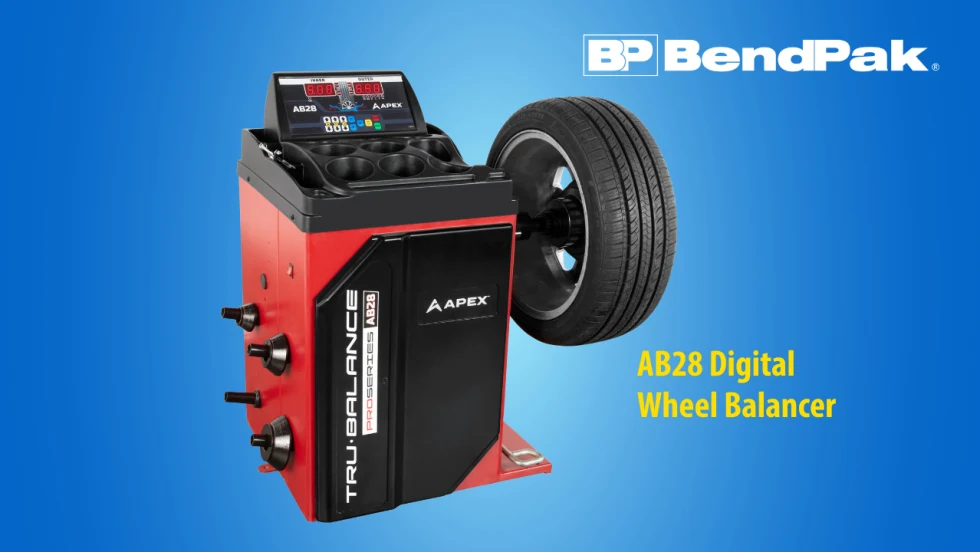
New APEX by BendPak AB28 Wheel Balancer Provides Accuracy & Fast Cycle Times
The APEX by BendPak AB28 digital wheel balancer is designed to support everything from passenger-vehicle and light-truck wheels to performance and specialty wheels.
Read More →
When a Work Truck Breaks Down, the Job Can Stop, Too
A work truck breakdown can stop more than the vehicle. Discover how payloads, jobsites, and specialty equipment change the roadside response.
Read More →