




Cox Automotive’s EV Battery Solutions Team Partners with Local Fire Departments for Groundbreaking EV Fire Training
Electric vehicle battery experts from EV Battery Solutions by Cox Automotive have partnered with fire departments in Oklahoma to better understand EV fires. Part of that involved EV live-fire training for the firefighters.
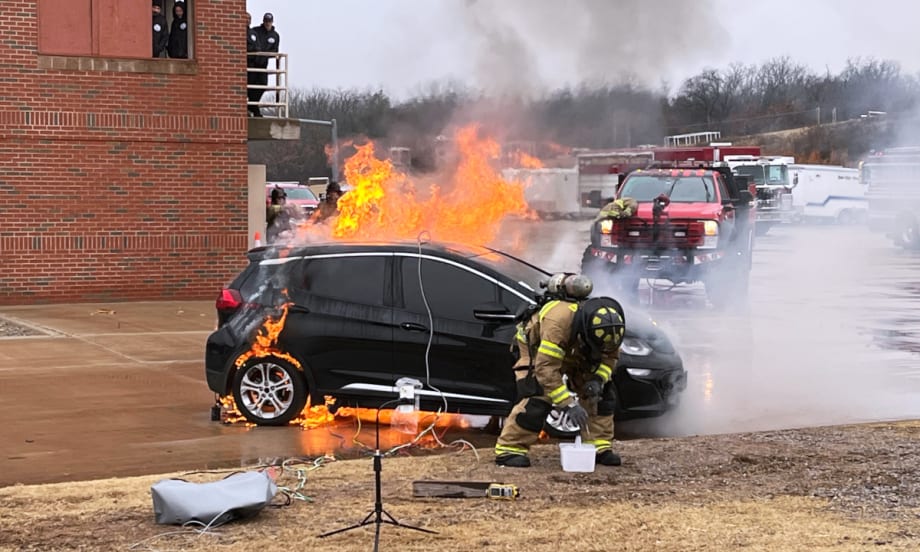
An Oklahoma firefighter battles an electric vehicle battery fire during training as part of a combined project involving several fire departments and EV Battery Solutions by Cox Automotive. The goal was to test and refine methods for extinguishing EV battery fires.
Photo: EV Battery Solutions by Cox Automotive
In a collaborative effort to improve community safety and deepen first responders’ understanding of electric vehicle fires, EV Battery Solutions by Cox Automotive recently conducted a live-fire training exercise with the Edmond Fire Department and surrounding Oklahoma agencies.
The exercise, held on a cold and rainy day in Edmond, brought together approximately 40 firefighters and three fire trucks—including an all-terrain vehicle—to test and refine methods for extinguishing EV battery fires.
“This event was a huge success,” said Juan Valencia, director of environmental health and safety for EV Battery Solutions. “It gave us a chance to strengthen our relationship with local authorities and help firefighters gain hands-on experience with EV fires—knowledge that’s increasingly vital as EVs become more common.”
Lea Malloy, AVP of EV Battery Solutions, echoed that sentiment, emphasizing the importance of collaboration and real-world practice in safely handling EV fires.
“We’re thrilled with how this training turned out,” Malloy said. “Bringing together our engineering teams and local firefighters created the perfect opportunity to deepen everyone’s expertise and confidence. As EV adoption continues to grow, these hands-on exercises are essential to ensuring first responders are equipped with the knowledge and skills they need to protect our communities.”
Months of Planning and Preparation
Planning conversations with Edmond’s fire department started informally several months ago. By October, Cox Automotive began conducting internal tests to ensure the training could be carried out safely and effectively. Engineers spent weeks experimenting with different methods to induce thermal runaway—an uncontrolled chemical reaction in a battery cell that can lead to fire.
“We had to ensure the EV battery would ignite reliably so firefighters could learn how to respond in a real-life scenario,” Valencia explained. “Our engineering team developed specialized devices and used thermite, which generates extremely high temperatures capable of melting metal and triggering the battery cells into thermal runaway.”
Testing Fumes and Water Streams
During the live burn, firefighters not only battled flames but also collected samples of fumes, smoke, and water runoff to analyze potential health and environmental hazards. All personnel wore Self-Contained Breathing Apparatus (SCBA) gear and followed strict safety protocols.
“This was the first time we tried something like this in a controlled setting,” Valencia said. “We don’t yet have all the data on exactly what’s in those fumes or the water, so sampling and analyzing them is crucial. Over time, this research will help us refine our protocols to keep everyone safer.”
Lessons Learned on EV Fire Behavior
One key takeaway from the training was the unpredictability of EV battery fires. Valencia notes that even under seemingly identical conditions—same type of battery, same charge level, same setup—the time it takes for a battery to ignite or re-ignite can vary significantly.
“It’s not like a typical internal combustion engine fire,” he added. “A battery that appears extinguished can spontaneously flare up hours later. This underscores why the standard approach is often to keep the battery cool and monitor it closely rather than assume it’s completely out.”
Firefighters also learned that the materials in and around the battery—plastic, foam, seating, and in some cases hybrid gas tanks—can intensify flames or cause explosions.
Collaboration on EV Battery Fires & Next Steps
The Edmond Fire Department, joined by firefighters from Oklahoma City, Moore, and Tulsa, expressed appreciation for the opportunity to train on an actual EV. The exercise offered a valuable, real-world look at how different firefighting strategies—such as cooling vs. smothering—might work on a lithium-ion battery fire.
“Every firefighter who participated came back and thanked us,” Valencia said. “They wanted to see firsthand how EVs react to fire, how to contain a blaze effectively, and how to protect themselves from the toxic smoke.”
Although there is no firm date set for a second exercise, both Cox Automotive and the local fire departments are eager to continue collaborating. Valencia hopes future live-fire trainings will address more complex scenarios, such as EVs burning indoors or in parking structures, where additional challenges—like moving a flaming vehicle—come into play.
What Happens After the Flames?
As for the training vehicle itself, Cox Automotive’s “flying doctor” engineering team—so named because they travel to client sites all across the U.S. to diagnose, repair, and resolve EV battery issues—is currently evaluating its battery modules to ensure they are safe to transport and recycle.
The car will remain on-site for at least a week until the modules are fully discharged or removed, after which it will be shipped back to an EV Battery Solutions center for safe disposal.
“Safety is our top priority,” Valencia emphasized. “We have strict protocols to ensure every component is secure before we move the vehicle. At the end of the day, this entire exercise was about fostering a safer community and improving our collective response to EV fires.”
With the success of this initial training, Cox Automotive’s EV Battery Solutions team is poised to expand and refine its collaboration with first responders. As electric vehicles continue gaining popularity, exercises like these could become a new standard—equipping firefighters with the critical skills needed to protect the public in the face of rapidly evolving automotive technology.
More Green Fleet

Fleet Forward Conference Introduces One-Day Passes for 2026
New one-day registration gives fleet professionals the flexibility to attend Tuesday, Wednesday, or Thursday, with passes available for $199 through Sept. 18.
Read More →
CALSTART Rebrands as Catalyst Mobility, Will Combine with Forth in 2027
CALSTART has rebranded as Catalyst Mobility and will combine with Forth at the start of 2027. The new organization said it is poised to become one of the world's largest, strongest, and most impactful clean transportation nonprofits.
Read More →
Electric Truck and Charging Programs to Boost Sustainability at NY & NJ Ports
Together, the Port Authority of New York and New Jersey and CALSTART will electrify drayage and terminal operations serving the East Coast’s busiest container port. A pair of incentive programs totaling $45 million has launched to accelerate adoption of zero-emission drayage trucks and terminal tractors.
Read More →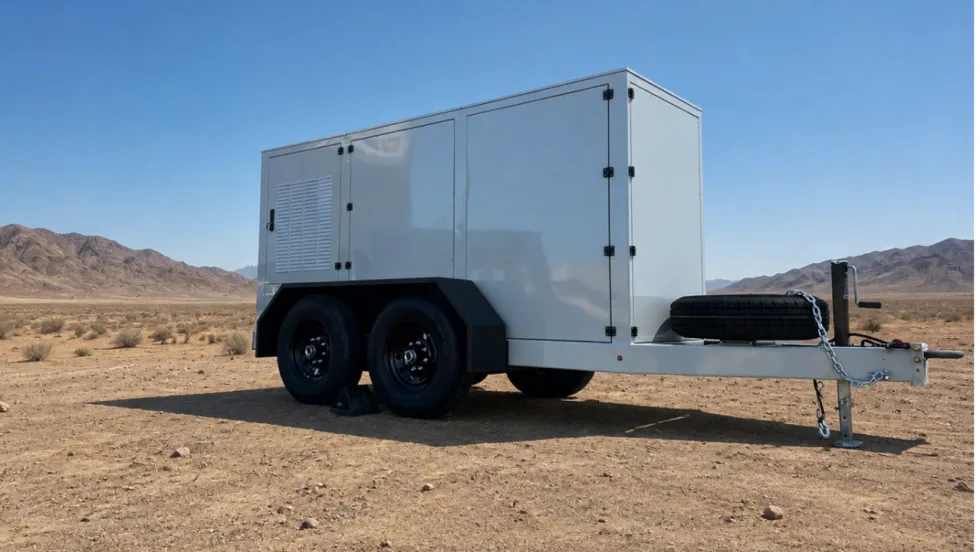
Xos Hub Surpasses One Gigawatt-Hour of Energy Delivered in the Field
A single Xos Hub has surpassed one gigawatt-hour of energy across more than 33,600 charging sessions in the field, demonstrating performance that supports Xos' expansion across new products and markets.
Read More →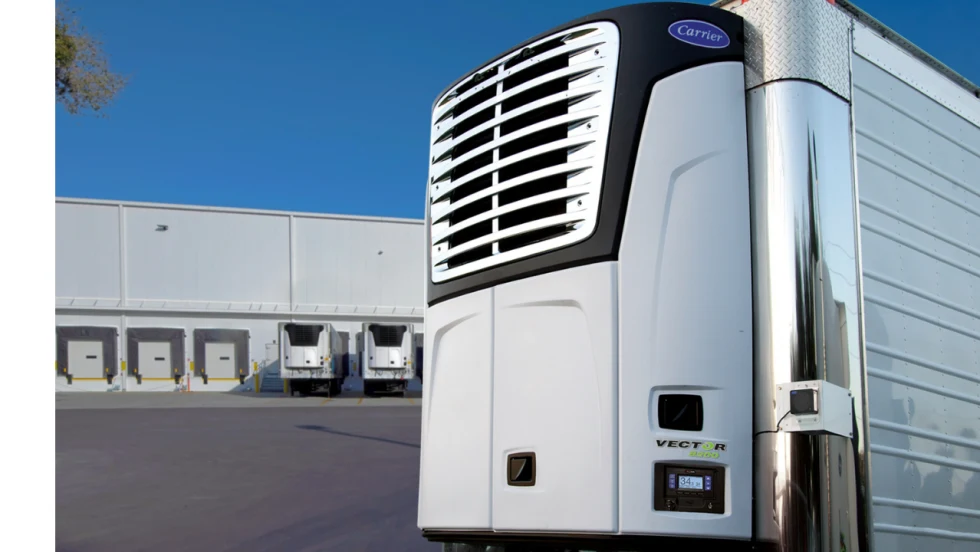
Carrier Transicold Launches All-Electric Vector 8200 TRU for Diesel-Free On-Site Cold Storage
Carrier Transicold’s first engineless multi-temperature TRU helps fresh- and frozen-food fleets add supplemental cold storage capacity during seasonal peaks.
Read More →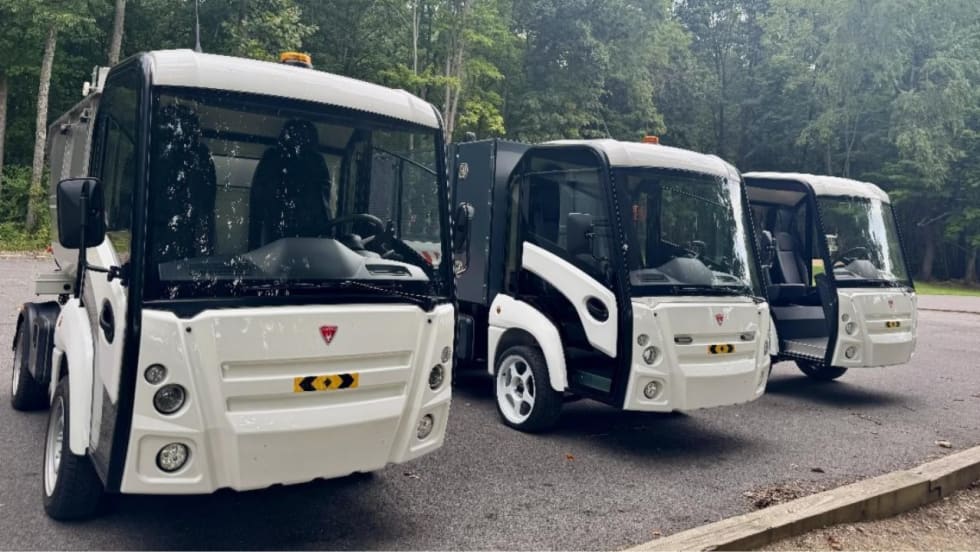
Narro Trucks Introduces Electric Utility Vehicle
Narro Trucks officially launched its operations on Aug. 20 and hosted a ride and drive to showcase its electric truck, which will be produced in Virginia.
Read More →
Samsung SDI Takes Full Control of GM Battery JV as Indiana Plant Pivots to Energy Storage
Samsung SDI is taking full control of its Indiana battery plant with GM, marking a major shift from the EV-focused joint venture Charged Fleet first covered in 2023.
Read More →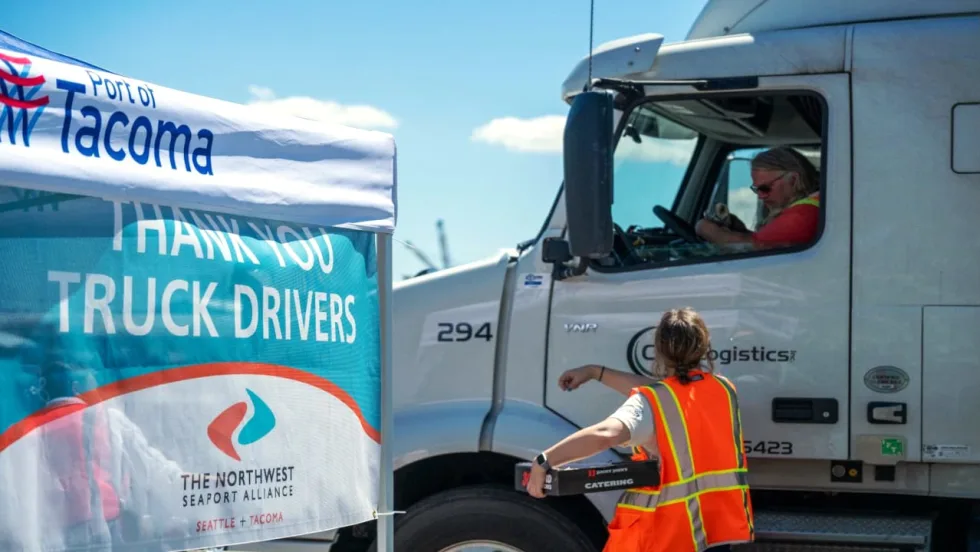
NWSA Taps CALSTART to Administer Zero-Emission Drayage Assistance Program
CALSTART will provide free technical assistance services to drayage fleets serving the Ports of Seattle and Tacoma and looking to transition to cleaner technologies and help decarbonize freight hubs.
Read More →
EV Fleet Reality Check: What Operators Wish They Knew Before Electrifying Their Work Vans
Electric work truck upfits bring new compatibility questions. Learn how parts availability, OEM guidance, power demands, and route planning can affect fleet performance.
Read More →
Peterbilt Expands Sourcewell Partnership with Electric Vehicle Lineup
Peterbilt Motors Company’s cooperative purchasing agreement with Sourcewell and its Canadian partner, Canoe Procurement Group, now includes including Peterbilt's battery-electric vehicle lineup.
Read More →