




Learn More: Caring for the Air System that Feeds Your Brakes
Air Dryer Cartridges: Insurance for Your Air System & the Components that Rely on It
Air dryer cartridges, and the air dryers that support them, play a key role in the truck’s operation.
by Chuck Brodie, ZF
February 22, 2021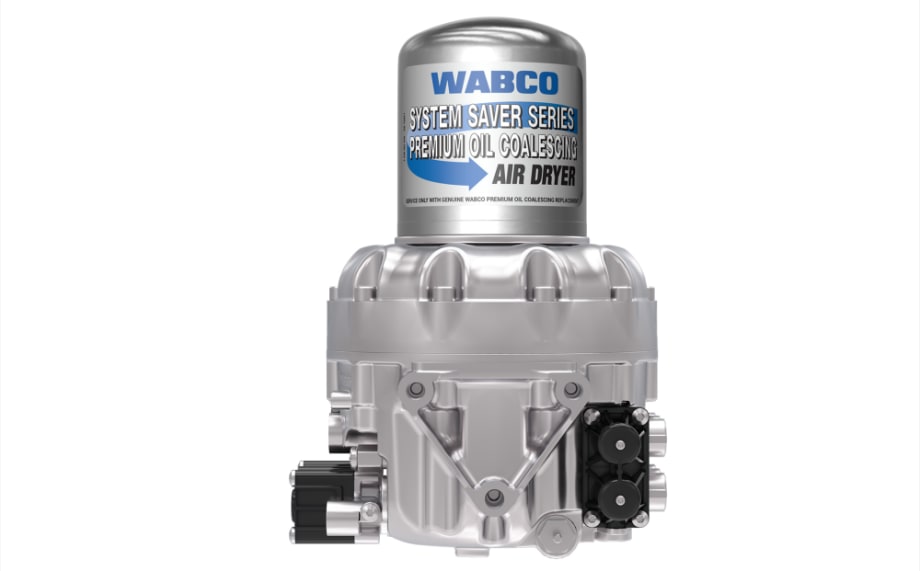
WABCO System Saver - Air Dryer 1200 plus air dryer with WABCO System Saver Series coalescing air dryer cartridge.
Photo: ZF
4 min to read
Anti-lock brakes and other components rely on the truck’s air system to properly perform. Air dryer cartridges, and the air dryers that support them, play a key role in the truck’s operation.
When air systems compress air, they also compress the moisture within that air. As the air cools, the moisture condenses and ends up as water in the system. Moisture is the enemy of an air system, where it can freeze, corrode, or damage valves, causing components to fail.
Unlike oil or fuel filters that screen out hard contaminants like metal shavings to keep them from entering the engine and causing damage, air dryer cartridges significantly reduce moisture from the air system, preventing it from reaching downstream components. Air dryer cartridges use desiccants, similar to those in the silica packets often tucked in consumer-packaged goods, to remove moisture from the air.
Air dryer cartridges come in two styles: coalescing, and standard or non-coalescing. Both styles use desiccants, but coalescing air dryer cartridges also contain a pad that resembles layered fabric that provides the added benefit of absorbing the small amount of oil that often enters the air system and prevents it from moving downstream where it can damage seals.
Coalescing or Non-Coalescing?
While standard air dryer cartridges are still used, coalescing cartridge use has steadily increased, especially as the popularity of automated manual transmissions has grown in late-model trucks. AMTs are especially sensitive to oil and moisture. In fact, using non-coalescing air dryer cartridges can void some AMT manufacturers’ warranties.
With coalescing cartridges providing the added protection against oil, why do some maintainers still use standard cartridges? Sometimes it’s because they don’t know the difference between the two, or they inadvertently grab the non-coalescing cartridge off the shelf. In other cases, with standard cartridges costing less than their coalescing equivalent, the choice is financial.
Cost is the only reason to use a standard cartridge. Keep in mind that a coalescing cartridge does not provide better moisture protection than a non-coalescing filter, but the added benefit of preventing small amounts of oil from moving downstream is worth the additional investment.
Pay More Now or Pay More Later
All air dryer cartridges are not created equal. Within the two air dryer cartridge styles there is a wide spectrum of options, from high-quality cartridges that use the best desiccants to low-cost budget cartridges that don’t.
With air systems, and the critical and often expensive components they support, air dryer cartridges are not the place to be thrifty. The risks of using the wrong or less expensive cartridge, or not changing the cartridge, range from unnecessary downtime to damaging the air system and the components that rely upon it. Saving a few bucks now costs a lot more later.
The best-case scenario when using a less expensive, low-grade air dryer cartridge is moisture passing downstream. Among other problems that creates is that moisture in a brake system can freeze, preventing air from passing though and not building up air pressure, thus creating a unit down issue.
The worst-cast scenario is much more troublesome: Desiccant in less expensive cartridges can degrade, leave the cartridge, move downstream and fill components, causing damage that requires repair or total component replacement.
When to Replace an Air Dryer Cartridge
In linehaul applications, coalescing air dryer cartridges can last one to two years while non-coalescing cartridges can last two to three years. Other applications can shorten cartridge life. As a general rule, follow the manufacturer’s recommended replacement intervals to get the best performance. In addition, replace the air dryer cartridge if you start seeing an increase in moisture in the wet tank.
Note that drivers and maintainers that see a sudden increase in moisture in the wet tank, or an increase in moisture short of the normally cartridge replacement time, often assume it’s a problem with the air dryer or cartridge. That may not be the case.
Dryers are designed to handle a certain amount of air. A misapplication of the vehicle that demands more air than the system was designed for, or a leak in the system, may cause air system demand that is higher than the dryer was designed for. A leak can be located and repaired, but a change in air demand may require an air system upgrade.
Some maintainers write the date on the air dryer cartridge when the install it, check the date during routine maintenance and replace the cartridge when it reaches or approaches its expected lifecycle. Others track the cartridge’s age on a maintenance log or simply replace it as part of every other preventive maintenance (PM) routine.
Selecting the Right Air Cartridge
Using the proper air dryer cartridge is very important. Use the cartridge from the same manufacturer that made the air dryer.
The air dryer is there to support the air dryer cartridge, so using the dryer and cartridge that were designed for each other ensures optimal performance.
About the Author: Chuck Brodie joined Wabco in 2011 and has held various positions in sales, service, and field training for the company. Wabco was acquired by ZF in May 2020 and renamed ZF’s Commercial Vehicle Controls Systems Division (CVCS).
Subscribe to Our Newsletter
More Maintenance
Les Schwab Expands Commercial Tire Footprint Into Arizona
Les Schwab Tires has expanded into Arizona with two commercial tire locations in Phoenix and Tucson, strengthening its fleet service footprint in the Southwest.
Read More →
Volvo Trucks’ 'Lock and Leave' Software Updates Go Live Across North America
Unattended over-the-air software updates are now available in Volvo trucks across the U.S. and Canada. The new capability lets trucks stay current with the latest software without interrupting operations or requiring a dealership visit.
Read More →
Why Technician Appreciation Can’t Be a Once-a-Year Thought
For fleets trying to keep skilled technicians, recognition cannot begin and end with Technician Appreciation Week. Learn what year-round appreciation really looks like and why the everyday technician experience matters just as much as pay when fleets are trying to keep good people.
Read More →
How Faster Driver Reporting Can Keep Small Truck Problems Small
When minor damage, warning lights, or equipment issues are reported late, small problems can quickly become bigger maintenance headaches. Conversational AI can help shorten the path from what a driver notices in the field to the person who can act on it.
Read More →
BendPak’s Ranger Wheel Service Equipment Achieves North American Safety Certification
BendPak’s full line of Ranger tire changers and wheel balancers has been ETL certified to UL and CSA standards to improve operator safety.
Read More →
Isuzu & U.S. Department of Labor Celebrate Milestone for Veterans Apprenticeship Program
The Isuzu Veterans Apprenticeship Program (IVAP) signing ceremony highlighted Isuzu’s long-term commitment to veterans, Isuzu dealers, and the skilled workforce supporting its customers and the commercial transportation industry.
Read More →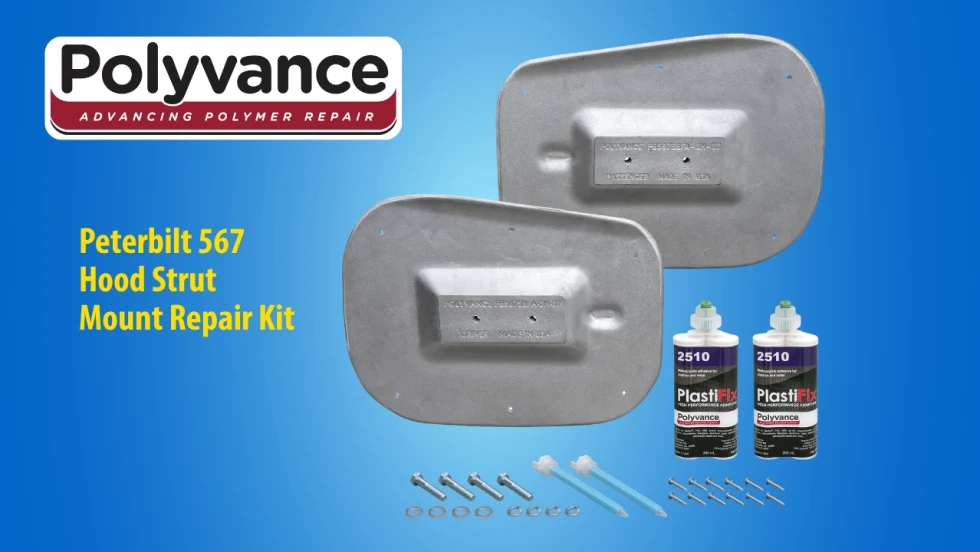
Polyvance Introduces New Peterbilt 567 Hood Strut Mount Repair Kit
Polyvance has launched a repair solution for Peterbilt 567 hood struts, helping truck owners and repair facilities avoid costly hood replacements.
Read More →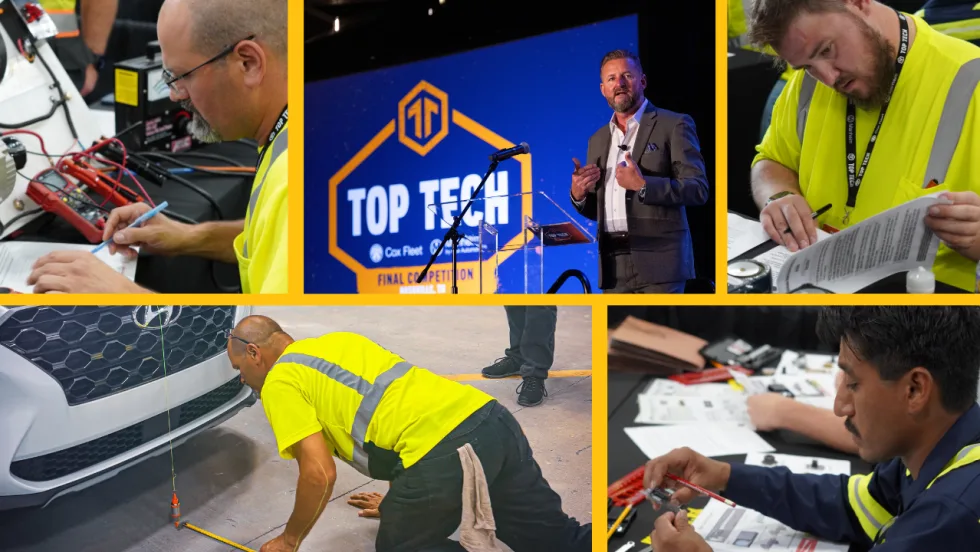
Cox Automotive Celebrates Technical Excellence at 2026 Top Tech Finals
The top technicians from Cox Fleet and Manheim tested their skills in Nashville, Tennessee, at Cox Automotive’s 2026 Top Tech Finals. The overall winners will advance to compete at the American Trucking Association’s TMC SuperTech competition.
Read More →
Grote Industries Appoints Vice President of North American Operations
Grote Industries has appointed Patrick Smith as vice president of North American operations as it celebrates 125 years of innovation and manufacturing excellence. He has more than 20 years of manufacturing leadership experience.
Read More →
Winter Fleet Prep: Expert Tips to Keep Vehicles Running Smoothly
Cold weather can expose weak batteries, tires, fuel systems, and maintenance gaps fast. Use this winter fleet checklist to prepare trucks and drivers before temperatures drop.
Read More →