




Watch IIHS Begin Headlight Testing for Mid-Size Cars
The Insurance Institute for Highway Safety performs a round of headlight evaluations and only one model — when equipped with LED lights and high-beam assist — drew a top score.

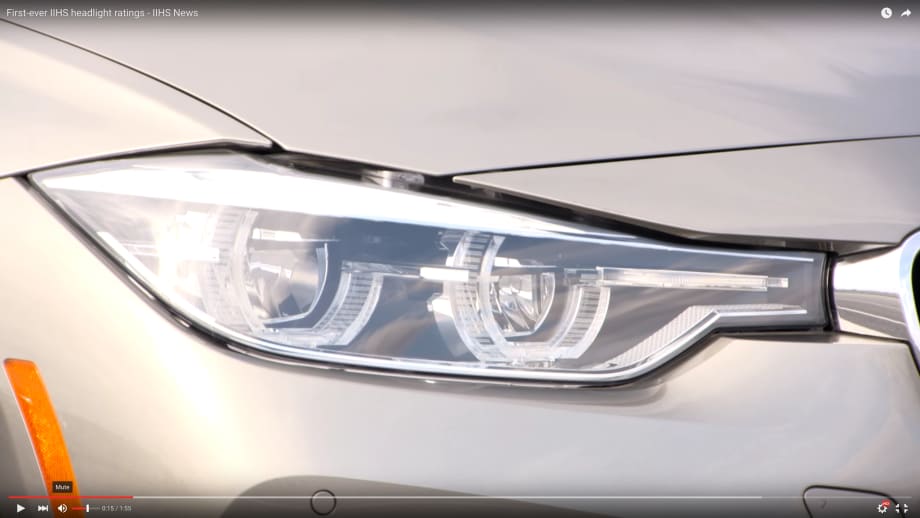
Photo: IIHS
The Toyota Prius V is the only midsize car out of 31 tested to draw the highest rating of “good” in the first-ever headlights evaluations by the Insurance Institute for Highway Safety.
The best available headlights on 11 cars received an “acceptable” rating, while nine drew a “marginal” rating, IIHS said. Ten of the vehicles can’t be purchased with anything other than “poor”-rated headlights.
(Scroll down for headlight evaluation results. To watch a video report about the evaluations, click on the photo or link below the headline.)
The Prius V earned a “good” rating when equipped with LED lights and high-beam assist. To get those headlights, buyers must purchase the advanced technology package, which is only available on the highest trim level. When equipped with regular halogen lights and without high-beam assist, the Prius V earned a “poor” rating.
“The Prius V's LED low beams should give a driver traveling straight at 70 mph enough time to identify an obstacle on the right side of the road, where the light is best, and brake to a stop,” explained Matthew Brumbelow, an IIHS senior research engineer. “In contrast, someone with the halogen lights would need to drive 20 mph slower in order to avoid a crash.”
Surprisingly, many of the “poor”-rated headlights belong to luxury vehicles.
“If you're having trouble seeing behind the wheel at night, it could very well be your headlights and not your eyes that are to blame,” said David Zuby, IIHS executive vice president and chief research officer.
The ability to see the road ahead — as well as spot pedestrians, bicyclists or obstacles — is obviously essential for drivers. However, government standards for headlights, based on laboratory tests, allow huge variation in the amount of illumination that headlights provide in actual on-road driving, according to IIHS. With about half of traffic deaths occurring either in the dark or in dawn or dusk conditions, improved headlights have the potential to substantially reduce road fatalities.
In many vehicles, high-intensity discharge (HID) or LED lamps have replaced halogen ones. Curve-adaptive headlights, which swivel according to steering input, are also becoming more common.
Research has shown advantages for the new headlight types, IIHS said, but they don't guarantee high-quality performance.
“The Institute's headlight rating system doesn't favor one lighting technology over the other, but simply rewards systems that produce ample illumination without excessive glare for drivers of oncoming vehicles,” IIHS said in a news summary of the evaluations.
Researchers evaluated the headlights after dark at the IIHS Vehicle Research Center track in Virginia. A special device measured the light from both low beams and high beams as each vehicle was driven on five different approaches: traveling straight, a sharp left curve, a sharp right curve, a gradual left curve and a gradual right curve.
Evaluators also measured glare for oncoming vehicles from low beams in each scenario to make sure the glare wasn’t excessive.
Although the vertical aim of headlights can be adjusted on most vehicles, IIHS didn’t change headlight aim because few vehicle owners ever do and some manufacturers advise consumers not to.
After a vehicle was tested on the track, IIHS engineers compared its visibility and glare measurements to those of a hypothetical ideal headlight system and used a scheme of demerits to determine the rating. Results for low beams were weighted more heavily than high beams because drivers use them more often. The readings on the straightaway were weighted more heavily than those on the curves because more crashes occur on straight sections of road, IIHS noted.
Vehicles equipped with high-beam assist, which automatically switches between high beams and low beams depending on the presence of other vehicles, were able to earn back some points taken off for less-than-ideal low beam visibility. This credit was given only for approaches on which the glare threshold wasn’t exceeded and on which the high beams provided additional visibility compared with the low beams.
A vehicle with excessive glare on any of the approaches couldn’t earn a rating above “marginal.”
Since vehicles can be equipped with different headlights, there are a total of 82 headlight ratings for 2016 models even though there are only 31 vehicles. IIHS plans to rate every possible headlight combination as it becomes available from dealers.
Originally posted on Automotive Fleet
More Safety
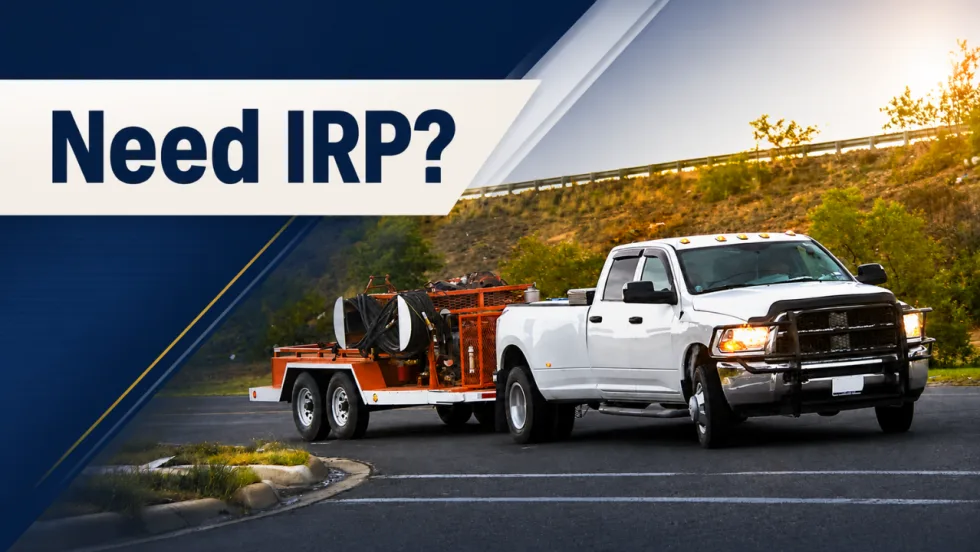
When Work Trucks Under 26,001 Pounds Need IRP Registration
Think trucks under 26,001 pounds are automatically in the clear when it comes to IRP? Not always. Learn where lighter vehicles can still run into trip permit, apportioned registration, and IFTA compliance requirements when crossing state or provincial lines.
Read More →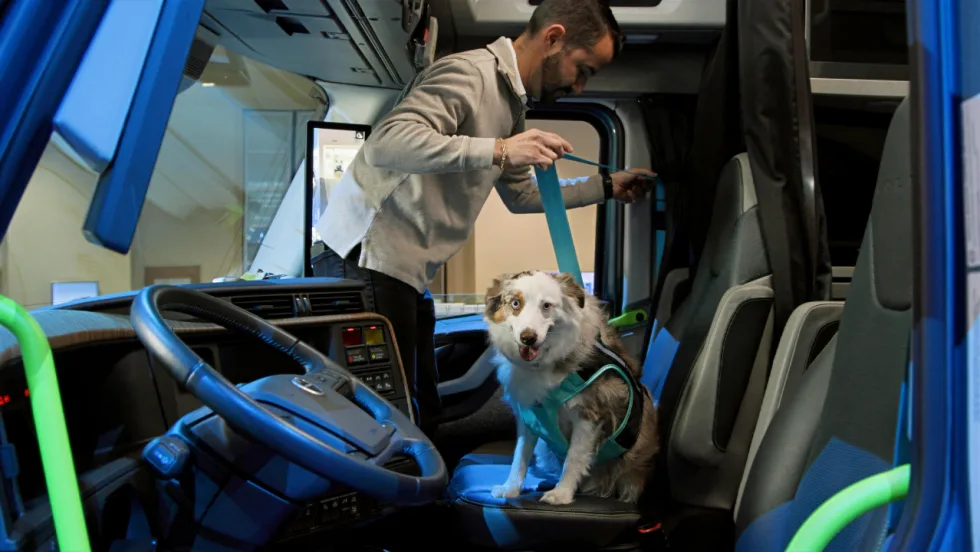
Volvo Trucks Releases New Safety Recommendations for Traveling with Pets
One of the most important recommendations for professional drivers traveling with pets is to ensure pets are properly restrained while the truck is moving. Other tips are available in the new guide from Volvo Trucks North America and Center for Pet Safety.
Read More →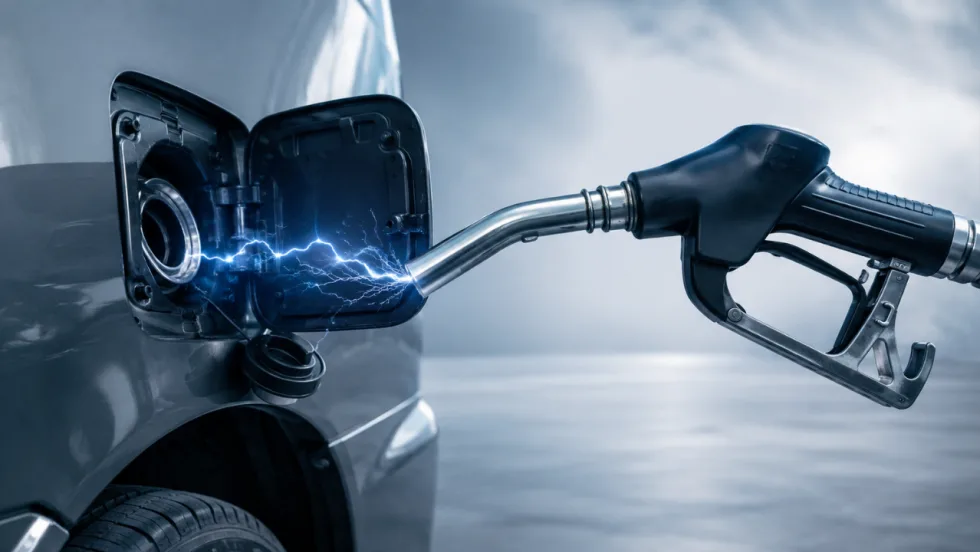
API Issues Refueling Safety Guidelines
The American Petroleum Institute offers a list of safe vehicle refueling guidelines, including ways to avoid potential problems with static electricity discharges in fall, winter, and early spring.
Read More →
Winter Fleet Prep: Expert Tips to Keep Vehicles Running Smoothly
Cold weather can expose weak batteries, tires, fuel systems, and maintenance gaps fast. Use this winter fleet checklist to prepare trucks and drivers before temperatures drop.
Read More →
When a Work Truck Breaks Down, the Job Can Stop, Too
A work truck breakdown can stop more than the vehicle. Discover how payloads, jobsites, and specialty equipment change the roadside response.
Read More →
What Stronger Long-Term Fleet Service Partnerships Actually Require
Fleet service partnerships rarely fall apart all at once. Learn the three warning signs that trust is eroding and what fleets and providers can do before downtime, frustration, and lost revenue follow.
Read More →
Applause & TRUCE Software Partner to Improve Driver Safety Through AI-Powered Telematics & Employee Performance Management
Applause has integrated TRUCE driving metrics directly into its employee-first performance and safety platform that transforms mobile devices into AI-powered telematics.
Read More →
How Detroit Assurance with Active Brake Assist Works
Do you want to see what it is like to experience Detroit Assurance’s Active Brake Assist? In this video, Work Truck will put you in the cab to see how it all works and then hear more details from DTNA’s Mike Young.
Read More →
Get Left of Loss: A 5-Step Workplace Violence Prevention Framework for Fleet Operators
Violence risks do not stop at the driver’s door. Learn five practical steps fleets can take to spot threats early and protect workers before loss occurs.
Read More →
How Better Visibility Cut Speeding Violations by 48%
Fleet leaders don't need more data, they need clearer visibility into what the data is saying. This case study explores how one utility replaced speeding-event counts with a single metric — miles driven in violation — to strengthen safety and significantly reduce speeding violations.
Read More →