




Volvo & Mack Fueling New Trucks with Renewable Diesel
Volvo Trucks North America and Mack Trucks both are now using hydrotreated vegetable oil, a type of biodiesel, to fuel Class 8 trucks as they leave assembly plants.

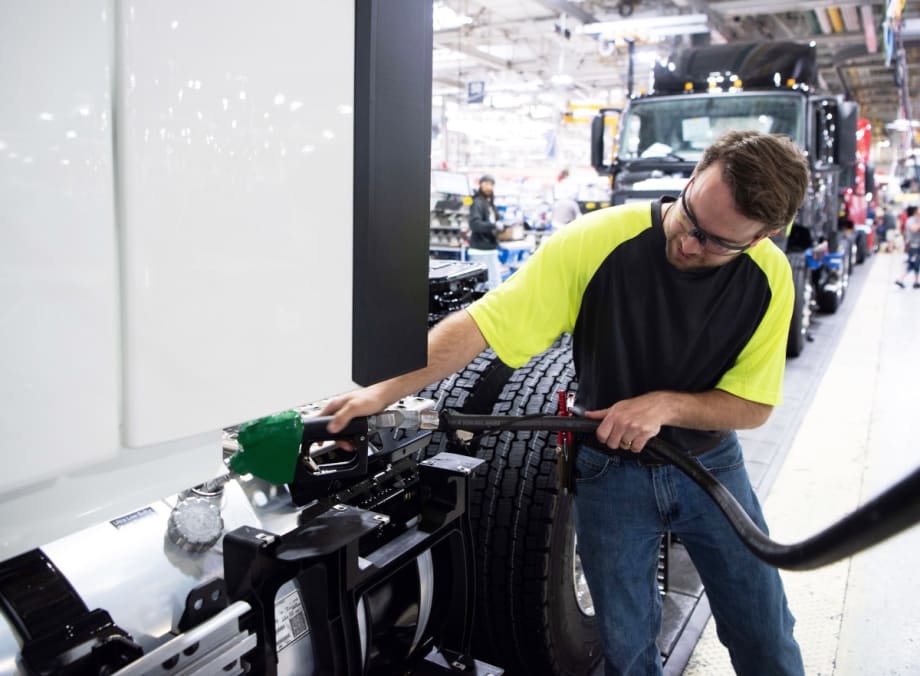
Volvo Trucks is fueling new trucks leaving the NRV plant with 20 to 25 gallons of HVO per tank, with full tanks provided for trucks destined directly to customers.
Photo: Volvo Trucks North America
Trucks rolling off both Volvo Trucks North America and Mack Trucks assembly lines are now leaving under the power of renewable diesel. Both are fueling Class 8 trucks with hydrotreated vegetable oil (HVO).
Manufacturing facilities fueling new trucks with HVO are:
Volvo’s New River Valley Assembly (NRV) plant in Dublin, Virginia
Mack’s Lehigh Valley Operations (LVO), in Macungie, Pennsylvania
The NRV plant produces all Volvo trucks for the North American market. All Mack Class 8 models for North America and export are produced at LVO. It is estimated that by utilizing HVO, LVO was able to reduce carbon emissions by about 18%.
The Mack MD Series is produced at Roanoke Valley Operations (RVO) in Salem, Virginia. RVO has plans to begin utilizing HVO this year.
“The utilization of HVO will help Mack in its journey to promote the decarbonization of the transportation industry,” said Jonathan Randall, president of Mack Trucks North America. “Whether it’s through the use of HVO, or through the development of Mack battery-electric vehicles, such as the Mack LR Electric refuse and Mack MD Electric models, Mack is committed to reducing its carbon footprint and achieving our sustainability goals.”
At Volvo’s NRV plant, trucks are fueled with 20 to 25 gallons of HVO per tank, with full tanks provided for trucks destined directly to customers. This initiative is expected to replace 1,125,000 gallons of fossil-based diesel annually, achieving an estimated 75% to 85% reduction in CO2 emissions for Volvo Trucks' operations in North America.
Volvo said this initiative is part of its broader strategy to decarbonize the industry through a three-pillar approach that involves:
Renewable fuels in the internal combustion engine
Hydrogen fuel cell trucks
“Today and for the foreseeable future there will not be a one-size fits all approach to decarbonizing transportation,” said Peter Voorhoeve, president, Volvo Trucks North America. “With the all-new Volvo VNL and by utilizing HVO, we can make the most substantial and immediate impact today. There is a future for the ICE and we’re happy to be doing all factory fills with renewable fuel.”
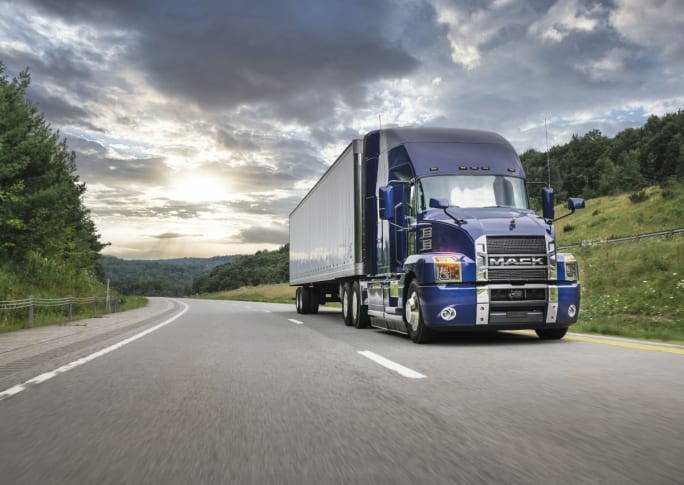
Mack Class 8 trucks now leave the assembly plant under the power of renewable diesel, but the Mack MD will also be fueled with hydrotreated vegetable oil later this year.
Photo: Mack Trucks
Renewable Diesel Can Power Existing Engines
HVO is a renewable fuel that can be used in the same engine as fossil-based diesel without requiring engine modifications. Produced from renewable sources such as waste vegetable oils and animal fats, HVO has the same chemical structure as fossil-based diesel so it can be used as a direct replacement to reduce greenhouse gas emissions while maintaining engine performance.
Volvo Trucks said by utilizing these waste products as feedstocks, HVO production can promote a more sustainable circular economy by converting waste into valuable fuel.
Unlike first-generation biofuels, these raw sources are processed using a sophisticated hydrotreatment to achieve high levels of purity allowing HVO to be stored, used, pumped, and handled virtually the same way as fossil-based diesel products.
Because HVO is hydrogenated it doesn’t contain oxygen and does not present the challenges of first-generation biofuels, including biodiesel, relating to extreme temperature and storage.
This is an added benefit of HVO as it does not require separate storage or fueling infrastructure, according to Volvo. Renewable diesel at any blend up to a maximum of 100% (RD100) that conforms to ASTM D975 or EN15940 will not adversely affect engine or aftertreatment performance or durability.
“The internal combustion engine has more than 100 years of research and development and established support in the industry. It must be part of the decarbonization journey and major, immediate decarbonization possibilities exist by using renewable fuels, including HVO and hydrogen,” said Johan Agebrand, director of product marketing, Volvo Trucks North America. “Fuels produced using hydrotreatment process such as, HVO and RD100, can be interchangeable with diesel and is a viable fuel to decarbonize transportation truck operators can start using today.”
More Green Fleet

Fleet Forward Conference Introduces One-Day Passes for 2026
New one-day registration gives fleet professionals the flexibility to attend Tuesday, Wednesday, or Thursday, with passes available for $199 through Sept. 18.
Read More →
CALSTART Rebrands as Catalyst Mobility, Will Combine with Forth in 2027
CALSTART has rebranded as Catalyst Mobility and will combine with Forth at the start of 2027. The new organization said it is poised to become one of the world's largest, strongest, and most impactful clean transportation nonprofits.
Read More →
Electric Truck and Charging Programs to Boost Sustainability at NY & NJ Ports
Together, the Port Authority of New York and New Jersey and CALSTART will electrify drayage and terminal operations serving the East Coast’s busiest container port. A pair of incentive programs totaling $45 million has launched to accelerate adoption of zero-emission drayage trucks and terminal tractors.
Read More →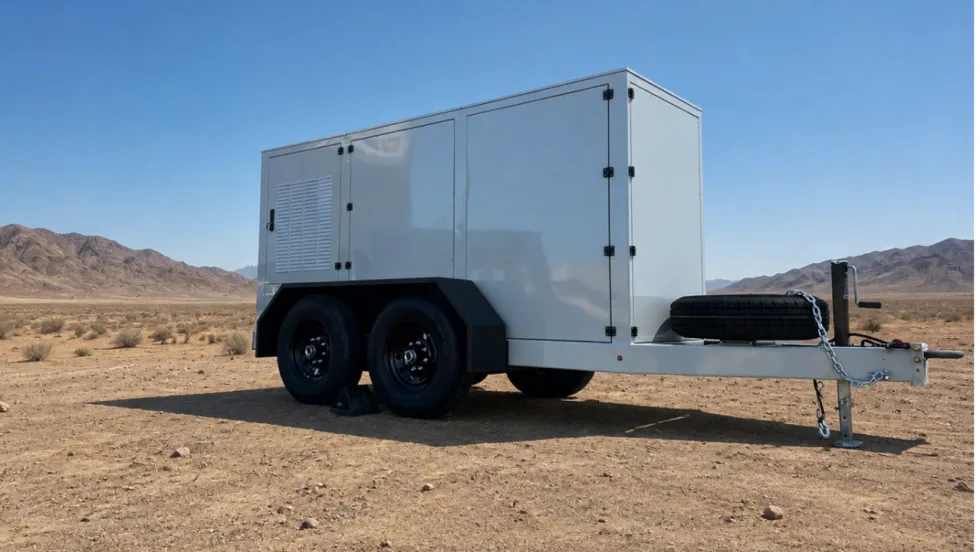
Xos Hub Surpasses One Gigawatt-Hour of Energy Delivered in the Field
A single Xos Hub has surpassed one gigawatt-hour of energy across more than 33,600 charging sessions in the field, demonstrating performance that supports Xos' expansion across new products and markets.
Read More →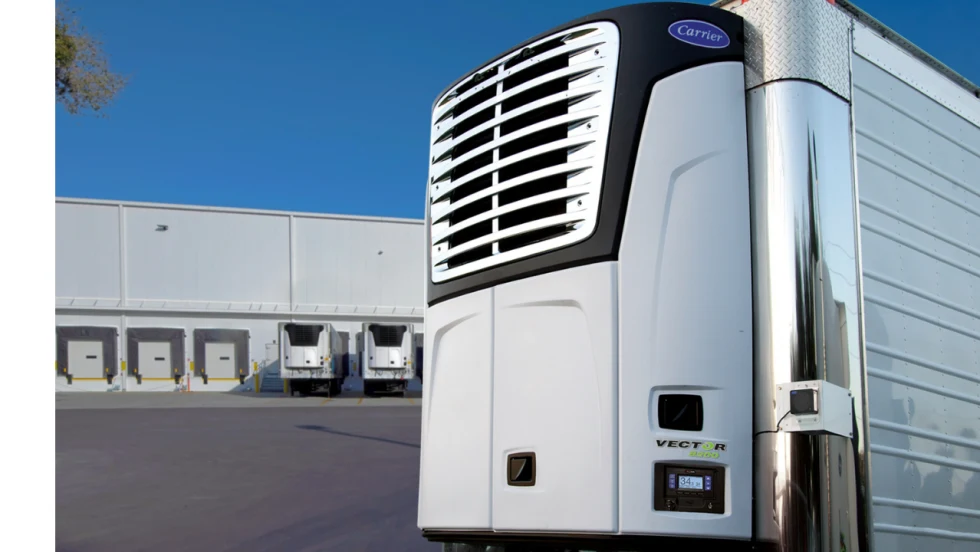
Carrier Transicold Launches All-Electric Vector 8200 TRU for Diesel-Free On-Site Cold Storage
Carrier Transicold’s first engineless multi-temperature TRU helps fresh- and frozen-food fleets add supplemental cold storage capacity during seasonal peaks.
Read More →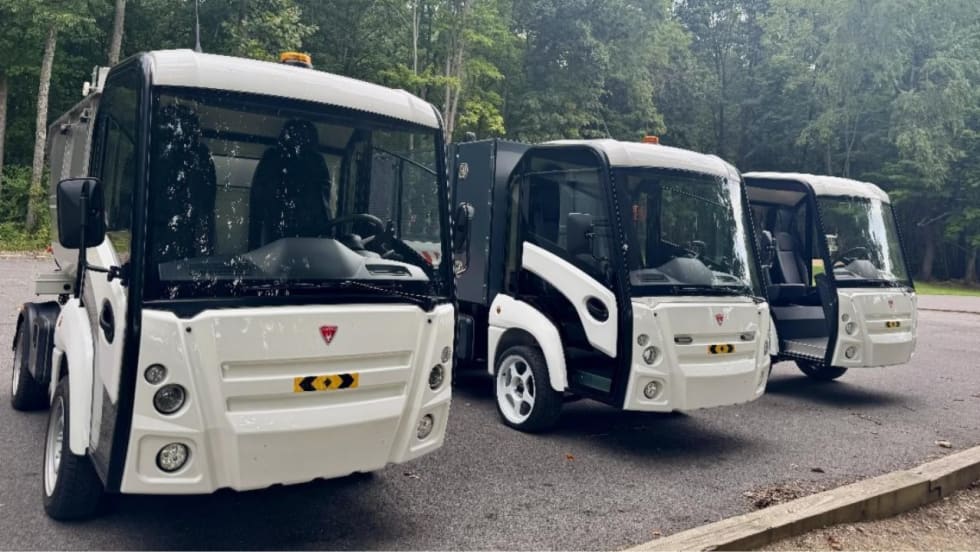
Narro Trucks Introduces Electric Utility Vehicle
Narro Trucks officially launched its operations on Aug. 20 and hosted a ride and drive to showcase its electric truck, which will be produced in Virginia.
Read More →
Samsung SDI Takes Full Control of GM Battery JV as Indiana Plant Pivots to Energy Storage
Samsung SDI is taking full control of its Indiana battery plant with GM, marking a major shift from the EV-focused joint venture Charged Fleet first covered in 2023.
Read More →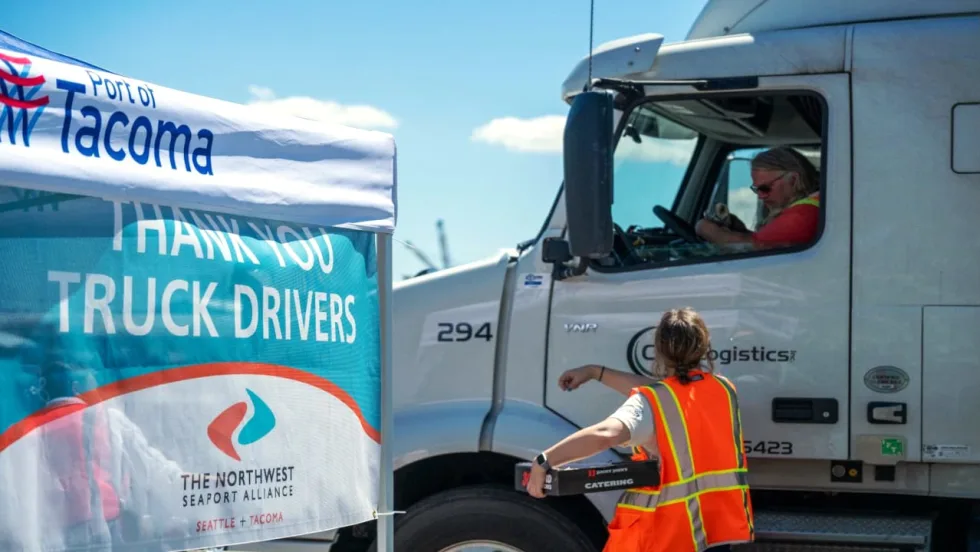
NWSA Taps CALSTART to Administer Zero-Emission Drayage Assistance Program
CALSTART will provide free technical assistance services to drayage fleets serving the Ports of Seattle and Tacoma and looking to transition to cleaner technologies and help decarbonize freight hubs.
Read More →
EV Fleet Reality Check: What Operators Wish They Knew Before Electrifying Their Work Vans
Electric work truck upfits bring new compatibility questions. Learn how parts availability, OEM guidance, power demands, and route planning can affect fleet performance.
Read More →
Peterbilt Expands Sourcewell Partnership with Electric Vehicle Lineup
Peterbilt Motors Company’s cooperative purchasing agreement with Sourcewell and its Canadian partner, Canoe Procurement Group, now includes including Peterbilt's battery-electric vehicle lineup.
Read More →