




Two New V-6 Engines Dominate Ford F-150 Sales
DEARBORN, MI - With its powerful and fuel-efficient 3.5L twin-turbocharged V-6 engine, the 365-horsepower Ford F-150 EcoBoost is outselling all other competitive six-cylinder trucks combined.
DEARBORN, MI - With its powerful and fuel-efficient 3.5L twin-turbocharged V-6 engine, the 365-horsepower Ford F-150 EcoBoost is outselling all other competitive six-cylinder trucks combined, according to the manufacturer.
The new EcoBoost V-6 is one of four new fuel-efficient engines Ford introduced in the F-150 for 2011. Another of those new engines - a 3.7L, 302-horsepower V-6 - also outsells all other competitive V6 engines in full-sized trucks from Chevrolet, GMC, Dodge and Toyota.
According to sales data from J.D. Power and Associates, both new Ford truck V6 engines accounted for 79.5-percent market share of V-6 full-sized trucks sold in July.
The Chevrolet Silverado takes second place with 12.1 percent market share, followed by the GMC Sierra with 4 percent, the Dodge Ram with 3.5 percent and the Toyota Tundra with 0.9 percent. Nissan does not offer a V6 in its Titan pickup.
In July, Ford sold 49,104 F-Series trucks. The EcoBoost V6 accounted for 40 percent of the mix, while the 3.7L took 16 percent of sales. This is the third consecutive month that V-6s have outsold V8s in the F-Series. The last time the V-6 outsold the V-8 in America's most popular truck was 1985. Year to date, the F-Series has sold 313,183 units, 8-percent higher than a year ago.
"Both of our new V-6 powerplants are changing the way customers think about truck engines," said Doug Scott, Ford's truck group marketing manager. "The 3.7L has more horsepower than two of the three V-8 engines we offered in last year's F-150. The 3.5L EcoBoost V-6 engine, at 365 horsepower and 420 lb.-ft. torque, is in a class of its own - no one has anything even remotely close to this engine, which can tow as much as 11,300 pounds and deliver 22 mpg."
Fuel efficiency, along with best-in-class performance, is another reason the two new Ford F-150 engines are rewriting the book on V6 truck sales. The 3.7L F-150 carries an EPA rating of 17 mpg city and 23 mpg highway, while the F-150 EcoBoost is EPA certified at 16 mpg city and 22 mg highway, making it the most fuel-efficient truck with more than 350 horsepower on the market.
The hot-selling F-150 EcoBoost is now the highest volume vehicle in Ford's growing global family of cars, trucks and SUVs available with the company's patented fuel-saving technology.
EcoBoost combines engine downsizing with turbocharging, direct injection and other technologies to deliver both performance and fuel efficiency gains as high as 20 percent over the larger engines they replace. Ford holds more than 125 patents on its EcoBoost technology and has launched a family of EcoBoost engines globally in sizes ranging from 1.6L to 3.5L.
The next two models scheduled to receive EcoBoost engines are two of the company's top-selling utility vehicles, the Edge crossover and the Explorer SUV. Both will offer a 2.0L EcoBoost four-cylinder engine and deliver class-leading fuel efficiency of 30 mpg and 28 mpg highway, respectively. Edge and Explorer EcoBoost go on sale this fall.
Overseas, Ford EcoBoost engines are also a hit, with the 1.6L EcoBoost four-cylinder optional in the European C-MAX multi-activity vehicle virtually sold out. Sales volume is nearly 50-percent higher than projections.
More Operations
2027 GM Trucks, Technician Retention, and Fleet Lessons Lead This Week’s News
New GM pickups, technician retention, fleet leadership lessons, winter equipment, and more headline this week’s Truck Chat Weekly Cheat Sheet.
Read More →
Family Ties Inside the Fleet Families Building Careers Across Generations
Three fleet families share what it really takes to work together, learn across generations, and keep business from following them home.
Read More →
Shades of Fleet Call for Voices: Fleet's Hidden Heroes
Fleet’s hidden heroes are often the ones keeping everything moving behind the scenes. September’s Shades of Fleet is looking for dispatchers, coordinators, parts specialists, and other support pros to share their stories.
Read More →From Our Partners



Truck Centers, Inc. Celebrates National Truck Driver Appreciation Week with $1,000 Fuel Card Giveaways
During National Truck Driver Appreciation Week, Truck Centers, Inc. is offering customers a chance to fuel up for free. Customers at all Truck Centers locations can enter to win one of four $1,000 fuel cards from Sept. 14 - 18.
Read More →
Fleet Guides, AI Time-Savers, Truck Tariffs & Fuel Strategy Lead the News
This week’s Truck Chat Cheat Sheet covers new fleet vehicle guides, practical AI use cases, U.S.-Canada truck production, mixed-energy strategy, and more.
Read More →
What Fleet Employers Are Missing When Hiring Veterans
What if some of the strongest candidates for fleet are already out there, but their experience is written in a language our industry does not always recognize?
Read More →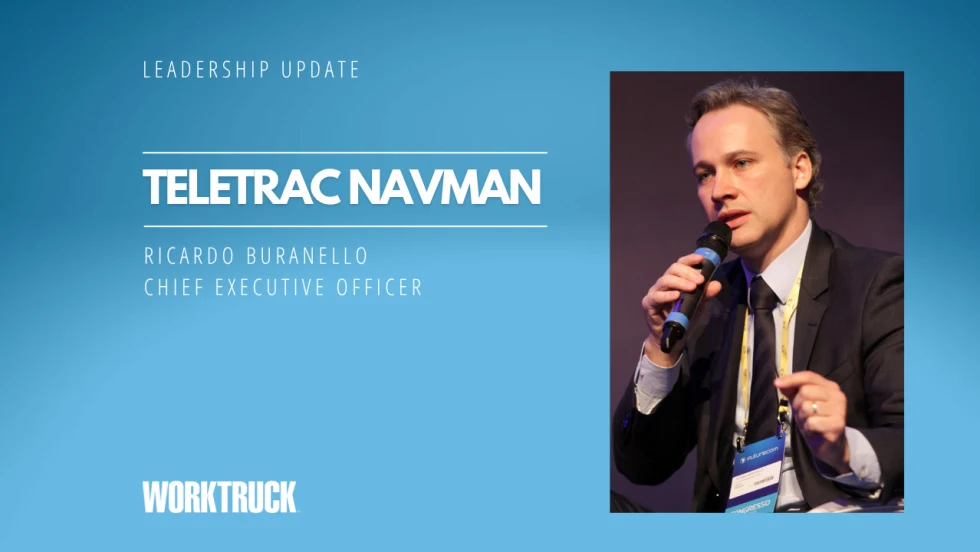
Teletrac Navman Promotes New CEO from Within
Teletrac Navman’s next CEO, Ricardo Buranello, has served as the company’s chief financial and operating officer. He brings deep financial and operational expertise, a strong strategic orientation, and an intimate knowledge of the business to his new role.
Read More →
Automotive Fleet Opens 2026 Personal Use Survey for Commercial Fleet Managers
Less than two weeks left! Commercial and corporate fleet managers are invited to share how their organizations handle company vehicle personal-use policies, charges, and driver eligibility.
Read More →
What Resilient Fleets Do Differently When Conditions Change
Fleet resilience is about more than reacting to disruption. Lauren Fletcher talks with AP Fleet’s Alex Coveney about flexibility, planning, scaling, and what helps fleets adapt when business conditions shift.
Read More →
Isuzu & U.S. Department of Labor Celebrate Milestone for Veterans Apprenticeship Program
The Isuzu Veterans Apprenticeship Program (IVAP) signing ceremony highlighted Isuzu’s long-term commitment to veterans, Isuzu dealers, and the skilled workforce supporting its customers and the commercial transportation industry.
Read More →