




Tire Maintenance Tips for Fleets
In recognition of National Tire Safety Week, here are some tire maintenance tips from the National Highway Traffic Safety Administration.

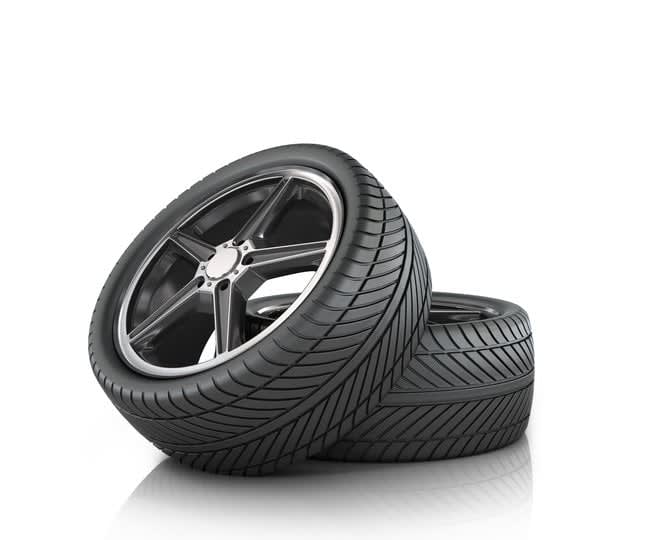
Photo courtesy of NHTSA.
National Tire Safety Week is May 28 to June 3 this year, so now is a good time to remind fleet drivers to make tire maintenance a priority throughout the year. Here’s advice from the National Highway Traffic Safety Administration:
Check tire pressure regularly (at least once a month), including the spare.
Inspect tires for uneven wear patterns on the tread, cracks, foreign objects, or other signs of wear or trauma. Remove bits of glass and other foreign objects wedged in the tread.
Make sure your tire valves have valve caps.
Check tire pressure before going on a long trip.
Do not overload your vehicle. Check the tire information placard or owner’s manual for the maximum recommended load for the vehicle.
If you are towing a trailer, remember that some of the weight of the loaded trailer is transferred to the towing vehicle.
Slow down if you have to go over a pothole or other object in the road.
Do not run over curbs, and try not to strike the curb when parking.
There’s Safety In Numbers
You can find the numbers for recommended tire pressure and vehicle load limit on the tire information placard and in the vehicle owner’s manual. Tire placards are permanent labels attached to the vehicle door edge, doorpost, glove-box door, or inside of the trunk lid. Once you’ve located this information, use it to check your tire pressure and to make sure your vehicle is not overloaded — especially when you head out for a long trip.
Checking Tire Pressure
Because tires may naturally lose air over time, it's important to check your tire pressure at least once a month. For convenience, keep a tire pressure gauge in your vehicle.
Remember, the tire inflation number that vehicle manufacturers provide reflects the proper pounds per square inch (psi) when a tire is cold. To get an accurate tire pressure reading, measure tire pressure when the car has been unused for at least three hours.
Step 1: Locate the correct tire pressure on the tire information placard or in the owner’s manual.
Step 2: Record the tire pressure of all tires.
Step 3: If the tire pressure is too high in any of the tires, slowly release air by gently pressing on the tire valve with the edge of your tire gauge until you get to the correct pressure.
Step 4: If the tire pressure is too low, note the difference between the measured tire pressure and the correct tire pressure. These “missing” pounds of pressure are what you will need to add.
Step 5: At a service station, add the missing pounds of air pressure to each tire that is underinflated.
Step 6: Check all the tires to make sure they have the same air pressure (except in cases in which the front and rear tires are supposed to have different amounts of pressure).
Checking Tire Tread
Tires have built-in treadwear indicators that let you know when it's time to replace your tires. These indicators are raised sections spaced intermittently in the bottom of the tread grooves. When they appear even with the outside of the tread, it's time to replace your tires.
You can also test your tread with a Lincoln penny. Simply turn the penny so Lincoln’s head is pointing down and insert it into the tread. If the tread doesn’t cover Lincoln’s head, it’s time to replace your tires.
Originally posted on Automotive Fleet
More Safety & Compliance
When Work Trucks Under 26,001 Pounds Need IRP Registration
Think trucks under 26,001 pounds are automatically in the clear when it comes to IRP? Not always. Learn where lighter vehicles can still run into trip permit, apportioned registration, and IFTA compliance requirements when crossing state or provincial lines.
Read More →
Volvo Trucks Releases New Safety Recommendations for Traveling with Pets
One of the most important recommendations for professional drivers traveling with pets is to ensure pets are properly restrained while the truck is moving. Other tips are available in the new guide from Volvo Trucks North America and Center for Pet Safety.
Read More →
API Issues Refueling Safety Guidelines
The American Petroleum Institute offers a list of safe vehicle refueling guidelines, including ways to avoid potential problems with static electricity discharges in fall, winter, and early spring.
Read More →


Winter Fleet Prep: Expert Tips to Keep Vehicles Running Smoothly
Cold weather can expose weak batteries, tires, fuel systems, and maintenance gaps fast. Use this winter fleet checklist to prepare trucks and drivers before temperatures drop.
Read More →
When a Work Truck Breaks Down, the Job Can Stop, Too
A work truck breakdown can stop more than the vehicle. Discover how payloads, jobsites, and specialty equipment change the roadside response.
Read More →
What Stronger Long-Term Fleet Service Partnerships Actually Require
Fleet service partnerships rarely fall apart all at once. Learn the three warning signs that trust is eroding and what fleets and providers can do before downtime, frustration, and lost revenue follow.
Read More →
Applause & TRUCE Software Partner to Improve Driver Safety Through AI-Powered Telematics & Employee Performance Management
Applause has integrated TRUCE driving metrics directly into its employee-first performance and safety platform that transforms mobile devices into AI-powered telematics.
Read More →
How Detroit Assurance with Active Brake Assist Works
Do you want to see what it is like to experience Detroit Assurance’s Active Brake Assist? In this video, Work Truck will put you in the cab to see how it all works and then hear more details from DTNA’s Mike Young.
Read More →
Get Left of Loss: A 5-Step Workplace Violence Prevention Framework for Fleet Operators
Violence risks do not stop at the driver’s door. Learn five practical steps fleets can take to spot threats early and protect workers before loss occurs.
Read More →
How Better Visibility Cut Speeding Violations by 48%
Fleet leaders don't need more data, they need clearer visibility into what the data is saying. This case study explores how one utility replaced speeding-event counts with a single metric — miles driven in violation — to strengthen safety and significantly reduce speeding violations.
Read More →