




Related: Working Through COVID-19: A Delivery Fleet’s Perspective
Tips for Construction Companies During COVID-19
As COVID-19 (coronavirus) brings countless businesses to a grinding halt, the construction industry remains resilient — even in the face of tremendous challenge.
by Association of Equipment Manufacturers
March 30, 2020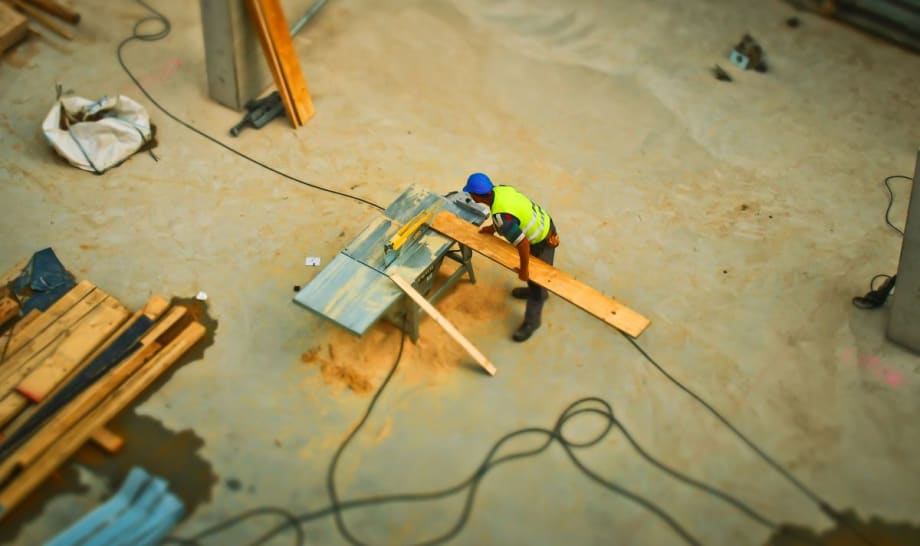
Ensuring employees can maintain proper social distancing is key to keeping construction sites safe during the pandemic.
Photo: Pexels
5 min to read
As COVID-19 (coronavirus) brings countless businesses to a grinding halt, the construction industry remains resilient — even in the face of tremendous challenge.
Unlike many industries where “working from home” and “drive-thru service” are feasible countermeasures, construction firms have jobsites to run. Chris Hopper, executive vice president and general manager of Skanska, told the Cincinnati Business Courier, “You can’t hang drywall from your house.”
The Association of Equipment Manufacturers (AEM) shares some best practices and thoughts on the construction industry's future.
Best Practices to Help Mitigate Exposure
Social distancing is a critical component of any COVID-19 response plan. Turner Construction Company, a New York-based firm that employs roughly 10,000, has begun limiting the size of employee gatherings and has already put a stop to large group meetings. Attending events such as conferences has also been suspended. Remote conferencing technology is now being utilized for meetings. On that note, Turner Construction has expanded its network capacity and training tools to accommodate this surge in online network activity.
Sometimes an essential meeting that requires in-person attendance must take place. Turner Construction mandates that these meetings occur in spaces allowing for adequate social distancing. The CDC recommends that people remain roughly 6 feet apart. Additionally, Turner Construction is adapting standard operating procedures to limit the number of employees in an elevator or hoist at a given time.
Harkins, an employee-owned construction company based in Maryland, constantly reminds employees about the 6-foot rule. Additionally, sick employees are sent home immediately. All gatherings such as lunches are forbidden, and all meetings are now conducted remotely via Microsoft Teams.
Monitoring employees who travel has been another point of focus for construction companies.
Skanska issued a ban on all international travel through at least April. Domestic travel has also been greatly limited.
Turner Construction has restricted all business travel to any CDC Level 3 country, which is a country deemed to have widespread transmission. Also, if any employee had traveled to or had close contact with anyone who traveled to one of these countries, that employee is not allowed onto a Turner jobsite or office for 14 days from the date of contact. Taking it a step further, any employee who exhibits any of the common COVID-19 symptoms is instructed to stay away from Turner jobsites and facilities. Symptoms include fever, cough and restricted breathing.
1. Promote Good Hygiene
Hygiene has also been at the top of the list for Turner Construction. All jobsites are required to provide access to handwashing stations. Additionally, staff has been trained to religiously clean and disinfect frequently touched objects such as lunch tables, coffee machines and door knobs.
Harkins has instituted a long list of jobsite protocols to help improve awareness. For example, CDC and OSHA guidelines are now posted in all conspicuous locations on jobsites. Furthermore, jobsite leaders are trained to closely monitor employee behavior to ensure that the guidelines are being followed.
Harkins has also taken steps to step up jobsite cleaning. Trailers are now cleaned daily. Furthermore, a commercial cleaning service is brought in to clean and disinfect certain areas of a jobsite if COVID-19 exposure is suspected to have taken place. Harkins has also increased the volume of hand sanitizing products deployed to jobsites.
2. Establish & Empower Dedicated Teams
Skanska has established a Coordination Response Team in each market it serves. Teams are tasked with monitoring COVID-19 developments, sharing information with employees and business partners, and implementing protocols.
Turner Construction has also established a dedicated COVID-19 Action Team. Efforts to support employees are an essential part of this team’s focus. Support is a key element that can get overshadowed in the midst of everything that is going on. This crisis has been taking a tremendous toll on many. Employers can play a constructive role in helping people cope.
On that note, Turner’s COVID-19 Action Team has gathered information to help employees guard against coronavirus-related scams, which are unfortunately emerging on a regular basis. The company has established a “fraud alert page” where employees can receive up-to-date information.
3. Keep Honest Communication Open
Skanska is utilizing its internal company website (intranet) to provide general updates on COVID-19. The intranet is also being used to reinforce guidelines and standard operating procedures. This same information is also available through the company’s mobile app.
As reported by the Cincinnati Business Courier, telling employees to stay home when they are not feeling well is a critical piece to maintaining a safe, functioning jobsite. To reinforce the importance of this policy, HGC Groups, a large regional general contractor based in Cincinnati, has temporarily stopped recording unscheduled absences. In other words, an employee who thinks they may have COVID-19 symptoms will not be penalized for calling in sick to work.
Looking to the Future
In Orlando, Fla., work on a $2.15 billion airport project continues amidst the COVID-19 crisis. As reported by the Orlando Business Journal, several guidelines have been put into place so work can continue:
Employees showing signs of illness are sent home.
Additional handwashing stations have been made available.
More frequent cleaning of high touch point areas like stairwells.
Administrative staffs are evaluated for possible shift adjustments to limit personal interaction.
The economic toll of COVID-19 has already set in. That said, some financial analysts expect that industries like manufacturing and construction will be among the last to begin issuing layoffs. That is due to the significant shortage of skilled workers these industries have been experiencing.
Rather, construction firms are expected to take proactive measures to help protect their workers and ongoing projects. The best practices outlined in this article showcase what leading construction firms are already doing in this regard.
More Safety
When Work Trucks Under 26,001 Pounds Need IRP Registration
Think trucks under 26,001 pounds are automatically in the clear when it comes to IRP? Not always. Learn where lighter vehicles can still run into trip permit, apportioned registration, and IFTA compliance requirements when crossing state or provincial lines.
Read More →
Volvo Trucks Releases New Safety Recommendations for Traveling with Pets
One of the most important recommendations for professional drivers traveling with pets is to ensure pets are properly restrained while the truck is moving. Other tips are available in the new guide from Volvo Trucks North America and Center for Pet Safety.
Read More →
API Issues Refueling Safety Guidelines
The American Petroleum Institute offers a list of safe vehicle refueling guidelines, including ways to avoid potential problems with static electricity discharges in fall, winter, and early spring.
Read More →
Winter Fleet Prep: Expert Tips to Keep Vehicles Running Smoothly
Cold weather can expose weak batteries, tires, fuel systems, and maintenance gaps fast. Use this winter fleet checklist to prepare trucks and drivers before temperatures drop.
Read More →
When a Work Truck Breaks Down, the Job Can Stop, Too
A work truck breakdown can stop more than the vehicle. Discover how payloads, jobsites, and specialty equipment change the roadside response.
Read More →
What Stronger Long-Term Fleet Service Partnerships Actually Require
Fleet service partnerships rarely fall apart all at once. Learn the three warning signs that trust is eroding and what fleets and providers can do before downtime, frustration, and lost revenue follow.
Read More →
Applause & TRUCE Software Partner to Improve Driver Safety Through AI-Powered Telematics & Employee Performance Management
Applause has integrated TRUCE driving metrics directly into its employee-first performance and safety platform that transforms mobile devices into AI-powered telematics.
Read More →
How Detroit Assurance with Active Brake Assist Works
Do you want to see what it is like to experience Detroit Assurance’s Active Brake Assist? In this video, Work Truck will put you in the cab to see how it all works and then hear more details from DTNA’s Mike Young.
Read More →
Get Left of Loss: A 5-Step Workplace Violence Prevention Framework for Fleet Operators
Violence risks do not stop at the driver’s door. Learn five practical steps fleets can take to spot threats early and protect workers before loss occurs.
Read More →
Sponsored•July 17, 2026
How Better Visibility Cut Speeding Violations by 48%
Fleet leaders don't need more data, they need clearer visibility into what the data is saying. This case study explores how one utility replaced speeding-event counts with a single metric — miles driven in violation — to strengthen safety and significantly reduce speeding violations.
Read More →